




Filters
SORT
Product Availability –
Category –
Brand –
Size –
Body Pattern –
Review Score –
 --%3E %3Csvg version='1.1' id='Fill' xmlns='http://www.w3.org/2000/svg' xmlns:xlink='http://www.w3.org/1999/xlink' x='0px' y='0px' viewBox='0 0 100 100' enable-background='new 0 0 100 100' xml:space='preserve'%3E %3Cpath fill='%23F15C02' d='M79.44,0.95H20.56C9.78,0.95,0.95,9.78,0.95,20.56v58.87c0,10.79,8.82,19.61,19.61,19.61h58.87 c10.79,0,19.61-8.83,19.61-19.61V20.56C99.05,9.78,90.22,0.95,79.44,0.95z M65.38,58.24l9.38,29.58L49.69,69.78L24.5,87.82 l9.34-29.6L8.8,39.6l30.73-0.17c0,0,6.98-19.61,10-28.93c0.54,1.36,9.88,29.1,9.88,29.1H91.2L65.38,58.24z'/%3E %3C/svg%3E)
 --%3E %3Csvg version='1.1' id='With-RB' xmlns='http://www.w3.org/2000/svg' xmlns:xlink='http://www.w3.org/1999/xlink' x='0px' y='0px' viewBox='0 0 100 100' enable-background='new 0 0 100 100' xml:space='preserve'%3E %3Cpath fill='%23FBC8B4' d='M79.44,0.95H20.56C9.78,0.95,0.95,9.78,0.95,20.56v58.87c0,10.79,8.82,19.61,19.61,19.61h58.87 c10.79,0,19.61-8.83,19.61-19.61V20.56C99.05,9.78,90.22,0.95,79.44,0.95z M65.38,58.24l9.38,29.58L49.69,69.78L24.5,87.82 l9.34-29.6L8.8,39.6l30.73-0.17c0,0,6.98-19.61,10-28.93c0.54,1.36,9.88,29.1,9.88,29.1H91.2L65.38,58.24z'/%3E %3C/svg%3E)
Price Range –
Manual Radiator Valves


 --%3E %3Csvg version='1.1' id='Half' xmlns='http://www.w3.org/2000/svg' xmlns:xlink='http://www.w3.org/1999/xlink' x='0px' y='0px' viewBox='0 0 100 100' enable-background='new 0 0 100 100' xml:space='preserve'%3E %3Cg%3E %3Cpath fill='%23F15C02' d='M30.05,70.23l3.79-12.01L8.8,39.6l30.73-0.17c0,0,6.98-19.61,10-28.93c0.54,1.36,9.88,29.1,9.88,29.1h1.58 L93.71,7.18c-3.58-3.82-8.66-6.23-14.28-6.23H20.56C9.78,0.95,0.95,9.78,0.95,20.56v58.87c0,5.41,2.22,10.32,5.79,13.88 L30.05,70.23z'/%3E %3C/g%3E %3Cpath fill='%23FBC8B4' d='M93.71,7.18L60.98,39.6H91.2L65.38,58.24l9.38,29.58L49.69,69.78L24.5,87.82l5.55-17.59L6.75,93.32 c3.55,3.54,8.44,5.73,13.82,5.73h58.87c10.79,0,19.61-8.83,19.61-19.61V20.56C99.05,15.4,97.01,10.69,93.71,7.18z'/%3E %3C/svg%3E)
 --%3E %3Csvg version='1.1' id='No-RB' xmlns='http://www.w3.org/2000/svg' xmlns:xlink='http://www.w3.org/1999/xlink' x='0px' y='0px' viewBox='0 0 100 100' enable-background='new 0 0 100 100' xml:space='preserve'%3E %3Cpath fill='%23CECECE' d='M79.44,0.95H20.56C9.78,0.95,0.95,9.78,0.95,20.56v58.87c0,10.79,8.82,19.61,19.61,19.61h58.87 c10.79,0,19.61-8.83,19.61-19.61V20.56C99.05,9.78,90.22,0.95,79.44,0.95z M65.38,58.24l9.38,29.58L49.69,69.78L24.5,87.82 l9.34-29.6L8.8,39.6l30.73-0.17c0,0,6.98-19.61,10-28.93c0.54,1.36,9.88,29.1,9.88,29.1H91.2L65.38,58.24z'/%3E %3C/svg%3E)
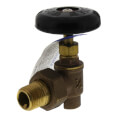
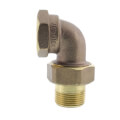
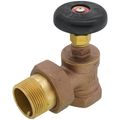
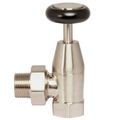
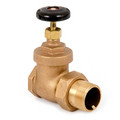
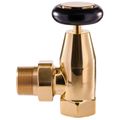
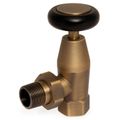
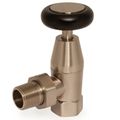
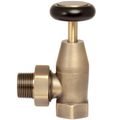

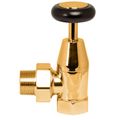
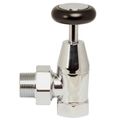
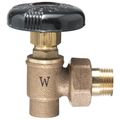
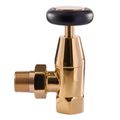
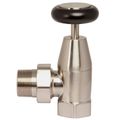
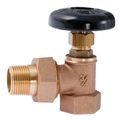
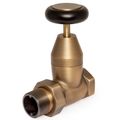
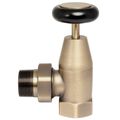
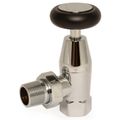
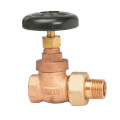
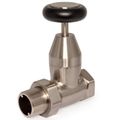
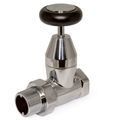
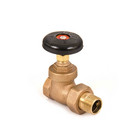
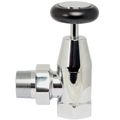

Manual Radiator Valves are hand-operated valve bodies that control hot water flow into a hydronic radiator, using a handwheel instead of an automatic thermostatic head. Selecting the right valve comes down to three factors: size, body pattern, and connection style, since a wrong body pattern turns a straightforward swap into a repiping job. Angle-pattern valves fit radiators with bottom opposite end connections, where the supply pipe runs horizontal into the bottom of the radiator, while straight-pattern valves fit installations where the pipe rises directly up from the floor into the valve. Danfoss RA-N valve bodies, a common option in this category, are rated to a maximum working pressure of 10 bar and a maximum working temperature of 120°C, and are available in both straight and angle patterns. Because the handwheel sets flow manually rather than responding to room temperature, output stays constant until someone adjusts it by hand, which suits systems where zoning is handled elsewhere.
Subcategories
- Angle Pattern Valves: Angle pattern valves connect to radiators with bottom opposite end piping, where the supply line runs horizontally into the bottom of the radiator and needs a 90-degree turn into the valve body. Danfoss RA-N angle bodies are available in this pattern with a maximum working pressure of 10 bar. Installers replacing an existing angle valve match the new body's pattern to the old one to avoid re-routing pipe.
- Straight Pattern Valves: Straight pattern valves fit installations where supply pipe rises directly up from the floor into the bottom of the valve without a directional turn. Danfoss RA-N straight bodies share the same 120°C maximum working temperature rating as the angle version, just in a different body shape. Retrofits on older systems with floor-fed risers typically call for the straight pattern over the angle pattern.
- Valve Bodies with Integrated Presetting: Valve bodies with integrated presetting add a built-in flow limiter, letting an installer set a maximum flow rate through the valve independent of how far the handwheel opens. Danfoss RA-N bodies offer presetting in steps from 1 to 7, covering a flow range from 0.04 to 1.04 cubic meters per hour. Balancing multiple radiators on the same loop gets easier with presetting, since each valve can be dialed to its designed flow share before the system is balanced.
- Valve Sizing: Radiator valve bodies are sized to match the connecting pipe, most commonly in DN 10 or DN 15 for residential radiators. Danfoss offers RA-N valves in both the RA-N 10 and RA-N 15 size designations. Choosing a body sized to the existing pipe avoids adding a reducing fitting at the valve connection.
Buying Guide
Matching body pattern to existing piping is the first decision on any radiator valve replacement. Angle pattern valves work where the supply pipe enters horizontally at the bottom of the radiator, a configuration known as bottom opposite end piping and the most common setup in older two-pipe systems. Straight pattern valves work where the pipe rises straight up from the floor into the valve, a layout more common in newer installations or radiators fed from below. Installing the wrong pattern means cutting and re-routing pipe instead of a straightforward valve swap, so confirming the existing pipe direction before ordering saves a return trip.
Pressure and temperature ratings matter next, especially on older systems or commercial buildings running higher boiler temperatures. Manual Radiator Valves built on platforms like the Danfoss RA-N line carry a maximum working pressure of 10 bar and a maximum working temperature of 120°C, covering the overwhelming majority of residential and light commercial hydronic setups.
Presetting capability is worth considering on multi-radiator loops. A valve body with integrated presetting lets an installer dial in a maximum flow rate per radiator, which helps balance heat output across a system with radiators of different sizes on the same loop. Valve size should match the connecting pipe diameter directly, commonly DN 10 or DN 15 for residential radiators, so the body doesn't force a reducing fitting at the connection point.
Frequently Asked Questions
What's the difference between angle and straight radiator valves?
Angle valves connect to radiators with horizontal bottom opposite end piping, turning the flow 90 degrees into the radiator. Straight valves connect where supply pipe rises directly up from the floor, with no directional turn needed at the valve body.
What pressure and temperature can a manual radiator valve handle?
Valve bodies like the Danfoss RA-N line are rated to a maximum working pressure of 10 bar and a maximum working temperature of 120°C. That covers standard residential and light commercial hydronic systems.
What does presetting do on a radiator valve body?
Presetting adds a built-in flow limiter to the valve, letting an installer cap the maximum flow independent of how far the handwheel opens. Danfoss RA-N bodies offer presetting in steps from 1 to 7, which helps balance flow across radiators of different sizes on the same loop.
What sizes do these valve bodies come in?
Common residential sizes are DN 10 and DN 15, matching most radiator supply pipe diameters. Danfoss offers its RA-N line in both the RA-N 10 and RA-N 15 designations to match those pipe sizes.
How does a manual valve differ from a thermostatic radiator valve?
A manual valve uses a handwheel to set flow directly, so output stays constant until someone adjusts it by hand. A thermostatic valve instead uses a temperature-sensing head to open and close the same valve body automatically as room temperature changes.
