



Radiant Floor Heating Supplies
Radiant floor heating supplies cover everything needed to build out a hydronic radiant heat system, from the PEX tubing itself to the fittings, valves, manifolds, and tools that connect it all together. Radiant heat packages bundle the major components into a single kit for a defined zone or project size.
Working from a packaged kit simplifies material takeoff for a straightforward installation, while sourcing components individually gives more flexibility on larger or custom radiant systems. Matching PEX tubing, fittings, and manifolds to the same connection method throughout the job keeps tooling and installation consistent.







PEX Tubing is the flexible cross-linked polyethylene pipe used to carry heated water through radiant floor heating loops. For hydronic radiant applications, oxygen barrier PEX is recommended to prevent dissolved oxygen from corroding cast iron components. PEX tubing for radiant applications is typically 1/2" or 5/8" in outside diameter, and loop lengths are sized to keep flow velocity and pressure drop within the design range.
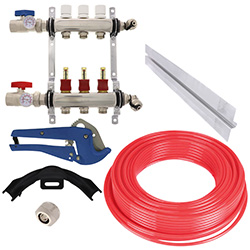
Radiant Heat Packages are bundled supply kits that include the major components needed to start a hydronic radiant heating installation. Packages typically include PEX tubing, a manifold assembly with flow meters and actuators, a circulator pump, and system accessories. Packaged systems simplify component selection for contractors and homeowners installing a radiant system for the first time.
PEX Fittings are the connection components used to join PEX tubing to manifolds, valves, transition fittings, and other PEX segments. The three main PEX connection methods are crimp, clamp, and expansion, each requiring its own fitting type and installation tool. Brass PEX fittings are the standard choice at the manifold and at any transition to copper or threaded fittings.
PEX Valves are shut-off, balancing, and isolation valves designed for use in PEX piping systems. In radiant heating systems, balancing valves at the manifold allow flow to be adjusted in individual loops to maintain even heat distribution across all zones. Zone valves and thermostatic valves control flow to individual heating zones based on thermostat demand.
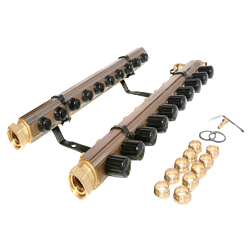
Radiant Heat Manifolds are the distribution headers that connect the main supply and return lines to the individual PEX tubing loops in a hydronic radiant system. Each loop port includes a flow meter for balancing and can be fitted with actuators for zone control. Manifolds are available in stainless steel and brass, in configurations from 2 to 12 loop connections.
PEX Tools include the crimp tools, clamp tools, expansion tools, pipe cutters, and deburring tools used to make PEX connections and prepare tubing for installation. The connection tool required depends on the PEX fitting type: crimp fittings require a PEX crimp tool and go-no-go gauge, clamp fittings require a stainless clamp tool, and expansion fittings require an expansion tool.
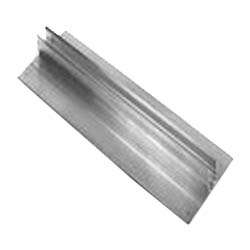
Selecting an installation method is the first step in planning a radiant floor heating system. Slab-on-grade installations embed tubing in concrete, producing the highest thermal mass and most even heat distribution. Above-subfloor systems using aluminum heat transfer plates staple tubing to plywood panels and conduct heat into the floor. Below-subfloor systems attach tubing between joists with aluminum plates that face the subfloor above.
Oxygen barrier PEX is strongly recommended for hydronic radiant systems that include cast iron components such as boiler sections, circulator pump bodies, or cast iron manifolds. Oxygen barrier PEX uses a thin EVOH layer bonded to the outer surface that reduces oxygen permeation into the system water and prevents corrosion of ferrous metals.
Loop length limits are set by pressure drop and flow velocity characteristics of the tubing and the circulator pump. For 1/2" PEX tubing, maximum loop lengths are typically 200 to 300 feet per circuit. Longer loops increase pressure drop and may result in reduced flow and uneven heating in affected zones.
Controls and thermostats for radiant systems must account for the thermal lag of the floor mass. Outdoor reset controls that adjust supply water temperature based on outdoor air temperature help maintain more consistent comfort and reduce on-off cycling. Thermostats for radiant applications should have a setback capability with recovery lead time to compensate for the floor's slow response.
What is the difference between electric and hydronic radiant heat?
Electric radiant heat uses resistance heating cables or mats embedded in the floor and requires no boiler, pump, or piping. It is typically used for supplemental heating in smaller areas. Hydronic radiant heat circulates hot water through PEX tubing in the floor. Hydronic systems have higher installation costs but lower operating costs for whole-house applications.
Do I need a special boiler for a radiant heating system?
Radiant heating systems operate most efficiently with supply water temperatures of 90 to 120 degrees Fahrenheit, lower than the 160 to 180 degrees used in baseboard systems. Condensing boilers and on-demand water heaters are well suited because they are designed to operate efficiently at lower water temperatures. Standard non-condensing boilers can be used but may require mixing valves to limit supply temperature to the radiant loops.
How far apart should PEX tubing be spaced in a radiant floor?
Tubing spacing is typically 6, 9, or 12 inches on center, depending on the heat output required per square foot and the floor construction method. For slab-on-grade systems, 12 inch spacing is common in well-insulated spaces. For above-subfloor systems with aluminum heat transfer plates, 8 or 9 inch spacing is more typical. Perimeter zones often use closer spacing than interior zones.
What type of PEX tubing should I use for radiant heat?
Oxygen barrier PEX is the correct choice for hydronic radiant heating systems that include any cast iron or ferrous metal components. The EVOH oxygen barrier layer prevents dissolved oxygen from diffusing into the system water and corroding iron components. For systems that use only non-ferrous components, standard non-barrier PEX tubing can be used.
How do I balance the flow in a radiant heating system?
Flow balancing is done at the manifold using the flow meters or balancing valves at each loop port. With the system running, adjust the flow meter on each loop to the design flow rate calculated for that loop's length and tubing diameter. After balancing, confirm that the circulator pump is operating within its designed flow range.
Resources

 --%3E %3C!DOCTYPE svg PUBLIC '-//W3C//DTD SVG 1.1//EN' 'http://www.w3.org/Graphics/SVG/1.1/DTD/svg11.dtd'%3E %3Csvg version='1.1' id='Layer_1' xmlns='http://www.w3.org/2000/svg' xmlns:xlink='http://www.w3.org/1999/xlink' x='0px' y='0px' width='90px' height='90px' viewBox='0 0 90 90' enable-background='new 0 0 90 90' xml:space='preserve'%3E %3Crect x='27' y='23' fill='%23FFFFFF' width='43' height='44'/%3E %3Cg%3E %3Cdefs%3E %3Crect id='SVGID_1_' width='90' height='90'/%3E %3C/defs%3E %3CclipPath id='SVGID_2_'%3E %3Cuse xlink:href='%23SVGID_1_' overflow='visible'/%3E %3C/clipPath%3E %3Cpath clip-path='url(%23SVGID_2_)' fill='%234186AD' d='M45,0C20.1,0,0,20.1,0,45c0,24.9,20.1,45,45,45c24.9,0,45-20.1,45-45 C90,20.1,69.9,0,45,0'/%3E %3C/g%3E %3Cpath fill='%23FFFFFF' d='M60.6,47.4l-22.5,14c-0.5,0.3-1,0.399-1.5,0.399s-0.9-0.1-1.4-0.399c-0.9-0.5-1.4-1.4-1.4-2.5v-28 c0-1,0.6-2,1.4-2.5c0.9-0.5,2-0.5,2.9,0.1l22.5,14.1C61.4,43.1,61.9,44,61.9,45S61.4,46.9,60.6,47.4'/%3E %3C/svg%3E)
Other Resources
PEX Tubing is the flexible cross-linked polyethylene pipe used to carry heated water through radiant floor heating loops. For hydronic radiant applications, oxygen barrier PEX is recommended to prevent dissolved oxygen from corroding cast iron components. PEX tubing for radiant applications is typically 1/2" or 5/8" in outside diameter, and loop lengths are sized to keep flow velocity and pressure drop within the design range.
Radiant Heat Packages are bundled supply kits that include the major components needed to start a hydronic radiant heating installation. Packages typically include PEX tubing, a manifold assembly with flow meters and actuators, a circulator pump, and system accessories. Packaged systems simplify component selection for contractors and homeowners installing a radiant system for the first time.
PEX Fittings are the connection components used to join PEX tubing to manifolds, valves, transition fittings, and other PEX segments. The three main PEX connection methods are crimp, clamp, and expansion, each requiring its own fitting type and installation tool. Brass PEX fittings are the standard choice at the manifold and at any transition to copper or threaded fittings.
PEX Valves are shut-off, balancing, and isolation valves designed for use in PEX piping systems. In radiant heating systems, balancing valves at the manifold allow flow to be adjusted in individual loops to maintain even heat distribution across all zones. Zone valves and thermostatic valves control flow to individual heating zones based on thermostat demand.
Radiant Heat Manifolds are the distribution headers that connect the main supply and return lines to the individual PEX tubing loops in a hydronic radiant system. Each loop port includes a flow meter for balancing and can be fitted with actuators for zone control. Manifolds are available in stainless steel and brass, in configurations from 2 to 12 loop connections.
PEX Tools include the crimp tools, clamp tools, expansion tools, pipe cutters, and deburring tools used to make PEX connections and prepare tubing for installation. The connection tool required depends on the PEX fitting type: crimp fittings require a PEX crimp tool and go-no-go gauge, clamp fittings require a stainless clamp tool, and expansion fittings require an expansion tool.
Selecting an installation method is the first step in planning a radiant floor heating system. Slab-on-grade installations embed tubing in concrete, producing the highest thermal mass and most even heat distribution. Above-subfloor systems using aluminum heat transfer plates staple tubing to plywood panels and conduct heat into the floor. Below-subfloor systems attach tubing between joists with aluminum plates that face the subfloor above.
Oxygen barrier PEX is strongly recommended for hydronic radiant systems that include cast iron components such as boiler sections, circulator pump bodies, or cast iron manifolds. Oxygen barrier PEX uses a thin EVOH layer bonded to the outer surface that reduces oxygen permeation into the system water and prevents corrosion of ferrous metals.
Loop length limits are set by pressure drop and flow velocity characteristics of the tubing and the circulator pump. For 1/2" PEX tubing, maximum loop lengths are typically 200 to 300 feet per circuit. Longer loops increase pressure drop and may result in reduced flow and uneven heating in affected zones.
Controls and thermostats for radiant systems must account for the thermal lag of the floor mass. Outdoor reset controls that adjust supply water temperature based on outdoor air temperature help maintain more consistent comfort and reduce on-off cycling. Thermostats for radiant applications should have a setback capability with recovery lead time to compensate for the floor's slow response.
What is the difference between electric and hydronic radiant heat?
Electric radiant heat uses resistance heating cables or mats embedded in the floor and requires no boiler, pump, or piping. It is typically used for supplemental heating in smaller areas. Hydronic radiant heat circulates hot water through PEX tubing in the floor. Hydronic systems have higher installation costs but lower operating costs for whole-house applications.
Do I need a special boiler for a radiant heating system?
Radiant heating systems operate most efficiently with supply water temperatures of 90 to 120 degrees Fahrenheit, lower than the 160 to 180 degrees used in baseboard systems. Condensing boilers and on-demand water heaters are well suited because they are designed to operate efficiently at lower water temperatures. Standard non-condensing boilers can be used but may require mixing valves to limit supply temperature to the radiant loops.
How far apart should PEX tubing be spaced in a radiant floor?
Tubing spacing is typically 6, 9, or 12 inches on center, depending on the heat output required per square foot and the floor construction method. For slab-on-grade systems, 12 inch spacing is common in well-insulated spaces. For above-subfloor systems with aluminum heat transfer plates, 8 or 9 inch spacing is more typical. Perimeter zones often use closer spacing than interior zones.
What type of PEX tubing should I use for radiant heat?
Oxygen barrier PEX is the correct choice for hydronic radiant heating systems that include any cast iron or ferrous metal components. The EVOH oxygen barrier layer prevents dissolved oxygen from diffusing into the system water and corroding iron components. For systems that use only non-ferrous components, standard non-barrier PEX tubing can be used.
How do I balance the flow in a radiant heating system?
Flow balancing is done at the manifold using the flow meters or balancing valves at each loop port. With the system running, adjust the flow meter on each loop to the design flow rate calculated for that loop's length and tubing diameter. After balancing, confirm that the circulator pump is operating within its designed flow range.