




Filters
SORT
Product Availability –
Brand –
Bit Type –
Size –
Review Score –
 --%3E %3Csvg version='1.1' id='Fill' xmlns='http://www.w3.org/2000/svg' xmlns:xlink='http://www.w3.org/1999/xlink' x='0px' y='0px' viewBox='0 0 100 100' enable-background='new 0 0 100 100' xml:space='preserve'%3E %3Cpath fill='%23F15C02' d='M79.44,0.95H20.56C9.78,0.95,0.95,9.78,0.95,20.56v58.87c0,10.79,8.82,19.61,19.61,19.61h58.87 c10.79,0,19.61-8.83,19.61-19.61V20.56C99.05,9.78,90.22,0.95,79.44,0.95z M65.38,58.24l9.38,29.58L49.69,69.78L24.5,87.82 l9.34-29.6L8.8,39.6l30.73-0.17c0,0,6.98-19.61,10-28.93c0.54,1.36,9.88,29.1,9.88,29.1H91.2L65.38,58.24z'/%3E %3C/svg%3E)
 --%3E %3Csvg version='1.1' id='With-RB' xmlns='http://www.w3.org/2000/svg' xmlns:xlink='http://www.w3.org/1999/xlink' x='0px' y='0px' viewBox='0 0 100 100' enable-background='new 0 0 100 100' xml:space='preserve'%3E %3Cpath fill='%23FBC8B4' d='M79.44,0.95H20.56C9.78,0.95,0.95,9.78,0.95,20.56v58.87c0,10.79,8.82,19.61,19.61,19.61h58.87 c10.79,0,19.61-8.83,19.61-19.61V20.56C99.05,9.78,90.22,0.95,79.44,0.95z M65.38,58.24l9.38,29.58L49.69,69.78L24.5,87.82 l9.34-29.6L8.8,39.6l30.73-0.17c0,0,6.98-19.61,10-28.93c0.54,1.36,9.88,29.1,9.88,29.1H91.2L65.38,58.24z'/%3E %3C/svg%3E)
Price Range –
Ratcheting & Socket Wrench Sets


 --%3E %3Csvg version='1.1' id='No-RB' xmlns='http://www.w3.org/2000/svg' xmlns:xlink='http://www.w3.org/1999/xlink' x='0px' y='0px' viewBox='0 0 100 100' enable-background='new 0 0 100 100' xml:space='preserve'%3E %3Cpath fill='%23CECECE' d='M79.44,0.95H20.56C9.78,0.95,0.95,9.78,0.95,20.56v58.87c0,10.79,8.82,19.61,19.61,19.61h58.87 c10.79,0,19.61-8.83,19.61-19.61V20.56C99.05,9.78,90.22,0.95,79.44,0.95z M65.38,58.24l9.38,29.58L49.69,69.78L24.5,87.82 l9.34-29.6L8.8,39.6l30.73-0.17c0,0,6.98-19.61,10-28.93c0.54,1.36,9.88,29.1,9.88,29.1H91.2L65.38,58.24z'/%3E %3C/svg%3E)


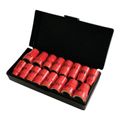


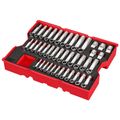


Ratcheting & Socket Wrench Sets are combination tool kits pairing a ratchet handle with interchangeable sockets sized to turn nuts and bolts without repositioning the tool between turns. Most sets bundle multiple drive sizes, commonly quarter-inch, three-eighths-inch, and half-inch, into one case so a technician can move from small fasteners to larger ones without swapping tools entirely. Sockets typically come in both SAE and metric sizing within the same set, since equipment on a job site often mixes fastener standards depending on manufacturer and country of origin.
Some sets add a 90-tooth ratchet mechanism with a 4-degree swing arc, which needs far less clearance to turn a fastener than a standard-tooth ratchet, a real advantage in tight mechanical rooms or crowded equipment cabinets. Bit socket sets built from heat-treated S2 steel extend the same ratchet to hex and Torx fasteners, covering security screws and other non-standard heads that a plain socket can't grip. Picking the right combination of drive sizes, sizing systems, and bit compatibility keeps a service call from stalling out over a missing tool.
Subcategories
- 1/4 in. Drive Socket Sets: Quarter-inch drive sets pair a compact ratchet with smaller sockets suited to low-torque fasteners, the kind found on electrical panels, small equipment housings, and instrumentation. Technicians reach for this drive size in tight spaces where a bulkier three-eighths or half-inch ratchet won't fit or swing. Sets in this drive size typically include both SAE and metric sockets, plus hex and Torx bit options in some kits.
- 3/8 in. Drive Socket Sets: Three-eighths-inch drive is the most common size across general mechanical and HVAC service work, covering a wide middle range of fastener sizes without the bulk of a half-inch set. Techs use this drive size for everyday panel screws, mounting bolts, and equipment fasteners that fall between the small and large extremes. Sets in this size commonly include a 90-tooth ratchet, which cuts down the swing needed to turn a fastener in a crowded cabinet.
- 1/2 in. Drive Socket Sets: Half-inch drive sets handle larger, higher-torque fasteners like structural bolts, larger equipment mounts, and heavy mechanical connections. Technicians reach for half-inch drive when a smaller ratchet doesn't hold up under the torque a fastener needs. Combination sets often pair half-inch sockets with the same ratchet body used for the three-eighths-inch drive, keeping one handle working across two socket sizes.
- Hex and Torx Bit Socket Sets: Bit socket sets swap a standard hex socket profile for hex or Torx bits made from heat-treated S2 steel, letting the same ratchet turn security fasteners and specialty screw heads. Technicians working on equipment with tamper-resistant screws or Torx-head hardware use these sets instead of carrying separate bit drivers. Sets typically include a mixed range of SAE hex, metric hex, and external Torx sizes in one case.
- Master Combination Sets: Master sets combine quarter-inch, three-eighths-inch, and half-inch drive tools with standard and deep sockets in both SAE and metric sizing, running well over a hundred pieces in some configurations. Technicians who need one case covering nearly every fastener on a job site reach for a master set instead of assembling drive sizes separately. A polished chrome finish on the sockets in these larger sets resists corrosion and wipes clean after a dirty job.
Buying Guide
Start with drive size, since that determines which sockets and fasteners the set can actually turn. Quarter-inch drive covers small, low-torque fasteners in tight spaces, three-eighths-inch drive handles the bulk of everyday mechanical and HVAC fasteners, and half-inch drive steps up to structural bolts and higher-torque connections. Most Ratcheting & Socket Wrench Sets bundle two or three drive sizes into one case, which covers a wider range of jobs than a single-drive set without carrying multiple ratchet handles. Sizing system matters next: a set with both SAE and metric sockets handles equipment from different manufacturers without needing a second kit on the truck, which matters on jobs mixing domestic and imported equipment. Tooth count on the ratchet head affects how much clearance a technician needs to turn a fastener; a 90-tooth ratchet needs less swing than a standard ratchet, which pays off in cramped mechanical rooms or behind tightly packed equipment. Decide whether the job calls for bit sockets as well as standard hex sockets, since security screws and Torx-head hardware need a hex or Torx bit rather than a plain six-point or twelve-point socket. Piece count should match how the set actually gets used: a smaller, focused set is easier to keep organized on a service van, while a master set with well over a hundred pieces suits a shop that needs to cover nearly any fastener that comes through the door.
Frequently Asked Questions
What drive size is best for general HVAC service work?
Three-eighths-inch drive covers the bulk of everyday HVAC and mechanical fasteners without the bulk of a half-inch ratchet. Many sets pair three-eighths-inch drive with quarter-inch or half-inch sockets in the same case for jobs that need a wider fastener range.
What's the difference between SAE and metric sockets?
SAE sockets are sized in fractions of an inch and fit fasteners common on domestic equipment, while metric sockets are sized in millimeters and fit imported equipment and newer manufacturing standards. Sets that include both sizing systems in one case cover equipment from multiple manufacturers without a second kit.
Why does tooth count matter on a ratchet?
A 90-tooth ratchet moves in a 4-degree swing arc, needing far less clearance to turn a fastener than a standard ratchet. The reduced swing matters in cramped mechanical rooms or behind tightly packed equipment where a full swing isn't possible.
When does a technician need bit sockets instead of standard sockets?
Bit sockets made from heat-treated S2 steel handle hex and Torx fasteners, including security screws that a standard six-point or twelve-point socket can't grip. Technicians working on equipment with tamper-resistant hardware carry bit sockets alongside standard sets.
How many pieces should a socket set include?
Piece count depends on how the set gets used: a smaller, focused set stays organized on a service van, while master sets running well over a hundred pieces suit a shop covering a wide range of fastener types. Matching piece count to actual use keeps the set practical instead of bulky.
