




Filters
SORT
Product Availability –
Brand –
Product Type –
Size –
Connection Type –
Review Score –
 --%3E %3Csvg version='1.1' id='Fill' xmlns='http://www.w3.org/2000/svg' xmlns:xlink='http://www.w3.org/1999/xlink' x='0px' y='0px' viewBox='0 0 100 100' enable-background='new 0 0 100 100' xml:space='preserve'%3E %3Cpath fill='%23F15C02' d='M79.44,0.95H20.56C9.78,0.95,0.95,9.78,0.95,20.56v58.87c0,10.79,8.82,19.61,19.61,19.61h58.87 c10.79,0,19.61-8.83,19.61-19.61V20.56C99.05,9.78,90.22,0.95,79.44,0.95z M65.38,58.24l9.38,29.58L49.69,69.78L24.5,87.82 l9.34-29.6L8.8,39.6l30.73-0.17c0,0,6.98-19.61,10-28.93c0.54,1.36,9.88,29.1,9.88,29.1H91.2L65.38,58.24z'/%3E %3C/svg%3E)
 --%3E %3Csvg version='1.1' id='With-RB' xmlns='http://www.w3.org/2000/svg' xmlns:xlink='http://www.w3.org/1999/xlink' x='0px' y='0px' viewBox='0 0 100 100' enable-background='new 0 0 100 100' xml:space='preserve'%3E %3Cpath fill='%23FBC8B4' d='M79.44,0.95H20.56C9.78,0.95,0.95,9.78,0.95,20.56v58.87c0,10.79,8.82,19.61,19.61,19.61h58.87 c10.79,0,19.61-8.83,19.61-19.61V20.56C99.05,9.78,90.22,0.95,79.44,0.95z M65.38,58.24l9.38,29.58L49.69,69.78L24.5,87.82 l9.34-29.6L8.8,39.6l30.73-0.17c0,0,6.98-19.61,10-28.93c0.54,1.36,9.88,29.1,9.88,29.1H91.2L65.38,58.24z'/%3E %3C/svg%3E)
Price Range –
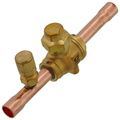
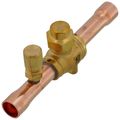
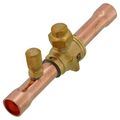
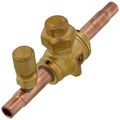
Refrigeration Ball Valves

 --%3E %3Csvg version='1.1' id='No-RB' xmlns='http://www.w3.org/2000/svg' xmlns:xlink='http://www.w3.org/1999/xlink' x='0px' y='0px' viewBox='0 0 100 100' enable-background='new 0 0 100 100' xml:space='preserve'%3E %3Cpath fill='%23CECECE' d='M79.44,0.95H20.56C9.78,0.95,0.95,9.78,0.95,20.56v58.87c0,10.79,8.82,19.61,19.61,19.61h58.87 c10.79,0,19.61-8.83,19.61-19.61V20.56C99.05,9.78,90.22,0.95,79.44,0.95z M65.38,58.24l9.38,29.58L49.69,69.78L24.5,87.82 l9.34-29.6L8.8,39.6l30.73-0.17c0,0,6.98-19.61,10-28.93c0.54,1.36,9.88,29.1,9.88,29.1H91.2L65.38,58.24z'/%3E %3C/svg%3E)




 --%3E %3Csvg version='1.1' id='Half' xmlns='http://www.w3.org/2000/svg' xmlns:xlink='http://www.w3.org/1999/xlink' x='0px' y='0px' viewBox='0 0 100 100' enable-background='new 0 0 100 100' xml:space='preserve'%3E %3Cg%3E %3Cpath fill='%23F15C02' d='M30.05,70.23l3.79-12.01L8.8,39.6l30.73-0.17c0,0,6.98-19.61,10-28.93c0.54,1.36,9.88,29.1,9.88,29.1h1.58 L93.71,7.18c-3.58-3.82-8.66-6.23-14.28-6.23H20.56C9.78,0.95,0.95,9.78,0.95,20.56v58.87c0,5.41,2.22,10.32,5.79,13.88 L30.05,70.23z'/%3E %3C/g%3E %3Cpath fill='%23FBC8B4' d='M93.71,7.18L60.98,39.6H91.2L65.38,58.24l9.38,29.58L49.69,69.78L24.5,87.82l5.55-17.59L6.75,93.32 c3.55,3.54,8.44,5.73,13.82,5.73h58.87c10.79,0,19.61-8.83,19.61-19.61V20.56C99.05,15.4,97.01,10.69,93.71,7.18z'/%3E %3C/svg%3E)
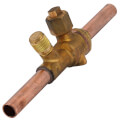

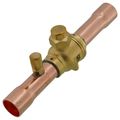
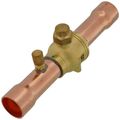

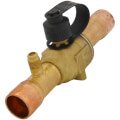
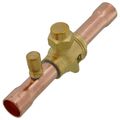
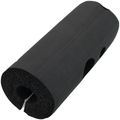


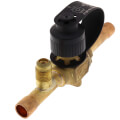
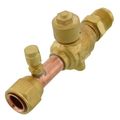
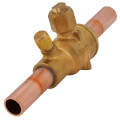
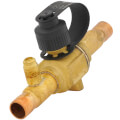
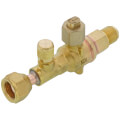
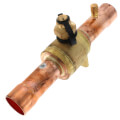

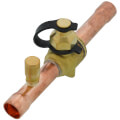
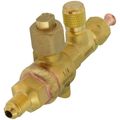
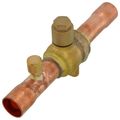
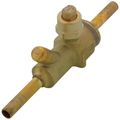

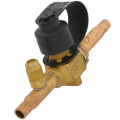

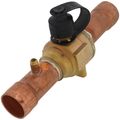
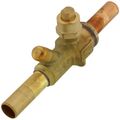
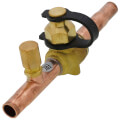
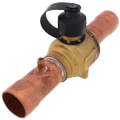
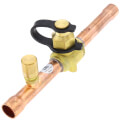
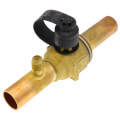
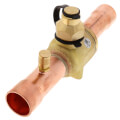
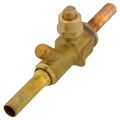
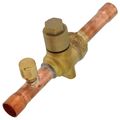
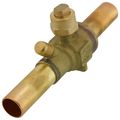
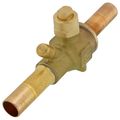
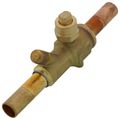
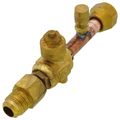
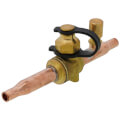
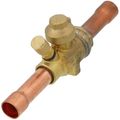

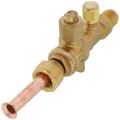
Refrigeration ball valves are quarter-turn shutoff valves installed in refrigerant lines to isolate a section of the circuit for service, repair, or system charging. A rotating ball with a bored passage opens or closes the line fully with a single quarter turn, unlike a globe or needle valve that needs multiple turns to seat. Refrigeration and HVAC technicians install these valves at compressors, receivers, and liquid or suction line branches so a section of the system can be closed off without recovering the entire refrigerant charge. Ball valves are rated for specific refrigerant types and working pressures, and matching that rating to the system is part of choosing the correct valve. Having isolation points built into a refrigerant circuit cuts down on refrigerant loss and labor time during routine service calls.
Subcategories
- Access Ball Valves: Access ball valves include a schrader-style port or gauge connection alongside the shutoff function, letting a technician read pressure or add refrigerant without breaking the line. These are common at service points on condensing units and compressor racks where technicians connect gauges regularly. Access valves reduce the number of separate brazed fittings needed at a given service point. Choosing an access valve with the correct port thread avoids a fitting mismatch with existing gauge sets.
- Line Isolation Ball Valves: Line isolation valves shut off a straight section of liquid or suction line without an integrated service port, typically installed in pairs to bracket a component that needs periodic replacement, such as a filter drier or sight glass. Isolating that section lets a technician swap the component without recovering refrigerant from the whole system. These valves are sized to match the existing line diameter through a solder or flare connection. Installers position isolation valves close enough to the serviced component to minimize the refrigerant trapped between them.
- Ball Valves for Compressors and Receivers: Compressor and receiver ball valves mount directly at the equipment's suction, discharge, or liquid connections and are often supplied as OEM replacement parts matched to a specific compressor or receiver model. These valves see more thermal cycling and vibration than line valves elsewhere in the system, so they're built for a higher duty cycle. Replacing a worn compressor valve restores a tight shutoff point for future service without needing to replace the compressor itself. Confirming the port size and connection type against the existing equipment prevents an improper fit.
Buying Guide
Selecting a refrigeration ball valve starts with confirming the connection type and size needed for the line it will serve, whether that's a solder, flare, or threaded fitting, since an adapter at the valve reduces flow and adds another potential leak point. Refrigeration ball valves are rated for specific refrigerant compatibility and maximum working pressure, and using a valve rated below the system's operating pressure creates a safety risk rather than just a performance shortfall.
Port configuration is the next decision: a valve with an integrated access port suits a location where gauge connections happen regularly, while a straight isolation valve without a port works better at a fixed service boundary, such as bracketing a filter drier. Technicians also check the valve's body material and seal compatibility against the refrigerant type in use, since older valves built for legacy refrigerants may not seal reliably with newer blends. For compressor or receiver-mounted valves, matching the OEM part number to the existing equipment matters more than a generic equivalent, since bolt patterns and port spacing vary between manufacturers. Reviewing connection type, pressure rating, and refrigerant compatibility together before ordering keeps a replacement valve from becoming a second trip back to the supply house.
Frequently Asked Questions
What's the difference between an access ball valve and a standard isolation valve?
An access valve includes a schrader or gauge port built into the body so a technician can check pressure or add refrigerant without breaking the line. A standard isolation valve only opens and closes the line and doesn't have that connection point. Choosing between the two comes down to whether the installation location needs regular gauge access or just a fixed shutoff point.
Can a refrigeration ball valve be used with any refrigerant type?
No. Valve seals and body materials are rated for specific refrigerant families, and using an incompatible refrigerant can cause the seal to degrade and leak over time. Checking the valve's refrigerant compatibility rating against the system's charge before installation avoids a seal failure down the line. Manufacturer documentation lists which refrigerant types a given valve is rated for.
Why install isolation valves around a filter drier instead of just brazing it in directly?
Isolation valves let a technician replace the filter drier without recovering refrigerant from the entire system. Without valves on both sides, replacing that single component means pulling down the whole charge first. The added labor time for occasional filter drier service is usually the deciding factor for including isolation valves during initial installation.
How is a refrigeration ball valve sized for a job?
Valve size follows the line diameter it connects to, matched through a solder, flare, or threaded connection rather than the compressor tonnage directly. Undersizing a valve relative to the line restricts flow, while an oversized valve doesn't seat properly at the connection. Checking the existing line diameter before ordering confirms the correct valve size.
What causes a refrigeration ball valve to start leaking?
Seal wear from age, refrigerant incompatibility, or physical damage from over-tightening during installation are the most common causes. Vibration at compressor-mounted valves can also loosen a connection over time if it wasn't torqued to the manufacturer's specification. Replacing the valve rather than attempting a field seal repair is usually the more reliable fix once a leak is confirmed.
