



Filters
SORT
Product Availability –
Application –
Review Score –
 --%3E %3Csvg version='1.1' id='Fill' xmlns='http://www.w3.org/2000/svg' xmlns:xlink='http://www.w3.org/1999/xlink' x='0px' y='0px' viewBox='0 0 100 100' enable-background='new 0 0 100 100' xml:space='preserve'%3E %3Cpath fill='%23F15C02' d='M79.44,0.95H20.56C9.78,0.95,0.95,9.78,0.95,20.56v58.87c0,10.79,8.82,19.61,19.61,19.61h58.87 c10.79,0,19.61-8.83,19.61-19.61V20.56C99.05,9.78,90.22,0.95,79.44,0.95z M65.38,58.24l9.38,29.58L49.69,69.78L24.5,87.82 l9.34-29.6L8.8,39.6l30.73-0.17c0,0,6.98-19.61,10-28.93c0.54,1.36,9.88,29.1,9.88,29.1H91.2L65.38,58.24z'/%3E %3C/svg%3E)
Price Range –
Resideo & Honeywell Home Switching Relays





 --%3E %3Csvg version='1.1' id='No-RB' xmlns='http://www.w3.org/2000/svg' xmlns:xlink='http://www.w3.org/1999/xlink' x='0px' y='0px' viewBox='0 0 100 100' enable-background='new 0 0 100 100' xml:space='preserve'%3E %3Cpath fill='%23CECECE' d='M79.44,0.95H20.56C9.78,0.95,0.95,9.78,0.95,20.56v58.87c0,10.79,8.82,19.61,19.61,19.61h58.87 c10.79,0,19.61-8.83,19.61-19.61V20.56C99.05,9.78,90.22,0.95,79.44,0.95z M65.38,58.24l9.38,29.58L49.69,69.78L24.5,87.82 l9.34-29.6L8.8,39.6l30.73-0.17c0,0,6.98-19.61,10-28.93c0.54,1.36,9.88,29.1,9.88,29.1H91.2L65.38,58.24z'/%3E %3C/svg%3E)


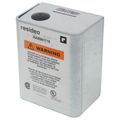

Resideo & Honeywell Home Switching Relays are low voltage control devices that connect a thermostat circuit to a furnace, air handler, or accessory load such as a humidifier or electronic air cleaner. Fan centers like the R8285D5001 add a 50 VA transformer and a DPST switch to a paired R8222U relay, giving a single assembly that can power a fan motor and a secondary load from one 24 volt source. Other configurations, including SPST, SPDT, and DPDT switching, let a technician match the relay to a specific fan motor and limit controller setup. General purpose relays such as the R8222 and R8228 use a 24 Vac coil and slide into a fan center base without rewiring the low voltage side. Distributors, HVAC contractors, and control panel builders rely on these parts to keep replacement jobs straightforward and to standardize wiring across multiple furnace brands.
Subcategories
- DPST Fan Centers: DPST fan centers pair a 50 VA transformer with a double pole single throw switch, as seen in the R8285D5001 that ships with a matching R8222U relay. Installers use this configuration to power a single speed fan motor and a limit controller from one low voltage source. It suits standard gas furnace replacements where the existing wiring already expects a DPST switching action.
- DPDT Fan Centers: DPDT fan centers, such as the R8285B1053 built around a 40 VA transformer and an R8222B relay, add a second switching path for systems running an electronic air cleaner, humidifier, and blower motor together. Technicians select this type when a job calls for coordinated control of more than one accessory load off a single fan center. The double pole double throw contact set keeps each accessory isolated on its own circuit.
- SPST and SPDT Fan Center Relays: SPST and SPDT fan center relays handle one speed and two speed fan motor applications respectively, giving a simpler switching path where only the blower motor needs low voltage control. Contractors pick SPST for single speed blowers and SPDT when a furnace or air handler runs a two speed fan motor. Both configurations mount into the same R8285 base used across the switching relay lineup.
- General Purpose Switching Relays: General purpose switching relays like the R8222 and heavy duty R8228 use a 24 Vac coil and snap into a fan center base without additional low voltage wiring. Panel builders and service technicians stock these as standalone replacement relays when only the relay, not the full fan center assembly, has failed. The R8228 heavy duty version handles higher load applications than the standard R8222.
Buying Guide
Start a switching relay replacement by matching the existing fan center's switching action rather than just the model number, since a DPST unit like the R8285D5001 cannot substitute for a DPDT unit like the R8285B1053 without rewiring the low voltage side. Pull the old relay and read the letter suffix stamped on the housing; that letter identifies whether the unit is SPST, SPDT, DPST, or DPDT, and it should match the wiring diagram on the furnace or air handler. Check the transformer rating next. A 40 VA transformer supports lighter accessory loads, while a 50 VA transformer leaves more headroom for a humidifier, electronic air cleaner, or two speed blower motor running at the same time. Confirm the coil voltage on any standalone general purpose relay, since the R8222 and R8228 both use a 24 Vac coil but differ in load capacity. Resideo & Honeywell Home Switching Relays generally ship as a fan center and relay pair, so ordering the two together avoids a mismatch between the base and the plug in relay. Keep the original wiring diagram on hand during installation, since low voltage terminals are labeled differently across R8285 letter variants.
Frequently Asked Questions
What's the difference between a DPST and DPDT fan center?
A DPST fan center, like the R8285D5001, uses a double pole single throw switch to control one accessory load alongside the fan motor. A DPDT fan center, like the R8285B1053, adds a second switching path so two accessories, such as a humidifier and an electronic air cleaner, can run off the same low voltage source. Matching the switch type to the furnace wiring diagram prevents a rewiring job during replacement.
Can a general purpose relay replace a full fan center?
A general purpose relay such as the R8222 or R8228 only replaces the plug in relay portion of a fan center, not the transformer base. Technicians use a standalone relay when the base itself still tests good and only the relay has failed. The R8228 heavy duty version handles larger loads than the standard R8222 coil.
How is transformer VA rating chosen for a fan center?
Transformer VA rating depends on the combined draw of the fan motor and any accessory loads wired to the fan center. A 40 VA transformer, found in the R8285B1053, covers lighter accessory setups, while a 50 VA transformer, used in the R8285D5001, leaves more capacity for a humidifier or electronic air cleaner running alongside the blower.
What furnace applications use SPST or SPDT switching relays?
SPST switching relays control single speed fan motor applications where only one blower speed needs low voltage switching. SPDT switching relays handle two speed fan motor setups, switching between low and high blower speeds as the limit controller calls for it. Both configurations share the same R8285 fan center base.
What coil voltage do Resideo switching relays use?
Resideo switching relays in the R8222 and R8228 series use a 24 Vac coil, matching standard low voltage thermostat and control circuits. The shared coil voltage lets the relay drop into most fan center bases without changing the transformer or the thermostat wiring. Confirming coil voltage against the furnace's control transformer avoids a mismatched replacement.
