




Filters
SORT
Product Availability –
Brand –
Size –
Material –
Review Score –
 --%3E %3Csvg version='1.1' id='Fill' xmlns='http://www.w3.org/2000/svg' xmlns:xlink='http://www.w3.org/1999/xlink' x='0px' y='0px' viewBox='0 0 100 100' enable-background='new 0 0 100 100' xml:space='preserve'%3E %3Cpath fill='%23F15C02' d='M79.44,0.95H20.56C9.78,0.95,0.95,9.78,0.95,20.56v58.87c0,10.79,8.82,19.61,19.61,19.61h58.87 c10.79,0,19.61-8.83,19.61-19.61V20.56C99.05,9.78,90.22,0.95,79.44,0.95z M65.38,58.24l9.38,29.58L49.69,69.78L24.5,87.82 l9.34-29.6L8.8,39.6l30.73-0.17c0,0,6.98-19.61,10-28.93c0.54,1.36,9.88,29.1,9.88,29.1H91.2L65.38,58.24z'/%3E %3C/svg%3E)
Price Range –
Steel Conduit Hangers


 --%3E %3Csvg version='1.1' id='No-RB' xmlns='http://www.w3.org/2000/svg' xmlns:xlink='http://www.w3.org/1999/xlink' x='0px' y='0px' viewBox='0 0 100 100' enable-background='new 0 0 100 100' xml:space='preserve'%3E %3Cpath fill='%23CECECE' d='M79.44,0.95H20.56C9.78,0.95,0.95,9.78,0.95,20.56v58.87c0,10.79,8.82,19.61,19.61,19.61h58.87 c10.79,0,19.61-8.83,19.61-19.61V20.56C99.05,9.78,90.22,0.95,79.44,0.95z M65.38,58.24l9.38,29.58L49.69,69.78L24.5,87.82 l9.34-29.6L8.8,39.6l30.73-0.17c0,0,6.98-19.61,10-28.93c0.54,1.36,9.88,29.1,9.88,29.1H91.2L65.38,58.24z'/%3E %3C/svg%3E)



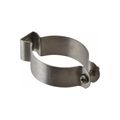


Steel Conduit Hangers are the supports that carry electrical metallic tubing, rigid conduit, and armored cable along a run without letting the conduit sag or stress its connections. The category covers trapeze hangers for multiple parallel conduit runs, clevis hangers, one-hole straps, and beam clamps, and trapeze pipe hangers such as the ASC Engineered Solutions 69H are built from carbon steel with a pre-galvanized finish rated to ASTM A653. Electricians pick a hanger style based on how many conduits share a support point, the mounting surface available, such as a beam flange, strut channel, or wood framing, and the code required spacing between supports. Choosing the correct steel conduit hanger for the run keeps conduit level, protects wire insulation from abrasion at bend points, and passes inspection on commercial and industrial jobs where support spacing is checked closely.
Subcategories
- Trapeze Hangers: Trapeze hangers use a pair of vertical hanger rods with a horizontal steel channel between them to support several conduits running parallel on one support point. Electricians on commercial jobs with dense conduit racks use trapeze hangers to cut down the number of individual supports needed compared to a strut trapeze built piece by piece on site. A pre-fabricated bracket style trapeze support can reduce the part count at each support location by as much as 75 percent compared to a traditional built up strut trapeze assembly. Trapeze pipe hangers such as the ASC Engineered Solutions 69H use carbon steel with a pre-galvanized finish per ASTM A653.
- Clevis Hangers: Clevis hangers wrap around a single conduit or pipe and hang from a threaded rod, forming a pivoting cradle that lets the conduit hang plumb even on an angled support point. Electricians use clevis hangers most on individual conduit runs suspended from an overhead structure rather than dense multi-conduit racks. The clevis design allows some adjustment after installation, which helps when leveling a run across an uneven ceiling. nVent Caddy manufactures clevis hangers sized to match standard conduit and pipe trade sizes.
- One-Hole Straps: One-hole straps secure a single run of conduit directly to a wall, joist, or stud with one fastener through the strap's center hole. Residential and light commercial electricians reach for one-hole straps on short runs along framing members where a suspended hanger isn't practical. The strap wraps the conduit snugly to keep it from rotating or pulling away from the mounting surface. nVent Caddy offers one-hole straps sized for common electrical metallic tubing and rigid conduit diameters.
- Beam Clamps: Beam clamps attach a hanger rod directly to a structural steel beam flange without drilling or welding into the structure. Electricians and mechanical contractors use beam clamps when a conduit or trapeze support needs to hang from structural steel rather than a wall or ceiling deck. Clamp jaws tighten against the beam flange from underneath, and clamp styles vary by the flange thickness range they're rated to grip. Choosing a beam clamp rated for the actual flange thickness on site keeps the connection tight under vibration.
Buying Guide
Start by counting how many conduits need support at a given point along the run. A single conduit suspended from an overhead structure calls for a clevis hanger, while several conduits sharing one support point call for a trapeze hanger to avoid installing individual clamps at every location. A conduit run fastened flat against a wall, joist, or stud calls for a one-hole strap instead of a suspended hanger. Identify the mounting surface next, since Steel Conduit Hangers are built around different attachment methods for wood framing, strut channel, concrete decking, and structural steel beams. A run that needs to hang from a beam flange without drilling into the structure calls for a beam clamp rated to the flange's actual thickness. Material finish matters on jobs exposed to moisture or corrosive air, since a pre-galvanized finish rated to ASTM A653 holds up better over time than an unfinished or lightly coated hanger. Confirm the trade size range a hanger or strap covers before ordering, since undersized hardware won't close fully around the conduit and oversized hardware leaves the run loose enough to sag. Local electrical code sets maximum spacing between supports based on conduit type and trade size, so checking that spacing table before laying out a run avoids failing inspection and having to add supports after the fact.
Frequently Asked Questions
When should a trapeze hanger be used instead of individual clamps?
Trapeze hangers make sense whenever several conduits share the same support point along a run, since a horizontal channel between two hanger rods carries multiple conduits at once. Individual clamps at every support location add labor and parts that a single trapeze assembly avoids. A pre-fabricated trapeze bracket can cut part count at each support point by as much as 75 percent compared to a built up strut trapeze.
What's the difference between a clevis hanger and a one-hole strap?
A clevis hanger suspends a single conduit from an overhead threaded rod and pivots slightly to keep the conduit plumb, while a one-hole strap fastens a conduit directly flat against a wall, joist, or stud. Overhead runs away from framing typically use clevis hangers, and runs along framing members typically use one-hole straps. Picking between them comes down to whether the conduit needs to hang from a rod or mount flush to a surface.
Can a beam clamp be used without drilling into the steel structure?
Beam clamps attach to a structural beam flange by tightening clamp jaws against the flange from underneath, so no drilling or welding into the beam is needed. Avoiding drilled holes keeps the structural steel's original rating intact. Selecting a clamp rated for the actual flange thickness on site keeps the connection tight under vibration.
Why does the finish on a steel conduit hanger matter?
A pre-galvanized finish rated to ASTM A653, like the finish used on the ASC Engineered Solutions 69H trapeze hanger, resists corrosion better than an unfinished or lightly coated hanger. Damp basements, exterior conduit runs, and industrial environments with corrosive air all shorten the service life of an unprotected hanger. Choosing a properly finished hanger for the environment avoids replacing hardware partway through a building's service life.
How is maximum support spacing determined for a conduit run?
Local electrical code sets maximum spacing between supports based on the conduit's material and trade size, with larger and more rigid conduit generally allowed longer spans between supports. Checking the applicable code table before laying out a run keeps the job compliant on inspection. Adding supports after a failed inspection costs more time than planning spacing correctly the first time.
