




Trapzilla

 --%3E %3Csvg version='1.1' id='No-RB' xmlns='http://www.w3.org/2000/svg' xmlns:xlink='http://www.w3.org/1999/xlink' x='0px' y='0px' viewBox='0 0 100 100' enable-background='new 0 0 100 100' xml:space='preserve'%3E %3Cpath fill='%23CECECE' d='M79.44,0.95H20.56C9.78,0.95,0.95,9.78,0.95,20.56v58.87c0,10.79,8.82,19.61,19.61,19.61h58.87 c10.79,0,19.61-8.83,19.61-19.61V20.56C99.05,9.78,90.22,0.95,79.44,0.95z M65.38,58.24l9.38,29.58L49.69,69.78L24.5,87.82 l9.34-29.6L8.8,39.6l30.73-0.17c0,0,6.98-19.61,10-28.93c0.54,1.36,9.88,29.1,9.88,29.1H91.2L65.38,58.24z'/%3E %3C/svg%3E)
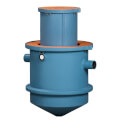
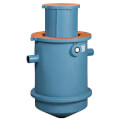
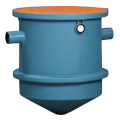
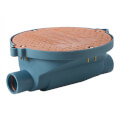

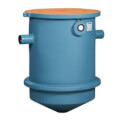
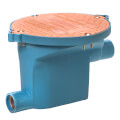
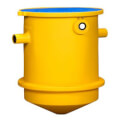
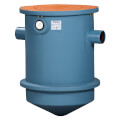
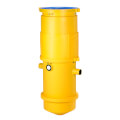
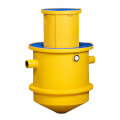
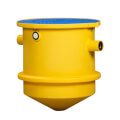
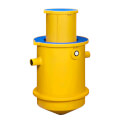
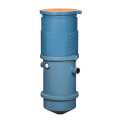
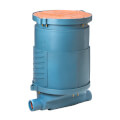
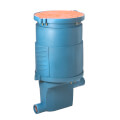

Trapzilla is a grease interceptor line manufactured by Thermaco, Inc., a wastewater separation technology company based in Asheboro, North Carolina. Thermaco has focused on oil and grease extraction from commercial kitchen wastewater for more than 40 years. It built its reputation on the Big Dipper automatic grease recovery unit before introducing Trapzilla as a higher capacity option.
Trapzilla units are designed for larger commercial and institutional kitchens that need more grease retention capacity than a standard under sink interceptor can provide. They still fit a compact in ground footprint.
Product Lines
The Trapzilla lineup includes the TZ-160, TZ-400, and TZ-525. The TZ-160 is rated for 35 GPM with 167 pounds of grease retention capacity and 3 inch inlet and outlet connections. The TZ-400 is rated for 75 GPM with 405 pounds of capacity and 4 inch connections. The TZ-525 is rated for 50 GPM with 525 pounds of capacity, 4 inch connections, and a stated 99 percent grease removal efficiency.
Beyond the interceptor tanks themselves, Thermaco supplies solids separators, sample ports, replacement parts, and other accessories to round out a complete Trapzilla installation. Units are certified to UPC, PDI, and ASME standards.
Why Contractors Specify Trapzilla
Foodservice and institutional kitchen projects often call for a grease interceptor that delivers high capacity without consuming excess floor space. Trapzilla's compact in ground design addresses that constraint directly.
Corrosion resistant construction and long service life give contractors confidence when specifying Thermaco products. Big Dipper units, for example, are still operating decades after installation. This matters in kitchens where interceptor failures would be costly to remediate.
Third party certification to UPC, PDI, and ASME standards also simplifies code compliance conversations with local plumbing inspectors.
How to Choose Trapzilla Products
Selecting the right Trapzilla model starts with matching flow rate. Kitchen wastewater discharge in gallons per minute should fall within the GPM rating of the chosen unit, whether that is the TZ-160, TZ-400, or TZ-525.
Grease retention capacity matters just as much as flow rate. This is particularly true for high volume kitchens, such as institutional cafeterias or multi unit foodservice operations, that generate grease loads faster than a smaller interceptor can hold.
Inlet and outlet sizing should align with existing waste line diameter to avoid additional fittings or transitions. The TZ-160 has 3 inch connections, while the TZ-400 and TZ-525 have 4 inch connections.
Local plumbing code often dictates minimum interceptor capacity based on kitchen type and meal volume. Confirming those requirements before finalizing a model helps avoid a failed inspection.
Frequently Asked Questions
What is the difference between Trapzilla and Thermaco's Big Dipper line?
Big Dipper is the automatic grease recovery unit on which Thermaco built its reputation. Trapzilla was introduced later as a higher capacity, compact in ground interceptor built for larger kitchens.
How is a Trapzilla unit sized for a commercial kitchen?
Sizing starts with the kitchen's wastewater flow rate in gallons per minute and its expected grease load in pounds. Those values are then matched against the GPM and capacity ratings of the TZ-160, TZ-400, or TZ-525.
Are Trapzilla interceptors designed for in ground installation?
Yes. Trapzilla units are designed with a compact in ground footprint. They suit larger commercial and institutional kitchens that need more grease retention capacity than a standard under sink interceptor can provide.
What certifications do Trapzilla interceptors carry?
Trapzilla units are certified to UPC, PDI, and ASME standards. Third party certification also simplifies code compliance conversations with local plumbing inspectors.
Are replacement parts and accessories offered for Trapzilla systems?
Yes. Thermaco supplies solids separators, sample ports, replacement parts, and other accessories to round out a complete Trapzilla installation.
