



Water Gauges and Gauge Glass

 --%3E %3Csvg version='1.1' id='No-RB' xmlns='http://www.w3.org/2000/svg' xmlns:xlink='http://www.w3.org/1999/xlink' x='0px' y='0px' viewBox='0 0 100 100' enable-background='new 0 0 100 100' xml:space='preserve'%3E %3Cpath fill='%23CECECE' d='M79.44,0.95H20.56C9.78,0.95,0.95,9.78,0.95,20.56v58.87c0,10.79,8.82,19.61,19.61,19.61h58.87 c10.79,0,19.61-8.83,19.61-19.61V20.56C99.05,9.78,90.22,0.95,79.44,0.95z M65.38,58.24l9.38,29.58L49.69,69.78L24.5,87.82 l9.34-29.6L8.8,39.6l30.73-0.17c0,0,6.98-19.61,10-28.93c0.54,1.36,9.88,29.1,9.88,29.1H91.2L65.38,58.24z'/%3E %3C/svg%3E)


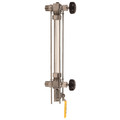
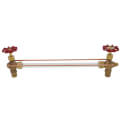
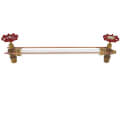
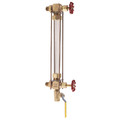
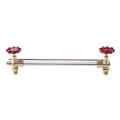
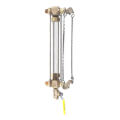
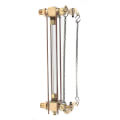
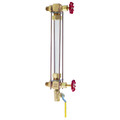
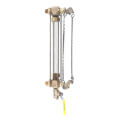
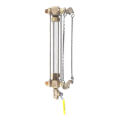
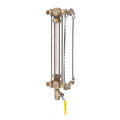

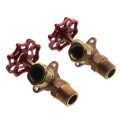
Water gauges and gauge glass let a technician visually confirm the water level inside a boiler, tank, or pressure vessel without opening the vessel itself. A gauge glass assembly typically consists of a clear glass or polymer tube mounted between two shutoff cocks, connected to the vessel at two points so the liquid level inside the glass matches the actual level inside the tank. Steam boilers rely on this visual check as a critical safety component, since running a boiler with a water level too low can damage the heat exchanger or create a dangerous condition. Reflex and tubular styles cover most residential and commercial applications, with reflex glass using a prism pattern that makes the water line easier to read at a distance. Replacing worn gauge glass tubes, washers, and cocks on a regular schedule keeps this visual check reliable rather than becoming a maintenance item that gets overlooked.
Subcategories
- Gauge Glass Tubes: Gauge glass tubes are the clear or reflex-pattern glass sections mounted between the top and bottom gauge cocks, providing the direct visual reference for water level. Tubes come in specific lengths and diameters that must match the existing gauge assembly's cock spacing exactly. Because these tubes handle both pressure and temperature extremes inside a boiler, using a tube rated for the system's actual operating conditions is a safety requirement, not just a fit issue. Cracked or clouded tubes are a common reason a gauge glass assembly gets replaced even when the surrounding hardware is still functional.
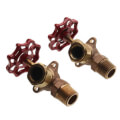
- Gauge Cocks and Fittings: Gauge cocks are the shutoff valves at the top and bottom of a gauge glass assembly, allowing the glass tube to be isolated from the vessel for replacement or cleaning without draining the entire system. These fittings typically include a drain or blowdown function that lets a technician flush sediment out of the gauge glass periodically to keep the reading accurate. Thread size and connection type need to match both the vessel's tapping and the gauge glass tube being installed. A cock that doesn't seal fully after closing is a common cause of a gauge glass replacement turning into an unplanned system shutdown.
- Reflex and Tubular Gauge Glass Sets: Complete gauge glass sets bundle the tube, washers, and sometimes the cocks together, sized for a specific boiler or tank model rather than requiring separate component-by-component selection. Reflex sets use a prism-cut glass surface that makes the water-to-steam boundary appear as a sharp light-and-dark line, which is easier to read from a distance than a plain tubular glass. Tubular sets remain common on smaller residential boilers where the shorter viewing distance makes a plain glass tube sufficient. Choosing between reflex and tubular styles often comes down to matching what the existing boiler was originally equipped with.
- Gauge Glass Washers and Gaskets: Washers and gaskets seal the connection points between the gauge glass tube and the cocks above and below it, and they wear out from repeated heat cycling well before the glass or the cocks themselves fail. A worn washer typically shows up as a slow weep or drip at the top or bottom connection point rather than a sudden failure. Material selection, commonly rubber or a heat-resistant composite, needs to match the system's operating temperature and pressure. Replacing washers during any gauge glass service, rather than waiting for a visible leak, is a common preventive maintenance step.
Buying Guide
Selecting the correct water gauge and gauge glass components starts with matching the existing gauge assembly's dimensions exactly, since tube length, diameter, and cock spacing vary between boiler and tank manufacturers and even between models from the same manufacturer. Measuring the current setup, rather than assuming a standard size will fit, avoids ordering a replacement that doesn't seal properly against the existing cocks.
Pressure and temperature rating matter just as much as physical fit. Water Gauges and Gauge Glass components installed on a steam boiler face higher temperatures and pressures than those on a simple water tank, and using an underrated tube or washer in a high-pressure application creates a genuine safety risk rather than just a shortened service life.
Reflex versus tubular style is largely a matter of matching what the system already uses, since converting from one style to the other usually means replacing the cocks as well as the glass. Technicians servicing an older boiler also check whether washers and gaskets are sold separately or only as part of a complete kit, since sourcing individual wear components can be more economical for routine maintenance than replacing an entire assembly.
Frequently Asked Questions
How often should gauge glass be replaced on a steam boiler?
There's no single fixed interval, since wear depends on operating temperature, water chemistry, and how often the gauge cocks get exercised for blowdown. Inspecting the glass for clouding, cracking, or sediment buildup during regular boiler maintenance is the standard way to catch a tube that needs replacement before it fails.
What's the difference between reflex and tubular gauge glass?
Reflex glass has a prism-cut surface that makes the water line appear as a distinct light-and-dark boundary, which is easier to read from a distance. Tubular glass is a plain clear tube that works well at closer viewing distances, commonly found on smaller residential boilers. The choice generally follows what the existing equipment was designed for.
Why does a gauge glass assembly need a blowdown function?
Blowdown lets sediment that settles inside the gauge glass tube get flushed out periodically, keeping the water level reading accurate. Without regular blowdown, sediment buildup can cause the glass to show a level that doesn't match the actual water level inside the boiler, which defeats the purpose of having a visual gauge.
Can gauge glass washers be replaced without draining the whole boiler?
Yes, that's the purpose of the gauge cocks at the top and bottom of the assembly. Closing both cocks isolates the gauge glass from the boiler, allowing the tube and washers to be serviced without draining the entire system.
What causes a gauge glass tube to crack?
Thermal stress from rapid temperature changes, age-related brittleness in the glass, and over-tightening the connecting nuts during installation are common causes of cracking. Using a tube rated for the system's actual operating temperature and pressure, and tightening connections to the manufacturer's specification rather than as tight as possible, reduces the risk of premature cracking.
