




'/%3E%3C/svg%3E)
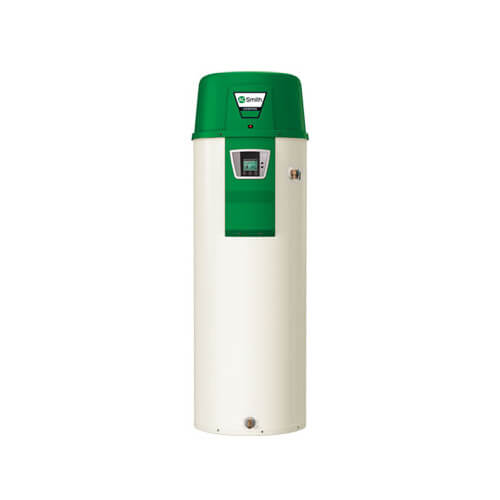
50 Gallon GDHE-50 100,000 BTU Vertex 100 Power Direct Vent Residential Gas Water Heater - Tall (NG)
 --%3E %3Csvg version='1.1' id='Fill' xmlns='http://www.w3.org/2000/svg' xmlns:xlink='http://www.w3.org/1999/xlink' x='0px' y='0px' viewBox='0 0 100 100' enable-background='new 0 0 100 100' xml:space='preserve'%3E %3Cpath fill='%23F15C02' d='M79.44,0.95H20.56C9.78,0.95,0.95,9.78,0.95,20.56v58.87c0,10.79,8.82,19.61,19.61,19.61h58.87 c10.79,0,19.61-8.83,19.61-19.61V20.56C99.05,9.78,90.22,0.95,79.44,0.95z M65.38,58.24l9.38,29.58L49.69,69.78L24.5,87.82 l9.34-29.6L8.8,39.6l30.73-0.17c0,0,6.98-19.61,10-28.93c0.54,1.36,9.88,29.1,9.88,29.1H91.2L65.38,58.24z'/%3E %3C/svg%3E)
 --%3E %3Csvg version='1.1' id='Half' xmlns='http://www.w3.org/2000/svg' xmlns:xlink='http://www.w3.org/1999/xlink' x='0px' y='0px' viewBox='0 0 100 100' enable-background='new 0 0 100 100' xml:space='preserve'%3E %3Cg%3E %3Cpath fill='%23F15C02' d='M30.05,70.23l3.79-12.01L8.8,39.6l30.73-0.17c0,0,6.98-19.61,10-28.93c0.54,1.36,9.88,29.1,9.88,29.1h1.58 L93.71,7.18c-3.58-3.82-8.66-6.23-14.28-6.23H20.56C9.78,0.95,0.95,9.78,0.95,20.56v58.87c0,5.41,2.22,10.32,5.79,13.88 L30.05,70.23z'/%3E %3C/g%3E %3Cpath fill='%23FBC8B4' d='M93.71,7.18L60.98,39.6H91.2L65.38,58.24l9.38,29.58L49.69,69.78L24.5,87.82l5.55-17.59L6.75,93.32 c3.55,3.54,8.44,5.73,13.82,5.73h58.87c10.79,0,19.61-8.83,19.61-19.61V20.56C99.05,15.4,97.01,10.69,93.71,7.18z'/%3E %3C/svg%3E)
' fill='%23F15C02' d='M49 0C21.938 0 0 21.938 0 49s21.938 49 49 49 49-21.938 49-49S76.062 0 49 0m0 82.709a7.54 7.54 0 1 1 0-15.08 7.54 7.54 0 0 1 0 15.08m7.54-28.412a7.541 7.541 0 0 1-15.08 0V22.831a7.54 7.54 0 0 1 15.08 0v31.466z'/%3E%3C/svg%3E)
MANUALS (5)
 --%3E %3Csvg version='1.1' id='With-RB' xmlns='http://www.w3.org/2000/svg' xmlns:xlink='http://www.w3.org/1999/xlink' x='0px' y='0px' viewBox='0 0 100 100' enable-background='new 0 0 100 100' xml:space='preserve'%3E %3Cpath fill='%23FBC8B4' d='M79.44,0.95H20.56C9.78,0.95,0.95,9.78,0.95,20.56v58.87c0,10.79,8.82,19.61,19.61,19.61h58.87 c10.79,0,19.61-8.83,19.61-19.61V20.56C99.05,9.78,90.22,0.95,79.44,0.95z M65.38,58.24l9.38,29.58L49.69,69.78L24.5,87.82 l9.34-29.6L8.8,39.6l30.73-0.17c0,0,6.98-19.61,10-28.93c0.54,1.36,9.88,29.1,9.88,29.1H91.2L65.38,58.24z'/%3E %3C/svg%3E)
Product Highlights


Description
Product Details:
- Delivers 100-gallon first hour rating
- Versatile ENERGY STAR certified power direct vent design delivers up to 0.88 Uniform Energy Factor (96% Thermal Efficiency)
- Advanced high efficiency condensing design delivers energy savings & continuous hot water at a constant flow of over 4 gallons per minute
- Helical coil internal heat exchanger lengthens heat transfer cycle and reduces lime & scale build-up to maintain high efficiency operation
- Power direct vent design installs with 2" or 3" PVC, CPVC or polypropylene pipe terminating through outside wall
- Top fired Ultra-Low NOX gas burner, meets or exceeds emission requirements in California & Utah
- Push-button piezo ignitor makes lighting pilot fast & easy
- Patented Blue Diamond glass tank lining protects against corrosion
- 6-year limited tank and parts warranty
- The Vertex 50-Gallon Ultra-Low NOx Power Direct Vent Natural Gas Water Heater is designed specifically to generate a constant flow of 4 gallons per minute, resulting in continuous hot water for your home. Featuring a 50-gallon (nominal) tank and a 100,000 BTU gas burner, the GDHE-50 Power Direct Vent delivers a thermal efficiency of 96%, a Uniform Energy Factor of 0.88, and a recovery rate of 129 gallons per hour. It carries a 6-year limited warranty, and meets Ultra-Low NOx emission requirements. Environmentally-friendly insulation and factory-installed heat trap nipples reduce heat loss for maximum energy savings. This ProLine water heater is designed with A. O. Smith's superior commercial-grade tank protection. Advanced tank features include stainless steel CoreGard anode rod, Blue Diamond glass lining and DynaClean automatic sediment-cleaning system, all designed to help protect the tank from the corrosive effects of water and extend the life of the water heater. A. O. Smith's ProLine water heaters are residential products built to commercial-grade standards and are only available for purchase through professional wholesalers and contractors.
Specs
| Intended Household: | 3-4 Person |
|---|---|
| Application: | Plumbing |
| Fuel Type: | Natural Gas |
| Capacity (Gallons): | 49.8 |
| BTU Input: | 100000 |
| Efficiency: | 96% |
| Vent Size: | 2" |
| Vent Type: | Power Vent PVC |
| Water Connection: | 3/4" |
| Gas Connection: | 1/2" |
| ASME: | No |
| 1st Hour Delivery (Gallons): | 164 |
| Recovery 90°F Rise: | 129 GPH |
| Voltage: | 120v |
| Max Pressure (PSI): | 150 |
| Max Pressure: | 14" W.C. 8" W.C. (Propane) |
| Max Altitude (Feet): | 10100 |
| Energy Star Rated: | Yes |
| Depth (Inches): | 22" |
| Height (Inches): | 66.75" |
| Diameter (Inches): | 22" |
| Weight (lbs): | 255 lbs |
| Warranty: | 6 Year Tank/6 Year Parts Limited |


Questions?
You May Also Need
Product Reviews
Most Liked Positive Review
So far I'm very impressed
Most Liked Negative Review
Great when new but internally leaked after only 3.5 yrs
Great water heater

I already have. 2nd one.
I love this water heater!
Better Than an Instant Combi Unit!
Water Heater
my customers love these water heaters
third tank
Great water heater
works great, but terrible igniter issue
Buyer beware! Performs ok WHEN it works
Product Q&A
64 QuestionsQ: How much propane will the unit burn on a one hour runtime
Asked by Dylan 11 years ago
Add your answer
Verified Reply- SupplyHouse StaffThe unit will burn 100,000 BTU in one hour of run time.
Q: What is the NOx emissions of the 50 Gallon Vertex 100?
Asked by The 'Mike Holmes' of Renovations 12 years ago
Add your answer
Verified Reply- SupplyHouse StaffThe Vertex complies with the ultra-low Nox emission requirements.
Q: What is the maximum water temperature that this unit can deliver
Asked by CAFO Fighter 12 years ago
Add your answer
I believe the specs say 160F.
Q: Regarding venting: Does the maximum number of 90 degrees elbows and the equivalent feet of pipe include both intake and exhaust? (i.e three 90 degrees elbows for intake and three 90 degrees elbows for exhaust)
Asked by Johny 12 years ago
Add your answer
Verified Reply- SupplyHouse StaffThe exhaust venting maximum number of elbows and length equivalents are for the exhaust portion of the venting system only. The intake is separate.
I cannot answer this question. I suggest calling the AOSmith help number which should be in the Vertex manual. When you call the number, and the phone-answering robot asks ‘Residential or commercial’, select ‘Commercial’ because AOSmith considers the Vertex a commercial unit. This should result in a shorter telephone wait. Their telephone support was very helpful to me the several times I called. Also, if a plumber installs the unit for you, he can call the help number, and they will talk him through the problem. I also suggest, if you are installing new gas pipe, that you consider what other gas appliances you might install in the future. For example, you might want to use an over-size gas pipe from the pressure reducer to prepare for future connection of a gas emergency generator, fireplace, barbecue, or stove top burners. For my propane Vertex, AO Smith told me that very little flex pipe was permissible in the gas supply—you should either run solid gas pipe all the way to the unit or limit any final flex pipe section to as short a length as possible. Ed Fiala
Q: I am building a new home and I believe based on my research the Vertex would be my best and least expensive option for domestic hot water and in-floor heat. Is there a better option that I might be missing? I'm looking at approximately 1300 sq' in basement slab in floor and approximately 1000' in the joist run for up stairs. Am I exceeding the Vertex's abilities or if not how many more sq' of floor space/pex could I run without an issue?
Asked by scott 13 years ago
Add your answer
I have had this in my 4000 sq ft home for the last 3 years with little to know issues. it heats the floor heat in the basement 2000 sq ft and gives us all the hot water we could ever want. this is with a family of 10 using it we never run out of hot water even with 3 showers going at the same time. I have had to replace the igniter 2 times though. just regular maintenance i guess. I sure would not look at anything different if i had to do it again. i used it to replace the old lennox system that we had. Scott in South Dakota
I would recommend this as I have a similar install. The one thing you need to be concerned with, which is what i'm facing, is the demand of hot water I need both for radiant heating and domestic use have started to compete. Living in the northern US, we've had a bitter cold winter and I have 4 kids in the house all demanding hot water, sometimes at the same time. I'm looking to purchase an additional Vertex, smaller gallons, dedicated to radiant as i'm planning on expanding to other floors in the house. Since you are building a new house I would plan on two from a space, cost and install perspective it is a lot cheaper now. this would then allow you to do a direct install which is more efficient than an indirect as I have bc you can't mix radiant w/ domestic and need a heat exchanger. Your distance should not be an issue as long as you get the pumps, zoning and the plumbing correct. Menards has even started selling the piece parts as well as pre-assembled systems. As it sounds like you've been researching and have seriously considered a Vertex you are not put off by the up front cost. In the long run, it is not only more cost efficient way to heat but more environmentally friendly, healthier and more comfortable! Good luck!
Q: I read somewhere that the Vertex benefits from a different type of anode when having a well water source... i have a well that supply's 100% of my water- also located at the end of long island, NY- tend to have lots of minerals & metals in water..
Asked by will 13 years ago
Add your answer
Team wrote: I also have a well, and have had this water heater for 2 years. Works great, never run out of hot water. This heater will be the heat source for my radiant floor heating system. Don't know about the different type anode.
The anode is generally designed to protect the water heater from electrolytic action. The anode is a sacrificial element. There may be certain conditions in the water that would influence the life of the anode. If there are conditions such as that you may want to have an appropriate water softener and possibly other treatment since the same chemical actions reacting with the anode may also have reactions with pluming and fixtures. there are conditions where the anode will react with the minerals in the water and produce some unwanted tastes or smells such as a sulfur smell.
Q: We'd like to use hot water radiant in 3 bath floors; can we use the Vertex 100 with circulating pump? Our normal hw needs are not great.
Asked by Hache 13 years ago
Add your answer
Yes, that is the setup that I have. It works great!! Hot water almost instantly (depends on the distance from the return recirculation line to the tap). I have never run out of hot water. The only thing that I might do is to add an interval timer to shut off the pump late in the evening (say 11:00PM) and turn it back on in the morning (say 6:00AM) mainly to save electricity. Also one day I might crawl into my attic and insulate the hot water pipes and the recirculating pipes. Good luck
There are two 3/4 ports on the unit for recirculating heating. I don't use it but the instructions indicated the option was possible. You will need to check with someone about the heat loading for your application. Also you will be recirculating potable water so you want to make sure the plumbing meets requirements for such water usage.
You should have plenty of heating capacity there... Sent from my Motorola Smartphone on the Now Network from Sprint!
I made my decision to purchase the Vertex water heater after extensive research. I was debating on a tank less system which I am so happy I did not choose. This. Vertex is by far the best water heater I ever had or saw .. My family is very pleased with performance and cost savings. We have a pretty high demand for hot water and no one ever complains that the unit can't keep up. I too am considering floor heat for my powder room and family room this is a great added feature. The initial cost was a bit higher but well worth the money. I did online ordering thru PexSupply and it was so easy delivered on time. Recommend using a professional plumber for installation. Overall HIGHLY recommend!
Yes. You can use a circulation pump. It feels hot water never ends. However not many people know how to fix it if there is a problem. Ours break down in 1.5 years. The whole family were taking cold showers for one week waiting for a fix. Sent from my iPhone
Q: How much water comes out of the condenser unit. Does it need its own drain line, or can this be tied into my AC pump?
Asked by Chris 13 years ago
Add your answer
I have had my Vertex 100 for two years now, and my drain line runs to my sump croc. During that time, I have never even heard it drip, so I would say that very little condensation is produced by the unit, so I would presume it can be routed into your a/c pump without overloading that drain system.
It can easily be handled by an AC condensate pump. I plumbed mine into a sewer line, but if that wasn't available I'd have gone the route you're proposing. Sent from my Atari 2600.
When the unit is running there is a trickle of water. My heater shares a standpipe with my AC - no problems. Excellent water heater! Mine has been installed for over a year now & we are very satisfied. It will heat the entire 50 gallons of cold water in 12 minutes. We are a family of 4 & we all take showers in a 40 minute period (3 bathrooms) without running out of hot water. We have a 90 gallon whirlpool bathtub that we are able to fill in 15 minutes, we have to stop filling ½ way & let the heater heat for 5 minutes then we are able to fill the rest of the way. Our old standard heater took over a half hour to fill, almost took you out of the mood to use it! VERY HAPPY WITH THIS HEATER!!! Robert (Bob) Collins Alignment Equipment Manager
Hard to say... we did put it on own line per manufacturer instructions. We have installed 12 of these so far (various sizes) and been very pleased. Eric N. Ericson
Reply: It does not produce much water, but I live in the desert with low humidity. I had the same question and chose to plumb mine to the AC Condenser drain with no issues at all. Just make sure that the splice is below the level of the water heater outlet so the water will drain and not back up. Hope this helps. Here's a photo of my drain hookup:
In answer to your question, we have our drain line tied into a small condenser pump that the AC unit is drained into as well. It works well for us and has never given us a problem. As far a how much water comes out of the water heater condenser unit, I am not sure, probably minimal compared to the A/C unit, but the two work fine together. We love this hot water heater.
I've never measured the actual rate of condensate output but it is not a large amount. A condensate pump for an air conditioner should handle the flow rate. The only caution is that the condensate will be slightly acidic so the pump should be rated for burner condensate. One other thing about the installation is that the drain is a bit low so the drain needs to be at or below the exhaust elbow. I did have the hose a bit high once and the system filled the exhaust pipe and stopped working due to back pressure. When the hose was lowered the system drained and everything worked normally after that. It has been an excellent system.
mine has its own drain line. the vent is about 20' and i think it produces a fair amount of water
I have had this water heater for close to two years. It is wonderful. It does throw off a fair amount of water so you will need to have a drain in the proximity.
Both my Vertex water heater and a/c condensate drain tubes go directly into a floor drain in my utility room, so I don't see the accumulation volume. The Vertex is VERY efficient and does not run often so there doesn't appear to be much water drainage. The air conditioner condensate is much more visible since it runs for much longer periods of time. If I were you I would sure try draining the water heater condensate into the A/C water pump. I think it would work. The worst case would be to get a bigger water pump. This water heater is the best. It replaced two 40,000 BTU water heaters needed to fill a 100 gallon Jacuzzi. Under normal usage it hardly ever runs. It does not run out of hot water filling the Jacuzzi and when I did intentionally run it out of hot water, it only took 12 minutes to recover. Amazing.
Q: I'm considering buying the Vertex to replace an old atmospheric vented heater. I have all the room to install and vent this heater but am wondering if it will work at 10,200 ft above sea level. Other heaters state they are rated for high altitude, is the Vertex rated for high altitude?
Asked by Plumber's Crack 14 years ago
Add your answer
Verified Reply- PexSupply StaffThis high efficiency water heater is certified for use without modification for an altitude of 10,000 feet (3,079 meters). Consult the factory for installation at altitudes over 10,100 feet (3,079m).
The Vertex vents by an air pump that pushing the CO2 out. Check the pump pressure but I am sure the atm at 10,200 ft is less than the air pump.
My copy of the Owner's Manual states on page 19: " The high efficiency water heater is certified for use without modification for an altitude of 10,000 feet". I would recommend you contact the A. O. Smith (www.hotwater.com), the manufacturer, for verification and clarification. miketfr
I'm running the same unit at 8500' with zero issues. She's running like a champ providing radiant heat for a 4400 square foot structure and providing nearly-endless domestic hot water in the Rockies. It's a great unit. And, of course, if you have issues I'd suspect AOSmith would be willign to supply a modified fuel-gas restricting-orifice... can't imagine it'd be a big deal.
Theoritically the issue at higher altitude would be in an inefficient combustion of the gas since there is less oxygen in the air resulting in poor burn. Exhaust at an higher altitude and thus to a lower ambient pressure will pose no problem at all.
Q: I have a 1/2 O.D 3/8 I.D. gas line. Is this big enough for this heater?
Asked by Mark 14 years ago
Add your answer
Verified Reply- PexSupply StaffThe manufacturer requires a gas inlet line with a 1/2" inside diameter for this unit.