




'/%3E%3C/svg%3E)
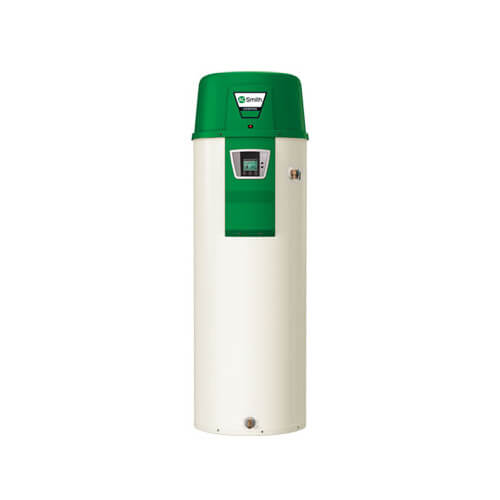
50 Gallon GDHE-50 100,000 BTU Vertex 100 Power Direct Vent Residential Gas Water Heater - Tall (NG)
 --%3E %3Csvg version='1.1' id='Fill' xmlns='http://www.w3.org/2000/svg' xmlns:xlink='http://www.w3.org/1999/xlink' x='0px' y='0px' viewBox='0 0 100 100' enable-background='new 0 0 100 100' xml:space='preserve'%3E %3Cpath fill='%23F15C02' d='M79.44,0.95H20.56C9.78,0.95,0.95,9.78,0.95,20.56v58.87c0,10.79,8.82,19.61,19.61,19.61h58.87 c10.79,0,19.61-8.83,19.61-19.61V20.56C99.05,9.78,90.22,0.95,79.44,0.95z M65.38,58.24l9.38,29.58L49.69,69.78L24.5,87.82 l9.34-29.6L8.8,39.6l30.73-0.17c0,0,6.98-19.61,10-28.93c0.54,1.36,9.88,29.1,9.88,29.1H91.2L65.38,58.24z'/%3E %3C/svg%3E)
 --%3E %3Csvg version='1.1' id='Half' xmlns='http://www.w3.org/2000/svg' xmlns:xlink='http://www.w3.org/1999/xlink' x='0px' y='0px' viewBox='0 0 100 100' enable-background='new 0 0 100 100' xml:space='preserve'%3E %3Cg%3E %3Cpath fill='%23F15C02' d='M30.05,70.23l3.79-12.01L8.8,39.6l30.73-0.17c0,0,6.98-19.61,10-28.93c0.54,1.36,9.88,29.1,9.88,29.1h1.58 L93.71,7.18c-3.58-3.82-8.66-6.23-14.28-6.23H20.56C9.78,0.95,0.95,9.78,0.95,20.56v58.87c0,5.41,2.22,10.32,5.79,13.88 L30.05,70.23z'/%3E %3C/g%3E %3Cpath fill='%23FBC8B4' d='M93.71,7.18L60.98,39.6H91.2L65.38,58.24l9.38,29.58L49.69,69.78L24.5,87.82l5.55-17.59L6.75,93.32 c3.55,3.54,8.44,5.73,13.82,5.73h58.87c10.79,0,19.61-8.83,19.61-19.61V20.56C99.05,15.4,97.01,10.69,93.71,7.18z'/%3E %3C/svg%3E)
' fill='%23F15C02' d='M49 0C21.938 0 0 21.938 0 49s21.938 49 49 49 49-21.938 49-49S76.062 0 49 0m0 82.709a7.54 7.54 0 1 1 0-15.08 7.54 7.54 0 0 1 0 15.08m7.54-28.412a7.541 7.541 0 0 1-15.08 0V22.831a7.54 7.54 0 0 1 15.08 0v31.466z'/%3E%3C/svg%3E)
MANUALS (5)
 --%3E %3Csvg version='1.1' id='With-RB' xmlns='http://www.w3.org/2000/svg' xmlns:xlink='http://www.w3.org/1999/xlink' x='0px' y='0px' viewBox='0 0 100 100' enable-background='new 0 0 100 100' xml:space='preserve'%3E %3Cpath fill='%23FBC8B4' d='M79.44,0.95H20.56C9.78,0.95,0.95,9.78,0.95,20.56v58.87c0,10.79,8.82,19.61,19.61,19.61h58.87 c10.79,0,19.61-8.83,19.61-19.61V20.56C99.05,9.78,90.22,0.95,79.44,0.95z M65.38,58.24l9.38,29.58L49.69,69.78L24.5,87.82 l9.34-29.6L8.8,39.6l30.73-0.17c0,0,6.98-19.61,10-28.93c0.54,1.36,9.88,29.1,9.88,29.1H91.2L65.38,58.24z'/%3E %3C/svg%3E)
Product Highlights


Description
Product Details:
- Delivers 100-gallon first hour rating
- Versatile ENERGY STAR certified power direct vent design delivers up to 0.88 Uniform Energy Factor (96% Thermal Efficiency)
- Advanced high efficiency condensing design delivers energy savings & continuous hot water at a constant flow of over 4 gallons per minute
- Helical coil internal heat exchanger lengthens heat transfer cycle and reduces lime & scale build-up to maintain high efficiency operation
- Power direct vent design installs with 2" or 3" PVC, CPVC or polypropylene pipe terminating through outside wall
- Top fired Ultra-Low NOX gas burner, meets or exceeds emission requirements in California & Utah
- Push-button piezo ignitor makes lighting pilot fast & easy
- Patented Blue Diamond glass tank lining protects against corrosion
- 6-year limited tank and parts warranty
- The Vertex 50-Gallon Ultra-Low NOx Power Direct Vent Natural Gas Water Heater is designed specifically to generate a constant flow of 4 gallons per minute, resulting in continuous hot water for your home. Featuring a 50-gallon (nominal) tank and a 100,000 BTU gas burner, the GDHE-50 Power Direct Vent delivers a thermal efficiency of 96%, a Uniform Energy Factor of 0.88, and a recovery rate of 129 gallons per hour. It carries a 6-year limited warranty, and meets Ultra-Low NOx emission requirements. Environmentally-friendly insulation and factory-installed heat trap nipples reduce heat loss for maximum energy savings. This ProLine water heater is designed with A. O. Smith's superior commercial-grade tank protection. Advanced tank features include stainless steel CoreGard anode rod, Blue Diamond glass lining and DynaClean automatic sediment-cleaning system, all designed to help protect the tank from the corrosive effects of water and extend the life of the water heater. A. O. Smith's ProLine water heaters are residential products built to commercial-grade standards and are only available for purchase through professional wholesalers and contractors.
Specs
| Intended Household: | 3-4 Person |
|---|---|
| Application: | Plumbing |
| Fuel Type: | Natural Gas |
| Capacity (Gallons): | 49.8 |
| BTU Input: | 100000 |
| Efficiency: | 96% |
| Vent Size: | 2" |
| Vent Type: | Power Vent PVC |
| Water Connection: | 3/4" |
| Gas Connection: | 1/2" |
| ASME: | No |
| 1st Hour Delivery (Gallons): | 164 |
| Recovery 90°F Rise: | 129 GPH |
| Voltage: | 120v |
| Max Pressure (PSI): | 150 |
| Max Pressure: | 14" W.C. 8" W.C. (Propane) |
| Max Altitude (Feet): | 10100 |
| Energy Star Rated: | Yes |
| Depth (Inches): | 22" |
| Height (Inches): | 66.75" |
| Diameter (Inches): | 22" |
| Weight (lbs): | 255 lbs |
| Warranty: | 6 Year Tank/6 Year Parts Limited |


Questions?
You May Also Need
Product Reviews
Most Liked Positive Review
So far I'm very impressed
Most Liked Negative Review
Great when new but internally leaked after only 3.5 yrs
Great water heater

I already have. 2nd one.
I love this water heater!
Better Than an Instant Combi Unit!
Water Heater
my customers love these water heaters
third tank
Great water heater
works great, but terrible igniter issue
Buyer beware! Performs ok WHEN it works
Product Q&A
64 QuestionsQ: What is the energy factor of this unit? I'm sorry...I looked around the listing briefly, but was unable to locate it. Thanks.
Asked by wildmtns 14 years ago
Add your answer
Verified Reply- PexSupply StaffThis unit does not have an Energy Factor rating. EF ratings are only given to units with input BTU ratings of 75,000 BTUs or fewer.
When I was researching the unit I also could not find the energy factory. The problem is that this is a 100,000 BTU unit and energy factors are only given out to hot water heaters with less than 75,000 BTUs. Here is a link to the Bradford white website explaining what equipment qualifies for the energy factor rating. Bradford White
AO Smith lists the thermal efficiency of the Vertex 100 as 96% compared to 80% for most other water heaters. Here is a pretty good explanation that I found at this website: http://www.aricoplumbing.com/waterheater/waterheater-energy-factor.aspx:
Q: GDHE-50-LP New installation three days ago. I found the normally dry drain pan full to the overflow pipe. I see no obvious leaks anywhere. What could have caused it to accumulate water in a short period of time (like overnight). The T & P pipe is over the drain pan. Could it have opened and why? (I have placed a separate pan under that to isolate that for now.) Is there something else to check?
Asked by Drew 14 years ago
Add your answer
I have not had any problem similar to the one you described with my Vertex water heater . I did have a similar problem, though, with a new installation of a previous water heater before I installed an expansion tank on the hot water outlet line. The pressure build up after the burner shut off was causing the T&P valve to open briefly. The expansion tank cured it. I understand this is a common issue. Mike
I had a similar issue after I installed my water heater although not as much water as it sounds like you have. I had to install an expansion tank to eliminate the water seeping out of the T&P valve. Since the expansion tank has been installed I have not had a single drop of water leak out of the T&P valve. Hope this helps. Mark
It will help any pressure/water release issues if you have a thermal expansion tank installed. You also need to make sure that there is a discharge pipe hooked up to the temperature-pressure relief valve! Ours drains all the time and we have it set up at the perfect angle to drain outside by taking it thru an exterior garage wall. (water heater is located in the garage) There has never been any water in our drain pan because the installation instructions (figure 10, pg 16) specifically shows to have the temperature-pressure relief valve draining into an external location that can funnel water to a home's drain pipe or exterior location. " The Temperature-Pressure Relief Valve must be installed directly into the fitting of the water heater designed for the relief valve. Install discharge piping so that any discharge will exit the pipe within 6 inches (15.2 cm) above an adequate floor drain, or external to the building. In cold climates it is recommended that it be terminated at an adequate drain inside the building. Be certain that no contact is made with any live electrical part. The discharge opening must not be blocked or reduced in size under any circumstances. Excessive length, over 30 feet (9.14 m), or use of more than four elbows can cause restriction and reduce the discharge capacity of the valve. "
It is condensate from the condensate line R.J. Laffranchi
After fussing with this for a month, the problem still existed. A.O. Smith said it was surely an installation error and they'd send a plumber who on the phone confirmed he'd charge me for his time if there was an installation error. He said he was sure it would be my error. I reviewed my installation one more time and called the plumber in to show me what I did wrong. He said "nice install" and then "the tank has a bad weld which is dripping and he needs to replace the whole unit" I hope the new unit is not a leaker. Otherwise it is a really nice hot water heater!....It heated from cold water start-up to 140 degrees in about 15 minutes! A O Smith has great customer service too!
Q: Can this heater easily be turned off when hot water is not required for extended periods of time? Is it easy to turn back on?
Asked by do-it-yourselfer 14 years ago
Add your answer
One switch on the front of the unit is all that is required to turn off and on
Yes, very easy. LCD screen steps you thru everything. Eating Chile Is Always A Good Idea.
Yes this heater can be easily turned off, then when you need hot water just turn the switch back on and in a couple minutes water is hot again. From Alicia and Sean
One of the great things about this computerized hot water heater is how simple it is to use. As long as your gas line is turned on (a simple quarter turn of the shut-off valve), this unit takes care of the rest. It also informs you when there are issues, such as loss of power, and is easy to program for desired water temperature. We use this unit to heat a 2,800 square foot Vermont home with radiant floor tubing, along with our domestic hot water. It has worked out great thus far.
Yes it can be easily turned on and off. There's basically a light switch at the front of the unit that toggles on and off, or you can just unplug it from the power outlet. I unplug mine for 3 months during the summer while the solar hot water is pumping and there's no call for radiant heat. Great unit for open loop systems!
There is a power switch above the status display. It shuts the tank off and on. We have used it several times to turn the tank off when taking vacations. The tank recovers quickly and we haven't had any problems.
Yes. Just an on/off switch. If there is a risk of freezing, you would want to drain it like any tank hot water heater.
This unit is very simple to turn on and off, just a single switch on the front of the unit. Sent from my iPhone
Yes, it has a simple on/off switch just above the control panel. Everything is automated. -Michael Sent from an iPod, please excuse any horrendous corrections.
It is EXTREMELY user-friendly. It has an electronic ignition and a digital display read-out. We have it in our summer home, so we often turn it off. We do drain it at season's open, but did not see the need.
Q: I have a low-tech, no-tech 75 gallon water heater in my garage which I want to replace with the Vertex. The vent from the water heater currently joins the vent from the space heater, also in the garage. It’s all standard metal with a Y connector. Can I connect the vent from the Vertex to this existing vent system?
Asked by do-it-yourselfer 14 years ago
Add your answer
No. You must run two new PVC vents one incoming one out. Down load manual from AO Smith web site. This is a great water heater I am very impressed with it.
NO!
No you cannot this water heater vents in PVC pipe Kevin M O'Dell Sent from my iPhone
They do not recommend it. But you can vent it easily to an outside wall which is the preferred method. B
I would not do it if I were you. The water heater (with the power vent) will run fine, but there is a risk of interfering with the burner of the space heater, and, worse yet, blowing toxic gasses backward through the space heater into the garage. What you propose may work depending on the length of vent, diameter of the vent, and whether or not the water heater joins at a wye (pushing gases up) or a tee, but I would not risk it unless someone more knowledgeable looked at the specific configuration. Greg Livermore CA
Do not use the Y connector for venting your new unit. The unit is designed to vent independently using PVC pipe. Like you, I also had a Y connection that was used to vent the old water heater in combination with the forced air heat. I did not use it. It is a very simple install using all PVC fittings. Joe
While it may seem that it would work.. I would be concerned about a couple of things. One is the blower prove switch. If the blower fails and the other unit is running, this could potential fire the hot water heater without the blower, and like wise the other way around. Not to mention if they are both running at the same time this could cause a back pressure situation. And cut the efficiency of each unit, or flame out. 2-seperate lines would be the way to go! Dave
I do not believe that would be code compliant. The intake and exhast venting for the vertex should all be pvc. The specific requirements are detailed in its manual.
No, the unit must be independently vented to the outside.
I expect the official answer depends on the building codes in your area, so I wouldn't proceed without checking them, but I do have a couple of points to think about even before that. The first is that the fact that since both the water heater and the space heater are in the garage already, you probably would not have an issue with the exhaust going into the house. The second point is that the Vertex has a power vent, with a fan. The exhaust of the water heater is going to go up to the Y connector, and then some of the force of the fan will continue out the vent as intended. If the vent past the Y is open/short enough, it might pull more air from the space heater. If it did that, it could increase the airflow through the space heater. How much effect that would have on the space heater is probably dependent on the specific space heater you have. Of the other hand, if the vent after the Y is restricted in any way (blocked, vent too long, or too many/too sharp bends) it could cause there to be back pressure from the vent into the space heater. What effect this might have on the space heater would almost certainly depend on the design of the space heater, but I can't think of any positive effects. The negative effects I can think of range from a reduced efficiency of the space heater to air flowing backwards through the space heater and fumes and/or flame coming out the space heater intake, into the garage. I'm just a homeowner without any professional training or experience with these matters, but I would not try to combine the exhaust of a natural-draft-vented appliance with a power-vented appliance.
Q: tankless vs vertex power 100
Asked by michael 14 years ago
Add your answer
We've had our vertex hot water heater for a year now. Our gas bill is extremely low, and I think it's virtually impossible to run out of hot water.
It depends on the conditions and usage purposes. I switched from a tankless heater (electric) to the vertex 100. The tankless ran a closed loop floor heat system but still used too much energy. The vertex can and is maintaining the floor heat system and the household hot water supply at a lower cost. Granted my old water heater was not an energy saver, it had an continuous flame, the heat exhaust piping was inconvenient and didn't heat enough water for more than two showers and a dishwasher. That was a 75 gallon tank. With the vertex and with the operator panel I know exactly how often it runs so I know the exact energy consumption and I love the fact I can plan a plumbing system a dozen different ways and the vertex is flexible in design to fit any of those ideas. A tankless is great if the house is small and the incoming water is above 65 degrees or in the case of floor heat, if you are running a small home with great insulation. PS I got a better price and free shipping with PexSupply.
I am extremely happy with my Vertex. When faced with the same choice, I chose the Vertex to avoid the criticisms of tankless water heaters while compromising only slightly on efficiency. After installing the Vertex, I was quickly convinced I made the right choice. It has far exceeded my expectations. Sent from my iPhone
The efficiency of the tankless does not compare to the vertex. Heated gallons per minute is another comparison that favors the vertex and the price is almost the same. When comparing the estimated annual cost the vertex seems the best choice.
If you live in an area where the incoming water temp is high (above say 60 degrees) then tankless may be a good choice. If you live in an area where the water temp is cold (e.g. I live in Colorado and my incoming water temp in the winter is ~40 degrees) then it's hard to beat the Vertex. We have four kids, three baths and the Vertex 120 and have never run out of water. We love it.
Vertex by a mile I have installed 11 of these units they are fantastic R.J. Laffranchi
Q: I am due for a new anode rod for my Vertex 100. Which one do I purchase? I notice that they come in different lengths and diameters.
Asked by Grey 14 years ago
Add your answer
Verified Reply- PexSupply StaffFor GDHE-50 Vertex units, the replacement aluminum anode rod is part 9003892005. The magnesium version is part 9001829005.
Q: We're building one one those multi-head showers. The heads use up to total 21 gal.(of mixed) water per minute (probably 15 gal of hot per minute). Will this unit keep up? Does the temperature change (get cooler) at all during prolonged use? Thanks
Asked by Tom 15 years ago
Add your answer
Verified Reply- Another PexSupply CustomerFunny you should ask that. We have been using the water heater now for about 8 months in our new home and I am contemplating getting another one to supplement it. We have a 6 head Kohler DTV system that we absolutely love. However, like you, I estimate that it is probably pumping out at least 20 gal of hot water per minute. To be fair we have tremendous water pressure coming from the street and 1" lines going to the shower. With all the heads on I have measured the flow rate to be roughly 30gal/minute. (I'm sure you are aware that average shower head puts out a max of 2.5 gal/minute!) To make matters worse, (or better in my opinion) I removed all the flow restrictors in all the heads. (I try to do my part in other ways to help save the environment but clearly this is NOT one of them). The result is what my wife refers to as the "decontamination chamber". It's simply awesome and easily the best part of the whole house. Having said all that the hot water cuts out in about 10 minutes. With the digital temp gauge on the Kohler panel you can see that the water stays at perfect temperature with no fluctuations for all ten minutes but once it reaches its limit the temp drops rapidly. The good news is that the recovery time is excellent. In about 20 minutes the tank will restore itself to full capacity again. (my wife gets up about 20 minus after me so the timing works for us). At first I was a little disappointed that this unit that I had heard such great reviews on was only good for a maximum of 10 minutes but my plumber put things in perspective by saying that our shower was the equivalent draw of most small hotels...and he was blown away that it was able to keep up that long. For daily use, the 10 minutes is actually a good thing. I have heard that most people who buy efficient heaters like this end up using just as much energy because when the hot water never runs out they end up staying in twice as long. However sometimes my wife and I like to take a longer showers, (on the weekend for example) and that's when I start contemplating another unit. I think if we got another tank just like this one and put it in parallel we would never run out of water, especially given the recovery period of the units working in conjunction. I notice that A.O. Smith also makes a commercial version of this unit which I would imagine would probably also do the trick, however it looks like it costs just as much as buying two residential units. My plumber said he later installed the Vertex unit in a more conventional 4 head shower system and the owners told him they never ran out of hot water so I would hate to recommend a commercial tank or two of the Vertex's if you don't really need them. My recommendation therefore would be to start with one unit and see how it performs once the shower is installed. To install another unit right next to it really wouldn't cost that much more in labor, (just the cost of the extra unit). Good luck and please let me know if you have any other questions. Dean
IT says 4 GPM continuous in the manual so probably not
I don't think you can run this unit out of hot water. You can set the temperature and the differential so you never have to worry about the water cooling down during a shower. In my opinion this is by far the best and most efficient waterheater on the market.
If you set the water temperature of the heater all the way on high (160F), you will get about 6 minutes before it starts feeling cooler unless your water is already warm coming into the heater. It has no trouble keeping the water hot all day long in a normal sh, even with 50F incoming water. This inbound email has been scanned for all viruses by the MessageLabs SkyScan service. This outbound email has been scanned for all viruses by the MessageLabs Skyscan service. For more information please visit http://www.symanteccloud.com
The water temp does drop when both the shower and tub are used together. I would recommend large volume tankless for any app over 6 gpm with longer use times. Sent from Randy's iPhone
Yes. This water heater is amazing. It can supply two shower at the same time and still has good reserve of hot water. I am having it for 1 y now and very pleased with my purchase. Thanks Ashkan Farhadi Sent from my iPhone
Our experience is this: The first shower the hot water supply is shorter. A fter 5 minutes of the first shower and once it starts is can keep up with any demand. One morning 6 of us showered one right after the other and it kept up beautifully.
15 GPM seems very high. I doubt any water heater could keep up with that level of usage. Here are the stats from the Vertex Specification Manual: http://s3.pexsupply.com/manuals/1277407495583/32775_PROD_FILE.pdf The 50-gallon Vertex delivers hot water output that exceeds a 75-gallon atmospheric gas water heater. In fact, the fully condensing Vertex design is so advanced, it can deliver continuous hot water for shower after shower...a continuous flow of over 4 gallons per minute.* * 4.31 GPM continuous flow, based on 65ºF inlet water temperature, 110º outlet temperature. Eric
The Vertex 100 amazed me with the fact that it NEVER runs out of hot water. Yes, we do not have multihead showers or any other advanced equipment. Just a regular household with 3 bathrooms and 5 people. But what I can confidently state from about a year of experience with the unit is that you can take a hot 60 minute shower and never run out of hot water even with the rest of the family using whatever they decide to use. It looks like the unit is powerful enough to heat the water on the fly without storing it in the tank. I think I sometimes can feel the moment when the tank is empty and it starts instant heating. The temperature may drop a couple of degrees, but a small adjustment to the faucet makes the mix blazingly hot again. Really happy with the Vertex 100. The summer gas bill dropped significantly too (more than 50%).
Mine is heating water for a 5-unit apartment building. The tenants only have showers. I've heard no complaints, which means it's "probably" doing fine. Maybe this helps.
Q: I read reviews about noisiness. The attenuator pictured in the install manual, is it for intake or exhaust side? Cost? Neighbor's patio is only 25 ft. from my inlet/exhaust.
Asked by T 15 years ago
Add your answer
T, My exhaust is less than 25 feet from my deck. I installed it using parts that came standard with the unit. I can hear it run, but I would characterize the noise as "detectable" not annoying. I would not hesitate to install it 25 feet from the neighbor's patio. The noise seems similar to a dryer vent, or a bit better, and much less than a pool pump. My inlet is in my crawl space, so I am less sure about that, but it seems pretty quite too. Greg
We don't have an attenuator installed, and have not noticed any excessive noise with this unit. The fan makes slightly more noise than the burner on our old water heater. Tound seems equivalent to the intake/exhaust of our furnace.
Yes this WH makes jet like noise. Intake is on top of the unit and exhaust is on bottom. If you want to reduce noise you can extend intake pipe to the roof, make sure it properly covered so water doesn't get in. But you will have to calculate intake+exhaust to allowed lengths of exhaust pipe.
My unit is in the garage. Outside, at 25' to your neighbor, I don't think the exhaust sound will be an issue. When I'm in the garage and the unit comes on, it definitely makes some white noise, so I would not want the unit inside unless in a basement, even then maybe in a closed area. My gas furnace makes slightly more noise than the water heater. -bob
We are very happy with this boiler. It is in our garage and we can't hear it. We usually hear our furnace, not our water heater. No worries about the exhaust or noise. It is a good water heater. Regarding the price, we think we got a good deal over the internet. They do not carry this water heater in Oregon and the special order was twice as expensive. Vlad
My intake/exhaust is right out to my deck, and there is little noise. Less than a dryer vent.
I have one of these AOsmith water heaters, but don't have access to the manual right now. The exhaust and inlet are clearly marked both in the manual and on the top of the tank and neither is noisy when the tank is operational. So don't worry about your neghbors and noise. You'll love the efficiency of this unit,,,,,,,,,,,,,,,,,,,,,,chuck
I don't think it should be an issue, our intake/exhaust is only a foot away and it never bothers us. Don't know what the other part of the question is, I did not use one for my installation. Jon Wyngarden CFO Indiana Rotomolding Inc. (IRI) ***.****
The Exhaust noise is just a blowing noise, that to me is not very loud. And I don't have any noise suppression on it. I don't see this as an issue and my Deck is right next to the vent and no one has ever complained when the Hot water heater kicks on. This unit does not run that long anyway! Dave Curran
I believe the intake is high and the outlet is low. I haven't noticed any extreme noise with mine, and it seems to reach temperature quickly. A sensitive neighbor my complain, I have never sat next to mine. With that said I have loved the performance and saving it has afforded me.
Q: What is the effect of not being able to provide the unit with 100,000 BTU of gas at times? Rough numbers indicate that my house has the capability of drawing more gas than the meter is rated for under a worst case use situation.
Asked by Anonymous 15 years ago
Add your answer
I can't really say. when the plumbers installed the unit they thought the gas line diameter was a little undersized for the unit, but it has run perfectly since it was installed.
Hmmm, That I am not sure about... a good question for A.O. Smith! It's possibltt it will simply adjust it's ratio's to accomodate b at may or may not have an effect on overall efficiency. I would call the manufacturer about that one. Cheers Ken :) Sent by me. Sent by StarTribune Mail http://www.stribmail.com
My response to this is contact AO-Smith the manufacture of the unit. As this unit is a direct vent, you may have problems with a flame outs and restarts.
Call your natural gas supply company, they would be able to answer your question. Jon Wyngarden
Q: I am building an addition to our home that will need a separate water heating and radiant floor system. It is not a large addition - 864 square foot and we will add one and a half bathrooms, laundry and kitchen. Would one of these be over kill? Would it serve both for water heat and the radiant floor installation? In winter it goes down to - 20 Farenheight is that a problem for air intake? We will be using propane. Thans
Asked by Anonymous 15 years ago
Add your answer
I think, it will be perfect for what you want to do.
Hi, The Vertex 100 will certainly accommodate the challenge... Is it overkill? Probably. That said, I installed the Vertex 100 and a $1k Taco X-Pump Block... http://www.taco-hvac.com/en/products/X-Pump+Block%99+(XPB)/products.html?current_category=345 in my 1600sf home for domestic hot water (2ba, kitchen, laundry & utility room) and 800sf radiant system in the basement slab The installation was so easy and so efficient, that I would recommend the system to anyone. Hope that helps, Escher
I think y ou will need to work through the calculations to determine the BTU's required to heat the space. The formulas can be found in on-line calculators and the better ones use the square footage, the wall and ceiling insulation values, size of windows as well as the expected outsid e temperature to calculate the heat lost. Simpler formulas require fewer inputs but also give less accurate results. The heat input to the space must of course be greater than the heat lost, plus the BTU s required for the hot water used in the laundry, baths and kitchen. We used a 105,000 BTU boiler for our 17 00 square foot house in the Colorado mountains which was calculated to need 75,000 BTU s, with the V ertex only for hot water. Because the e fficiency of the units is so high, even when running well below their maximum output ratings, "over kill" is not really an issue. .
Fellow Shopper. This unit will be more than enough to do both your domestic hot water and radiant floor heating. It is able to do a whole house. Overkill, possibly. But you will likely be very happy with it.. Cheers. .
Hello, Ok lots of options with what you are proposing but here is my take on it. This unit will easily hefor the entire house and the floor system. I have used one to heat my parents home of 1200 sq ft plus 800 sq ft gand heat the hot water for all of their home needs. The infloor radiant system is a closed system and I used a heat exchanger. There is a seperate port on the hot water heater for this all you will need is a circulating pump for the hot water side of the heat exchanger and one for the floor side of the heat exchanger. It can easily heat what you want and supply hot water to your house. It's VERY efficient, simple to set up and opperate andfe electricity goes off and then back on it resets itself and remembers all of your settings. They sell two versions of this unit, get the larger one... it's not much more in cost over its lifetime and it is more efficient to boot. The heat recoveery rate is excellent. In fact I don't think you can use water fast enough to end in a cold shower. I don't thinknr case that it is overkill as just about any other water heater out there is not nearly as efficient. You will loose some efficiency due to propane instead of natural gas but not much maybe 4-5 percent, but that is true with any gas appliance. My parents home is in Northern MN and it has been working flawlessly since I installed it 3 years ago. Just make sure you install the intake and exhaust vents according to iinstructions. I highl commend useing the duel inlet/outlet concentric vent kit. It's a few bucks but it works and is simple to install. Good luck and enjoy, it truly is one of the best water heaters for the purpose you propose out there hands down. Cheers Ken Sent by me. Sent by StarTribune Mail http://www.stribmail.com
This unit will work fine for your sitiuation but is probably a little overkill depending on your heating load. . I would only use it for the floor heat and use something else for the domestic to keep the water separated. An even better option would be to use a Navien Combi tankless heater for the in-floor and the domestic. Very slick unit that will also run on propane. I happend to install one in a system today. The -20 degree temperature is not an isuue.
We love our Vertex 120k but we have ~3800 sq ft; me plus a wife and four kids, two of whom are teenage girls. We have three full baths and never run out of hot water, even if two showers are going at once and our gas bill has gone down despite the ever growing shower durations (that's what happens when you don't run out of hot water). Just hope it never breaks because it was pricey.
Fellow shopper, I have loved my NG 100,000 BTU Vertex Water Heater! I do both floor heat, 2000 square foot basement and hot water for five of us and have never run out. For floor heat I run it through a heat exchanger on the side ports. I am not sure if I can help you with questions on air intake or over kill. Other than to say if you are using it for hot water for the whole house I wouldn't worry about it, My natural gas bill last summer was 15 dollar with long hot showers etc. I am saving hundreds a year on my utilities plus I got a tax rebate. I am sure in a few years it will have paid for itself plus heated my basement perfectly! Please don't hesitate to ask any other questions you may have and I will do my best to answer them.
To answer this! Yes! I use it not only for a 1500 square feet of my basement, but also for my 26 x 26 garage. I only heat the garage to 50 degrees. I also have a 50 gallon hot tub in our bathroom, there are days when the in-floor is on we have to wait about 10 minutes for the unit to catch-up to fill the tub. The unit is fast and efficient. Not to mention when walking on the floors, such as a bathroom or tile floors bare footed it is nice warm. So would it be over kill, I would say NO! even though you are less square footage, you will never run out of hot water and your comfort level would be assume. There should not be a problem with the air intake. The only thing is make sure to keep your exhaust and dyer venting ect. Away from that intake, as this will cause an icing problem! So yes this one unit is assume! I would recommend it to anyone, rather than another boiler, or hot water heater. One unit to maintain! And it is always on and ready to go. I simply shut the 2 circulating pumps off during the summer and lower the thermostats. I use natural gas. Hope this was some Help? Dave Curran, Post-lake Wis, and yes we get -20 degrees
I don't see why there would be any problem with using it for both the radiant heating and the domestic hot water supply. It's probably a bit oversized for just the addition, however. We live in a cold climate as well, and have had to install heat tape on the air intake to keep it from freezing up. Otherwise we needed to clear the ice off the intake every other day or so. That's been the only drawback with this water heater- we've been very happy with it otherwise.