




Filters
SORT
Product Availability –
Brand –
Size –
Review Score –
 --%3E %3Csvg version='1.1' id='Fill' xmlns='http://www.w3.org/2000/svg' xmlns:xlink='http://www.w3.org/1999/xlink' x='0px' y='0px' viewBox='0 0 100 100' enable-background='new 0 0 100 100' xml:space='preserve'%3E %3Cpath fill='%23F15C02' d='M79.44,0.95H20.56C9.78,0.95,0.95,9.78,0.95,20.56v58.87c0,10.79,8.82,19.61,19.61,19.61h58.87 c10.79,0,19.61-8.83,19.61-19.61V20.56C99.05,9.78,90.22,0.95,79.44,0.95z M65.38,58.24l9.38,29.58L49.69,69.78L24.5,87.82 l9.34-29.6L8.8,39.6l30.73-0.17c0,0,6.98-19.61,10-28.93c0.54,1.36,9.88,29.1,9.88,29.1H91.2L65.38,58.24z'/%3E %3C/svg%3E)
 --%3E %3Csvg version='1.1' id='With-RB' xmlns='http://www.w3.org/2000/svg' xmlns:xlink='http://www.w3.org/1999/xlink' x='0px' y='0px' viewBox='0 0 100 100' enable-background='new 0 0 100 100' xml:space='preserve'%3E %3Cpath fill='%23FBC8B4' d='M79.44,0.95H20.56C9.78,0.95,0.95,9.78,0.95,20.56v58.87c0,10.79,8.82,19.61,19.61,19.61h58.87 c10.79,0,19.61-8.83,19.61-19.61V20.56C99.05,9.78,90.22,0.95,79.44,0.95z M65.38,58.24l9.38,29.58L49.69,69.78L24.5,87.82 l9.34-29.6L8.8,39.6l30.73-0.17c0,0,6.98-19.61,10-28.93c0.54,1.36,9.88,29.1,9.88,29.1H91.2L65.38,58.24z'/%3E %3C/svg%3E)
Price Range –
Copper Fitting Brushes

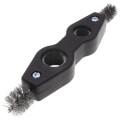

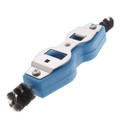

 --%3E %3Csvg version='1.1' id='Half' xmlns='http://www.w3.org/2000/svg' xmlns:xlink='http://www.w3.org/1999/xlink' x='0px' y='0px' viewBox='0 0 100 100' enable-background='new 0 0 100 100' xml:space='preserve'%3E %3Cg%3E %3Cpath fill='%23F15C02' d='M30.05,70.23l3.79-12.01L8.8,39.6l30.73-0.17c0,0,6.98-19.61,10-28.93c0.54,1.36,9.88,29.1,9.88,29.1h1.58 L93.71,7.18c-3.58-3.82-8.66-6.23-14.28-6.23H20.56C9.78,0.95,0.95,9.78,0.95,20.56v58.87c0,5.41,2.22,10.32,5.79,13.88 L30.05,70.23z'/%3E %3C/g%3E %3Cpath fill='%23FBC8B4' d='M93.71,7.18L60.98,39.6H91.2L65.38,58.24l9.38,29.58L49.69,69.78L24.5,87.82l5.55-17.59L6.75,93.32 c3.55,3.54,8.44,5.73,13.82,5.73h58.87c10.79,0,19.61-8.83,19.61-19.61V20.56C99.05,15.4,97.01,10.69,93.71,7.18z'/%3E %3C/svg%3E)


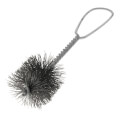
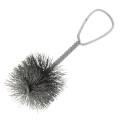

 --%3E %3Csvg version='1.1' id='No-RB' xmlns='http://www.w3.org/2000/svg' xmlns:xlink='http://www.w3.org/1999/xlink' x='0px' y='0px' viewBox='0 0 100 100' enable-background='new 0 0 100 100' xml:space='preserve'%3E %3Cpath fill='%23CECECE' d='M79.44,0.95H20.56C9.78,0.95,0.95,9.78,0.95,20.56v58.87c0,10.79,8.82,19.61,19.61,19.61h58.87 c10.79,0,19.61-8.83,19.61-19.61V20.56C99.05,9.78,90.22,0.95,79.44,0.95z M65.38,58.24l9.38,29.58L49.69,69.78L24.5,87.82 l9.34-29.6L8.8,39.6l30.73-0.17c0,0,6.98-19.61,10-28.93c0.54,1.36,9.88,29.1,9.88,29.1H91.2L65.38,58.24z'/%3E %3C/svg%3E)
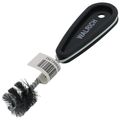
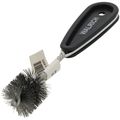
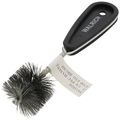
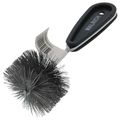
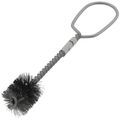
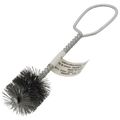
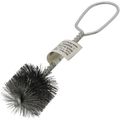
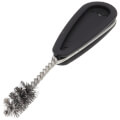
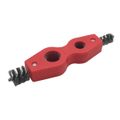


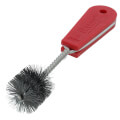

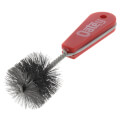
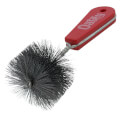
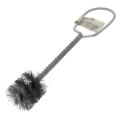
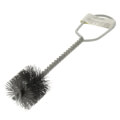
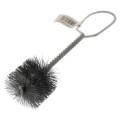
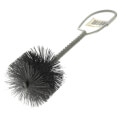

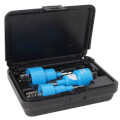
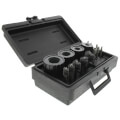
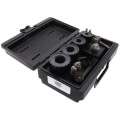
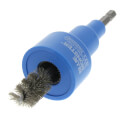
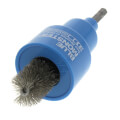
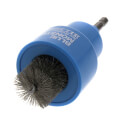
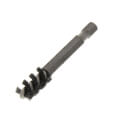

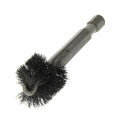

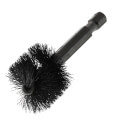
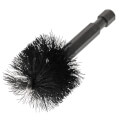
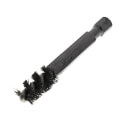
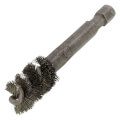
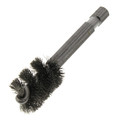
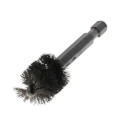

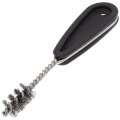
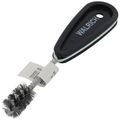
Copper fitting brushes are wire-bristled cleaning tools that plumbers and HVAC technicians use to prepare the interior surfaces of copper fittings before soldering. The bristles scrub away oxidation, grease, and debris that would otherwise block solder from bonding evenly to the fitting wall, a step that directly affects whether a sweated joint holds under pressure. Fittings come in a range of diameters, so brushes are sized to match specific pipe dimensions rather than sold as a single universal size.
Contractors keep a range of brush sizes on hand because a mismatched brush leaves part of the fitting wall unscrubbed, creating a weak spot in the joint. Clean fittings solder faster and more reliably, which matters on jobs where dozens of joints need to be sweated in a single day.
Subcategories
- Individual Fitting Brushes: Single-size wire brushes matched to one specific pipe diameter, ideal for stocking exact sizes used routinely on a job. Sticking with the exact diameter keeps the entire fitting interior scrubbed clean. These are a common choice for shops that mostly work with a narrow range of pipe sizes.
- Fitting Brush Sets: Assortments covering a range of common diameters in a single package, useful for service trucks that handle varied pipe sizes without carrying open-stock singles. A set reduces the chance of showing up to a job without the right size on hand.
- Wire Pipe Cleaning Brushes: Brushes designed to clean the outer end of the pipe rather than the fitting interior, used alongside fitting brushes to prep both mating surfaces before soldering. Both surfaces need to be free of oxidation for a solder joint to seal properly.
- Replacement Brush Heads: Swappable heads for reusable brush handles, letting installers replace worn bristles without buying a new handle each time. This keeps ongoing costs down for shops running through a lot of joints over a season.
Buying Guide
Selecting a copper fitting brush starts with matching the bristle diameter to the exact pipe size being joined, since even a slightly undersized or oversized brush leaves part of the fitting wall unscrubbed. Copper fitting brushes are typically labeled by nominal pipe size, so checking that number against the job's material list before ordering avoids delays on-site.
Brush construction matters for how long the tool lasts under repeated use. Wire bristles wear down with heavy use, and a brush with a sturdy handle holds up better across multiple projects than a lightweight, disposable design. Contractors doing high-volume soldering work often find that investing in a slightly more durable brush reduces how often replacements are needed mid-job.
Handle style is a practical consideration on tight job sites. Fold-out or accordion-style brushes take up less space in a tool pouch, while fixed-handle versions can offer a firmer grip for scrubbing stubborn oxidation. Either style gets the fitting clean, so the choice often comes down to storage space and personal preference.
Stocking a full range of sizes, rather than just the one or two used most often, prevents a scramble when a job calls for an unexpected diameter. A brush set that spans common residential and light commercial sizes covers most routine plumbing and HVAC work, while single fittings in odd sizes can be ordered as needed for larger commercial jobs.
Frequently Asked Questions
Why is cleaning a copper fitting necessary before soldering?
Oxidation and residue on the fitting's interior surface block solder from bonding evenly to the copper, which can create a leak-prone joint. A properly cleaned fitting lets solder flow into every gap for a full, even seal.
Can one fitting brush be used across multiple pipe sizes?
No, fitting brushes are sized to match a specific nominal pipe diameter. Using a brush that doesn't match the fitting size leaves part of the interior wall unscrubbed and weakens the joint.
How often should a fitting brush be replaced?
Replacement timing depends on use, but bristles that look flattened, frayed, or coated in built-up residue no longer clean effectively and should be swapped out. Brushes with replaceable heads make this an inexpensive fix.
Is a fitting brush different from a pipe cleaning brush?
Yes, a fitting brush cleans the interior of the fitting while a pipe cleaning brush or cloth preps the outer surface of the pipe end. Both surfaces need cleaning before a solder joint is made.
Do fitting brushes work on both copper and brass fittings?
Wire fitting brushes are primarily designed for copper fittings used in sweat soldering. Checking the manufacturer's listing for compatible fitting materials is worth doing before using one on a different metal.
