



Filters
SORT
Product Availability –
Voltage –
Used With –
Review Score –
 --%3E %3Csvg version='1.1' id='Fill' xmlns='http://www.w3.org/2000/svg' xmlns:xlink='http://www.w3.org/1999/xlink' x='0px' y='0px' viewBox='0 0 100 100' enable-background='new 0 0 100 100' xml:space='preserve'%3E %3Cpath fill='%23F15C02' d='M79.44,0.95H20.56C9.78,0.95,0.95,9.78,0.95,20.56v58.87c0,10.79,8.82,19.61,19.61,19.61h58.87 c10.79,0,19.61-8.83,19.61-19.61V20.56C99.05,9.78,90.22,0.95,79.44,0.95z M65.38,58.24l9.38,29.58L49.69,69.78L24.5,87.82 l9.34-29.6L8.8,39.6l30.73-0.17c0,0,6.98-19.61,10-28.93c0.54,1.36,9.88,29.1,9.88,29.1H91.2L65.38,58.24z'/%3E %3C/svg%3E)
 --%3E %3Csvg version='1.1' id='With-RB' xmlns='http://www.w3.org/2000/svg' xmlns:xlink='http://www.w3.org/1999/xlink' x='0px' y='0px' viewBox='0 0 100 100' enable-background='new 0 0 100 100' xml:space='preserve'%3E %3Cpath fill='%23FBC8B4' d='M79.44,0.95H20.56C9.78,0.95,0.95,9.78,0.95,20.56v58.87c0,10.79,8.82,19.61,19.61,19.61h58.87 c10.79,0,19.61-8.83,19.61-19.61V20.56C99.05,9.78,90.22,0.95,79.44,0.95z M65.38,58.24l9.38,29.58L49.69,69.78L24.5,87.82 l9.34-29.6L8.8,39.6l30.73-0.17c0,0,6.98-19.61,10-28.93c0.54,1.36,9.88,29.1,9.88,29.1H91.2L65.38,58.24z'/%3E %3C/svg%3E)
Price Range –
Fantech Controls & Switches





 --%3E %3Csvg version='1.1' id='Half' xmlns='http://www.w3.org/2000/svg' xmlns:xlink='http://www.w3.org/1999/xlink' x='0px' y='0px' viewBox='0 0 100 100' enable-background='new 0 0 100 100' xml:space='preserve'%3E %3Cg%3E %3Cpath fill='%23F15C02' d='M30.05,70.23l3.79-12.01L8.8,39.6l30.73-0.17c0,0,6.98-19.61,10-28.93c0.54,1.36,9.88,29.1,9.88,29.1h1.58 L93.71,7.18c-3.58-3.82-8.66-6.23-14.28-6.23H20.56C9.78,0.95,0.95,9.78,0.95,20.56v58.87c0,5.41,2.22,10.32,5.79,13.88 L30.05,70.23z'/%3E %3C/g%3E %3Cpath fill='%23FBC8B4' d='M93.71,7.18L60.98,39.6H91.2L65.38,58.24l9.38,29.58L49.69,69.78L24.5,87.82l5.55-17.59L6.75,93.32 c3.55,3.54,8.44,5.73,13.82,5.73h58.87c10.79,0,19.61-8.83,19.61-19.61V20.56C99.05,15.4,97.01,10.69,93.71,7.18z'/%3E %3C/svg%3E)



 --%3E %3Csvg version='1.1' id='No-RB' xmlns='http://www.w3.org/2000/svg' xmlns:xlink='http://www.w3.org/1999/xlink' x='0px' y='0px' viewBox='0 0 100 100' enable-background='new 0 0 100 100' xml:space='preserve'%3E %3Cpath fill='%23CECECE' d='M79.44,0.95H20.56C9.78,0.95,0.95,9.78,0.95,20.56v58.87c0,10.79,8.82,19.61,19.61,19.61h58.87 c10.79,0,19.61-8.83,19.61-19.61V20.56C99.05,9.78,90.22,0.95,79.44,0.95z M65.38,58.24l9.38,29.58L49.69,69.78L24.5,87.82 l9.34-29.6L8.8,39.6l30.73-0.17c0,0,6.98-19.61,10-28.93c0.54,1.36,9.88,29.1,9.88,29.1H91.2L65.38,58.24z'/%3E %3C/svg%3E)


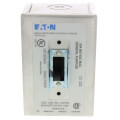


Fantech controls and switches are the operating hardware that turns Fantech ventilation fans, inline blowers, and energy recovery equipment on and off and adjusts how they run, covering everything from simple wall switches to timers, speed controllers, and humidity or motion-triggered activation. Fantech is a ventilation equipment manufacturer whose product line includes bath fans, inline duct fans, and whole-house ventilation systems, and its controls are built to match the electrical and control interfaces of that specific equipment rather than working as generic aftermarket switches. Contractors specify these controls when installing or servicing Fantech fans because using a mismatched control can limit functionality, such as losing variable-speed operation or automatic humidity response the fan is capable of. Getting the control right at rough-in also avoids a second trip back to the job later, since swapping a basic on/off switch for a timer or humidity sensor after the wall is closed up means running new low-voltage or line-voltage wiring.
Subcategories
- Wall Switches: Basic wall switches give simple on/off control for a Fantech fan and are the most common control type for straightforward exhaust applications without a need for scheduling or automatic activation. They're typically the lowest-cost option and the easiest to wire during a standard install. Contractors use these where the fan just needs to run when someone flips a switch, similar to a light.
- Timers: Timer controls let a fan run for a set duration after being activated, which is useful in bathrooms or utility spaces where continuous manual operation isn't practical. Some timer models offer adjustable run times to match the room size and typical usage pattern. This control type is common in code-driven exhaust applications where a minimum run time after occupancy is required.
- Humidity & Motion Sensors: Sensor-based controls activate the fan automatically based on detected humidity or motion, removing the need for a manual switch entirely. Humidity sensors are common in bathrooms prone to condensation, while motion sensors suit spaces where occupants may forget to turn a fan on manually. These controls typically cost more than basic switches but reduce moisture-related callbacks.
- Variable Speed Controllers: Variable speed controllers let installers or occupants adjust fan speed rather than running at a single fixed output, which helps balance noise level against ventilation rate depending on the situation. These pair with Fantech fans that support variable-speed operation and won't provide speed control on single-speed equipment. Matching a variable speed controller to a single-speed fan wastes the control's added cost.
Buying Guide
Start with the fan model already installed or specified for the job, since Fantech controls and switches are designed to match specific equipment control interfaces rather than functioning as universal replacements. Check whether the fan supports variable-speed operation, humidity sensing, or timed operation before buying a control built for those features, since a single-speed fan won't gain speed control from a variable-speed switch. Confirm voltage requirements match the fan and the existing wiring at the switch location, particularly on retrofits where low-voltage control wiring may not already be run.
Think through how the space will actually be used before choosing between a basic switch, a timer, or a sensor-based control. Bathrooms with a history of condensation issues often benefit from humidity-sensing control, while utility or mechanical spaces may only need a basic on/off switch. For multi-fan installs, check whether a single control can operate more than one fan or whether each fan needs its own dedicated switch, since combining controls incorrectly can undersize the electrical capacity of the control itself. Finally, confirm the control's mounting style, whether it's a standard wall box switch or an inline/remote-mounted control, fits the space available at the install location.
Frequently Asked Questions
Can any wall switch operate a Fantech fan?
A basic on/off switch will operate simple power to most fans, but features like variable speed, humidity sensing, or timed operation require a control built to interface with that specific functionality. Check the fan's control compatibility before assuming a generic switch will unlock those features.
Do humidity sensor controls need to be calibrated?
Some humidity-sensing controls include an adjustable trigger threshold that should be set to match the room's normal humidity baseline, since setting it too sensitive can cause the fan to run more than necessary. Check the specific control's instructions for adjustment steps.
What happens if I install a variable speed controller on a single-speed fan?
The fan will still run, but it won't respond to speed adjustments since single-speed motors don't support variable output. In that case the added cost of a variable speed controller doesn't provide any functional benefit.
Can one control operate multiple Fantech fans at once?
Some controls are rated to handle more than one fan, but the combined electrical load has to stay within the control's rated capacity. Check the amperage rating on both the control and the combined fans before wiring them together.
Is a timer control required by code for bathroom exhaust fans?
Requirements vary by local building code, and some jurisdictions require a minimum run time or continuous ventilation for bathroom exhaust. Check with the local code authority for the specific requirement before finalizing the control choice.
