




PEX Press Fittings

PEX Fittings


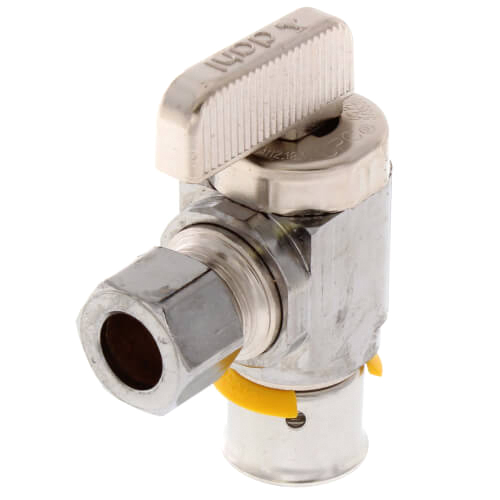
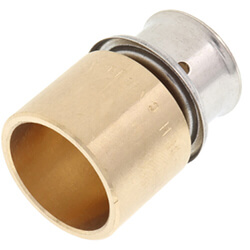


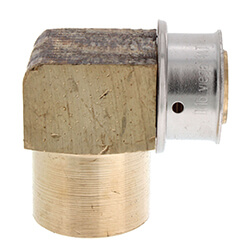
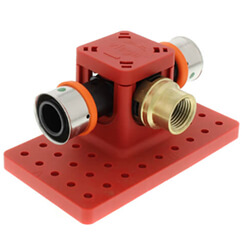
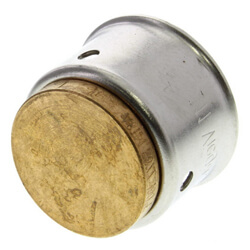

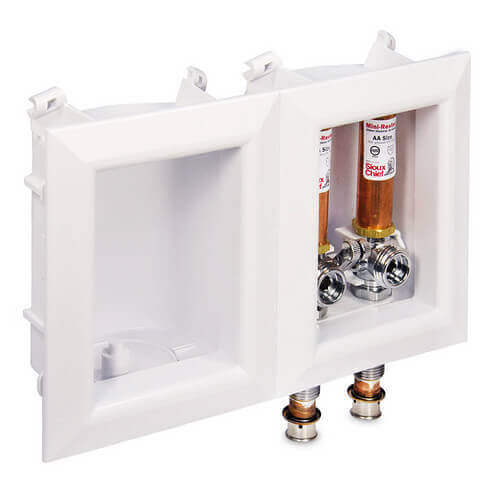

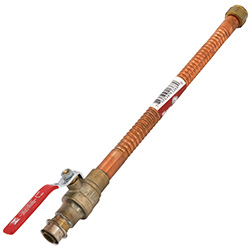
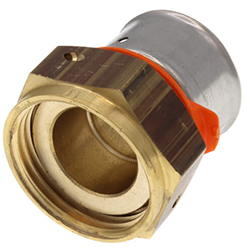
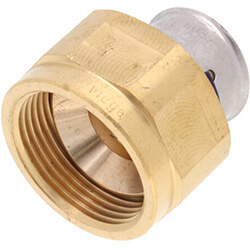
| PRODUCT | SIZE | SINGLE UNIT | BOX UP & SAVE | STOCK STATUS | LIST | COMPARE |
|---|

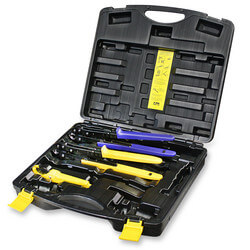
PEX press fittings connect PEX-a tubing using a battery-powered or manual press tool that expands and seats a stainless steel sleeve over the tubing and fitting, forming the connection without crimp rings, clamps, or an open flame. The fitting body is typically brass or a corrosion-resistant polymer, and the press sleeve is stainless steel so the joint holds up in both potable water and hydronic heating systems. Sizes commonly run from 3/8 inch up to 2 inch, covering everything from a single fixture supply line to a whole-house trunk line.
Contractors reach for press fittings on jobs where an open flame isn't practical, such as remodels near finished framing or occupied spaces, and because a press connection can be made faster than sweating copper once the tool and jaw are on hand. The trade-off is the up-front cost of the press tool itself, which is why plumbers weigh press fittings against crimp or clamp systems based on job volume.
Subcategories
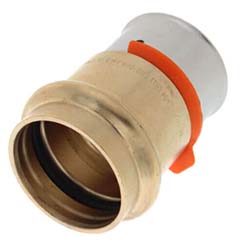
- Press Couplings: Press couplings join two lengths of PEX tubing in a straight run, which comes up constantly when extending an existing line or repairing a section of pipe. They use the same press jaw as other fittings in the line, so a plumber already carrying the tool for elbows and tees doesn't need a separate crimp setup for couplings. Reducing couplings are also available for stepping down tubing size mid-run.
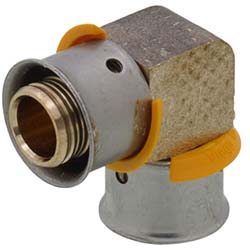
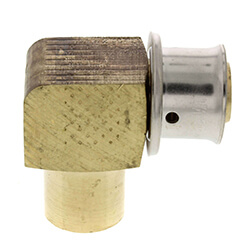
- Press Elbows: Press elbows change the direction of a PEX run, most commonly at 90 degrees, and are used constantly when routing tubing around framing members or into a wall stub-out. Because the fitting is pressed rather than crimped, there's no ring to slide over the tubing ahead of time, which speeds up work in tight stud bays. Drop-ear elbows are also common in this category for securing a fixture stub-out to framing.
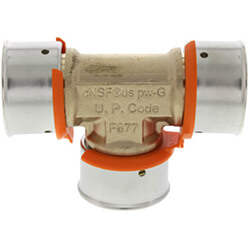
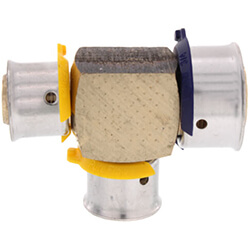
- Press Tees: Press tees branch a single PEX line into two directions, which is the standard way to split a supply line to feed multiple fixtures off one trunk. Equal and reducing tee configurations are both common, letting a plumber step down to a smaller branch line without adding a separate reducing fitting. These see heavy use in manifold-style and trunk-and-branch plumbing layouts alike.
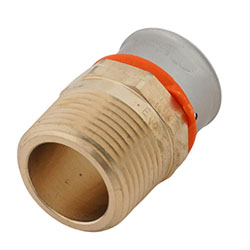
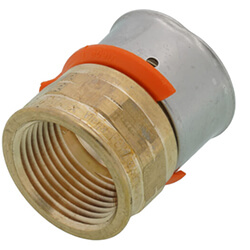
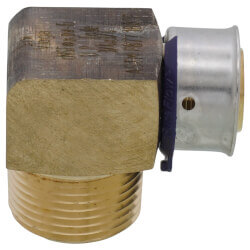
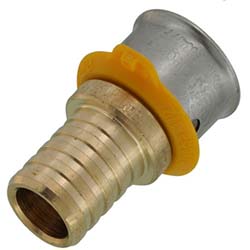
- Press Adapters: Press adapters transition PEX tubing to another pipe material or thread type, most often copper, NPT-threaded fittings, or a fixture stub-out. They let a plumber tie a PEX run into an existing copper system, or terminate at a valve or fixture connection that expects threaded pipe. Because the transition happens in one fitting, there's no need for a separate union or dielectric fitting in most cases.
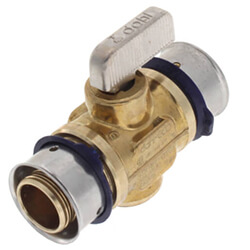
- Press Ball Valves: Press ball valves give a PEX run a shutoff point without needing a threaded or sweat connection on either side, which is useful for isolating a fixture or a branch line for future service. The valve body presses directly onto the tubing the same way any other press fitting does, keeping the whole run consistent. These are commonly installed at manifolds and just ahead of fixture stub-outs.
Buying Guide
The first thing to confirm is tubing compatibility. Press fittings are made for PEX-a tubing specifically, since the expansion-style press connection relies on PEX-a's ability to stretch and recover around the fitting; PEX-b and PEX-c tubing use crimp or clamp systems instead. Mixing tubing types with the wrong fitting system won't produce a sealed joint.
Match the fitting size to the tubing diameter exactly, and confirm the press tool on hand has the correct jaw for that size before starting a run. PEX press fittings are sized the same way across brands, from 3/8 inch fixture supply lines up to 2 inch trunk lines, but jaws are size-specific, so a plumber moving between a small remodel and a larger trunk line job needs the matching jaw for each size.
Decide between brass and polymer fitting bodies based on the application. Brass fittings are the more common choice for hydronic heating systems and higher-temperature applications, while polymer fittings are frequently used on straightforward potable water branch lines where cost matters more than the added durability of metal.
Weigh the press method against crimp or clamp systems for the job at hand. Press fittings speed up work once the tool is on the truck, particularly in tight spaces or occupied buildings where a torch isn't practical, but the tool investment only pays off with regular use. For a one-off repair, a crimp fitting and hand tool may still be the more practical choice.
Keep spare stainless press sleeves and a few extra fittings of each size on hand, since a bad press or a fitting dropped in a stud bay is common on any job, and running out of a specific size mid-installation means a trip back to the supply house.
Frequently Asked Questions
Do PEX press fittings work with all types of PEX tubing?
No. Press fittings are designed for PEX-a tubing, which expands and recovers around the fitting during the press connection. PEX-b and PEX-c tubing use crimp or clamp fittings instead.
What sizes do PEX press fittings come in?
Press fittings commonly range from 3/8 inch up to 2 inch, covering everything from fixture supply lines to whole-house trunk lines. The press tool jaw has to match the fitting size being used.
Are brass or polymer press fittings better?
Brass fittings are the typical choice for hydronic heating and higher-temperature applications, while polymer fittings are common on standard potable water branch lines where cost is the bigger factor.
Why would I use press fittings instead of crimp fittings?
Press fittings don't require sliding a ring over the tubing ahead of time and can be faster to install once the press tool is on hand, which matters in tight stud bays or occupied spaces where working room is limited.
Can PEX press fittings be used to transition to copper pipe?
Yes, press adapters are made specifically to transition PEX tubing to copper, NPT-threaded connections, or a fixture stub-out in a single fitting, without needing a separate union.
