




Filters
SORT
Product Availability –
Brand –
Size –
Review Score –
 --%3E %3Csvg version='1.1' id='Fill' xmlns='http://www.w3.org/2000/svg' xmlns:xlink='http://www.w3.org/1999/xlink' x='0px' y='0px' viewBox='0 0 100 100' enable-background='new 0 0 100 100' xml:space='preserve'%3E %3Cpath fill='%23F15C02' d='M79.44,0.95H20.56C9.78,0.95,0.95,9.78,0.95,20.56v58.87c0,10.79,8.82,19.61,19.61,19.61h58.87 c10.79,0,19.61-8.83,19.61-19.61V20.56C99.05,9.78,90.22,0.95,79.44,0.95z M65.38,58.24l9.38,29.58L49.69,69.78L24.5,87.82 l9.34-29.6L8.8,39.6l30.73-0.17c0,0,6.98-19.61,10-28.93c0.54,1.36,9.88,29.1,9.88,29.1H91.2L65.38,58.24z'/%3E %3C/svg%3E)
 --%3E %3Csvg version='1.1' id='With-RB' xmlns='http://www.w3.org/2000/svg' xmlns:xlink='http://www.w3.org/1999/xlink' x='0px' y='0px' viewBox='0 0 100 100' enable-background='new 0 0 100 100' xml:space='preserve'%3E %3Cpath fill='%23FBC8B4' d='M79.44,0.95H20.56C9.78,0.95,0.95,9.78,0.95,20.56v58.87c0,10.79,8.82,19.61,19.61,19.61h58.87 c10.79,0,19.61-8.83,19.61-19.61V20.56C99.05,9.78,90.22,0.95,79.44,0.95z M65.38,58.24l9.38,29.58L49.69,69.78L24.5,87.82 l9.34-29.6L8.8,39.6l30.73-0.17c0,0,6.98-19.61,10-28.93c0.54,1.36,9.88,29.1,9.88,29.1H91.2L65.38,58.24z'/%3E %3C/svg%3E)
Price Range –
PEX Press Tools & Sleeves


 --%3E %3Csvg version='1.1' id='Half' xmlns='http://www.w3.org/2000/svg' xmlns:xlink='http://www.w3.org/1999/xlink' x='0px' y='0px' viewBox='0 0 100 100' enable-background='new 0 0 100 100' xml:space='preserve'%3E %3Cg%3E %3Cpath fill='%23F15C02' d='M30.05,70.23l3.79-12.01L8.8,39.6l30.73-0.17c0,0,6.98-19.61,10-28.93c0.54,1.36,9.88,29.1,9.88,29.1h1.58 L93.71,7.18c-3.58-3.82-8.66-6.23-14.28-6.23H20.56C9.78,0.95,0.95,9.78,0.95,20.56v58.87c0,5.41,2.22,10.32,5.79,13.88 L30.05,70.23z'/%3E %3C/g%3E %3Cpath fill='%23FBC8B4' d='M93.71,7.18L60.98,39.6H91.2L65.38,58.24l9.38,29.58L49.69,69.78L24.5,87.82l5.55-17.59L6.75,93.32 c3.55,3.54,8.44,5.73,13.82,5.73h58.87c10.79,0,19.61-8.83,19.61-19.61V20.56C99.05,15.4,97.01,10.69,93.71,7.18z'/%3E %3C/svg%3E)




 --%3E %3Csvg version='1.1' id='No-RB' xmlns='http://www.w3.org/2000/svg' xmlns:xlink='http://www.w3.org/1999/xlink' x='0px' y='0px' viewBox='0 0 100 100' enable-background='new 0 0 100 100' xml:space='preserve'%3E %3Cpath fill='%23CECECE' d='M79.44,0.95H20.56C9.78,0.95,0.95,9.78,0.95,20.56v58.87c0,10.79,8.82,19.61,19.61,19.61h58.87 c10.79,0,19.61-8.83,19.61-19.61V20.56C99.05,9.78,90.22,0.95,79.44,0.95z M65.38,58.24l9.38,29.58L49.69,69.78L24.5,87.82 l9.34-29.6L8.8,39.6l30.73-0.17c0,0,6.98-19.61,10-28.93c0.54,1.36,9.88,29.1,9.88,29.1H91.2L65.38,58.24z'/%3E %3C/svg%3E)

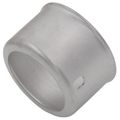


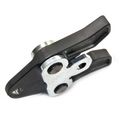


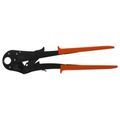
PEX Press Tools & Sleeves are the crimp-free connection system contractors use to join PEX tubing to fittings by compressing a stainless steel sleeve over the tubing and fitting together. Press tools from Milwaukee, Ridgid, and Viega drive interchangeable jaws, with kits commonly covering 1/2 inch, 3/4 inch, and 1 inch connections in one case. Sleeves are stocked from 3/8 inch up to 2 inch and work with brass fittings meeting ASTM F1807 or PPSU fittings meeting ASTM F2159, and many include a view hole so an installer can confirm the tubing seated fully before pressing. Plumbers and mechanical contractors reach for this system on repipe and new construction jobs because pressing a connection takes seconds and does not call for a torch, which matters on jobs where open flame near PEX tubing is not an option.
Subcategories
- Battery-Powered Press Tools: Milwaukee and Ridgid battery press tools drive jaws hydraulically off a cordless platform, so a plumber does not need a hose or compressor on site to make a connection. Jaw kits for these tools commonly cover 1/2 inch, 3/4 inch, and 1 inch fittings in a single case. Crews doing repipe or new construction work in volume reach for a battery tool since it holds up to repeated pressing all day without hand fatigue. Interchangeable jaws let one tool body cover a full range of fitting sizes instead of buying a separate machine per size.
- Manual Hand Press Tools: Viega hand press tools use a mechanical lever instead of a battery or hydraulic pump to compress the sleeve onto the fitting. Contractors doing occasional press connections or working in tight spaces where a bulkier battery tool will not fit reach for the hand version. Hand tools cover the same 1/2 inch to 1 inch range as battery models, just with more effort per press. A hand tool also serves as a backup on a truck when the main battery tool needs charging or service.
- Press Jaws: Press jaws are the interchangeable heads that mount on the tool body and match a specific fitting size, commonly 1/2 inch, 3/4 inch, or 1 inch. Buying additional jaws lets a contractor expand one tool across a full size range instead of purchasing a new press machine for every diameter on the job. Jaws wear over time from repeated compression cycles, so replacing a worn jaw restores a proper seal without replacing the whole tool. Matching jaw brand to the tool body matters, since jaws are not always interchangeable across manufacturers.
- Stainless Steel Press Sleeves: Press sleeves are stocked from 3/8 inch up to 2 inch and compress over the PEX tubing and fitting barb during pressing to form the seal. Sleeves work with brass fittings meeting ASTM F1807 or PPSU fittings meeting ASTM F2159, giving a contractor sleeve options that match whichever fitting brand is already specified on the job. Many sleeves include a view hole so an installer can check that the tubing seated fully into the fitting before pressing. Every press connection depends on the sleeve, since it is the sleeve, not the tool, that actually creates the compression around the joint.
Buying Guide
Picking between PEX Press Tools & Sleeves starts with the volume of connections expected on a job. A crew making dozens of connections a day benefits from a battery-powered tool, since hydraulic jaw pressure and a cordless platform cut down on hand fatigue compared to a manual hand tool. A service tech making an occasional repair connection can get by with a hand press tool instead, saving the cost of a battery platform for work that does not need it.
Jaw size range matters as much as the tool itself. Confirming a kit covers every fitting size expected on a project, commonly 1/2 inch, 3/4 inch, and 1 inch, avoids a mid-job trip to buy an additional jaw. Jaws also need to match the tool body brand, since a jaw built for one manufacturer's press machine does not always mount on another.
Sleeve compatibility depends on the fitting brand already specified on the job. Brass fittings built to ASTM F1807 and PPSU fittings built to ASTM F2159 both use a stainless steel sleeve, but confirming the sleeve matches the fitting material and size before pressing avoids a failed connection. Checking for a view hole on the sleeve gives an installer a way to confirm the tubing seated fully before compressing the joint, which matters most on connections that will end up buried in a wall or slab where a leak is not easy to find later.
Frequently Asked Questions
What sizes do PEX press jaws commonly cover?
Press jaw kits for PEX press tools commonly cover 1/2 inch, 3/4 inch, and 1 inch fittings in one case. Larger and smaller jaws are available separately for jobs running outside that range. Matching jaw size to the fitting on hand, rather than forcing a close but wrong size, keeps the compression seal correct.
Can a Milwaukee jaw be used on a Ridgid press tool?
Press jaws generally do not cross over between tool brands, since each manufacturer builds its jaws to mount on its own press machine. Confirming jaw and tool body compatibility before ordering avoids a jaw that arrives and does not fit. Sticking with one tool brand on a truck keeps jaw purchases straightforward going forward.
What sizes are PEX press sleeves available in?
PEX press sleeves are stocked from 3/8 inch up to 2 inch to match the tubing and fitting size on a job. Stainless steel construction across that size range compresses over the tubing and fitting barb to form the seal. Picking the sleeve size that matches both the tubing and the fitting exactly is what makes a press connection hold.
Do press sleeves work with any brand of PEX fitting?
Press sleeves work with brass fittings meeting ASTM F1807 or PPSU fittings meeting ASTM F2159, so compatibility depends on which fitting standard a job specifies. Checking the fitting brand and material before ordering sleeves keeps the sleeve and fitting from mismatching. A mismatched sleeve and fitting combination can compromise the seal even if the sleeve technically fits the tubing size.
What does the view hole on a press sleeve do?
A view hole on a press sleeve lets an installer see that the PEX tubing pushed all the way into the fitting before compressing the joint. Skipping that check risks pressing a sleeve onto a connection where the tubing did not seat fully. Confirming full insertion through the view hole takes only a second and prevents a leak that would otherwise show up after the wall or slab is closed.
