




Filters
SORT
Product Availability –
Size –
Fuel Type –
BTU Capacity (Burner) –
BTU Capacity (Burner And Pilot) –
BTU Capacity (Fixed Orifice) –
Review Score –
 --%3E %3Csvg version='1.1' id='Fill' xmlns='http://www.w3.org/2000/svg' xmlns:xlink='http://www.w3.org/1999/xlink' x='0px' y='0px' viewBox='0 0 100 100' enable-background='new 0 0 100 100' xml:space='preserve'%3E %3Cpath fill='%23F15C02' d='M79.44,0.95H20.56C9.78,0.95,0.95,9.78,0.95,20.56v58.87c0,10.79,8.82,19.61,19.61,19.61h58.87 c10.79,0,19.61-8.83,19.61-19.61V20.56C99.05,9.78,90.22,0.95,79.44,0.95z M65.38,58.24l9.38,29.58L49.69,69.78L24.5,87.82 l9.34-29.6L8.8,39.6l30.73-0.17c0,0,6.98-19.61,10-28.93c0.54,1.36,9.88,29.1,9.88,29.1H91.2L65.38,58.24z'/%3E %3C/svg%3E)
 --%3E %3Csvg version='1.1' id='With-RB' xmlns='http://www.w3.org/2000/svg' xmlns:xlink='http://www.w3.org/1999/xlink' x='0px' y='0px' viewBox='0 0 100 100' enable-background='new 0 0 100 100' xml:space='preserve'%3E %3Cpath fill='%23FBC8B4' d='M79.44,0.95H20.56C9.78,0.95,0.95,9.78,0.95,20.56v58.87c0,10.79,8.82,19.61,19.61,19.61h58.87 c10.79,0,19.61-8.83,19.61-19.61V20.56C99.05,9.78,90.22,0.95,79.44,0.95z M65.38,58.24l9.38,29.58L49.69,69.78L24.5,87.82 l9.34-29.6L8.8,39.6l30.73-0.17c0,0,6.98-19.61,10-28.93c0.54,1.36,9.88,29.1,9.88,29.1H91.2L65.38,58.24z'/%3E %3C/svg%3E)
Poppet Regulators

 --%3E %3Csvg version='1.1' id='No-RB' xmlns='http://www.w3.org/2000/svg' xmlns:xlink='http://www.w3.org/1999/xlink' x='0px' y='0px' viewBox='0 0 100 100' enable-background='new 0 0 100 100' xml:space='preserve'%3E %3Cpath fill='%23CECECE' d='M79.44,0.95H20.56C9.78,0.95,0.95,9.78,0.95,20.56v58.87c0,10.79,8.82,19.61,19.61,19.61h58.87 c10.79,0,19.61-8.83,19.61-19.61V20.56C99.05,9.78,90.22,0.95,79.44,0.95z M65.38,58.24l9.38,29.58L49.69,69.78L24.5,87.82 l9.34-29.6L8.8,39.6l30.73-0.17c0,0,6.98-19.61,10-28.93c0.54,1.36,9.88,29.1,9.88,29.1H91.2L65.38,58.24z'/%3E %3C/svg%3E)

 --%3E %3Csvg version='1.1' id='Half' xmlns='http://www.w3.org/2000/svg' xmlns:xlink='http://www.w3.org/1999/xlink' x='0px' y='0px' viewBox='0 0 100 100' enable-background='new 0 0 100 100' xml:space='preserve'%3E %3Cg%3E %3Cpath fill='%23F15C02' d='M30.05,70.23l3.79-12.01L8.8,39.6l30.73-0.17c0,0,6.98-19.61,10-28.93c0.54,1.36,9.88,29.1,9.88,29.1h1.58 L93.71,7.18c-3.58-3.82-8.66-6.23-14.28-6.23H20.56C9.78,0.95,0.95,9.78,0.95,20.56v58.87c0,5.41,2.22,10.32,5.79,13.88 L30.05,70.23z'/%3E %3C/g%3E %3Cpath fill='%23FBC8B4' d='M93.71,7.18L60.98,39.6H91.2L65.38,58.24l9.38,29.58L49.69,69.78L24.5,87.82l5.55-17.59L6.75,93.32 c3.55,3.54,8.44,5.73,13.82,5.73h58.87c10.79,0,19.61-8.83,19.61-19.61V20.56C99.05,15.4,97.01,10.69,93.71,7.18z'/%3E %3C/svg%3E)
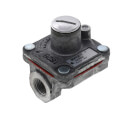
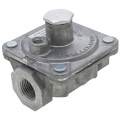
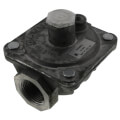
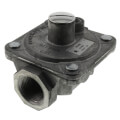
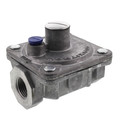
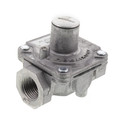
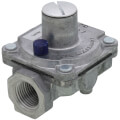
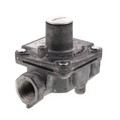
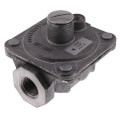
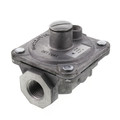
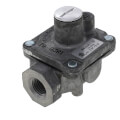
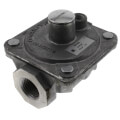
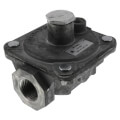
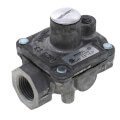
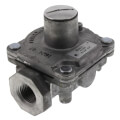
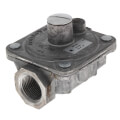
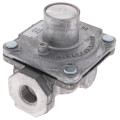
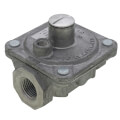
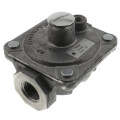
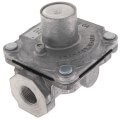
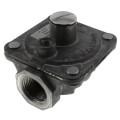
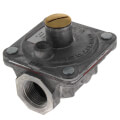
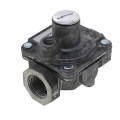
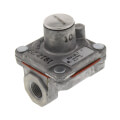
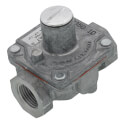
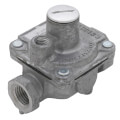
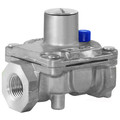
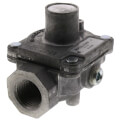


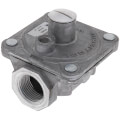
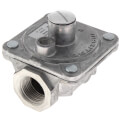
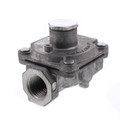
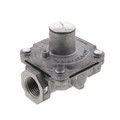
Poppet Regulators are gas pressure regulators built around a rubber seated poppet that lifts off its seat to admit gas and reseats as downstream pressure climbs back to setpoint. The design is used primarily for main burner and pilot load applications where equipment needs precise control of very small gas flows, down to as little as 0.15 CFH. Housings are high strength aluminum die castings, and most models mount in any plane or angle without restriction, with the exception of models carrying a D suffix. Rated for outlet pressure up to one half psi, poppet regulators work with natural, manufactured, mixed, and LP gas air mixtures, covering the fuel types most residential and commercial appliances run on. Contractors specify poppet regulators on cooking equipment, hearth products, pilot lines, and residential water heaters, where a compact regulator has to hold a steady low pressure setpoint inside a tight appliance enclosure without drifting under small load changes.
Subcategories
- 1/4 Inch Poppet Regulators: A 1/4 inch poppet regulator, such as the RV20L-1/4, is rated to handle up to 65,000 BTU per hour and threads directly into a small appliance or pilot supply line. Technicians reach for this size on cooking equipment, hearth appliances, and pilot circuits where the gas load stays modest and the connection needs to fit a compact fitting. The smaller pipe size keeps the regulator body compact enough for tight appliance cabinets. Its lower BTU rating matches it to single burner or pilot applications rather than a full furnace or boiler train.
- 3/4 Inch Poppet Regulators: A 3/4 inch poppet regulator, such as the RV48-3/4, steps up to a rating of 230,000 BTU per hour for larger main burner loads. Installers use this size on residential water heaters and larger appliances where a 1/4 inch connection wouldn't flow enough gas. The larger port size and body still use the same rubber seated poppet design as the smaller models. Choosing the 3/4 inch size over a smaller regulator comes down to matching the appliance's rated input to the regulator's flow capacity.
- Multi-Poise Poppet Regulators: Multi-poise poppet regulators mount in any plane or angle without restriction, giving an installer flexibility when appliance layout doesn't allow a level, upright installation. The exception is models carrying a D suffix, which are built for a single mounting position. Multi-poise construction matters most in tight appliance cabinets or retrofit jobs where the regulator has to fit wherever space allows. Checking for a D suffix on the model number before installing is a simple way to avoid a mounting orientation mistake.
Buying Guide
Sizing Poppet Regulators correctly starts with the appliance's rated BTU input rather than the pipe size already in the wall. Check the nameplate on the furnace, water heater, or cooking appliance for its maximum input, then choose a regulator rated at or above that number, such as the 65,000 BTU per hour rating on a 1/4 inch model or the 230,000 BTU per hour rating on a 3/4 inch model. Confirm the gas type next; poppet regulators are built for natural, manufactured, mixed, or LP gas air mixtures, and running the wrong gas through a regulator set up for another fuel throws off the outlet pressure the appliance expects. Mounting orientation is the next check. Most poppet regulators install in any plane or angle, but models with a D suffix are limited to a single position, so confirming the suffix on the nameplate avoids a failed inspection later. For pilot lines and small appliance circuits, the tight flow control down to fractions of a cubic foot per hour matters more than raw capacity, so match the regulator to the smallest reliable flow the pilot needs rather than oversizing it. Outlet pressure on every model in this line tops out at one half psi, so downstream equipment built for a higher setpoint needs a different regulator family entirely.
Frequently Asked Questions
What does poppet mean in a poppet style gas regulator?
A poppet is the spring loaded, rubber seated element inside the regulator that lifts off its seat to let gas through and reseats as pressure rises. The design gives tight shutoff and precise control over very small gas flows. Poppet regulators use this mechanism for main burner and pilot load applications rather than larger volume distribution work.
What size poppet regulator does a residential water heater need?
Many residential water heaters use a 3/4 inch poppet regulator rated up to 230,000 BTU per hour. Smaller appliances and pilot circuits typically use a 1/4 inch regulator rated closer to 65,000 BTU per hour instead. Matching the regulator's BTU rating to the appliance's nameplate input is the deciding factor, not just the pipe thread size.
Can a poppet regulator be mounted sideways or upside down?
Most poppet regulators are rated for multi-poise mounting and install in any plane or angle without restriction. Models carrying a D suffix in the model number are the exception and require a single mounting position. Checking the suffix before installation avoids a mounting error that could affect regulation.
What gas types work with a poppet regulator?
Poppet regulators are built to run on natural gas, manufactured gas, mixed gas, or an LP gas air mixture. Selecting a regulator for the correct fuel keeps the outlet pressure accurate for the appliance downstream. Running an unlisted gas type through the regulator isn't supported by the manufacturer's rating.
What outlet pressure does a poppet regulator hold?
Poppet regulators in this line are rated for outlet pressure up to one half psi. The rating covers main burner and pilot load applications, including cooking appliances, hearth products, and residential water heaters. Equipment requiring a higher outlet setpoint needs a different regulator family.
