




Filters
SORT
Product Availability –
Review Score –
 --%3E %3Csvg version='1.1' id='Fill' xmlns='http://www.w3.org/2000/svg' xmlns:xlink='http://www.w3.org/1999/xlink' x='0px' y='0px' viewBox='0 0 100 100' enable-background='new 0 0 100 100' xml:space='preserve'%3E %3Cpath fill='%23F15C02' d='M79.44,0.95H20.56C9.78,0.95,0.95,9.78,0.95,20.56v58.87c0,10.79,8.82,19.61,19.61,19.61h58.87 c10.79,0,19.61-8.83,19.61-19.61V20.56C99.05,9.78,90.22,0.95,79.44,0.95z M65.38,58.24l9.38,29.58L49.69,69.78L24.5,87.82 l9.34-29.6L8.8,39.6l30.73-0.17c0,0,6.98-19.61,10-28.93c0.54,1.36,9.88,29.1,9.88,29.1H91.2L65.38,58.24z'/%3E %3C/svg%3E)
Price Range –
Robertshaw Thermostats

 --%3E %3Csvg version='1.1' id='No-RB' xmlns='http://www.w3.org/2000/svg' xmlns:xlink='http://www.w3.org/1999/xlink' x='0px' y='0px' viewBox='0 0 100 100' enable-background='new 0 0 100 100' xml:space='preserve'%3E %3Cpath fill='%23CECECE' d='M79.44,0.95H20.56C9.78,0.95,0.95,9.78,0.95,20.56v58.87c0,10.79,8.82,19.61,19.61,19.61h58.87 c10.79,0,19.61-8.83,19.61-19.61V20.56C99.05,9.78,90.22,0.95,79.44,0.95z M65.38,58.24l9.38,29.58L49.69,69.78L24.5,87.82 l9.34-29.6L8.8,39.6l30.73-0.17c0,0,6.98-19.61,10-28.93c0.54,1.36,9.88,29.1,9.88,29.1H91.2L65.38,58.24z'/%3E %3C/svg%3E)
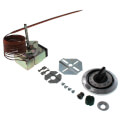

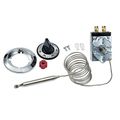
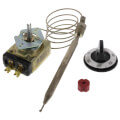

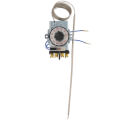
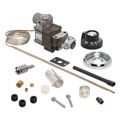
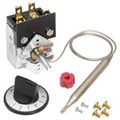
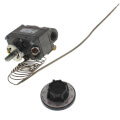
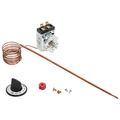
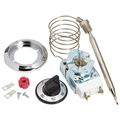
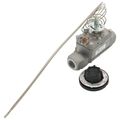
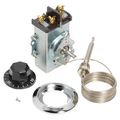
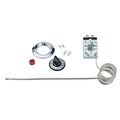
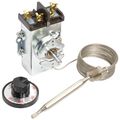
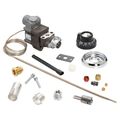
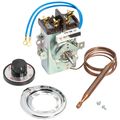
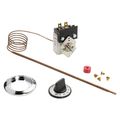
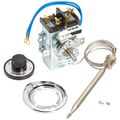
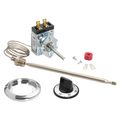
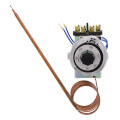

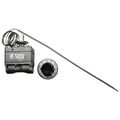
Robertshaw thermostats are heating and cooling controls built by a company that has manufactured electromechanical controls since 1899. Robertshaw operates as a global supplier of controls across gas management, fluid management, and specialty solutions, and its product line spans more than 40,000 distinct parts used in HVAC, appliance, and industrial applications. On the HVAC side, Robertshaw thermostats range from simple mechanical models used on baseboard heaters and unit heaters to programmable and line-voltage models for whole-system control. Robertshaw supplies both OEM manufacturers and the replacement parts market, so many of its thermostats work as direct replacements for controls that originally shipped with a specific piece of heating or cooling equipment. Matching the thermostat type, voltage, and mounting style to the original equipment keeps the replacement functioning the way the system was designed to operate.
Subcategories
- Line Voltage Thermostats: Line voltage thermostats switch the full electrical load of a heating device directly, without a separate low-voltage control circuit, which makes them common on electric baseboard heaters and unit heaters. Carrying the full line voltage and current of the connected heater means these thermostats need a rating sized to the heater's electrical load rather than a generic sizing. Robertshaw's line voltage models commonly serve as direct replacements on existing electric heating circuits.
- Millivolt Thermostats: Millivolt thermostats operate on the small electrical current a thermocouple or thermopile generates rather than external line or low-voltage power, which makes them common on gas-fired heaters without a standard electrical hookup. Self-powered operation is why millivolt systems often show up in wall furnaces, floor furnaces, and other appliances installed without nearby wiring. Matching the thermostat's millivolt range to the heater's gas valve stays necessary for reliable operation.
- Programmable and Digital Thermostats: Programmable and digital thermostats allow scheduled temperature setbacks throughout the day, which can reduce run time on systems that don't need to hold a single temperature around the clock. A stable low-voltage control circuit typically supports these models, and while that circuit is standard on most central heating and cooling systems, it isn't always present on baseboard or unit heater circuits. Digital models also commonly add features like larger displays or remote sensor compatibility beyond what mechanical thermostats offer.
Buying Guide
Selecting a Robertshaw thermostat starts with confirming the electrical type the existing system uses, since line voltage, low voltage, and millivolt thermostats aren't interchangeable without also changing the wiring or the heating appliance's control circuit. Line voltage thermostats switch the heater's full electrical load directly and need a rating that matches the heater's amperage, while millivolt thermostats run on the small current a thermocouple generates and size to the gas valve they control instead of to any external power source. Getting this wrong isn't just a performance issue: an underrated line voltage thermostat can create a safety hazard, and a mismatched millivolt thermostat may not generate enough control signal to open the gas valve reliably. Mounting style comes next, since some Robertshaw Thermostats install as flush wall-mount replacements for a specific style of baseboard or unit heater, while others mount to a standard low-voltage subbase used on central systems. Technicians replacing an older thermostat typically match the new unit to the original by electrical type and mounting style first, then consider added features like a programmable schedule or a larger display, since those features only matter once the basic electrical compatibility is confirmed.
Frequently Asked Questions
What's the difference between a line voltage and a low voltage thermostat?
A line voltage thermostat switches the heater's full electrical load directly, which is common on electric baseboard and unit heaters. A low voltage thermostat instead controls a separate 24-volt circuit that operates relays or valves in a central heating and cooling system. The two aren't interchangeable without changing the wiring the thermostat connects to.
How does a millivolt thermostat get its power?
A millivolt thermostat runs on the small electrical current a thermocouple or thermopile generates at the gas appliance itself, rather than from house wiring or a battery. Self-powered design is why millivolt systems commonly appear on wall furnaces and other gas appliances installed without a nearby electrical hookup. The thermostat's millivolt range needs to match the appliance's gas valve for reliable operation.
Can a programmable thermostat replace a mechanical one on any heating system?
Not always, since programmable and digital thermostats typically need a stable low-voltage control circuit that standard central heating and cooling systems provide but some baseboard or unit heater circuits don't. Checking the existing wiring type before upgrading avoids installing a thermostat the circuit can't properly power. A line voltage or millivolt system usually calls for a matching replacement rather than a programmable low-voltage model.
Why does thermostat replacement need to match electrical type exactly?
Matching electrical type isn't just about function, since an underrated line voltage thermostat can pose a safety risk if it can't handle the heater's amperage. A millivolt thermostat that doesn't match the appliance's gas valve may also fail to generate enough signal to operate reliably. Confirming electrical type first avoids both problems before considering any other feature.
Does Robertshaw make thermostats for both OEM and replacement markets?
Yes, Robertshaw supplies thermostats both to original equipment manufacturers and as standalone replacement parts, and many of its models work as direct replacements for controls that originally shipped with specific heating equipment. Finding a matching replacement gets easier without altering the wiring or mounting the original system was built around. Confirming the original equipment's specification remains the most reliable way to select the right replacement.
