




Filters
SORT
Product Availability –
Mount –
Voltage –
Review Score –
 --%3E %3Csvg version='1.1' id='Fill' xmlns='http://www.w3.org/2000/svg' xmlns:xlink='http://www.w3.org/1999/xlink' x='0px' y='0px' viewBox='0 0 100 100' enable-background='new 0 0 100 100' xml:space='preserve'%3E %3Cpath fill='%23F15C02' d='M79.44,0.95H20.56C9.78,0.95,0.95,9.78,0.95,20.56v58.87c0,10.79,8.82,19.61,19.61,19.61h58.87 c10.79,0,19.61-8.83,19.61-19.61V20.56C99.05,9.78,90.22,0.95,79.44,0.95z M65.38,58.24l9.38,29.58L49.69,69.78L24.5,87.82 l9.34-29.6L8.8,39.6l30.73-0.17c0,0,6.98-19.61,10-28.93c0.54,1.36,9.88,29.1,9.88,29.1H91.2L65.38,58.24z'/%3E %3C/svg%3E)
Price Range –
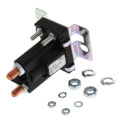
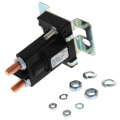
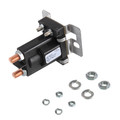
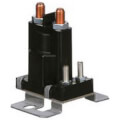
Solenoids


 --%3E %3Csvg version='1.1' id='No-RB' xmlns='http://www.w3.org/2000/svg' xmlns:xlink='http://www.w3.org/1999/xlink' x='0px' y='0px' viewBox='0 0 100 100' enable-background='new 0 0 100 100' xml:space='preserve'%3E %3Cpath fill='%23CECECE' d='M79.44,0.95H20.56C9.78,0.95,0.95,9.78,0.95,20.56v58.87c0,10.79,8.82,19.61,19.61,19.61h58.87 c10.79,0,19.61-8.83,19.61-19.61V20.56C99.05,9.78,90.22,0.95,79.44,0.95z M65.38,58.24l9.38,29.58L49.69,69.78L24.5,87.82 l9.34-29.6L8.8,39.6l30.73-0.17c0,0,6.98-19.61,10-28.93c0.54,1.36,9.88,29.1,9.88,29.1H91.2L65.38,58.24z'/%3E %3C/svg%3E)
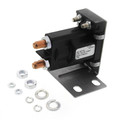
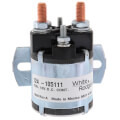
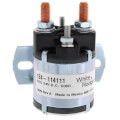
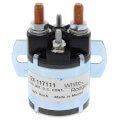
 --%3E %3Csvg version='1.1' id='Half' xmlns='http://www.w3.org/2000/svg' xmlns:xlink='http://www.w3.org/1999/xlink' x='0px' y='0px' viewBox='0 0 100 100' enable-background='new 0 0 100 100' xml:space='preserve'%3E %3Cg%3E %3Cpath fill='%23F15C02' d='M30.05,70.23l3.79-12.01L8.8,39.6l30.73-0.17c0,0,6.98-19.61,10-28.93c0.54,1.36,9.88,29.1,9.88,29.1h1.58 L93.71,7.18c-3.58-3.82-8.66-6.23-14.28-6.23H20.56C9.78,0.95,0.95,9.78,0.95,20.56v58.87c0,5.41,2.22,10.32,5.79,13.88 L30.05,70.23z'/%3E %3C/g%3E %3Cpath fill='%23FBC8B4' d='M93.71,7.18L60.98,39.6H91.2L65.38,58.24l9.38,29.58L49.69,69.78L24.5,87.82l5.55-17.59L6.75,93.32 c3.55,3.54,8.44,5.73,13.82,5.73h58.87c10.79,0,19.61-8.83,19.61-19.61V20.56C99.05,15.4,97.01,10.69,93.71,7.18z'/%3E %3C/svg%3E)
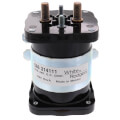
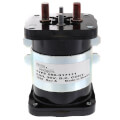
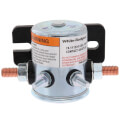
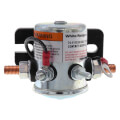
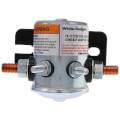
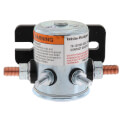

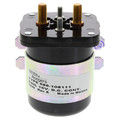
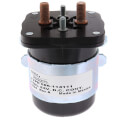
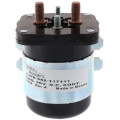
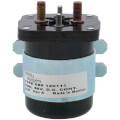
Solenoids are electromechanical devices that use an energized coil and a moving plunger to open or close a valve, or to actuate a switch, without a technician touching the mechanism directly. In HVAC, refrigeration, and plumbing systems, a solenoid is most often the working core of a solenoid valve, sitting on a gas line, water line, or refrigerant line to give a control board electric on-off control over flow. Contractors and technicians replace solenoids when a valve fails to open or close on command, when a coil burns out from age or a voltage mismatch, or when they're upgrading a manual shutoff to an electrically controlled one. Because solenoids come in normally open and normally closed configurations, matching the fail-safe behavior to the application matters as much as matching the voltage and pipe size, since the wrong configuration can leave a system either stuck open or stuck closed during a power interruption.
Subcategories
- Gas Valve Solenoids: These solenoids operate the shutoff mechanism inside a gas valve on a furnace, boiler, or water heater, opening the gas port on a call for heat and closing it the instant power is removed. HVAC technicians replace them when a unit won't ignite despite a good spark or hot surface igniter, since a failed solenoid coil is a common reason gas never reaches the burner. They're built as normally closed by design, a safety feature that shuts off fuel flow automatically if power is lost.
- Water and Irrigation Solenoids: Plumbers and irrigation contractors use these to add electric control to a water line, most often at a sprinkler zone valve or an automatic shutoff. A controller sends a low-voltage signal to open the solenoid on a schedule instead of requiring someone to turn a handle. They're typically sized to the pipe diameter and rated for continuous outdoor exposure since irrigation valve boxes sit below grade.
- Refrigeration Solenoid Coils: Refrigeration technicians use these to control refrigerant flow into an evaporator or through a liquid line, most commonly paired with a solenoid valve body ahead of a thermal expansion valve. Replacing just the coil, rather than the whole valve body, is common when the valve seat and body are still in good condition but the coil has failed electrically. Coil voltage must match the control circuit exactly, since an over-voltage or under-voltage coil will overheat or fail to seat.
- General-Purpose Control Solenoids: This group covers solenoids used outside a dedicated valve body, such as those built into control panels, safety interlocks, or equipment shutoff mechanisms. Facility technicians select these when integrating an existing mechanical system into an electrical control scheme rather than replacing the whole assembly. Mounting style and duty cycle rating matter here more than pipe size, since these solenoids often cycle far more frequently than a valve solenoid.
Buying Guide
Start with the application. A solenoid replacing a failed gas valve coil, an irrigation zone valve, or a refrigeration liquid-line valve each has a different housing, voltage class, and pressure rating, so matching the replacement to the exact application avoids a part that fits the pipe but not the system.
Confirm the fail-safe configuration before ordering. Normally closed solenoids shut off flow when power is lost, which is the standard and often code-required choice for gas and fuel applications. Normally open solenoids default to flow when de-energized, which suits some water and process applications where continuous flow during a power outage is preferred.
Match the coil voltage to the control circuit exactly. Common classes include low-voltage control circuits and standard line-voltage circuits, and installing the wrong class either burns out the coil immediately or leaves the solenoid too weak to seat fully.
Check the pressure and temperature rating against the line it's serving, since a solenoids category page covers products meant for very different services, from low-pressure irrigation water to higher-pressure refrigerant lines.
Finally, decide whether the job calls for a full valve replacement or just a coil swap. When the valve body and seat are undamaged, replacing only the coil is faster and less expensive than swapping the entire assembly, provided the new coil matches the original mounting and electrical rating.
Frequently Asked Questions
What's the difference between a normally open and normally closed solenoid?
A normally closed solenoid blocks flow until power energizes the coil, while a normally open solenoid allows flow until power closes it. Gas applications almost always use normally closed for safety.
Can I replace just the coil instead of the whole solenoid valve?
Yes, if the valve body and seat are still in good condition. Match the replacement coil's voltage and mounting exactly to the original before ordering.
Why did my gas valve solenoid fail?
Common causes include age-related coil burnout, a voltage mismatch between the coil and control circuit, or debris preventing the plunger from seating fully.
What voltage do irrigation solenoids typically use?
Most irrigation zone valve solenoids run on a low-voltage control circuit powered by the irrigation controller, not standard line voltage.
Do refrigeration solenoid coils need to match the valve body brand?
Not always, but the coil must match the valve body's mounting style and voltage rating, so check compatibility before assuming a universal fit.
