



'/%3E%3C/svg%3E)
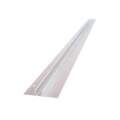
Wirsbo Joist Trak, 1/2" Heat Transfer Panel
 --%3E %3Csvg version='1.1' id='Fill' xmlns='http://www.w3.org/2000/svg' xmlns:xlink='http://www.w3.org/1999/xlink' x='0px' y='0px' viewBox='0 0 100 100' enable-background='new 0 0 100 100' xml:space='preserve'%3E %3Cpath fill='%23F15C02' d='M79.44,0.95H20.56C9.78,0.95,0.95,9.78,0.95,20.56v58.87c0,10.79,8.82,19.61,19.61,19.61h58.87 c10.79,0,19.61-8.83,19.61-19.61V20.56C99.05,9.78,90.22,0.95,79.44,0.95z M65.38,58.24l9.38,29.58L49.69,69.78L24.5,87.82 l9.34-29.6L8.8,39.6l30.73-0.17c0,0,6.98-19.61,10-28.93c0.54,1.36,9.88,29.1,9.88,29.1H91.2L65.38,58.24z'/%3E %3C/svg%3E)
 --%3E %3Csvg version='1.1' id='Half' xmlns='http://www.w3.org/2000/svg' xmlns:xlink='http://www.w3.org/1999/xlink' x='0px' y='0px' viewBox='0 0 100 100' enable-background='new 0 0 100 100' xml:space='preserve'%3E %3Cg%3E %3Cpath fill='%23F15C02' d='M30.05,70.23l3.79-12.01L8.8,39.6l30.73-0.17c0,0,6.98-19.61,10-28.93c0.54,1.36,9.88,29.1,9.88,29.1h1.58 L93.71,7.18c-3.58-3.82-8.66-6.23-14.28-6.23H20.56C9.78,0.95,0.95,9.78,0.95,20.56v58.87c0,5.41,2.22,10.32,5.79,13.88 L30.05,70.23z'/%3E %3C/g%3E %3Cpath fill='%23FBC8B4' d='M93.71,7.18L60.98,39.6H91.2L65.38,58.24l9.38,29.58L49.69,69.78L24.5,87.82l5.55-17.59L6.75,93.32 c3.55,3.54,8.44,5.73,13.82,5.73h58.87c10.79,0,19.61-8.83,19.61-19.61V20.56C99.05,15.4,97.01,10.69,93.71,7.18z'/%3E %3C/svg%3E)


MANUALS (3)
Product Highlights


Description
To find out the parts and quantities you will need for your application, use our easy, quick and convenient Joist Trak Calculator.
Please note: These panels require the use of #8 screws which are not included
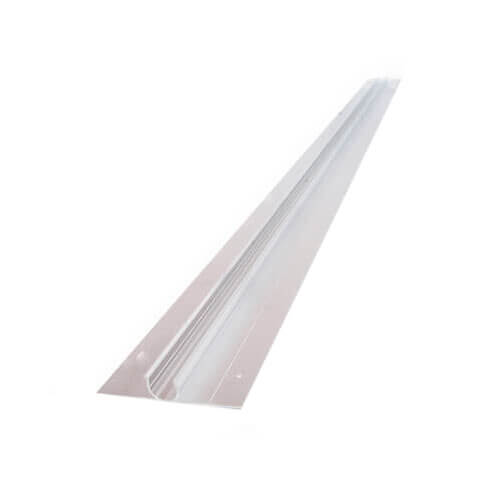
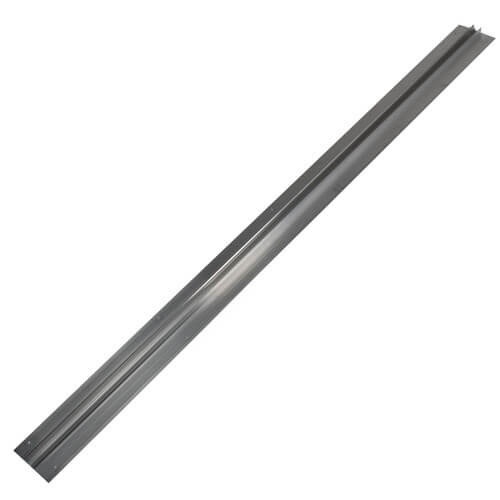
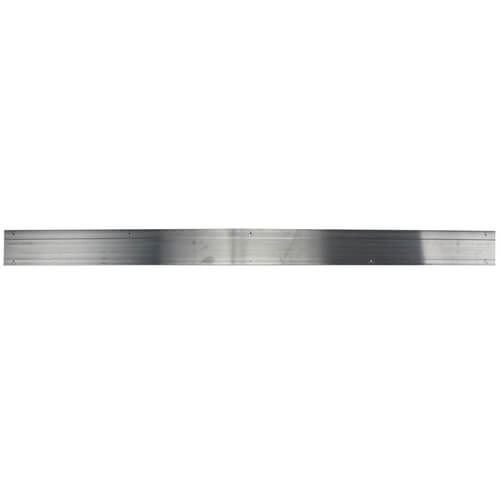
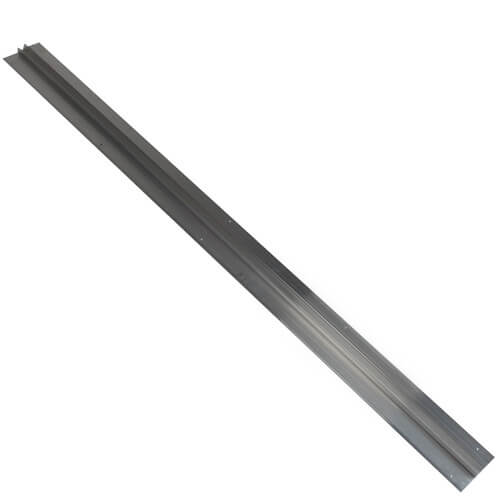
Use Uponor Wirsbo Joist Trak, extruded aluminum heat transfer panels, with Uponor Wirsbo 3/8" or 1/2" AQUAPEX or hePEX plus in floor joist applications. Each panel is 4 feet long by 3.5 inches wide. It provides easy installation, increased heat transfer and superior comfort.
Specs
| Width (Inches): | 3-1/2" |
|---|---|
| Material: | Aluminum |
| Tubing Compatibility: | PEX-a PEX-b |
| Application: | 1/2" PEX |
| Length (Inches): | 48" |
| Height: | .675" |
| Diameter: | 0.640" (Internal Channel) |
| Wall Thickness: | .050" |


Questions?

Compare Similar Products
You May Also Need
Product Reviews
Most Liked Positive Review
 --%3E %3Csvg version='1.1' id='With-RB' xmlns='http://www.w3.org/2000/svg' xmlns:xlink='http://www.w3.org/1999/xlink' x='0px' y='0px' viewBox='0 0 100 100' enable-background='new 0 0 100 100' xml:space='preserve'%3E %3Cpath fill='%23FBC8B4' d='M79.44,0.95H20.56C9.78,0.95,0.95,9.78,0.95,20.56v58.87c0,10.79,8.82,19.61,19.61,19.61h58.87 c10.79,0,19.61-8.83,19.61-19.61V20.56C99.05,9.78,90.22,0.95,79.44,0.95z M65.38,58.24l9.38,29.58L49.69,69.78L24.5,87.82 l9.34-29.6L8.8,39.6l30.73-0.17c0,0,6.98-19.61,10-28.93c0.54,1.36,9.88,29.1,9.88,29.1H91.2L65.38,58.24z'/%3E %3C/svg%3E)
Good basic product, easily improved
Most Liked Negative Review
Nope nope noooooooope!
Properly product
Plates work as expected.
Worked great in my application
Good heat conduction, sharp edges
Great product. No issues, works as intended.
Easiest to use
I would buy this again
I would buy these again.
Perfect for underfloor heating zone retrofits.
Good product with excellent customer service
Product Q&A
52 QuestionsQ: Can this product be used on a ceiling mounting format
Asked by Craig 14 years ago
Add your answer
Verified Reply- PexSupply StaffJoist Trak panels are most commonly used in floor heating applications, but they can be installed in walls or ceilings as well. For wall and ceiling applications, make sure to provide 5/8" thick filler boards between the channels of the Trak panels (5/8" sheetrock is commonly used).
They do mount to the ceiling and heat the subfloor of the floor above. Do not try and use these in a ceiling and try and heat the room below the ceiling. Heat won't fall.
If by ceiling mounting you mean under the upper floor to transfer the heat to the floor above it then yes. The plates are made to transfer or radiate the heat across the heated floor. Make sure to leave a gap between plates to compensate for the expansion and also make sure the ends are deburred.
I have my install in the floor joists. Heat rises, whatever is above the ceiling will get heated than what is below. If a radiant barrier and other insulating materials are used it will be better. I have seen electric heat panels installed in a ceiling so I guess it can be done.
If by ceiling you mean where the beams are exposed and contact can be made with the underlayment of the floor above then yes. If you are trying to heat the floor above by installing on an insulated or drywalled ceiling then no. Depends on what you are trying to do... could you use it to heat a room from the ceiling? I would not... heat rises and would pool in the 2-3 feet near the ceiling.
Q: Can 5/8 PEX be used in this 1/2" track? I imagine it would be snug but could still work, correct?
Asked by dlc 14 years ago
Add your answer
Verified Reply- PexSupply StaffWe wouldn't recommend it. The 1/2" panels are designed to fit tightly around 1/2" PEX.
No wont work.
I would say no, it would not work. The 1/2" is already a snug fit.
No
1/2 inch pex has a 5/8 dia OD. If 5/8 pex has a 3/4 dia OD you could probably force it in because the fins would flex but I don't know if it would be as efficient as having as much surface contact with the pipe.
Q: I installed the 1/2" heat transfer panels between the basement joists. I do get heat above on the 1st floor. I never put any type of insulation into the joists housing the transfer panels. The basement area below the transfer plates actually get too warm. Would it be beneficial to add insulation into the joist cavaties? If yes, can I use either foam or batts?
Asked by Steve 14 years ago
Add your answer
Verified Reply- PexSupply StaffWe would always recommend installing insulation beneath the panels. You would be best off putting insulation with an R-value of 19 or higher directly against the Joist Trak.
I didn't have that problem because my basement is finished so the heat is kept above the dropped ceiling tiles but I would recommend some insulation. I would use either blue styrofoam or Kraft faced insulating bats but I would leave at least a few inches between the insulation and the tubing. Bud Bauer Baseline Contracting
I put in finer glass batts for my setup because my garage was getting a lot of heat.
What I did was staple up a cloth and then blew in dense packed cellulose between the joists. I finished the ceiling by screwing up 2" of foil faced polyiso foam board. You probably don't need the foam board.
You should absolutely insulate between the joists. I used a combination of the foil bubble wrap type of insulation 3-4 inches under the pex. Then normal faced insulation rolls to fill out the remaining area. This in my mind is mandatory. The difference in heat below and above the pex is dramatic. To insulate an air gap near the pex keeps the heat against the joists and floor. Once I did this my heat cycles on average twice a day and each heat cycle keeps the house warm for 3-4 hours. Without the insulation I would guess that the pex is 70% less effective. Lastly the heat transfer plates are a must. They have a similar effectiveness impact on heat transfer and retention.
Yes, you can insulate between the joists to help solve this. The best product to use is insulating foam panels with foil reflective coating on one side. Put the foil side up towards the tubing and transfer panels. Using this will both insulate, and reflect the heat up towards the room above where you need it. The panels are usually sold in 8ft by 4ft sheets. Just cut them to your joist spacing and install In the space, leaving a small air gap of an inch or 2.
I had the same problem. I ended up putting in batt insulation and I also had some bubblefoil wrap that I used and stapled to the joists...overkill!!! But it made a huge difference
I installed radiant foil insulation in the joists and closed the ends with fiberglass insulation. Made a huge difference.
Q: What is the proper type of screws to install this plates: #4,#6, #8, where do I get them???
Asked by beekmansup 14 years ago
Add your answer
Verified Reply- PexSupply StaffJoist Trak plates require #8 screws. You should use at least eight of the ten screw holes on each panel. You can get these screws at a local home improvement store.
Q: I'd like to use heavy duty staples for quick installation, is this possible with the heavy gauge of the aluminum? Also I'd like to have a completely separate loop off my manifold to run outside for snow melt in the winter. Is this recommended?
Asked by MEP Engineer 14 years ago
Add your answer
The gauge is much too thick for a staple. The plates a very heavy duty. You can do a seperae loop but it must be capable of being a closed loop with glycol in it. Sent from my iPhone
The plates need to fit very tight against the sub flooring and I suggest taking the time and install screws into them! I purchased Phillip head stainless steel screws and installed well over 6500 hundred of these screws, complaining every time one would drop BUT when I was done and the floor heated up very nicely I was glad I took the time to secure the plates and you will to. As for an outside one, this is exactly what I did but added a heat exchanger so I could run a small amount of antifreeze in the outside one. That way if ever we lost power and couldn't pump to the outside I knew it wouldn't burst. I did the same loop for my driveway, side walk and inside the garage.
Also make sure to debur the edges. Some came very course where other came very smooth. I used a Dremel with a file head that made life very easy!
Re question 1; it's possible to use a compressed air gun that shoots staples but I would test it out first to get the required air pressure. And I would think you'd have a more positive experience with a short brad nails. Put enough in and at angles so that over time with the aluminum expanding and contracting it will hold. Re question 2; it's possible but can be very tricky. I would put a mixing valve on there before going outside since you don't want it to be too hot. Also, konw that you are going to be exchanging a lot of heat outside. That means a good portion of heat energy that your heat source creates will go to heating up the cold water coming back in from outside. I'd put it on a line that is valved off so you can turn it on and off when it snows easily. Also, I'd refer to some of the literature on pexsupplycom's website regarding snow melt systems. They run a bit differently than the traditional radiant (in house) heating system. Joe C West Chester, PA
Q: how does the pex stay in the Trak? do i need special clips
Asked by adam 15 years ago
Add your answer
Verified Reply- PexSupply StaffThe PEX tubing snaps into the Joist Trak. No clips or additional parts are necessary.
The PEX stays in the Wirsbo Joist Trak, 1/2 Heat Transfer Panel by friction. No special clips of any type are required.
Just hammer it in. It's that easy
Look at the specs of the pipe your using you will notice the pipe is slightly smaller than the groove. I would suggest a rubber mallot. To press the tubing into place.
Q: Should I lay in a bead of silicone when installing the tubing into the trak before screwing the track in the subfloor?
Asked by Michael 15 years ago
Add your answer
Verified Reply- PexSupply StaffSilicone is not necessary with Joist Trak panels.
Q: If I have a 24" space between panels in the center of a room with 3/4" subfloor and tile above do you think there will be cold spots in the floor or big difference in efficiency.
Asked by 15 years ago
Add your answer
Verified Reply- PexSupply StaffJoist Trak panels are designed to minimize cold spots and facilitate even heat distribution.
Q: I am planning a Joist Trak System under the sub floor. There is blocking between the joists. Do I need to remove the blocking or should I just drill through the joist blocking and feed the pex pipe through to the next trak.
Asked by John 15 years ago
Add your answer
Verified Reply- PexSupply StaffMost people drill through the joist blocking and feed the pex pipe through to the next joist trak
Q: I am using 4' track for the straight runs, but is it necessary to use some kind of track in the tubing loops between the joists? or will the heat loss be negligible?
Asked by Bill 15 years ago
Add your answer
Verified Reply- PexSupply StaffYou would not need any trak in the loops. The heat loss would, in fact, be negligible.