




Filters
SORT
Product Availability –
Product Type –
Capacity (lbs) –
Color –
Review Score –
 --%3E %3Csvg version='1.1' id='Fill' xmlns='http://www.w3.org/2000/svg' xmlns:xlink='http://www.w3.org/1999/xlink' x='0px' y='0px' viewBox='0 0 100 100' enable-background='new 0 0 100 100' xml:space='preserve'%3E %3Cpath fill='%23F15C02' d='M79.44,0.95H20.56C9.78,0.95,0.95,9.78,0.95,20.56v58.87c0,10.79,8.82,19.61,19.61,19.61h58.87 c10.79,0,19.61-8.83,19.61-19.61V20.56C99.05,9.78,90.22,0.95,79.44,0.95z M65.38,58.24l9.38,29.58L49.69,69.78L24.5,87.82 l9.34-29.6L8.8,39.6l30.73-0.17c0,0,6.98-19.61,10-28.93c0.54,1.36,9.88,29.1,9.88,29.1H91.2L65.38,58.24z'/%3E %3C/svg%3E)
 --%3E %3Csvg version='1.1' id='With-RB' xmlns='http://www.w3.org/2000/svg' xmlns:xlink='http://www.w3.org/1999/xlink' x='0px' y='0px' viewBox='0 0 100 100' enable-background='new 0 0 100 100' xml:space='preserve'%3E %3Cpath fill='%23FBC8B4' d='M79.44,0.95H20.56C9.78,0.95,0.95,9.78,0.95,20.56v58.87c0,10.79,8.82,19.61,19.61,19.61h58.87 c10.79,0,19.61-8.83,19.61-19.61V20.56C99.05,9.78,90.22,0.95,79.44,0.95z M65.38,58.24l9.38,29.58L49.69,69.78L24.5,87.82 l9.34-29.6L8.8,39.6l30.73-0.17c0,0,6.98-19.61,10-28.93c0.54,1.36,9.88,29.1,9.88,29.1H91.2L65.38,58.24z'/%3E %3C/svg%3E)
Price Range –
Vibration Isolators

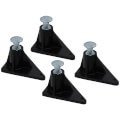

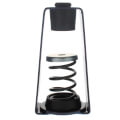
 --%3E %3Csvg version='1.1' id='No-RB' xmlns='http://www.w3.org/2000/svg' xmlns:xlink='http://www.w3.org/1999/xlink' x='0px' y='0px' viewBox='0 0 100 100' enable-background='new 0 0 100 100' xml:space='preserve'%3E %3Cpath fill='%23CECECE' d='M79.44,0.95H20.56C9.78,0.95,0.95,9.78,0.95,20.56v58.87c0,10.79,8.82,19.61,19.61,19.61h58.87 c10.79,0,19.61-8.83,19.61-19.61V20.56C99.05,9.78,90.22,0.95,79.44,0.95z M65.38,58.24l9.38,29.58L49.69,69.78L24.5,87.82 l9.34-29.6L8.8,39.6l30.73-0.17c0,0,6.98-19.61,10-28.93c0.54,1.36,9.88,29.1,9.88,29.1H91.2L65.38,58.24z'/%3E %3C/svg%3E)
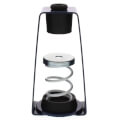
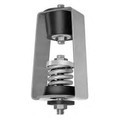
 --%3E %3Csvg version='1.1' id='Half' xmlns='http://www.w3.org/2000/svg' xmlns:xlink='http://www.w3.org/1999/xlink' x='0px' y='0px' viewBox='0 0 100 100' enable-background='new 0 0 100 100' xml:space='preserve'%3E %3Cg%3E %3Cpath fill='%23F15C02' d='M30.05,70.23l3.79-12.01L8.8,39.6l30.73-0.17c0,0,6.98-19.61,10-28.93c0.54,1.36,9.88,29.1,9.88,29.1h1.58 L93.71,7.18c-3.58-3.82-8.66-6.23-14.28-6.23H20.56C9.78,0.95,0.95,9.78,0.95,20.56v58.87c0,5.41,2.22,10.32,5.79,13.88 L30.05,70.23z'/%3E %3C/g%3E %3Cpath fill='%23FBC8B4' d='M93.71,7.18L60.98,39.6H91.2L65.38,58.24l9.38,29.58L49.69,69.78L24.5,87.82l5.55-17.59L6.75,93.32 c3.55,3.54,8.44,5.73,13.82,5.73h58.87c10.79,0,19.61-8.83,19.61-19.61V20.56C99.05,15.4,97.01,10.69,93.71,7.18z'/%3E %3C/svg%3E)
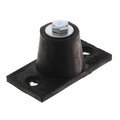
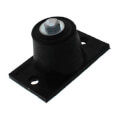
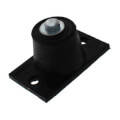

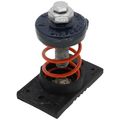
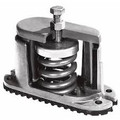
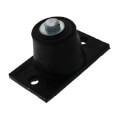
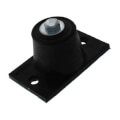
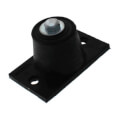
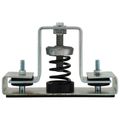
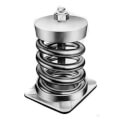
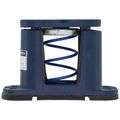
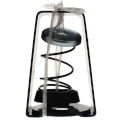
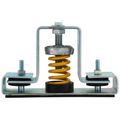
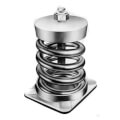
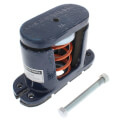
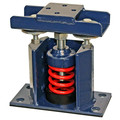
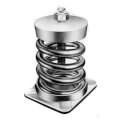
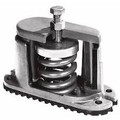

Vibration isolators are mechanical devices installed beneath or alongside HVAC equipment, pumps, and piping to keep operating vibration from transferring into a building's structure. A compressor, chiller, or air handler generates vibration as it runs, and without isolation that motion travels through a slab, hanger, or duct and shows up as noise or rattling in occupied spaces well away from the mechanical room. Spring, rubber, and pad-style isolators absorb that motion at the source by decoupling the equipment from its mounting surface. Selecting the right isolator depends on the weight of the equipment, its operating speed, and whether the installation sits on a slab, a suspended floor, or a roof curb. Mechanical contractors and HVAC installers use isolators on everything from rooftop condensing units to in-line pumps, matching isolator type and deflection to the specific piece of equipment rather than using a single style throughout a building.
Subcategories
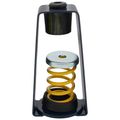
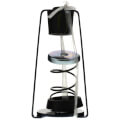
- Spring Vibration Isolators: Spring isolators use a coil spring housed in a steel cup to support heavy equipment such as chillers, large air handlers, and rooftop units where low-frequency vibration is a concern. The spring's deflection, how far it compresses under load, determines how effectively it isolates vibration at a given operating speed, so contractors size the spring to the equipment's weight and RPM. Open and housed spring designs are both common, with housed versions adding a restraint that limits horizontal movement during startup and shutdown. Roofing and structural engineers often specify spring isolators for rooftop equipment to protect the structure below.
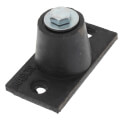
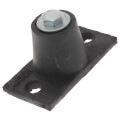
- Neoprene and Rubber Pad Isolators: Rubber and neoprene pads sit under smaller equipment, pumps, and duct supports where vibration levels are moderate and full spring isolation is not necessary. Pads come in various durometer ratings, with softer pads deflecting more under a given load and offering isolation at lower operating frequencies. Installers stack or layer pads under equipment feet or use molded waffle-pattern pads for even weight distribution. The pad style is common on light commercial and residential mechanical equipment where cost and simplicity matter alongside performance.
- Vibration Isolation Hangers: Isolation hangers suspend ductwork, piping, and overhead equipment from a structure while breaking the direct metal-to-metal path that would otherwise carry vibration upward. A rubber or spring element sits inside the hanger housing between the hanger rod and the supported load. Contractors use these hangers on suspended pump piping, fan sections, and ductwork runs near occupied spaces where structure-borne noise is a concern. Spacing and hanger selection typically follow the equipment manufacturer's or engineer's recommendations for the specific piping or duct size.
- Restrained and Seismic Vibration Isolators: Restrained isolators combine standard spring or elastomeric isolation with built-in snubbers or bolts that limit equipment movement during a seismic event or sudden pressure surge. Building codes in seismic zones often require this restraint on rooftop and floor-mounted mechanical equipment so a unit does not shift off its curb or base during ground motion. Contractors working in regions with seismic requirements install restrained isolators as standard practice rather than adding separate restraint hardware afterward. Engineers typically specify the restraint capacity based on the equipment's weight and the project's seismic design category.
Buying Guide
Selecting vibration isolators starts with identifying the equipment's weight, operating speed, and mounting location, since each of those factors changes which isolator type performs best. Heavy, low-speed equipment such as chillers and large air handlers typically calls for spring isolators, which deflect enough to absorb low-frequency vibration that lighter pad-style isolators cannot manage effectively. Smaller pumps, fan coils, and light equipment often do fine with rubber or neoprene pads, which cost less and install faster where vibration levels are modest.
Mounting location matters as much as equipment type. Rooftop units generally need isolators rated for outdoor exposure and, in many regions, seismic restraint that keeps the unit anchored to its curb during high winds or ground movement. Vibration Isolators installed on suspended floors or near occupied space below often need a higher deflection rating than the same equipment sitting on a slab-on-grade, since suspended structures transmit vibration more readily.
Checking the equipment manufacturer's isolation recommendations before ordering helps confirm the deflection range and load capacity match the actual installed weight, since an isolator sized for too little load will not compress enough to isolate vibration, while one sized for too much load may not compress at all. Coordinating isolator selection with a project engineer on code-required or seismic installations keeps the mechanical system compliant from rough-in through final inspection.
Frequently Asked Questions
What determines whether equipment needs spring isolators instead of pads?
Equipment weight and operating speed are the main factors. Heavy, low-speed equipment such as chillers and large air handlers generally needs the greater deflection that spring isolators provide, while smaller, lighter equipment often isolates effectively with rubber or neoprene pads. Consulting the manufacturer's isolation recommendations for a specific unit is the most reliable way to confirm which type applies.
Do rooftop units need a different isolator than floor-mounted equipment?
Rooftop equipment typically needs isolators rated for outdoor exposure and, depending on the region, seismic restraint that anchors the unit to its curb. Floor-mounted equipment on a slab generally has fewer restraint requirements than the same equipment mounted on a roof or a suspended floor. Local code and the project engineer's specifications determine the exact requirement for a given installation.
What is isolator deflection and why does it matter?
Deflection is how far an isolator compresses under the weight of the supported equipment, measured in a fraction of an inch. A greater deflection generally isolates lower-frequency vibration more effectively, which matters most for heavy, slow-turning equipment. Matching deflection to the equipment's actual operating speed and weight is central to selecting the correct isolator.
Can vibration isolation hangers be used on any duct or pipe run?
Isolation hangers work on most suspended duct and piping runs, but hanger size and spacing still need to match the load and span involved. Runs near occupied spaces or sensitive equipment benefit most from isolation hangers, since they interrupt the structure-borne path that vibration would otherwise travel. Spacing generally follows the same guidelines used for standard hangers, adjusted for the isolation hardware's dimensions.
Are seismic-restrained isolators only required in earthquake-prone regions?
Seismic restraint requirements are typically tied to a project's local building code and seismic design category, so requirements vary widely by location. Some regions require restrained isolators on all rooftop and floor-mounted mechanical equipment regardless of the building's size, while others apply requirements more selectively. Checking local code and the project's engineering documents is the standard way to confirm what a specific job requires.
