



'/%3E%3C/svg%3E)
 --%3E %3Csvg version='1.1' id='Fill' xmlns='http://www.w3.org/2000/svg' xmlns:xlink='http://www.w3.org/1999/xlink' x='0px' y='0px' viewBox='0 0 100 100' enable-background='new 0 0 100 100' xml:space='preserve'%3E %3Cpath fill='%23F15C02' d='M79.44,0.95H20.56C9.78,0.95,0.95,9.78,0.95,20.56v58.87c0,10.79,8.82,19.61,19.61,19.61h58.87 c10.79,0,19.61-8.83,19.61-19.61V20.56C99.05,9.78,90.22,0.95,79.44,0.95z M65.38,58.24l9.38,29.58L49.69,69.78L24.5,87.82 l9.34-29.6L8.8,39.6l30.73-0.17c0,0,6.98-19.61,10-28.93c0.54,1.36,9.88,29.1,9.88,29.1H91.2L65.38,58.24z'/%3E %3C/svg%3E)
 --%3E %3Csvg version='1.1' id='Half' xmlns='http://www.w3.org/2000/svg' xmlns:xlink='http://www.w3.org/1999/xlink' x='0px' y='0px' viewBox='0 0 100 100' enable-background='new 0 0 100 100' xml:space='preserve'%3E %3Cg%3E %3Cpath fill='%23F15C02' d='M30.05,70.23l3.79-12.01L8.8,39.6l30.73-0.17c0,0,6.98-19.61,10-28.93c0.54,1.36,9.88,29.1,9.88,29.1h1.58 L93.71,7.18c-3.58-3.82-8.66-6.23-14.28-6.23H20.56C9.78,0.95,0.95,9.78,0.95,20.56v58.87c0,5.41,2.22,10.32,5.79,13.88 L30.05,70.23z'/%3E %3C/g%3E %3Cpath fill='%23FBC8B4' d='M93.71,7.18L60.98,39.6H91.2L65.38,58.24l9.38,29.58L49.69,69.78L24.5,87.82l5.55-17.59L6.75,93.32 c3.55,3.54,8.44,5.73,13.82,5.73h58.87c10.79,0,19.61-8.83,19.61-19.61V20.56C99.05,15.4,97.01,10.69,93.71,7.18z'/%3E %3C/svg%3E)

MANUALS (3)
Product Highlights


Description
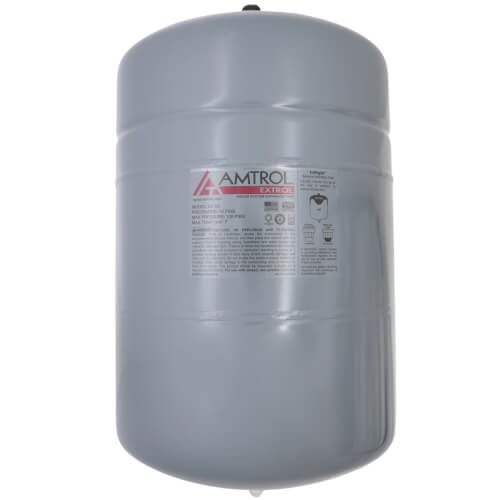
- For use with closed hydronic heating and cooling systems
- Factory pre-charged to 12 psig
- Pre-charge should be adjusted to equal minimum operating pressure at tank location
- Maximum working pressure: 100 psig
- Accepts 2.7 gallons of expansion
- Maximum operating temperature: 240ºF
Specs
| Tank Volume: | 6.7 Gallons |
|---|---|
| Height (Inches): | 23" |
| Warranty: | 7 Year Limited |
| Application: | Heating |
| Diameter (Inches): | 11" |
| Max Accepted Volume: | 2.5 Gallons |
| Max Pressure (PSI): | 100 |
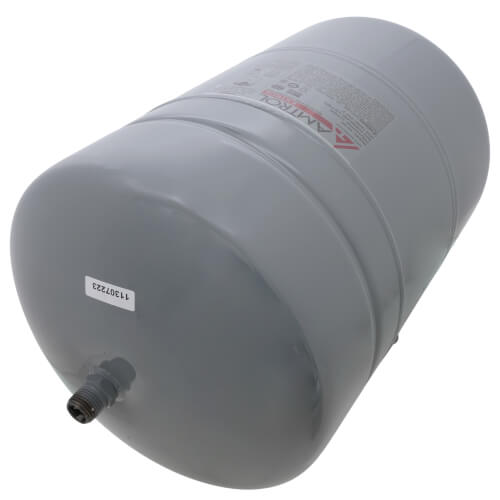
| Thread Type: | Male |
| Max Temp (F): | 240°F |
| Precharged PSI: | 12 psi |
| Thread Size: | 1/2" |

Questions?

Compare Similar Products
You May Also Need
Product Reviews
Most Liked Positive Review
giddy
Most Liked Negative Review
 --%3E %3Csvg version='1.1' id='With-RB' xmlns='http://www.w3.org/2000/svg' xmlns:xlink='http://www.w3.org/1999/xlink' x='0px' y='0px' viewBox='0 0 100 100' enable-background='new 0 0 100 100' xml:space='preserve'%3E %3Cpath fill='%23FBC8B4' d='M79.44,0.95H20.56C9.78,0.95,0.95,9.78,0.95,20.56v58.87c0,10.79,8.82,19.61,19.61,19.61h58.87 c10.79,0,19.61-8.83,19.61-19.61V20.56C99.05,9.78,90.22,0.95,79.44,0.95z M65.38,58.24l9.38,29.58L49.69,69.78L24.5,87.82 l9.34-29.6L8.8,39.6l30.73-0.17c0,0,6.98-19.61,10-28.93c0.54,1.36,9.88,29.1,9.88,29.1H91.2L65.38,58.24z'/%3E %3C/svg%3E)
Disappointed
Perfect fit
Quick delivery
Perfect
This was a great purchase
Excellent product
Would never buy from them again- shipped dented used product
Great product
Product arrived in perfect condition and works!
Would not buy again.
Benchmark expansion tank. Love the inspection window
Product Q&A
7 QuestionsQ: Is this tank suitable for use in a closed loop system containing glycol?
Asked by Chris 11 years ago
Add your answer
It’s been working fine for me for 6 years now in a closed loop system with propylene glycol.
Yes it is, see this guide to be sure you are getting the right size. http://www.amtrol.com/support/extrol_res_sizing.html
Q: I am converting an old overhead tank to a bladder tank after I piped in a spirovent last month. Your calculator tells me to use a #90, but amtrol's site sizes it for a #60? Output BTU is 120,000 and I have a mix of radiators and fin....which one is right?
Asked by Benj 11 years ago
Add your answer
Verified Reply- Supplyhouse Staffits hard to say without all the info, over sizing slightly wont hurt the system, under sizing will.
Q: can the expansion tank be mounted with the feed side down?
Asked by stel 12 years ago
Add your answer
Shouldn't be a problem with bladder tanks.
Yes you can, I have installed them Up down and sideways and they work fine.
Yes you can it will work the same either way!
Q: Installed on my system is an extrol model 60. The blow-off valve constantly releases when the temperature is set to 68 degrees and then the pressure rises to about 30 psi. The pressure tank always seems either cold or a little warm. i replaced the pressure valve already, so i am assuming the tank is not working properly(the pressure is holding at 12psi.) should i replace with the same model or a larger one? do you think from my description my diagnosis is correct?
Asked by IBK from NJ 12 years ago
Add your answer
I am just a home owner and novice at hot water systems, I have a 103 year old house with the original boiler and heating system that was converted from coal to natural gas in the 50's. I bought the Extrol Model 60 because the holding expansion tank in the attic had developed a leak and could not be repaired. The tank in the attic was exposed to the atmosphere and would allow water to expand by filling up the tank witch was above the entire system thus sealing the operating part of the system from the oxygen. I needed a way to regulate the expansion in the system by not having to have a tank in the attic and protecting the water from the corrosive power of oxygen. Now a 103 years have passed and we now have expansion tanks that can be installed right next to the boiler instead of the highest point on the system. It is possible to have to small of a expansion tank on your system, depending on the water volume your system contains. I am assuming you have a low pressure sealed hot water system? It should operate fine around 5 to 10lbs psi. The purpose of the tank is to absorb the expansion of the water as it heats up without exposing the water to oxygen, while not allowing the pressure to pop your blow off valve. Inside the tank is a rubber diaphragm that expands and allows water to fill inside the tank to equalize the pressure in the system. When the system cools down the water volume shrinks as does the rubber diaphragm pushing water back into the system. I am assuming that the valve stem you have pictured in the photo is the one on the bottom of the expansion tank, and NOT the pressure blow off valve that continually releases at 30 psi. The valve on the bottom of the tank is the other half of the expansion tank that holds air on the other side of the rubber diaphram, it comes from the factory with a pre- charged pressure. You can check the pressure of air in the tank with a tire pressure gauge. You can adjust the pressure in the tank by releasing the air or adding air with a bicycle pump. the purpose of the air pressure is to help the diaphragm regulate the pressure in the tank as different systems operate on different pressures. The air pressure in the tank could be so high that it is pushing to hard on the diaphragm and not allowing the water to expand into the tank, thus allowing the pressure to build up to high in the system. You can bleed off the air in the tank to equal the operating pressure of your system when the water is cold. As the system heats up you can watch the pressure gauge and bleed off the air little by little so it doesn't go to high above the operating pressure of your system. The same can happen if your volume of water in your system is so great that it expands so much it is filling the tank to full capacity and the pressure has no where to go. You would have to have a pretty huge house and system for this to happen with this size of tank. One way to check if the tank is too full of water is to tap on the tank lightly with you finger. The top of the tank should make a low thud sound meaning water is present, while the bottom should sound tinny and empty. As the water expands and heats up the thud sound should slowly creep down further toward the bottom of the tank. If your pressure valve is still blowing off and the tank sounds tinny, then water is not expanding in the tank, maybe a closed valve somewhere or a clogged pipe or to much air pressure in the bottom of the tank. If there is any water that leaks out of the valve on the bottom of the tank at any time, that means the diaphram is broken and the tank is completely shot. You need a new tank at this point. If only air comes out of the valve on the bottom the tank it is most likely fine. If water does not come out of the tank and it sounds full of water you can try pumping some air into the bottom of the tank and bleeding water out of the system to push the diaphragm up inside the tank giving some room for the water to expand, when the water is cold, less than a quarter of the top of the tank should contain water. Hope this helps, good luck.
There are a lot of variables involved. A couple things you didn't include are total system water volume and max system temp change. Glycol content too for expansion rate. Those factors dictate extrol tank size. IE: 100 liters of water expands by 1.28 liters going from 20 to 80C (from engineers toolbox) Aside from that, I'd test the tank bladder. Remove the tank and check the air pressure, if 0 try to add air, does it hold? Does the tank have water in it after being removed? - failed bladder.
Try releasing a little air out of the tank and see if any water comes with it, if so, the bladder is compromised and you need a new tank. If not I am not sure what is causing you issue.
Try releasing a little air out of the tank and see if any water comes with it, if so, the bladder is compromised and you need a new tank. If not I am not sure what is causing you issue.
Q: System is leaking at the top of the PRV check valve. What should I do to correct this?
Asked by 15 years ago
Add your answer
Verified Reply- PexSupply StaffWe would recommend that you repair or replace the PRV.
Q: I have a no-name (no model, no brand, nothing label on the tank) expansion tank in my hydronic system. It is leaking out some bubbles in the steel in the top part of the tank so I assume it needs replaced. The boilers are cast iron but the in floor radiant is plastic tubing. The existing tank is about 11 inches in diameter and about 20 inches in length. Can I assume a replacement tank of similar dimensions will work?
Asked by 15 years ago
Add your answer
Verified Reply- PexSupply StaffPlease use our expansion tank sizing calculator at the link below for a good estimate. http://www.pexsupply.com/pex/control/ExpansionTankSizeCalculator
Yes! After all it is working so far. #60 is pretty big. You can always use a larger Exp tank, but not too small or you will push water out of the boiler relief valve. I would go with an RX tank unless you are sure that your PEX has an oxygen barrier on it. I think that you have non-barrier PEX cuz your tank is rustin' out. If it does have a barrier use a regular tank (Extrol). Does your tank have the fill valve on top of the Exp tank (like a Filtrol-110 or a separate press. regulation fill valve to set system pressure)? The RX doesn't have any system pressure regulation built in like a Filtrol , so you need a P.R.(fill) Valve set to 12-15 psi.with RX tank inflated the same psi. If PEX is non-barrier get a good mico-bubbler, like a Sparco and not an air scoop, air eliminator. Cuz oxygen gets into non-barrier PEX and rusts out the iron parts.
Q: I have had a #60 Extrol Expansion Tank in my system operating flawlessly for 3 years, until I noticed a bubble in the paint near the top, side, where the groove that is formed at the factory is located. I touched the bubble, and it's leaking!!! Is this the proper tank for a cast iron closed loop heating system? The system pressure maximum is 22 PSI (hot water, not steam)
Asked by Dave 15 years ago
Add your answer
Verified Reply- PexSupply StaffYes, this is the correct tank.
How old is the Exp tank? Less than 5 yrs? You have oxygen getting into your system. Is your system In-Floor? Is it PEX plastic tubing? See Utah's response above about PEX. Your pressure should be 12-15 psi for a two story house, 16-19 psi @ 180 degrees. If your tank is rusting out because of O2 getting into your system, your rusting out the iron pumps, flanges, and heat exchanger in the boiler, too.---I've found in life everything works flawlessly until it doesn't.