




Filters
SORT
Product Availability –
Tank Volume –
Review Score –
 --%3E %3Csvg version='1.1' id='Fill' xmlns='http://www.w3.org/2000/svg' xmlns:xlink='http://www.w3.org/1999/xlink' x='0px' y='0px' viewBox='0 0 100 100' enable-background='new 0 0 100 100' xml:space='preserve'%3E %3Cpath fill='%23F15C02' d='M79.44,0.95H20.56C9.78,0.95,0.95,9.78,0.95,20.56v58.87c0,10.79,8.82,19.61,19.61,19.61h58.87 c10.79,0,19.61-8.83,19.61-19.61V20.56C99.05,9.78,90.22,0.95,79.44,0.95z M65.38,58.24l9.38,29.58L49.69,69.78L24.5,87.82 l9.34-29.6L8.8,39.6l30.73-0.17c0,0,6.98-19.61,10-28.93c0.54,1.36,9.88,29.1,9.88,29.1H91.2L65.38,58.24z'/%3E %3C/svg%3E)
 --%3E %3Csvg version='1.1' id='With-RB' xmlns='http://www.w3.org/2000/svg' xmlns:xlink='http://www.w3.org/1999/xlink' x='0px' y='0px' viewBox='0 0 100 100' enable-background='new 0 0 100 100' xml:space='preserve'%3E %3Cpath fill='%23FBC8B4' d='M79.44,0.95H20.56C9.78,0.95,0.95,9.78,0.95,20.56v58.87c0,10.79,8.82,19.61,19.61,19.61h58.87 c10.79,0,19.61-8.83,19.61-19.61V20.56C99.05,9.78,90.22,0.95,79.44,0.95z M65.38,58.24l9.38,29.58L49.69,69.78L24.5,87.82 l9.34-29.6L8.8,39.6l30.73-0.17c0,0,6.98-19.61,10-28.93c0.54,1.36,9.88,29.1,9.88,29.1H91.2L65.38,58.24z'/%3E %3C/svg%3E)
Price Range –
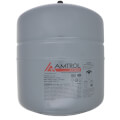
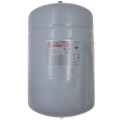
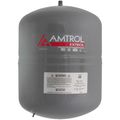
Extrol Expansion Tanks for Hydronic Heating



 --%3E %3Csvg version='1.1' id='Half' xmlns='http://www.w3.org/2000/svg' xmlns:xlink='http://www.w3.org/1999/xlink' x='0px' y='0px' viewBox='0 0 100 100' enable-background='new 0 0 100 100' xml:space='preserve'%3E %3Cg%3E %3Cpath fill='%23F15C02' d='M30.05,70.23l3.79-12.01L8.8,39.6l30.73-0.17c0,0,6.98-19.61,10-28.93c0.54,1.36,9.88,29.1,9.88,29.1h1.58 L93.71,7.18c-3.58-3.82-8.66-6.23-14.28-6.23H20.56C9.78,0.95,0.95,9.78,0.95,20.56v58.87c0,5.41,2.22,10.32,5.79,13.88 L30.05,70.23z'/%3E %3C/g%3E %3Cpath fill='%23FBC8B4' d='M93.71,7.18L60.98,39.6H91.2L65.38,58.24l9.38,29.58L49.69,69.78L24.5,87.82l5.55-17.59L6.75,93.32 c3.55,3.54,8.44,5.73,13.82,5.73h58.87c10.79,0,19.61-8.83,19.61-19.61V20.56C99.05,15.4,97.01,10.69,93.71,7.18z'/%3E %3C/svg%3E)

 --%3E %3Csvg version='1.1' id='No-RB' xmlns='http://www.w3.org/2000/svg' xmlns:xlink='http://www.w3.org/1999/xlink' x='0px' y='0px' viewBox='0 0 100 100' enable-background='new 0 0 100 100' xml:space='preserve'%3E %3Cpath fill='%23CECECE' d='M79.44,0.95H20.56C9.78,0.95,0.95,9.78,0.95,20.56v58.87c0,10.79,8.82,19.61,19.61,19.61h58.87 c10.79,0,19.61-8.83,19.61-19.61V20.56C99.05,9.78,90.22,0.95,79.44,0.95z M65.38,58.24l9.38,29.58L49.69,69.78L24.5,87.82 l9.34-29.6L8.8,39.6l30.73-0.17c0,0,6.98-19.61,10-28.93c0.54,1.36,9.88,29.1,9.88,29.1H91.2L65.38,58.24z'/%3E %3C/svg%3E)
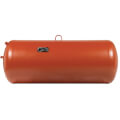
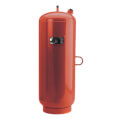
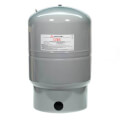
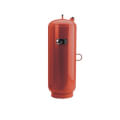
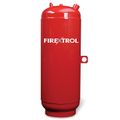
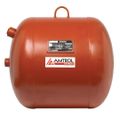

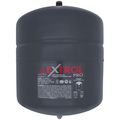
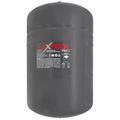


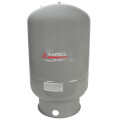
Extrol expansion tanks for hydronic heating are pre-pressurized diaphragm tanks installed on closed-loop hot water heating systems to absorb the volume change that occurs as system water heats and expands. Without an expansion tank, that expanding water has nowhere to go, which drives system pressure up and can trip a relief valve or stress boiler and piping connections. A diaphragm inside the tank separates the system water from a cushion of air, so the tank can accept the extra water volume without letting air mix into the heating loop.
Contractors specify these tanks on boiler and hydronic heating installations of nearly every size, from single-zone residential systems to larger multi-zone commercial loops, since any closed, water-filled heating system needs somewhere for thermal expansion to go. Sizing a tank correctly depends on total system water volume, the temperature range the system operates across, and the system's fill and operating pressures.
Subcategories
- Wall-Mounted Expansion Tanks: Smaller expansion tanks designed to mount on a wall bracket or hang from system piping, wall-mounted models suit residential and light commercial systems where mechanical room space is limited. Their compact size makes them a common fit for single-zone or small multi-zone boiler installations. Installers typically position them near the boiler where system pressure is most stable.
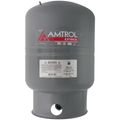
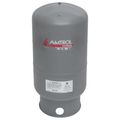
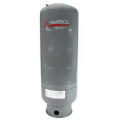
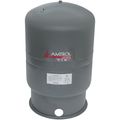
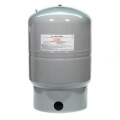
- Floor-Standing Expansion Tanks: Larger systems with higher total water volume need a floor-standing expansion tank sized to match that greater capacity. These tanks are common on commercial boiler installations and larger multi-zone residential systems where a wall-mounted tank wouldn't have sufficient volume. Their larger footprint requires floor space near the boiler room's piping connections.
- Replacement Diaphragms & Repair Parts: The internal diaphragm that separates system water from the air cushion is the component most likely to need service over a tank's service life, so replacement diaphragms and related repair parts keep existing tanks in service rather than requiring a full tank replacement. Stocking compatible repair parts alongside new tanks supports both new installs and service calls. Matching the replacement part to the specific tank model is necessary for a proper fit.
- Tank Fittings & Mounting Hardware: Mounting brackets, tank tees, and connection fittings support the installation of expansion tanks into an existing hydronic loop. A tank tee, in particular, is commonly used to connect the tank to the system piping while minimizing turbulence at the connection point. Having the right fittings on hand alongside the tank itself keeps a boiler installation or replacement moving without an extra parts trip.
Buying Guide
Correct sizing is the most important factor when selecting an expansion tank for a hydronic system. An undersized tank can't absorb the full volume of water expansion the system produces, leading to nuisance relief valve discharge or excess pressure cycling, while an oversized tank simply costs more without adding a functional benefit. Sizing calculations typically factor in total system water volume, the temperature swing between fill and operating conditions, and the system's fill and maximum operating pressures.
Mounting style should match the space available in the mechanical room. A wall-mounted tank suits smaller systems with limited floor space, while a floor-standing tank fits larger systems needing greater expansion capacity than a wall-mounted model can provide. Confirming the available mounting location before ordering a specific size avoids a tank that doesn't fit the intended space.
Extrol Expansion Tanks for Hydronic Heating should also be selected with the system's pre-charge pressure in mind. Every diaphragm tank ships with a factory air pre-charge that should be checked and adjusted, if needed, to match the system's actual fill pressure before it goes into service. Skipping that pre-charge check is a common reason a correctly sized tank still doesn't perform as expected.
Finally, plan for long-term serviceability by confirming that replacement diaphragms or repair kits are available for the specific tank model chosen. Systems that will be in service for many years benefit from choosing a tank line with accessible replacement parts rather than one that would require a full tank swap for a simple diaphragm failure.
Frequently Asked Questions
What does an expansion tank do in a hydronic heating system?
An expansion tank absorbs the volume increase that occurs as water in a closed heating loop heats up and expands. A diaphragm inside the tank separates that expanding system water from a pressurized air cushion, keeping system pressure within a normal operating range.
What happens if a hydronic system doesn't have an expansion tank, or the tank fails?
Without a functioning expansion tank, expanding water has nowhere to go, which drives system pressure up and can cause the relief valve to discharge repeatedly or put added stress on the boiler and piping connections. A failed diaphragm can also let system water flood the tank's air side, reducing its ability to absorb expansion.
How is an expansion tank sized for a specific system?
Sizing is based on the system's total water volume, the temperature range it operates across, and its fill and maximum operating pressures. A qualified contractor typically calculates these figures rather than matching a tank based on the boiler size alone.
Do expansion tanks need maintenance?
The tank's air pre-charge pressure should be checked periodically and adjusted if it has drifted from the system's fill pressure. Diaphragm tanks can also develop internal diaphragm failures over time, which typically shows up as water in the tank's air-charging valve.
Can a wall-mounted expansion tank be used on a larger commercial system?
It depends on the system's total water volume. Wall-mounted tanks are sized for smaller residential and light commercial applications, and a system with higher water volume generally needs a floor-standing tank sized to match that greater expansion capacity.
