




Filters
SORT
Product Availability –
Size –
Position –
Voltage –
Body Pattern –
Review Score –
 --%3E %3Csvg version='1.1' id='Fill' xmlns='http://www.w3.org/2000/svg' xmlns:xlink='http://www.w3.org/1999/xlink' x='0px' y='0px' viewBox='0 0 100 100' enable-background='new 0 0 100 100' xml:space='preserve'%3E %3Cpath fill='%23F15C02' d='M79.44,0.95H20.56C9.78,0.95,0.95,9.78,0.95,20.56v58.87c0,10.79,8.82,19.61,19.61,19.61h58.87 c10.79,0,19.61-8.83,19.61-19.61V20.56C99.05,9.78,90.22,0.95,79.44,0.95z M65.38,58.24l9.38,29.58L49.69,69.78L24.5,87.82 l9.34-29.6L8.8,39.6l30.73-0.17c0,0,6.98-19.61,10-28.93c0.54,1.36,9.88,29.1,9.88,29.1H91.2L65.38,58.24z'/%3E %3C/svg%3E)
Price Range –
Asco Gas Valves

 --%3E %3Csvg version='1.1' id='No-RB' xmlns='http://www.w3.org/2000/svg' xmlns:xlink='http://www.w3.org/1999/xlink' x='0px' y='0px' viewBox='0 0 100 100' enable-background='new 0 0 100 100' xml:space='preserve'%3E %3Cpath fill='%23CECECE' d='M79.44,0.95H20.56C9.78,0.95,0.95,9.78,0.95,20.56v58.87c0,10.79,8.82,19.61,19.61,19.61h58.87 c10.79,0,19.61-8.83,19.61-19.61V20.56C99.05,9.78,90.22,0.95,79.44,0.95z M65.38,58.24l9.38,29.58L49.69,69.78L24.5,87.82 l9.34-29.6L8.8,39.6l30.73-0.17c0,0,6.98-19.61,10-28.93c0.54,1.36,9.88,29.1,9.88,29.1H91.2L65.38,58.24z'/%3E %3C/svg%3E)
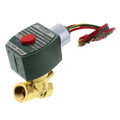
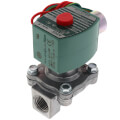

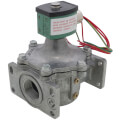
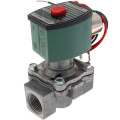
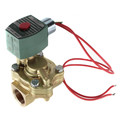

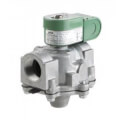
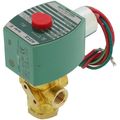
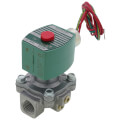
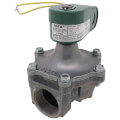
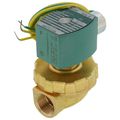

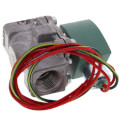
Asco gas valves are solenoid-operated valves used to control the flow of natural gas or propane to burners, furnaces, boilers, and other combustion equipment. An electrical signal from the equipment's control system opens or closes the valve, which is what lets a furnace or boiler shut off gas flow automatically the moment a safety condition isn't met. Because they sit directly in a fuel gas line, these valves are built and rated specifically for gas service rather than general-purpose fluid control. Matching the valve's pipe connection size and voltage rating to the equipment it's installed on is what keeps a combustion system's safety controls working the way they're designed to.
Subcategories
- Normally Closed Gas Solenoid Valves: These stay closed with no power applied and open only when energized, which is the standard fail-safe configuration for combustion gas shutoff. If power is lost, the valve defaults back to blocking gas flow. This is the configuration used in the large majority of residential and commercial combustion safety circuits.
- Redundant Gas Valve Assemblies: These combine two shutoff valves in a single body so that either one can independently stop gas flow, adding a layer of backup beyond a single valve. Commercial and industrial combustion systems often require this redundancy by code. Technicians replace these as a complete assembly rather than swapping individual internal components.
- Replacement Coils and Solenoid Kits: The electrical coil that operates the valve can fail independently of the valve body, so a replacement coil kit lets a technician restore function without replacing the whole valve. Matching the coil's voltage and connector style to the existing valve is essential here. This is a common service-call repair rather than a new-installation item.
Buying Guide
Pipe connection size and orientation need to match the existing gas line exactly, since gas valves are not a component to size up or down casually. Getting this wrong isn't just an installation inconvenience, it's a safety issue on a fuel gas line.
Voltage rating has to match the control circuit the valve is wired into, whether that's a standard line-voltage control or a low-voltage system tied into a furnace or boiler's control board. A mismatched coil voltage will either fail to operate the valve or damage the coil over time.
Normally closed configuration is standard for combustion safety applications, and Asco gas valves used in furnace, boiler, and burner circuits are almost always specified this way so the system defaults to a safe, gas-off state on any loss of power.
Redundant valve assemblies are worth checking against local code requirements before ordering, since many commercial and industrial combustion installations require dual shutoff rather than a single valve.
Replacement coils should be ordered by matching the existing valve's coil specifications exactly rather than assuming a universal fit, since coil voltage and connector styles vary across valve models and generations.
Frequently Asked Questions
Why do gas valves default to a closed position when power is lost?
This is a deliberate safety design so that any power interruption automatically stops gas flow rather than leaving it running unmonitored. Normally closed is the standard configuration for combustion shutoff applications.
Can I replace just the coil on a gas solenoid valve instead of the whole valve?
Yes, if the valve body itself is functioning correctly and only the electrical coil has failed, a matching replacement coil kit restores operation without replacing the full valve assembly.
What's a redundant gas valve assembly, and do I need one?
It's two shutoff valves combined into one body so a single failure doesn't leave the system without a working shutoff. Many commercial and industrial combustion installations require this by code, so it's worth checking local requirements before choosing a standard single valve instead.
What happens if I install a gas valve with the wrong voltage rating?
A mismatched coil voltage will either fail to actuate the valve properly or damage the coil over time. Always match the coil voltage to the control circuit it's wired into.
Are gas valves interchangeable across different equipment brands?
Not automatically. Pipe connection size, voltage, and control wiring vary across furnace, boiler, and burner manufacturers, so the replacement valve needs to match the original equipment's specifications rather than just the gas type.
