




Filters
SORT
Product Availability –
Connection Size –
Horse Power –
Max Flow (GPM) –
Max Head (Ft) –
Review Score –
 --%3E %3Csvg version='1.1' id='Fill' xmlns='http://www.w3.org/2000/svg' xmlns:xlink='http://www.w3.org/1999/xlink' x='0px' y='0px' viewBox='0 0 100 100' enable-background='new 0 0 100 100' xml:space='preserve'%3E %3Cpath fill='%23F15C02' d='M79.44,0.95H20.56C9.78,0.95,0.95,9.78,0.95,20.56v58.87c0,10.79,8.82,19.61,19.61,19.61h58.87 c10.79,0,19.61-8.83,19.61-19.61V20.56C99.05,9.78,90.22,0.95,79.44,0.95z M65.38,58.24l9.38,29.58L49.69,69.78L24.5,87.82 l9.34-29.6L8.8,39.6l30.73-0.17c0,0,6.98-19.61,10-28.93c0.54,1.36,9.88,29.1,9.88,29.1H91.2L65.38,58.24z'/%3E %3C/svg%3E)
 --%3E %3Csvg version='1.1' id='With-RB' xmlns='http://www.w3.org/2000/svg' xmlns:xlink='http://www.w3.org/1999/xlink' x='0px' y='0px' viewBox='0 0 100 100' enable-background='new 0 0 100 100' xml:space='preserve'%3E %3Cpath fill='%23FBC8B4' d='M79.44,0.95H20.56C9.78,0.95,0.95,9.78,0.95,20.56v58.87c0,10.79,8.82,19.61,19.61,19.61h58.87 c10.79,0,19.61-8.83,19.61-19.61V20.56C99.05,9.78,90.22,0.95,79.44,0.95z M65.38,58.24l9.38,29.58L49.69,69.78L24.5,87.82 l9.34-29.6L8.8,39.6l30.73-0.17c0,0,6.98-19.61,10-28.93c0.54,1.36,9.88,29.1,9.88,29.1H91.2L65.38,58.24z'/%3E %3C/svg%3E)
Price Range –
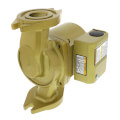
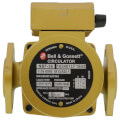
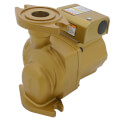
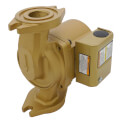
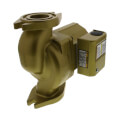
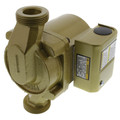
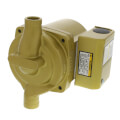
Bell & Gossett NBF Series Bronze Pumps


 --%3E %3Csvg version='1.1' id='Half' xmlns='http://www.w3.org/2000/svg' xmlns:xlink='http://www.w3.org/1999/xlink' x='0px' y='0px' viewBox='0 0 100 100' enable-background='new 0 0 100 100' xml:space='preserve'%3E %3Cg%3E %3Cpath fill='%23F15C02' d='M30.05,70.23l3.79-12.01L8.8,39.6l30.73-0.17c0,0,6.98-19.61,10-28.93c0.54,1.36,9.88,29.1,9.88,29.1h1.58 L93.71,7.18c-3.58-3.82-8.66-6.23-14.28-6.23H20.56C9.78,0.95,0.95,9.78,0.95,20.56v58.87c0,5.41,2.22,10.32,5.79,13.88 L30.05,70.23z'/%3E %3C/g%3E %3Cpath fill='%23FBC8B4' d='M93.71,7.18L60.98,39.6H91.2L65.38,58.24l9.38,29.58L49.69,69.78L24.5,87.82l5.55-17.59L6.75,93.32 c3.55,3.54,8.44,5.73,13.82,5.73h58.87c10.79,0,19.61-8.83,19.61-19.61V20.56C99.05,15.4,97.01,10.69,93.71,7.18z'/%3E %3C/svg%3E)
 --%3E %3Csvg version='1.1' id='No-RB' xmlns='http://www.w3.org/2000/svg' xmlns:xlink='http://www.w3.org/1999/xlink' x='0px' y='0px' viewBox='0 0 100 100' enable-background='new 0 0 100 100' xml:space='preserve'%3E %3Cpath fill='%23CECECE' d='M79.44,0.95H20.56C9.78,0.95,0.95,9.78,0.95,20.56v58.87c0,10.79,8.82,19.61,19.61,19.61h58.87 c10.79,0,19.61-8.83,19.61-19.61V20.56C99.05,9.78,90.22,0.95,79.44,0.95z M65.38,58.24l9.38,29.58L49.69,69.78L24.5,87.82 l9.34-29.6L8.8,39.6l30.73-0.17c0,0,6.98-19.61,10-28.93c0.54,1.36,9.88,29.1,9.88,29.1H91.2L65.38,58.24z'/%3E %3C/svg%3E)
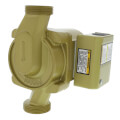
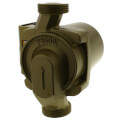
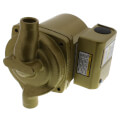

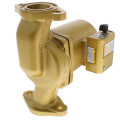
Bell & Gossett bronze pumps are in-line circulators built for water loops where cast iron isn't suitable, including domestic hot water recirculation, radiant floor systems using non-barrier tubing, and other applications carrying potable or otherwise corrosive water. Bronze construction resists the mineral scaling and pitting that shortens the service life of a cast iron pump body in these conditions, which is the main reason contractors specify bronze over iron on potable water jobs.
Many models in this class use a wet-rotor design, where the motor's rotor is cooled and lubricated by the system water itself. Wet-rotor designs keep the pump quiet in occupied spaces and remove the need for the separate motor oiling that older dry-rotor pumps required. Matching a pump to a loop's flow and head requirements is still the first step, since a bronze body doesn't change the underlying hydronic sizing math.
Subcategories
- In-Line Bronze Circulators: In-line circulators install directly into the pipeline of a recirculation loop rather than requiring a separate mounting base, which keeps the installation compact in a mechanical room or under a fixture. Wet-rotor construction means there is no mechanical shaft seal to wear out or leak over time, a common failure point on older dry-rotor pump designs. In-line bronze circulators are the standard choice for domestic hot water recirculation and small radiant zones.
- Bronze Booster Pumps: Booster pumps in bronze construction raise pressure on a domestic water branch or a multi-story recirculation system where the base pressure from the main supply is not enough to maintain adequate flow at the farthest fixture. Bronze resists the corrosion that a cast iron booster pump would experience in continuous contact with potable water. Sizing a booster pump correctly requires knowing both the available inlet pressure and the pressure needed at the worst-case fixture on the system.
- Replacement Cartridges & Rotor Assemblies: The rotor and impeller assembly is the primary wear part on a wet-rotor bronze pump, and most models allow that cartridge to be replaced without removing the pump body or cutting into the pipe. Keeping the correct cartridge on hand for a given pump model turns a pump failure into a quick swap rather than a full pump replacement. Confirming the exact pump model before ordering a cartridge avoids a mismatch, since cartridges are not interchangeable across different pump families.
Buying Guide
Confirm the application before choosing between a bronze and a cast iron pump. Bronze pumps are specified whenever the water in the loop is potable, non-barrier radiant tubing is used, or any other condition exists where iron content in the water is not acceptable. Using a cast iron pump in one of these applications can introduce rust and scale into a domestic water supply, a problem that often shows up as complaints long after the installation is finished.
Bell & Gossett NBF Series Bronze Pumps and similar bronze circulators are sized the same way as their cast iron counterparts, using the loop's required flow rate in gallons per minute and the head loss through the piping, fittings, and any heat exchanger in the loop. A pump chosen only for its bronze construction without matching flow and head to the system will underperform regardless of material.
Check the pump's wiring and mounting orientation requirements before installation, since many wet-rotor circulators have a preferred orientation for the motor to vent air and operate quietly. Vertical or horizontal mounting flexibility varies by model, so confirming this detail before the pump is installed in a wall or ceiling saves a return trip.
Keep a spare rotor and impeller cartridge on hand for critical recirculation loops, since this class of pump is designed around a fast cartridge swap rather than a full pump replacement when wear parts fail.
Frequently Asked Questions
Why use a bronze pump instead of a cast iron pump?
Bronze resists the corrosion, scaling, and pitting that potable or otherwise aggressive water can cause in a cast iron pump body over time. Any loop carrying domestic water or using non-barrier tubing typically calls for a bronze pump instead of a cast iron one.
What does wet-rotor mean on a circulator pump?
A wet-rotor design allows the system water to flow through the motor housing itself, cooling and lubricating the rotor without a separate seal or oil reservoir. It is quieter than a dry-rotor design and removes one common source of pump leaks.
Can the rotor assembly be replaced without removing the whole pump?
On most wet-rotor bronze pumps, yes. The rotor and impeller cartridge can be pulled and swapped without disturbing the pump body or the piping it is installed in, which keeps repair time short.
How is a bronze pump sized for a recirculation loop?
Sizing follows the same process as any circulator: calculate the loop's required flow rate and the head loss through the piping and fittings, then select a pump curve that meets both numbers. Bronze construction does not change this calculation.
Does mounting orientation matter for these pumps?
Many wet-rotor circulators have a preferred mounting orientation to vent air from the motor housing properly. Checking the specific model's installation instructions before mounting helps the pump run quietly and avoids trapped air.
