




CSST Fittings
 --%3E %3Csvg version='1.1' id='Fill' xmlns='http://www.w3.org/2000/svg' xmlns:xlink='http://www.w3.org/1999/xlink' x='0px' y='0px' viewBox='0 0 100 100' enable-background='new 0 0 100 100' xml:space='preserve'%3E %3Cpath fill='%23F15C02' d='M79.44,0.95H20.56C9.78,0.95,0.95,9.78,0.95,20.56v58.87c0,10.79,8.82,19.61,19.61,19.61h58.87 c10.79,0,19.61-8.83,19.61-19.61V20.56C99.05,9.78,90.22,0.95,79.44,0.95z M65.38,58.24l9.38,29.58L49.69,69.78L24.5,87.82 l9.34-29.6L8.8,39.6l30.73-0.17c0,0,6.98-19.61,10-28.93c0.54,1.36,9.88,29.1,9.88,29.1H91.2L65.38,58.24z'/%3E %3C/svg%3E)


 --%3E %3Csvg version='1.1' id='No-RB' xmlns='http://www.w3.org/2000/svg' xmlns:xlink='http://www.w3.org/1999/xlink' x='0px' y='0px' viewBox='0 0 100 100' enable-background='new 0 0 100 100' xml:space='preserve'%3E %3Cpath fill='%23CECECE' d='M79.44,0.95H20.56C9.78,0.95,0.95,9.78,0.95,20.56v58.87c0,10.79,8.82,19.61,19.61,19.61h58.87 c10.79,0,19.61-8.83,19.61-19.61V20.56C99.05,9.78,90.22,0.95,79.44,0.95z M65.38,58.24l9.38,29.58L49.69,69.78L24.5,87.82 l9.34-29.6L8.8,39.6l30.73-0.17c0,0,6.98-19.61,10-28.93c0.54,1.36,9.88,29.1,9.88,29.1H91.2L65.38,58.24z'/%3E %3C/svg%3E)

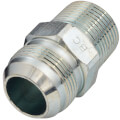
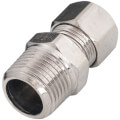
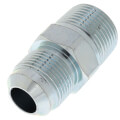
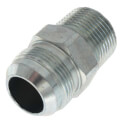


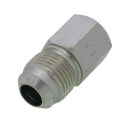
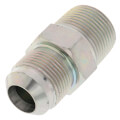
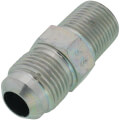
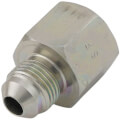
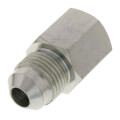
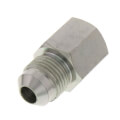
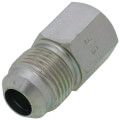
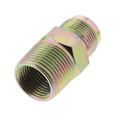
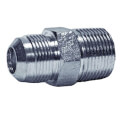
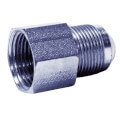

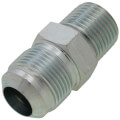
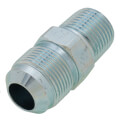
CSST fittings connect and terminate corrugated stainless steel tubing runs used for gas piping in residential and light commercial construction, joining tubing to appliances, manifolds, and rigid pipe transitions. The flexible nature of CSST lets installers route gas lines through framing with fewer rigid fittings and field-cut joints than traditional black iron pipe, and the fittings in this category are what make those connections mechanically sound and gas-tight.
Because CSST systems from different manufacturers are generally not interchangeable, fittings are typically sold as part of a matched system rather than a universal standard, and confirming compatibility between tubing and fitting brand is one of the first steps in specifying a job correctly. Fitting types range from mechanical compression designs to flare-style connections, each suited to different tubing generations and manufacturer systems.
Subcategories
- Mechanical (Compression) Fittings: Mechanical fittings use a compression-style connection that doesn't require special crimping tools, making them a common choice for straightforward field installation. They're widely used across multiple CSST manufacturer systems and typically allow for disassembly and reuse during service work.
- Flare Fittings: Flare fittings require the tubing end to be flared before assembly, creating a metal-to-metal seal at the joint. The flare style is common on certain CSST systems and appliance connectors where a flare connection is the manufacturer's specified termination method.
- Manifolds & Distribution Fittings: Manifolds distribute gas from a single supply line to multiple branch runs feeding individual appliances, a common layout in CSST installations that favor a home-run piping design over a traditional trunk-and-branch layout. Matching manifold port count and size to the job's appliance load is central to sizing this component correctly.
- Appliance Connectors & Adapters: Appliance connectors and adapters transition from CSST tubing to the threaded fitting on a gas appliance, water heater, or furnace. Connectors typically include a shutoff valve integrated into the fitting to allow appliance servicing without shutting down the whole gas line.
Buying Guide
The starting point for any CSST fitting purchase is confirming which manufacturer's tubing system is already installed or specified for the job, since fittings are generally not interchangeable between different CSST brands and generations.
Fitting style, mechanical compression versus flare, often comes down to what the tubing manufacturer specifies for that particular system rather than installer preference, so checking the manufacturer's installation instructions before ordering avoids a fitting that won't properly seal on that tubing.
Tubing size needs to match the fitting size exactly; CSST is sized by nominal diameter that doesn't always correspond directly to rigid pipe sizing, so cross-referencing the manufacturer's sizing chart is worth the extra step before finalizing an order.
For manifold-based systems, total appliance load determines how many ports and what supply line size the manifold needs, and undersizing here can starve appliances at the far end of a run of adequate gas pressure.
Local code often requires CSST systems to be bonded for lightning-related electrical safety, so confirming that bonding fittings or clamps are included or specified separately is worth checking before considering a job complete.
Frequently Asked Questions
Are CSST fittings interchangeable between different tubing brands?
Generally no. Most CSST systems are proprietary, meaning the fittings are designed and rated to work with that specific manufacturer's tubing generation. Mixing brands can result in a joint that isn't properly rated or sealed.
What's the difference between mechanical and flare CSST fittings?
Mechanical fittings use a compression-style connection that typically doesn't require special tools, while flare fittings require the tubing end to be flared to create a metal-to-metal seal. Which style applies depends on what the tubing manufacturer specifies for that system.
Why does CSST need to be electrically bonded?
CSST is more susceptible to arcing damage from nearby lightning strikes than rigid black iron pipe, so many jurisdictions require bonding the system to the home's electrical grounding system as a code requirement. Confirming local bonding requirements is part of a compliant CSST installation.
How is CSST manifold size determined?
Manifold sizing is based on the total gas load of all appliances the manifold will feed, along with the number of branch ports needed for a home-run distribution layout. Undersizing a manifold can leave appliances at the end of a run with inadequate gas pressure.
Do appliance connectors for CSST include a shutoff valve?
Many appliance connectors used with CSST systems include an integrated shutoff valve, letting a technician service or disconnect an individual appliance without shutting off gas supply to the rest of the system.
