




Filters
SORT
Product Availability –
Brand –
Voltage –
Wattage –
Review Score –
 --%3E %3Csvg version='1.1' id='Fill' xmlns='http://www.w3.org/2000/svg' xmlns:xlink='http://www.w3.org/1999/xlink' x='0px' y='0px' viewBox='0 0 100 100' enable-background='new 0 0 100 100' xml:space='preserve'%3E %3Cpath fill='%23F15C02' d='M79.44,0.95H20.56C9.78,0.95,0.95,9.78,0.95,20.56v58.87c0,10.79,8.82,19.61,19.61,19.61h58.87 c10.79,0,19.61-8.83,19.61-19.61V20.56C99.05,9.78,90.22,0.95,79.44,0.95z M65.38,58.24l9.38,29.58L49.69,69.78L24.5,87.82 l9.34-29.6L8.8,39.6l30.73-0.17c0,0,6.98-19.61,10-28.93c0.54,1.36,9.88,29.1,9.88,29.1H91.2L65.38,58.24z'/%3E %3C/svg%3E)
 --%3E %3Csvg version='1.1' id='With-RB' xmlns='http://www.w3.org/2000/svg' xmlns:xlink='http://www.w3.org/1999/xlink' x='0px' y='0px' viewBox='0 0 100 100' enable-background='new 0 0 100 100' xml:space='preserve'%3E %3Cpath fill='%23FBC8B4' d='M79.44,0.95H20.56C9.78,0.95,0.95,9.78,0.95,20.56v58.87c0,10.79,8.82,19.61,19.61,19.61h58.87 c10.79,0,19.61-8.83,19.61-19.61V20.56C99.05,9.78,90.22,0.95,79.44,0.95z M65.38,58.24l9.38,29.58L49.69,69.78L24.5,87.82 l9.34-29.6L8.8,39.6l30.73-0.17c0,0,6.98-19.61,10-28.93c0.54,1.36,9.88,29.1,9.88,29.1H91.2L65.38,58.24z'/%3E %3C/svg%3E)
Price Range –
Ceiling Heaters

 --%3E %3Csvg version='1.1' id='No-RB' xmlns='http://www.w3.org/2000/svg' xmlns:xlink='http://www.w3.org/1999/xlink' x='0px' y='0px' viewBox='0 0 100 100' enable-background='new 0 0 100 100' xml:space='preserve'%3E %3Cpath fill='%23CECECE' d='M79.44,0.95H20.56C9.78,0.95,0.95,9.78,0.95,20.56v58.87c0,10.79,8.82,19.61,19.61,19.61h58.87 c10.79,0,19.61-8.83,19.61-19.61V20.56C99.05,9.78,90.22,0.95,79.44,0.95z M65.38,58.24l9.38,29.58L49.69,69.78L24.5,87.82 l9.34-29.6L8.8,39.6l30.73-0.17c0,0,6.98-19.61,10-28.93c0.54,1.36,9.88,29.1,9.88,29.1H91.2L65.38,58.24z'/%3E %3C/svg%3E)

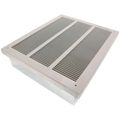
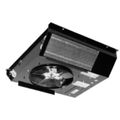
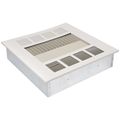
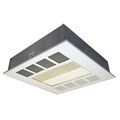
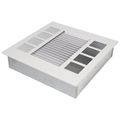

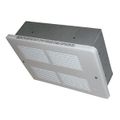
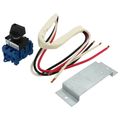
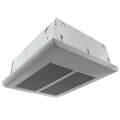
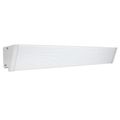
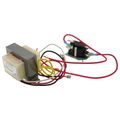
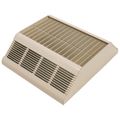
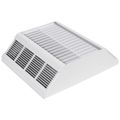
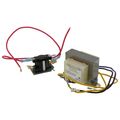
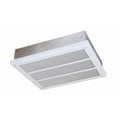
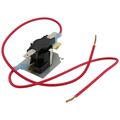
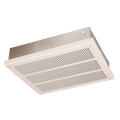
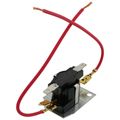

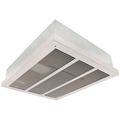
Ceiling Heaters are electric heating units installed overhead to warm commercial and residential spaces without taking up floor or wall space. Contractors reach for them in garages, workshops, warehouses, retail areas, and office spaces where floor clearance matters or wall space stays reserved for other equipment. Commercial models range from 2,000 to 24,000 watts and are available in 208, 240, 277, and 480 volt configurations, giving installers room to match output and electrical service to the space being heated. Surface mounted and recessed styles both exist, so crews can pick a profile that fits ceiling height and finish requirements on the job. Because a ceiling heater draws room air across a heating element and pushes it back into the space, positioning it near doorways or high traffic zones speeds recovery after cold air enters. Matching wattage and voltage to the actual square footage keeps energy draw proportional to the space and prevents nuisance tripping on shared circuits. Getting those specs right before ordering keeps installation on schedule and code compliant.
Subcategories
- Surface Mounted Ceiling Heaters: Surface mounted ceiling heaters bolt or bracket directly to the ceiling surface without requiring a cutout in the structure above. Contractors favor this style for garages, workshops, and warehouses where retrofit speed matters more than a flush finish. Models in this category run from 2,000 to 10,000 watts on 208, 240, or 480 volt circuits, covering everything from a single bay to a full shop floor. Installation typically takes less time than recessed alternatives because no ceiling cavity work is involved.
- Recessed Ceiling Heaters: Recessed ceiling heaters mount inside a cutout in the ceiling so only the grille and controls sit flush with the finished surface. Property managers and contractors choose this style for offices, retail lobbies, and school restrooms where appearance matters as much as heat output. Typical ratings run from 2,000 to 5,000 watts on 208, 240, 277, or 480 volt service. The housing sits inside the ceiling cavity, so available depth needs to be checked before ordering.
- Cabinet Ceiling Heaters: Cabinet style heaters install on the floor, wall, or ceiling depending on the layout of the space, making them a flexible option for larger commercial buildings. Wattage on these units spans 2,000 to 24,000 watts across 208, 240, 277, and 480 volt configurations, covering everything from a small mechanical room to a full warehouse bay. Facility crews often specify this style when a single heater needs to cover a large open area. Recessed mounting is also available on some cabinet models for jobs that call for a flush ceiling installation.
- High Voltage Ceiling Heaters: High voltage ceiling heaters run on 480 volt service and are built for industrial buildings, distribution centers, and other spaces with heavier electrical infrastructure already in place. Output on these units can reach as high as 24,000 watts, letting a single fixture heat a much larger footprint than a standard 208 or 240 volt model. Electricians size the circuit breaker and wire gauge to the higher voltage draw before installation. Facility managers typically choose this style when floor space for unit heaters is not available.
Buying Guide
Choosing the right unit starts with the electrical service already available on site. Confirm the panel and circuit can support the target voltage, since commercial ceiling heaters ship in 208, 240, 277, and 480 volt configurations, and picking a voltage that does not match existing service means additional electrical work before the heater ever turns on. Next, calculate the wattage needed for the square footage and ceiling height of the space; commercial models span 2,000 to 24,000 watts, so a small office bathroom and a warehouse bay call for very different units. Mounting style matters just as much as output. Surface mounted Ceiling Heaters install faster and suit garages, shops, and other utility spaces where appearance is not a priority, while recessed models take more labor but blend into finished ceilings in offices, lobbies, and retail spaces. For larger commercial buildings, cabinet style units that mount on the floor, wall, or ceiling give more flexibility when project requirements shift during construction. Confirm ceiling cavity depth before specifying a recessed model, since the housing needs clearance inside the finished surface. Finally, check local electrical code for required disconnects and clearances around heating elements, since these vary by jurisdiction and occupancy type. Matching voltage, wattage, and mounting style to the space before ordering avoids delays and rework once the crew is on site.
Frequently Asked Questions
What voltage do commercial ceiling heaters typically use?
Commercial ceiling heaters are available in 208, 240, 277, and 480 volt configurations. Confirming which voltage the existing electrical service supports before ordering avoids compatibility problems during installation. Matching voltage on the front end keeps a heater install on schedule.
What is the difference between surface mounted and recessed ceiling heaters?
Surface mounted ceiling heaters bolt directly to the ceiling and install faster, making them a common choice for garages and workshops. Recessed ceiling heaters sit inside a cutout so only the grille shows, which suits offices and retail spaces where a flush finish matters. Both styles are available across a similar wattage range, so the choice usually comes down to ceiling depth and finish requirements.
How much wattage does a ceiling heater need for a typical shop or garage?
Wattage needs depend on square footage, ceiling height, and insulation, but commercial ceiling heaters range from 2,000 to 24,000 watts to cover everything from a small room to a full warehouse bay. Sizing calculations should account for the coldest conditions the space will see. Undersizing a unit leads to long recovery times after doors open.
Can a ceiling heater be installed in a space with high ceilings?
Ceiling heaters work across a range of ceiling heights, though output needs to increase as mounting height goes up since warm air has farther to travel before reaching the occupied zone. Cabinet style units, which can also mount on a wall, offer an alternative when ceiling height makes a standard unit less effective. Checking manufacturer mounting height guidance before installation helps the unit perform as expected.
Do ceiling heaters need a dedicated circuit?
Higher wattage ceiling heaters, especially models in the 10,000 to 24,000 watt range, typically need a dedicated circuit sized to the unit's voltage and amperage draw. A licensed electrician should size the breaker and wire gauge based on the specific unit's nameplate rating. Confirming circuit requirements before rough-in prevents having to run new wire after drywall goes up.
