




Filters
SORT
Product Availability –
Brand –
Voltage –
Type –
Wattage –
Review Score –
 --%3E %3Csvg version='1.1' id='Fill' xmlns='http://www.w3.org/2000/svg' xmlns:xlink='http://www.w3.org/1999/xlink' x='0px' y='0px' viewBox='0 0 100 100' enable-background='new 0 0 100 100' xml:space='preserve'%3E %3Cpath fill='%23F15C02' d='M79.44,0.95H20.56C9.78,0.95,0.95,9.78,0.95,20.56v58.87c0,10.79,8.82,19.61,19.61,19.61h58.87 c10.79,0,19.61-8.83,19.61-19.61V20.56C99.05,9.78,90.22,0.95,79.44,0.95z M65.38,58.24l9.38,29.58L49.69,69.78L24.5,87.82 l9.34-29.6L8.8,39.6l30.73-0.17c0,0,6.98-19.61,10-28.93c0.54,1.36,9.88,29.1,9.88,29.1H91.2L65.38,58.24z'/%3E %3C/svg%3E)
 --%3E %3Csvg version='1.1' id='With-RB' xmlns='http://www.w3.org/2000/svg' xmlns:xlink='http://www.w3.org/1999/xlink' x='0px' y='0px' viewBox='0 0 100 100' enable-background='new 0 0 100 100' xml:space='preserve'%3E %3Cpath fill='%23FBC8B4' d='M79.44,0.95H20.56C9.78,0.95,0.95,9.78,0.95,20.56v58.87c0,10.79,8.82,19.61,19.61,19.61h58.87 c10.79,0,19.61-8.83,19.61-19.61V20.56C99.05,9.78,90.22,0.95,79.44,0.95z M65.38,58.24l9.38,29.58L49.69,69.78L24.5,87.82 l9.34-29.6L8.8,39.6l30.73-0.17c0,0,6.98-19.61,10-28.93c0.54,1.36,9.88,29.1,9.88,29.1H91.2L65.38,58.24z'/%3E %3C/svg%3E)
Price Range –
Electric Kickspace Heaters


 --%3E %3Csvg version='1.1' id='Half' xmlns='http://www.w3.org/2000/svg' xmlns:xlink='http://www.w3.org/1999/xlink' x='0px' y='0px' viewBox='0 0 100 100' enable-background='new 0 0 100 100' xml:space='preserve'%3E %3Cg%3E %3Cpath fill='%23F15C02' d='M30.05,70.23l3.79-12.01L8.8,39.6l30.73-0.17c0,0,6.98-19.61,10-28.93c0.54,1.36,9.88,29.1,9.88,29.1h1.58 L93.71,7.18c-3.58-3.82-8.66-6.23-14.28-6.23H20.56C9.78,0.95,0.95,9.78,0.95,20.56v58.87c0,5.41,2.22,10.32,5.79,13.88 L30.05,70.23z'/%3E %3C/g%3E %3Cpath fill='%23FBC8B4' d='M93.71,7.18L60.98,39.6H91.2L65.38,58.24l9.38,29.58L49.69,69.78L24.5,87.82l5.55-17.59L6.75,93.32 c3.55,3.54,8.44,5.73,13.82,5.73h58.87c10.79,0,19.61-8.83,19.61-19.61V20.56C99.05,15.4,97.01,10.69,93.71,7.18z'/%3E %3C/svg%3E)



 --%3E %3Csvg version='1.1' id='No-RB' xmlns='http://www.w3.org/2000/svg' xmlns:xlink='http://www.w3.org/1999/xlink' x='0px' y='0px' viewBox='0 0 100 100' enable-background='new 0 0 100 100' xml:space='preserve'%3E %3Cpath fill='%23CECECE' d='M79.44,0.95H20.56C9.78,0.95,0.95,9.78,0.95,20.56v58.87c0,10.79,8.82,19.61,19.61,19.61h58.87 c10.79,0,19.61-8.83,19.61-19.61V20.56C99.05,9.78,90.22,0.95,79.44,0.95z M65.38,58.24l9.38,29.58L49.69,69.78L24.5,87.82 l9.34-29.6L8.8,39.6l30.73-0.17c0,0,6.98-19.61,10-28.93c0.54,1.36,9.88,29.1,9.88,29.1H91.2L65.38,58.24z'/%3E %3C/svg%3E)



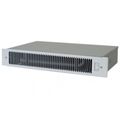
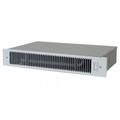
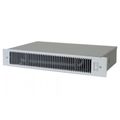

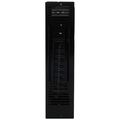
Electric Kickspace Heaters are compact, fan-forced units that install into the toe space under a cabinet, vanity, or stair riser to add floor-level heat in rooms without room for a wall unit. Marley's QTS Series covers this application across four models, split between 1125/563-watt and 1500/750-watt outputs and available in 120-volt or 208/240-volt versions to match whatever circuit is already run to the space. Inside, a commercial-grade galvanized steel chassis holds the heating element, fan motor, and tangential blower, along with an over-temperature protector that shuts the unit down if airflow gets blocked. A built-in thermostat adjusts across a 45°F to 85°F range, giving enough spread to hold a bathroom or kitchen toe space at a comfortable temperature without overheating a tight cabinet cavity. For remodels where duct or baseboard space simply doesn't exist, a kickspace heater fills the gap without taking up wall or floor area the room can't spare.
Subcategories
- 1125/563-Watt Kickspace Heaters: The 1125/563-watt tier covers the QTS1100 in 120 volts and the QTS1104 in 208 or 240 volts, giving a lower-output option for smaller toe spaces or rooms that don't need maximum heat. Both models share the same galvanized steel chassis, tangential blower, and over-temperature protection as the higher-wattage tier. Contractors spec this tier for powder rooms, small bathroom vanities, or secondary spaces where the full 1500-watt output would be more than the room needs. The two-position switch still allows a lower setting for mild days without needing a separate low-wattage model.
- 1500/750-Watt Kickspace Heaters: The 1500/750-watt tier covers the QTS1500T in 120 volts and the QTS1504T in 208 or 240 volts, giving the higher output option in the QTS Series lineup. This tier suits larger kitchen toe spaces, primary bathrooms, or stairwells where more heat is needed to offset a bigger volume of cold floor-level air. The chassis, blower, and protection features match the lower-wattage tier exactly, so the choice comes down to heat output rather than build quality. Matching the circuit's available voltage and amperage to the model before ordering avoids a mismatch at final connection.
- Thermostat & Control Options: Every QTS Series heater includes a built-in thermostat that adjusts across a 45°F to 85°F range, letting the unit cycle on its own without a separate wall control. Contractors working on a remodel with an existing wall thermostat location can instead wire in an S Series remote thermostat accessory rather than relying on the unit's built-in control. Either setup ties into the same galvanized steel chassis and over-temperature protector, so switching control types doesn't change the heater's core construction. Picking built-in versus remote control mostly comes down to where the toe space heater sits relative to where an occupant would want to adjust the temperature.
Buying Guide
Start by measuring the available toe space depth and height, since a kickspace heater has to fit inside the cabinet or riser cavity along with its chassis, blower, and heating element. Next, confirm the circuit voltage already run to the space: the QTS1100 and QTS1500T both run on 120 volts, while the QTS1104 and QTS1504T step up to 208 or 240 volts, and picking the wrong voltage model means either an undersized circuit or a wasted trip back to the panel. Wattage output matters as much as voltage. A 1125/563-watt model covers a small powder room or secondary vanity, while a 1500/750-watt model suits a larger kitchen toe space or a stairwell that loses more heat to open floor area. Selecting Electric Kickspace Heaters also means deciding between the unit's built-in thermostat, which adjusts across a 45°F to 85°F range, and a remote thermostat accessory wired to a wall location, which matters most in a kitchen where the toe space itself sits far from where an occupant actually stands. Every model in the lineup shares the same commercial-grade galvanized steel chassis, tangential blower, and over-temperature protector, so reliability doesn't factor into the choice between wattage tiers, only output and voltage do. Confirming clearance for the blower's air intake and discharge before final installation keeps the over-temperature protector from nuisance-tripping once the cabinet or riser panel goes back on.
Frequently Asked Questions
What's the difference between the QTS1100 and QTS1104 models?
The QTS1100 runs on 120 volts while the QTS1104 runs on 208 or 240 volts, but both deliver the same 1125/563-watt output across two heat settings. Choosing between them comes down entirely to what circuit voltage is already run to the toe space. Wiring the wrong voltage model to an existing circuit either underpowers the unit or overloads it, so confirming the panel circuit before ordering matters.
How much heat output does a kickspace heater need for a kitchen toe space?
A larger kitchen toe space typically calls for the 1500/750-watt tier, covered by the QTS1500T in 120 volts or the QTS1504T in 208 or 240 volts. A smaller powder room or secondary vanity space usually gets by on the 1125/563-watt tier instead. Sizing up unnecessarily doesn't add reliability, since every model in the lineup shares the same chassis and blower construction.
Do these heaters have a built-in thermostat or does one need to be added separately?
Every QTS Series kickspace heater includes a built-in thermostat that adjusts across a 45°F to 85°F range, so a separate control isn't required for basic operation. An S Series remote thermostat accessory is also available for installations where a wall-mounted control makes more sense than adjusting the unit at the toe space itself. Either option ties into the same over-temperature protector and blower system.
What keeps a kickspace heater from overheating in a tight cabinet cavity?
An over-temperature protector built into the QTS Series chassis shuts the unit down if the fan can't move enough air, such as when the intake or discharge gets blocked. The commercial-grade galvanized steel chassis and tangential blower work together to keep airflow moving even in a confined toe space. Keeping the intake and discharge clear during installation prevents nuisance shutdowns once the cabinet panel is back in place.
Can a 120-volt kickspace heater be installed on a 240-volt circuit?
A 120-volt model like the QTS1100 or QTS1500T is not interchangeable with the 208/240-volt QTS1104 or QTS1504T, since the wattage and amperage ratings are matched to a specific voltage. Installing a 120-volt unit on a 240-volt circuit damages the heating element and control components. Matching the model number to the actual circuit voltage before rough-in avoids a costly reinstall.
