




Filters
SORT
Product Availability –
Category –
Connection Type –
Inlet Size –
Outlet Size –
Ton –
Refrigerant Type –
Review Score –
 --%3E %3Csvg version='1.1' id='Fill' xmlns='http://www.w3.org/2000/svg' xmlns:xlink='http://www.w3.org/1999/xlink' x='0px' y='0px' viewBox='0 0 100 100' enable-background='new 0 0 100 100' xml:space='preserve'%3E %3Cpath fill='%23F15C02' d='M79.44,0.95H20.56C9.78,0.95,0.95,9.78,0.95,20.56v58.87c0,10.79,8.82,19.61,19.61,19.61h58.87 c10.79,0,19.61-8.83,19.61-19.61V20.56C99.05,9.78,90.22,0.95,79.44,0.95z M65.38,58.24l9.38,29.58L49.69,69.78L24.5,87.82 l9.34-29.6L8.8,39.6l30.73-0.17c0,0,6.98-19.61,10-28.93c0.54,1.36,9.88,29.1,9.88,29.1H91.2L65.38,58.24z'/%3E %3C/svg%3E)
Price Range –
Emerson Flow Controls Thermal Expansion Valves


 --%3E %3Csvg version='1.1' id='No-RB' xmlns='http://www.w3.org/2000/svg' xmlns:xlink='http://www.w3.org/1999/xlink' x='0px' y='0px' viewBox='0 0 100 100' enable-background='new 0 0 100 100' xml:space='preserve'%3E %3Cpath fill='%23CECECE' d='M79.44,0.95H20.56C9.78,0.95,0.95,9.78,0.95,20.56v58.87c0,10.79,8.82,19.61,19.61,19.61h58.87 c10.79,0,19.61-8.83,19.61-19.61V20.56C99.05,9.78,90.22,0.95,79.44,0.95z M65.38,58.24l9.38,29.58L49.69,69.78L24.5,87.82 l9.34-29.6L8.8,39.6l30.73-0.17c0,0,6.98-19.61,10-28.93c0.54,1.36,9.88,29.1,9.88,29.1H91.2L65.38,58.24z'/%3E %3C/svg%3E)

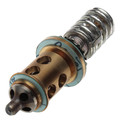
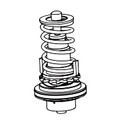
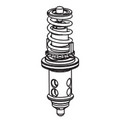
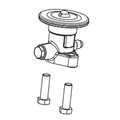
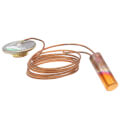
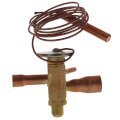
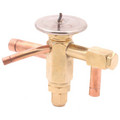
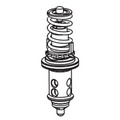
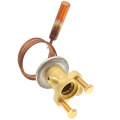
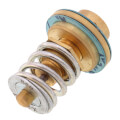
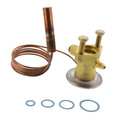

Emerson Flow Controls thermal expansion valves meter refrigerant into the evaporator coil, matching flow to the system's cooling load so the coil stays fed without flooding liquid back to the compressor. The valve senses evaporator outlet temperature and pressure through a bulb and, on externally equalized models, a separate equalizer line, then opens or closes a metering orifice to hold the correct superheat. A system running with the wrong superheat either starves the coil, cutting capacity and risking compressor damage from lack of lubrication return, or floods it, sending liquid refrigerant back toward the compressor. Emerson offers these valves across a range of orifice sizes and equalization types to match different coil designs and refrigerant types, so a valve pulled from one system will not necessarily perform correctly on another with a different capacity or refrigerant. Techs who keep a stocked range of common sizes and equalization types can replace a failed valve and restore proper superheat in a single visit.
Subcategories
- Externally Equalized TXVs: Externally equalized valves use a separate equalizer line connected downstream of the evaporator, giving a more accurate pressure reference on coils with meaningful pressure drop across the distributor and coil circuits. They are the common choice on larger coils and multi-circuit evaporators. Getting the equalizer line connection point right is critical to accurate superheat control.
- Internally Equalized TXVs: Internally equalized valves reference pressure at the valve outlet itself rather than through a separate line, simplifying installation on smaller, single-circuit coils with low pressure drop. They see common use on smaller residential and light commercial systems. Using an internally equalized valve on a coil with significant pressure drop can lead to inaccurate superheat control.
- Replacement Power Heads: Power heads contain the valve's temperature and pressure-sensing element and can often be replaced separately from the valve body when only the sensing element has failed. This lets a technician restore proper operation without replacing refrigerant lines tied to the full valve body. Power heads must match the original valve's refrigerant type and equalization style.
- TXV Repair Kits: Repair kits bundle a replacement valve or power head with the gaskets, seals, and small hardware needed for a complete swap without a separate parts run. They are useful for planned maintenance visits where a full valve replacement is expected. Kit contents vary by valve model, so confirming kit compatibility with the installed valve avoids a mismatched gasket set.
Buying Guide
Identify the refrigerant type in the system first, since a thermal expansion valve is charged and calibrated for a specific refrigerant and will not meter correctly, or may not be compatible at all, with a different refrigerant type.
Confirm the coil's capacity and pressure drop characteristics before choosing between externally and internally equalized valves. Larger coils or ones with multiple refrigerant circuits generally need external equalization, while smaller, low pressure drop coils often work correctly with an internally equalized valve.
Thermal expansion valves break down by equalization type, orifice size, and refrigerant charge, and getting all three matched to the original equipment specification matters more than matching physical valve body shape alone.
Diagnose which component actually failed before ordering a full valve. A valve that is stuck, or a system with erratic superheat despite a correctly sized orifice, sometimes points to a failed power head rather than the entire valve body, which can be a faster and less expensive fix.
Stocking a range of common orifice sizes and equalization types for the coil designs serviced most often cuts down on emergency freight charges and lets a no-cool call get resolved on the first visit instead of a return trip once the correct valve arrives.
Frequently Asked Questions
How do I know if a TXV needs to be externally or internally equalized?
Externally equalized valves are typically needed on larger coils or ones with significant pressure drop across the distributor and coil circuits, while smaller, low pressure drop coils generally work with an internally equalized valve. Check the original equipment specification when in doubt.
What are the symptoms of a failing thermal expansion valve?
Common symptoms include reduced cooling capacity, erratic or consistently high or low superheat readings, and frost or ice forming unevenly across the evaporator coil.
Can the power head be replaced without replacing the entire valve body?
On many Emerson valves, yes. If the valve body and orifice are undamaged and only the sensing element has failed, replacing just the power head can restore correct operation without breaking into the refrigerant lines connected to the valve body.
Does the valve need to match the exact refrigerant used in the system?
Yes. Thermal expansion valves are calibrated for a specific refrigerant's pressure and temperature relationship, and using the wrong refrigerant valve can prevent correct superheat control or damage the system.
Why would a system be flooding the compressor with liquid refrigerant?
Flooding often points to a TXV that is stuck open, an oversized orifice for the coil's capacity, or an equalizer line connected at the wrong point, any of which can prevent the valve from properly metering refrigerant into the coil.
