




Filters
SORT
Product Availability –
Min Airflow (CFM) –
Max Airflow (CFM) –
Speeds –
Length (Inches) –
Width (Inches) –
Duct Size –
Review Score –
 --%3E %3Csvg version='1.1' id='Fill' xmlns='http://www.w3.org/2000/svg' xmlns:xlink='http://www.w3.org/1999/xlink' x='0px' y='0px' viewBox='0 0 100 100' enable-background='new 0 0 100 100' xml:space='preserve'%3E %3Cpath fill='%23F15C02' d='M79.44,0.95H20.56C9.78,0.95,0.95,9.78,0.95,20.56v58.87c0,10.79,8.82,19.61,19.61,19.61h58.87 c10.79,0,19.61-8.83,19.61-19.61V20.56C99.05,9.78,90.22,0.95,79.44,0.95z M65.38,58.24l9.38,29.58L49.69,69.78L24.5,87.82 l9.34-29.6L8.8,39.6l30.73-0.17c0,0,6.98-19.61,10-28.93c0.54,1.36,9.88,29.1,9.88,29.1H91.2L65.38,58.24z'/%3E %3C/svg%3E)
 --%3E %3Csvg version='1.1' id='With-RB' xmlns='http://www.w3.org/2000/svg' xmlns:xlink='http://www.w3.org/1999/xlink' x='0px' y='0px' viewBox='0 0 100 100' enable-background='new 0 0 100 100' xml:space='preserve'%3E %3Cpath fill='%23FBC8B4' d='M79.44,0.95H20.56C9.78,0.95,0.95,9.78,0.95,20.56v58.87c0,10.79,8.82,19.61,19.61,19.61h58.87 c10.79,0,19.61-8.83,19.61-19.61V20.56C99.05,9.78,90.22,0.95,79.44,0.95z M65.38,58.24l9.38,29.58L49.69,69.78L24.5,87.82 l9.34-29.6L8.8,39.6l30.73-0.17c0,0,6.98-19.61,10-28.93c0.54,1.36,9.88,29.1,9.88,29.1H91.2L65.38,58.24z'/%3E %3C/svg%3E)
Price Range –
Fantech Heat Recovery Ventilators

 --%3E %3Csvg version='1.1' id='Half' xmlns='http://www.w3.org/2000/svg' xmlns:xlink='http://www.w3.org/1999/xlink' x='0px' y='0px' viewBox='0 0 100 100' enable-background='new 0 0 100 100' xml:space='preserve'%3E %3Cg%3E %3Cpath fill='%23F15C02' d='M30.05,70.23l3.79-12.01L8.8,39.6l30.73-0.17c0,0,6.98-19.61,10-28.93c0.54,1.36,9.88,29.1,9.88,29.1h1.58 L93.71,7.18c-3.58-3.82-8.66-6.23-14.28-6.23H20.56C9.78,0.95,0.95,9.78,0.95,20.56v58.87c0,5.41,2.22,10.32,5.79,13.88 L30.05,70.23z'/%3E %3C/g%3E %3Cpath fill='%23FBC8B4' d='M93.71,7.18L60.98,39.6H91.2L65.38,58.24l9.38,29.58L49.69,69.78L24.5,87.82l5.55-17.59L6.75,93.32 c3.55,3.54,8.44,5.73,13.82,5.73h58.87c10.79,0,19.61-8.83,19.61-19.61V20.56C99.05,15.4,97.01,10.69,93.71,7.18z'/%3E %3C/svg%3E)

 --%3E %3Csvg version='1.1' id='No-RB' xmlns='http://www.w3.org/2000/svg' xmlns:xlink='http://www.w3.org/1999/xlink' x='0px' y='0px' viewBox='0 0 100 100' enable-background='new 0 0 100 100' xml:space='preserve'%3E %3Cpath fill='%23CECECE' d='M79.44,0.95H20.56C9.78,0.95,0.95,9.78,0.95,20.56v58.87c0,10.79,8.82,19.61,19.61,19.61h58.87 c10.79,0,19.61-8.83,19.61-19.61V20.56C99.05,9.78,90.22,0.95,79.44,0.95z M65.38,58.24l9.38,29.58L49.69,69.78L24.5,87.82 l9.34-29.6L8.8,39.6l30.73-0.17c0,0,6.98-19.61,10-28.93c0.54,1.36,9.88,29.1,9.88,29.1H91.2L65.38,58.24z'/%3E %3C/svg%3E)
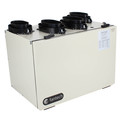
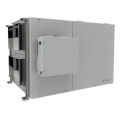
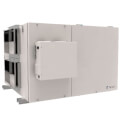
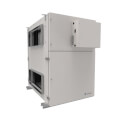
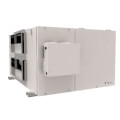
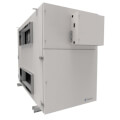
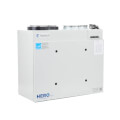
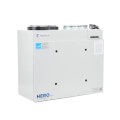
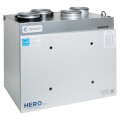
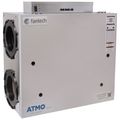


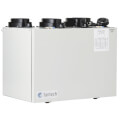
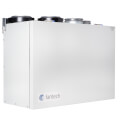
Fantech Heat Recovery Ventilators bring continuous fresh outdoor air into a home while exhausting an equal volume of stale indoor air, transferring heat between the two air streams through an aluminum core. The VHR70 model delivers up to 57 CFM and is built for compact homes needing balanced ventilation without a major duct redesign. HVAC contractors install these units to meet ventilation code requirements in tighter, well-sealed homes where natural infiltration no longer provides adequate fresh air exchange. The aluminum core is central to how the unit works: outgoing stale air passes heat to incoming fresh air before it enters the living space, cutting the heating load that fresh air would otherwise add. Because indoor air quality and energy code requirements keep tightening, a properly sized heat recovery ventilator has become a standard line item on new construction and deep energy retrofit jobs alike.
Subcategories
- VHR Series (Residential): The VHR series is built for single-family homes and smaller multi-residential units. The VHR70 model provides up to 57 CFM with top-mounted ports and an aluminum heat exchange core. HVAC installers use this series where duct runs are shorter and total ventilation demand is lower, such as a 1 to 3 bedroom home.
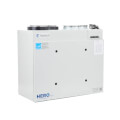
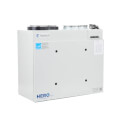
- VHR70RES with WinterGuard Defrost: The VHR70RES variant adds WinterGuard recirculation defrost and steps airflow up to 70 CFM through a 5 inch top port. Contractors specify this version in colder climates where standard exhaust defrost cycles aren't enough to prevent core icing during extended sub-freezing runs. The recirculation defrost method keeps the unit operating continuously rather than pausing fresh air delivery during a defrost cycle.
Buying Guide
Sizing starts with the home's required ventilation rate, which is typically calculated from square footage and bedroom count under the applicable mechanical code. That CFM target determines which Fantech Heat Recovery Ventilators model fits the job, since undersizing leaves a home under-ventilated and oversizing wastes fan energy and duct capacity. The VHR70 covers smaller homes at up to 57 CFM, while the WinterGuard-equipped VHR70RES steps up to 70 CFM for slightly larger demand or colder climates. Climate is the next major factor. Cold-climate installations need a defrost strategy that prevents the aluminum core from icing over during sustained low temperatures, since a frozen core blocks airflow and can damage the unit. Recirculation defrost, like the WinterGuard system, keeps fresh air moving during the defrost cycle instead of shutting off supply air, which matters in climates with long stretches of sub-freezing weather. Duct port size and orientation also affect installation time. Top-mounted ports simplify routing in tight mechanical rooms or attics where side access is limited. Finally, confirm the unit's voltage and control compatibility with the home's existing ventilation controls or thermostat integration before finalizing a model, since retrofitting a control mismatch after installation adds unnecessary labor.
Frequently Asked Questions
What's the difference between the VHR70 and VHR70RES?
The VHR70 delivers up to 57 CFM with a standard defrost approach, while the VHR70RES steps up to 70 CFM through a 5 inch top port and adds WinterGuard recirculation defrost. The RES variant suits colder climates or slightly higher ventilation demand than the base VHR70 covers.
How does the aluminum core recover heat?
Incoming fresh air and outgoing stale air pass through separate channels in the aluminum core without mixing, allowing heat to transfer from the warm outgoing air to the cold incoming air. Fantech Heat Recovery Ventilators use this core design to cut the heating load added by bringing in outdoor air.
Why does a heat recovery ventilator need a defrost cycle?
Cold incoming air can cause moisture in the exhaust air stream to freeze on the aluminum core, which blocks airflow if left unaddressed. A defrost cycle, such as WinterGuard recirculation defrost on the VHR70RES, periodically clears core ice so the unit keeps performing in cold climates.
What size home does the VHR70 fit?
The VHR70 is sized for compact single-family or multi-residential units, delivering up to 57 CFM of balanced ventilation. Larger homes or higher ventilation code requirements may call for a higher-capacity model in the Fantech Heat Recovery Ventilators lineup.
Do these units require a full duct system replacement?
Top-mounted ports on the VHR series are designed to simplify tie-in to existing or new duct runs without a major redesign. Duct sizing still needs to match the unit's rated CFM, so confirming existing duct capacity before installation avoids restricted airflow.
