




Filters
SORT
Product Availability –
Category –
Brand –
Size –
Review Score –
 --%3E %3Csvg version='1.1' id='Fill' xmlns='http://www.w3.org/2000/svg' xmlns:xlink='http://www.w3.org/1999/xlink' x='0px' y='0px' viewBox='0 0 100 100' enable-background='new 0 0 100 100' xml:space='preserve'%3E %3Cpath fill='%23F15C02' d='M79.44,0.95H20.56C9.78,0.95,0.95,9.78,0.95,20.56v58.87c0,10.79,8.82,19.61,19.61,19.61h58.87 c10.79,0,19.61-8.83,19.61-19.61V20.56C99.05,9.78,90.22,0.95,79.44,0.95z M65.38,58.24l9.38,29.58L49.69,69.78L24.5,87.82 l9.34-29.6L8.8,39.6l30.73-0.17c0,0,6.98-19.61,10-28.93c0.54,1.36,9.88,29.1,9.88,29.1H91.2L65.38,58.24z'/%3E %3C/svg%3E)
 --%3E %3Csvg version='1.1' id='With-RB' xmlns='http://www.w3.org/2000/svg' xmlns:xlink='http://www.w3.org/1999/xlink' x='0px' y='0px' viewBox='0 0 100 100' enable-background='new 0 0 100 100' xml:space='preserve'%3E %3Cpath fill='%23FBC8B4' d='M79.44,0.95H20.56C9.78,0.95,0.95,9.78,0.95,20.56v58.87c0,10.79,8.82,19.61,19.61,19.61h58.87 c10.79,0,19.61-8.83,19.61-19.61V20.56C99.05,9.78,90.22,0.95,79.44,0.95z M65.38,58.24l9.38,29.58L49.69,69.78L24.5,87.82 l9.34-29.6L8.8,39.6l30.73-0.17c0,0,6.98-19.61,10-28.93c0.54,1.36,9.88,29.1,9.88,29.1H91.2L65.38,58.24z'/%3E %3C/svg%3E)
Price Range –
Plumbing Pipe Straps




 --%3E %3Csvg version='1.1' id='No-RB' xmlns='http://www.w3.org/2000/svg' xmlns:xlink='http://www.w3.org/1999/xlink' x='0px' y='0px' viewBox='0 0 100 100' enable-background='new 0 0 100 100' xml:space='preserve'%3E %3Cpath fill='%23CECECE' d='M79.44,0.95H20.56C9.78,0.95,0.95,9.78,0.95,20.56v58.87c0,10.79,8.82,19.61,19.61,19.61h58.87 c10.79,0,19.61-8.83,19.61-19.61V20.56C99.05,9.78,90.22,0.95,79.44,0.95z M65.38,58.24l9.38,29.58L49.69,69.78L24.5,87.82 l9.34-29.6L8.8,39.6l30.73-0.17c0,0,6.98-19.61,10-28.93c0.54,1.36,9.88,29.1,9.88,29.1H91.2L65.38,58.24z'/%3E %3C/svg%3E)




 --%3E %3Csvg version='1.1' id='Half' xmlns='http://www.w3.org/2000/svg' xmlns:xlink='http://www.w3.org/1999/xlink' x='0px' y='0px' viewBox='0 0 100 100' enable-background='new 0 0 100 100' xml:space='preserve'%3E %3Cg%3E %3Cpath fill='%23F15C02' d='M30.05,70.23l3.79-12.01L8.8,39.6l30.73-0.17c0,0,6.98-19.61,10-28.93c0.54,1.36,9.88,29.1,9.88,29.1h1.58 L93.71,7.18c-3.58-3.82-8.66-6.23-14.28-6.23H20.56C9.78,0.95,0.95,9.78,0.95,20.56v58.87c0,5.41,2.22,10.32,5.79,13.88 L30.05,70.23z'/%3E %3C/g%3E %3Cpath fill='%23FBC8B4' d='M93.71,7.18L60.98,39.6H91.2L65.38,58.24l9.38,29.58L49.69,69.78L24.5,87.82l5.55-17.59L6.75,93.32 c3.55,3.54,8.44,5.73,13.82,5.73h58.87c10.79,0,19.61-8.83,19.61-19.61V20.56C99.05,15.4,97.01,10.69,93.71,7.18z'/%3E %3C/svg%3E)


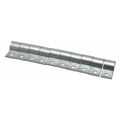
Plumbing Pipe Straps are fasteners that secure copper, PEX, CPVC, and DWV piping to framing, joists, and walls to prevent movement, sagging, and noise from water hammer. Contractors rely on them throughout rough-in and remodel work to hold pipe runs at consistent height and spacing so systems pass inspection and hold up over decades of use. Copper-plated steel straps, such as Oatey copper pipe support brackets, feature mounting holes spaced on 2 inch centers for half inch pipe and 4 inch centers for three quarter inch and 1 inch copper piping, letting installers match spacing to code requirements without extra layout work. Galvanized versions handle black iron, PVC, and ABS lines, while plastic straps offset tubing from the mounting surface to reduce metal-on-metal contact and vibration transfer. Picking the correct strap material and gauge for the pipe type keeps runs supported, quiet, and code compliant across residential and commercial jobs.
Subcategories
- Copper and Copper-Plated Straps: Copper-plated steel straps are designed specifically for copper tubing, preventing the galvanic corrosion that occurs when dissimilar metals stay in contact over time. Oatey copper pipe support brackets feature holes spaced on 2 inch centers for half inch pipe and 4 inch centers for three quarter inch and 1 inch pipe, so installers can secure long runs at consistent intervals. Plumbers use these on water supply lines throughout residential and light commercial rough-in. Pre-drilled holes speed installation with standard wood screws.
- Galvanized Metal Straps: Galvanized straps work with black iron, brass, PVC, and ABS pipe where copper compatibility is not a concern. The zinc coating resists rust in damp basements, crawl spaces, and mechanical rooms. Contractors reach for these on drain, waste, and vent lines as well as gas piping runs. Two-hole designs allow quick fastening directly to framing members.
- Plastic and Vinyl Straps: Plastic straps offset the pipe roughly an eighth to a quarter inch from the mounting surface, cushioning the line and reducing noise transfer through walls. Installers select these for PEX and CPVC runs where a rigid metal strap could restrict thermal expansion. They also prevent electrolysis between conductive pipe and other building materials. Common in multifamily and new construction plumbing.
- J-Hook Hangers: J-hook hangers, including HoldRite designs, support pipe and tubing ranging from half inch to 4 inch in size and meet MSS SP-58 and SP-69 standards for structural attachments. Plumbers install them flush against studs or suspend them overhead for horizontal runs through joist bays. Multiple nail holes let installers fine-tune hanger length on site. The open hook design speeds pipe insertion during rough-in.
- Strut and Channel Clamps: Strut clamps, sometimes called kindorf clamps, pair with metal strut channel to support horizontal or vertical pipe runs in mechanical rooms and commercial installations. The channel mounts to walls, ceilings, or floors first, then clamps secure individual pipes at whatever spacing the layout requires. The approach gives contractors flexibility to add or reposition pipe runs later without new anchor points. It is common on multi-pipe racks carrying supply, waste, and gas lines together.
Buying Guide
Selecting Plumbing Pipe Straps starts with matching material to pipe type. Copper piping calls for copper or copper-plated straps to avoid galvanic corrosion between dissimilar metals; galvanized or plastic straps suit PVC, CPVC, ABS, and PEX lines where that concern does not apply. Pipe diameter determines strap size, and installers should check the range stamped or listed on the packaging since an undersized strap will not close fully around the pipe while an oversized one leaves play that causes rattling.
Spacing matters as much as material. Plumbing codes typically require support at set intervals for horizontal copper and DWV runs, and mounting holes spaced on standard centers, such as 2 inch or 4 inch, make it easier to hit those intervals without extra measuring. For noise-sensitive applications like multifamily buildings, plastic or rubber-lined straps reduce vibration transfer through the structure compared to bare metal.
Location on the job also drives the choice between strap styles. J-hook hangers work well for long horizontal runs through open joist bays, while two-hole straps suit short runs fastened directly to a wall or stud. Mechanical rooms with multiple parallel pipes often call for strut and channel systems instead of individual straps, since the channel lets a crew adjust pipe positions during rough-in without drilling new holes. Checking local code for minimum support intervals before ordering avoids failed inspections and rework.
Frequently Asked Questions
What is the difference between a copper strap and a galvanized strap?
Copper-plated straps are made to contact copper tubing without causing galvanic corrosion, while galvanized straps use a zinc coating suited to black iron, PVC, ABS, and brass pipe. Mixing the wrong strap material with copper piping can lead to corrosion at the contact point over years of service. Matching strap material to pipe material protects the joint and the strap itself.
How far apart should pipe straps be installed?
Support spacing depends on pipe material, diameter, and local plumbing code, with copper and DWV lines commonly requiring support at regular intervals along horizontal runs. Manufacturer spec sheets and local code books list exact intervals for each pipe type and size. Checking these figures before rough-in avoids failed inspections.
Can plastic pipe straps be used on copper pipe?
Plastic straps can secure copper pipe and are often chosen specifically to reduce vibration and noise transfer through walls. The plastic offset keeps the pipe from direct contact with framing, which some installers prefer for sound control. They work well alongside metal straps in the same system where noise reduction matters in certain runs.
What size J-hook hanger is needed for a given pipe?
J-hook hangers from manufacturers like HoldRite cover a range from half inch to 4 inch pipe and tubing sizes, with the specific hook size matched to the outside diameter of the pipe. Selecting the correct size keeps the pipe seated fully in the hook without excessive play. Spec sheets list the exact pipe sizes each hook accommodates.
Are strut clamps better than straps for commercial jobs?
Strut and channel systems suit commercial mechanical rooms with multiple parallel pipe runs since the channel allows clamps to be repositioned without new anchor points. Individual straps remain simpler and faster for single pipe runs or residential rough-in. The choice comes down to how many pipes need support and whether future changes are likely.
