




Filters
SORT
Product Availability –
Brand –
Size –
Material –
Review Score –
 --%3E %3Csvg version='1.1' id='Fill' xmlns='http://www.w3.org/2000/svg' xmlns:xlink='http://www.w3.org/1999/xlink' x='0px' y='0px' viewBox='0 0 100 100' enable-background='new 0 0 100 100' xml:space='preserve'%3E %3Cpath fill='%23F15C02' d='M79.44,0.95H20.56C9.78,0.95,0.95,9.78,0.95,20.56v58.87c0,10.79,8.82,19.61,19.61,19.61h58.87 c10.79,0,19.61-8.83,19.61-19.61V20.56C99.05,9.78,90.22,0.95,79.44,0.95z M65.38,58.24l9.38,29.58L49.69,69.78L24.5,87.82 l9.34-29.6L8.8,39.6l30.73-0.17c0,0,6.98-19.61,10-28.93c0.54,1.36,9.88,29.1,9.88,29.1H91.2L65.38,58.24z'/%3E %3C/svg%3E)
 --%3E %3Csvg version='1.1' id='With-RB' xmlns='http://www.w3.org/2000/svg' xmlns:xlink='http://www.w3.org/1999/xlink' x='0px' y='0px' viewBox='0 0 100 100' enable-background='new 0 0 100 100' xml:space='preserve'%3E %3Cpath fill='%23FBC8B4' d='M79.44,0.95H20.56C9.78,0.95,0.95,9.78,0.95,20.56v58.87c0,10.79,8.82,19.61,19.61,19.61h58.87 c10.79,0,19.61-8.83,19.61-19.61V20.56C99.05,9.78,90.22,0.95,79.44,0.95z M65.38,58.24l9.38,29.58L49.69,69.78L24.5,87.82 l9.34-29.6L8.8,39.6l30.73-0.17c0,0,6.98-19.61,10-28.93c0.54,1.36,9.88,29.1,9.88,29.1H91.2L65.38,58.24z'/%3E %3C/svg%3E)
Price Range –
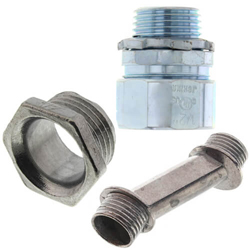
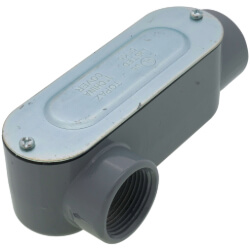
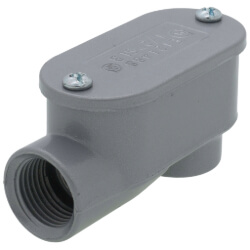
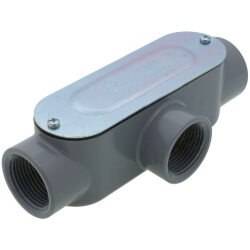
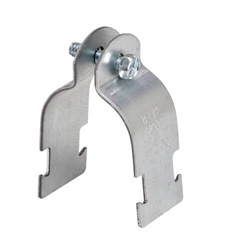
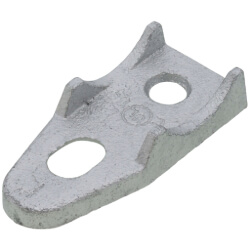
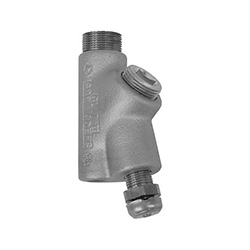
Rigid & IMC Conduit Fittings


 --%3E %3Csvg version='1.1' id='No-RB' xmlns='http://www.w3.org/2000/svg' xmlns:xlink='http://www.w3.org/1999/xlink' x='0px' y='0px' viewBox='0 0 100 100' enable-background='new 0 0 100 100' xml:space='preserve'%3E %3Cpath fill='%23CECECE' d='M79.44,0.95H20.56C9.78,0.95,0.95,9.78,0.95,20.56v58.87c0,10.79,8.82,19.61,19.61,19.61h58.87 c10.79,0,19.61-8.83,19.61-19.61V20.56C99.05,9.78,90.22,0.95,79.44,0.95z M65.38,58.24l9.38,29.58L49.69,69.78L24.5,87.82 l9.34-29.6L8.8,39.6l30.73-0.17c0,0,6.98-19.61,10-28.93c0.54,1.36,9.88,29.1,9.88,29.1H91.2L65.38,58.24z'/%3E %3C/svg%3E)
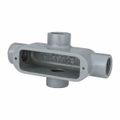
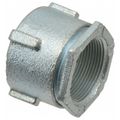
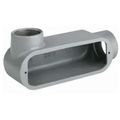
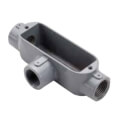
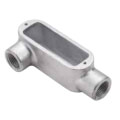
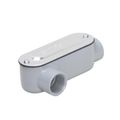
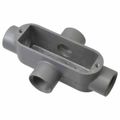

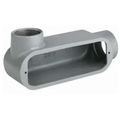
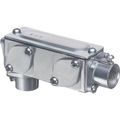
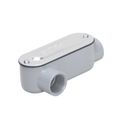
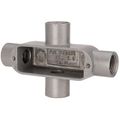
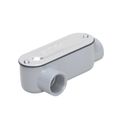
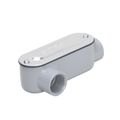
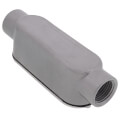

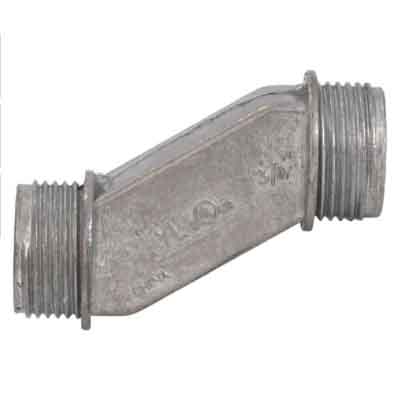
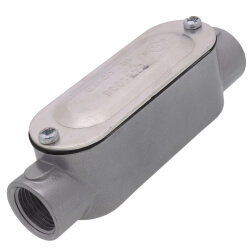
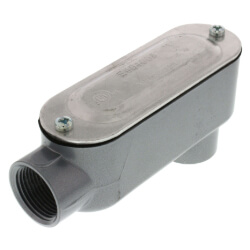
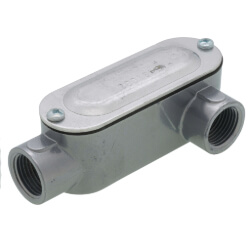
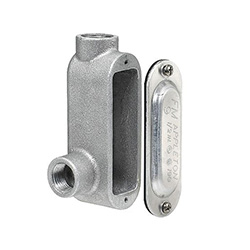
Rigid and IMC conduit fittings connect, terminate, and support rigid metal conduit (RMC) and intermediate metal conduit (IMC) runs in commercial and industrial electrical installations. Electricians reach for these fittings on jobs where the conduit itself needs to stand up to physical impact, corrosion, or exposure, since rigid and IMC systems are typically specified for outdoor runs, mechanical rooms, and areas where conduit is exposed rather than concealed in a wall cavity. Couplings join straight sections of conduit, connectors terminate conduit at a box or enclosure, and elbows change direction without a field bend. Threaded fittings are the standard here, which sets rigid and IMC apart from thinner-wall EMT systems that rely on set-screw or compression connections. Because these runs often carry feeders and branch circuits in demanding environments, matching the fitting material and finish to the conduit and the installation environment is part of getting the job to pass inspection the first time.
Subcategories
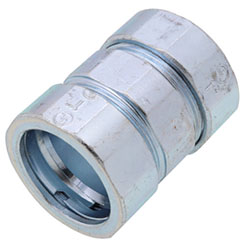
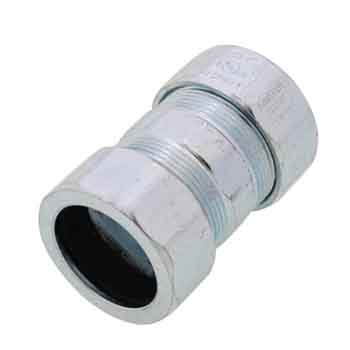
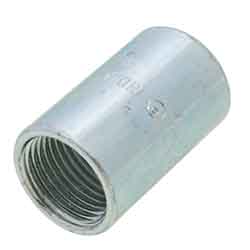
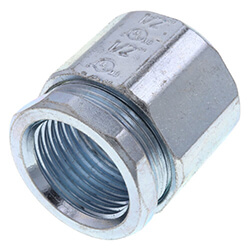
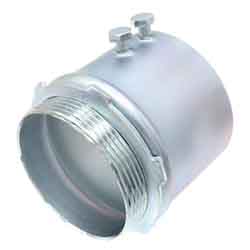
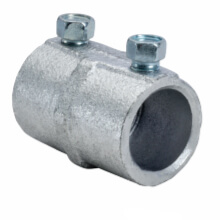
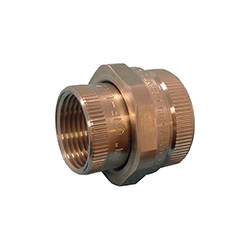
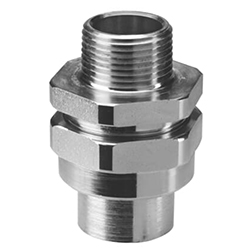
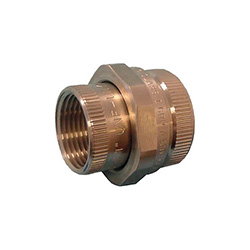
- Couplings: Couplings join two straight lengths of rigid or IMC conduit into a continuous run. Electricians use standard couplings for in-line joints and specify union-style or three-piece couplings when a run can't rotate freely to thread together, such as when both conduit ends are already fixed in place. Matching thread type and conduit size is the main consideration when ordering.
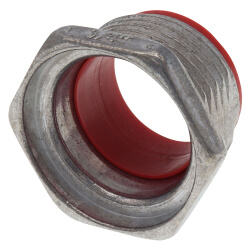
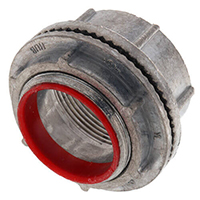
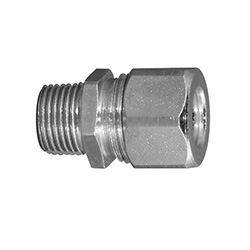
- Connectors: Connectors terminate a conduit run at a box, panel, or enclosure. Rigid and IMC connectors are threaded to match the conduit and typically include a locknut or bushing to secure the connection and protect conductors from a sharp edge at the opening. Contractors select insulated versions when code requires bushing protection for the conductors being pulled through.
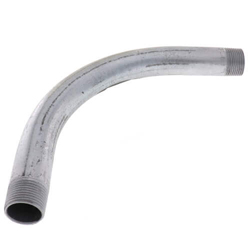
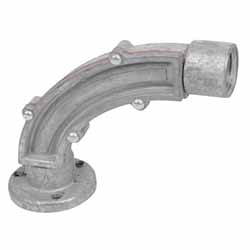
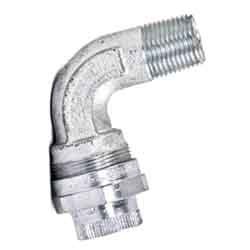
- Elbows and Bends: Elbows and factory bends change the direction of a rigid or IMC run without a field bend, which saves labor on repetitive angles and tight spaces where a hand bender can't get the geometry right. Common sweep angles cover 90 and 45 degree turns. Contractors stock these for conduit stub-ups and any run where a consistent, code-compliant bend radius matters more than a custom field bend.
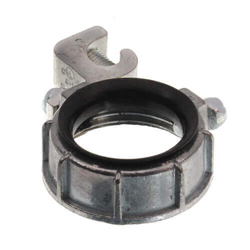
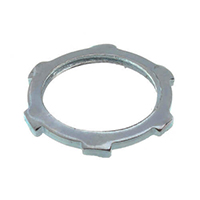
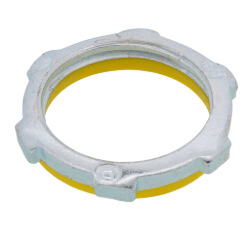
- Bushings and Locknuts: Bushings and locknuts secure conduit connectors to a box or enclosure and protect conductors from abrasion at the point of entry. Insulated bushings are specified wherever code requires additional conductor protection, while locknuts provide the mechanical grip that keeps a connector from backing out over time. These are ordered in the same quantities as connectors since every termination needs both.
Buying Guide
Matching fitting material to the conduit is the starting point for any rigid or IMC order. Rigid metal conduit and IMC differ slightly in wall thickness, and using fittings designed for the correct conduit type keeps the threaded connection tight and code compliant.
Environment drives finish selection. Outdoor runs, wet locations, and corrosive environments call for a fitting finish rated for that exposure, since a fitting that fails prematurely can compromise the whole run's grounding path and physical protection.
Thread engagement matters more on rigid and IMC systems than on thinner-wall conduit, since these systems rely on the threaded connection itself for both mechanical strength and a continuous grounding path. Under-threading a coupling or connector is a common inspection failure.
Plan for union-style or three-piece couplings anywhere a straight run can't rotate to thread together, such as between two fixed points like an existing panel and a wall-mounted disconnect. Standard couplings simply won't install in that situation.
Order bushings and locknuts in step with connectors rather than as an afterthought, since every termination point needs both to pass inspection and protect the conductors being pulled through the system.
Frequently Asked Questions
What's the difference between rigid metal conduit and IMC?
Rigid metal conduit has a thicker wall than IMC, though both are threaded systems rated for exposed, outdoor, and demanding industrial installations. Fittings are generally sized to match the specific conduit type being used.
When should I use a three-piece coupling instead of a standard coupling?
A three-piece or union-style coupling is needed when a conduit run can't rotate freely to thread together, such as when both ends of the run are already fixed in place.
Do I need an insulated bushing on every connector?
Insulated bushings are required wherever code calls for extra conductor protection at the point of entry into a box or enclosure. Checking the applicable code section for the specific installation is the best way to confirm.
Why are rigid and IMC fittings threaded instead of set-screw or compression style?
Threaded connections give rigid and IMC systems both mechanical strength and a continuous grounding path, which is why these fittings differ from the set-screw and compression fittings used on thinner-wall EMT conduit.
What finish should I choose for an outdoor conduit run?
The finish should match the exposure the run will see, since a fitting finish that isn't rated for outdoor or corrosive conditions can fail prematurely and compromise the run's protection and grounding path.
