




Filters
SORT
Product Availability –
Category –
Application –
Size –
Connection Type –
Connection Method –
Body Pattern –
Features –
Review Score –
 --%3E %3Csvg version='1.1' id='Fill' xmlns='http://www.w3.org/2000/svg' xmlns:xlink='http://www.w3.org/1999/xlink' x='0px' y='0px' viewBox='0 0 100 100' enable-background='new 0 0 100 100' xml:space='preserve'%3E %3Cpath fill='%23F15C02' d='M79.44,0.95H20.56C9.78,0.95,0.95,9.78,0.95,20.56v58.87c0,10.79,8.82,19.61,19.61,19.61h58.87 c10.79,0,19.61-8.83,19.61-19.61V20.56C99.05,9.78,90.22,0.95,79.44,0.95z M65.38,58.24l9.38,29.58L49.69,69.78L24.5,87.82 l9.34-29.6L8.8,39.6l30.73-0.17c0,0,6.98-19.61,10-28.93c0.54,1.36,9.88,29.1,9.88,29.1H91.2L65.38,58.24z'/%3E %3C/svg%3E)
 --%3E %3Csvg version='1.1' id='With-RB' xmlns='http://www.w3.org/2000/svg' xmlns:xlink='http://www.w3.org/1999/xlink' x='0px' y='0px' viewBox='0 0 100 100' enable-background='new 0 0 100 100' xml:space='preserve'%3E %3Cpath fill='%23FBC8B4' d='M79.44,0.95H20.56C9.78,0.95,0.95,9.78,0.95,20.56v58.87c0,10.79,8.82,19.61,19.61,19.61h58.87 c10.79,0,19.61-8.83,19.61-19.61V20.56C99.05,9.78,90.22,0.95,79.44,0.95z M65.38,58.24l9.38,29.58L49.69,69.78L24.5,87.82 l9.34-29.6L8.8,39.6l30.73-0.17c0,0,6.98-19.61,10-28.93c0.54,1.36,9.88,29.1,9.88,29.1H91.2L65.38,58.24z'/%3E %3C/svg%3E)
Price Range –
Taco Mixing Valves

 --%3E %3Csvg version='1.1' id='No-RB' xmlns='http://www.w3.org/2000/svg' xmlns:xlink='http://www.w3.org/1999/xlink' x='0px' y='0px' viewBox='0 0 100 100' enable-background='new 0 0 100 100' xml:space='preserve'%3E %3Cpath fill='%23CECECE' d='M79.44,0.95H20.56C9.78,0.95,0.95,9.78,0.95,20.56v58.87c0,10.79,8.82,19.61,19.61,19.61h58.87 c10.79,0,19.61-8.83,19.61-19.61V20.56C99.05,9.78,90.22,0.95,79.44,0.95z M65.38,58.24l9.38,29.58L49.69,69.78L24.5,87.82 l9.34-29.6L8.8,39.6l30.73-0.17c0,0,6.98-19.61,10-28.93c0.54,1.36,9.88,29.1,9.88,29.1H91.2L65.38,58.24z'/%3E %3C/svg%3E)

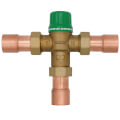
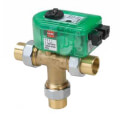
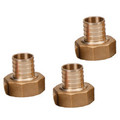
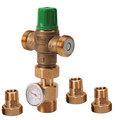
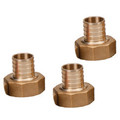
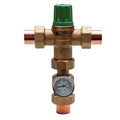
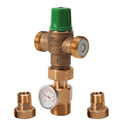
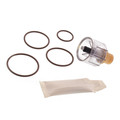
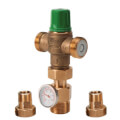
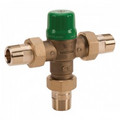
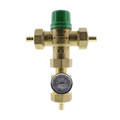
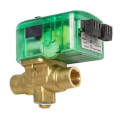

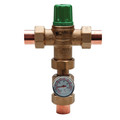
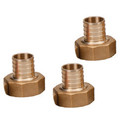
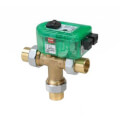
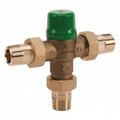

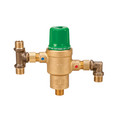
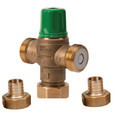
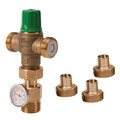
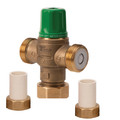
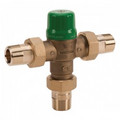
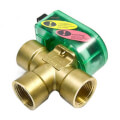
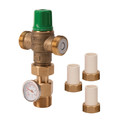
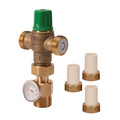
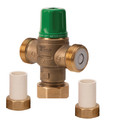
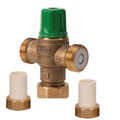

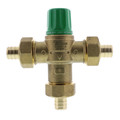
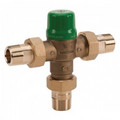
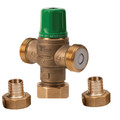
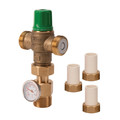
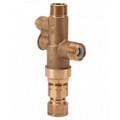
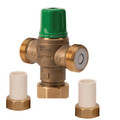
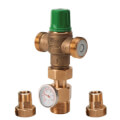
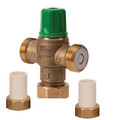
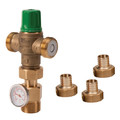

Taco mixing valves blend hot supply water with cooler return water to deliver a consistent temperature to a hydronic heating zone or domestic hot water fixture, protecting both the equipment and the people using it from water that's too hot. Thermostatic models adjust automatically as supply temperature fluctuates, holding the mixed output within a set range without a technician manually adjusting a valve. Taco, a company that has manufactured hydronic system components for more than a century, builds these valves for both radiant floor heating applications, where precise temperature control prevents damage to flooring materials, and domestic water systems where scald protection is the priority. Choosing between a manual and thermostatic model comes down to how often the supply temperature changes and how much attention the system gets after installation, since a manual valve set once and never checked again can drift out of the safe range as conditions change.
Subcategories
- Thermostatic Mixing Valves: Thermostatic models use an internal temperature-sensing element to automatically adjust the blend of hot and cold water as supply conditions change. Radiant floor heating systems commonly specify this style since flooring materials can be damaged by water that runs too hot for an extended period. Periodic checking confirms the sensing element still responds accurately as these valves age.
- Manual Mixing Valves: Manual valves set a fixed blend ratio that stays constant until someone physically adjusts the valve, making them a simpler and generally less expensive option than a thermostatic model. Systems with a stable, predictable supply temperature are better candidates for a manual valve than ones where boiler output fluctuates throughout the day. Periodic verification with a thermometer confirms the mixed output hasn't drifted from where it was originally set.
- Radiant Heating Mixing Valves: Valves in this group are sized and rated specifically for radiant floor and low-temperature hydronic zones, where supply water needs tempering down significantly before reaching the tubing embedded in a floor. Running water too hot through radiant tubing over time can damage certain flooring materials or the tubing itself, so precise temperature control matters more here than in baseboard or radiator zones. Confirming the flooring manufacturer's maximum water temperature before setting the valve is a step worth taking during commissioning.
- Mixing Valve Repair Kits & Accessories: Repair kits, replacement cartridges, and sensing elements in this group extend the service life of an installed mixing valve without requiring a full replacement. Keeping a rebuild kit on hand for a specific valve model shortens a service call when a valve starts drifting out of its set temperature range. Rebuild kits work best when the valve body itself hasn't corroded or been damaged, since only the internal wear components get replaced.
Buying Guide
Choosing between a manual and thermostatic valve depends mainly on how stable the supply water temperature stays throughout the day. A boiler that cycles and produces fluctuating supply temperatures calls for a thermostatic valve that adjusts automatically, while a system with steady, predictable output can often get by with a simpler manual valve set once during commissioning. Application matters just as much as valve type. Taco Mixing Valves sized for radiant floor heating need to hold tighter temperature tolerances than valves serving baseboard or fin-tube radiation, since certain flooring materials and the embedded tubing itself can be damaged by water that runs too hot for extended periods. Domestic hot water applications add a scald-protection consideration that space heating zones don't have, since a malfunctioning valve on a fixture line poses a direct risk to whoever turns on the tap. Flow rate and pipe size need to match the valve's rated capacity, since an undersized valve restricts flow and can cause temperature swings even with a properly functioning thermostatic element. Connection type, threaded, sweat, or press, should match the existing piping to avoid adding unnecessary adapters. Planning for periodic maintenance matters regardless of valve type, since both manual and thermostatic valves benefit from occasional verification with a thermometer to confirm the mixed output hasn't drifted from its intended setting.
Frequently Asked Questions
When does a project call for a thermostatic mixing valve instead of a manual one?
A thermostatic valve makes sense when supply water temperature fluctuates throughout the day, such as with a boiler that cycles on and off, since the valve adjusts the blend automatically to hold a consistent output. A manual valve works fine on systems with steady supply temperature, where the mixed output doesn't need constant readjustment.
Why do radiant floor systems need tighter mixing valve tolerances?
Radiant tubing and certain flooring materials can be damaged by water running too hot for extended periods, so radiant zones typically call for a valve rated to hold a tighter temperature range than baseboard or fin-tube radiation needs. Confirming the flooring manufacturer's maximum water temperature before setting the valve avoids long-term damage.
How often should a mixing valve be checked once installed?
Checking the mixed output with a thermometer once or twice a year confirms the valve hasn't drifted from its set temperature, since both manual and thermostatic valves can shift slightly as internal components age. Catching a drifted valve during routine maintenance is easier than diagnosing an uneven heating complaint months later.
Can a mixing valve be rebuilt instead of replaced?
Many mixing valves accept a rebuild kit with a replacement cartridge or sensing element, which restores performance without swapping the entire valve body. Rebuild kits work best when the valve body itself hasn't corroded or been damaged, since only the internal wear components get replaced.
What's the difference between a mixing valve for space heating and one for domestic hot water?
A mixing valve used on a domestic hot water fixture line needs scald-protection performance, since a malfunction directly affects water coming out of a tap or shower. A space heating mixing valve blends water for a heating zone rather than a fixture, so its main job is temperature consistency for the equipment and flooring rather than protecting someone from a sudden temperature spike at the point of use.
