




Filters
SORT
Product Availability –
Brand –
Size –
Pressure Set Point –
Capacity (BTU) –
Review Score –
 --%3E %3Csvg version='1.1' id='Fill' xmlns='http://www.w3.org/2000/svg' xmlns:xlink='http://www.w3.org/1999/xlink' x='0px' y='0px' viewBox='0 0 100 100' enable-background='new 0 0 100 100' xml:space='preserve'%3E %3Cpath fill='%23F15C02' d='M79.44,0.95H20.56C9.78,0.95,0.95,9.78,0.95,20.56v58.87c0,10.79,8.82,19.61,19.61,19.61h58.87 c10.79,0,19.61-8.83,19.61-19.61V20.56C99.05,9.78,90.22,0.95,79.44,0.95z M65.38,58.24l9.38,29.58L49.69,69.78L24.5,87.82 l9.34-29.6L8.8,39.6l30.73-0.17c0,0,6.98-19.61,10-28.93c0.54,1.36,9.88,29.1,9.88,29.1H91.2L65.38,58.24z'/%3E %3C/svg%3E)
 --%3E %3Csvg version='1.1' id='With-RB' xmlns='http://www.w3.org/2000/svg' xmlns:xlink='http://www.w3.org/1999/xlink' x='0px' y='0px' viewBox='0 0 100 100' enable-background='new 0 0 100 100' xml:space='preserve'%3E %3Cpath fill='%23FBC8B4' d='M79.44,0.95H20.56C9.78,0.95,0.95,9.78,0.95,20.56v58.87c0,10.79,8.82,19.61,19.61,19.61h58.87 c10.79,0,19.61-8.83,19.61-19.61V20.56C99.05,9.78,90.22,0.95,79.44,0.95z M65.38,58.24l9.38,29.58L49.69,69.78L24.5,87.82 l9.34-29.6L8.8,39.6l30.73-0.17c0,0,6.98-19.61,10-28.93c0.54,1.36,9.88,29.1,9.88,29.1H91.2L65.38,58.24z'/%3E %3C/svg%3E)
Price Range –
Boiler Pressure Relief Valves




 --%3E %3Csvg version='1.1' id='No-RB' xmlns='http://www.w3.org/2000/svg' xmlns:xlink='http://www.w3.org/1999/xlink' x='0px' y='0px' viewBox='0 0 100 100' enable-background='new 0 0 100 100' xml:space='preserve'%3E %3Cpath fill='%23CECECE' d='M79.44,0.95H20.56C9.78,0.95,0.95,9.78,0.95,20.56v58.87c0,10.79,8.82,19.61,19.61,19.61h58.87 c10.79,0,19.61-8.83,19.61-19.61V20.56C99.05,9.78,90.22,0.95,79.44,0.95z M65.38,58.24l9.38,29.58L49.69,69.78L24.5,87.82 l9.34-29.6L8.8,39.6l30.73-0.17c0,0,6.98-19.61,10-28.93c0.54,1.36,9.88,29.1,9.88,29.1H91.2L65.38,58.24z'/%3E %3C/svg%3E)


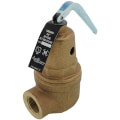


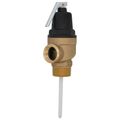


Boiler Pressure Relief Valves are safety devices that open automatically once system pressure exceeds a set threshold, venting excess pressure before it can damage the boiler, piping, or nearby equipment. Every hydronic boiler installation needs one sized and rated for the specific unit, since the valve is the last line of defense against a runaway pressure event caused by a failed control, a stuck circulator, or trapped air in a closed system. A valve carrying the proper safety agency rating is tested to open reliably at its stamped setting and to pass enough flow to bring pressure back down quickly.
Installation location matters as much as the valve itself. Code requires the relief valve to sit directly on the boiler or on the supply piping close to it, with no valve or restriction between the boiler and the relief device that could block it from doing its job. For a technician commissioning a new boiler or replacing an aging unit, confirming the relief valve's rated capacity matches the boiler's heat input is a required step, not an optional check.
Subcategories
- Low Pressure Relief Valves: These valves are rated for typical residential and light commercial hot water boiler systems, opening at settings common to standard hydronic heating loops. They cover the majority of single boiler residential replacements.
- High Pressure and Steam Relief Valves: Steam boilers and higher pressure hydronic systems need a valve rated for that specific service, since a low pressure valve is not built to handle steam temperatures or higher set points safely. Matching the valve rating to the boiler type is not optional here.
- Combination Pressure and Temperature Relief Valves: Some applications call for a single valve that responds to both excess pressure and excess temperature, adding a layer of protection beyond a pressure only device. These see common use on combination boiler and water heater setups.
- Replacement Relief Valve Kits: Kits bundle a relief valve with common fittings needed for a straightforward swap, which saves a technician a second trip to source adapters during a routine maintenance call.
Buying Guide
Matching the relief valve's rated capacity to the boiler's maximum heat input, as listed on the boiler's nameplate, is the starting point for every selection. A valve rated below that figure cannot vent fast enough in an overpressure event, which defeats the purpose of having one installed at all.
Boiler Pressure Relief Valves come in different pressure settings, and the correct setting depends on the system type. A standard residential hot water boiler typically uses a lower set point than a steam system, so pulling the boiler manual or nameplate data before ordering avoids installing the wrong rating.
Connection size and thread type need to match the boiler's tapped opening exactly, since an adapter fitting between the boiler and the relief valve can introduce a restriction that code does not allow in that location.
Material matters for longevity. Boiler water chemistry varies by system, and a valve built with internals suited to the water treatment in use holds up better over years of service than a generic part not rated for that environment.
Replacing a relief valve on the schedule recommended by the boiler manufacturer, rather than waiting for a failure or a visible leak, is the safer approach for any technician responsible for a building's heating system. A valve that has been discharging periodically or shows visible corrosion should be replaced immediately rather than monitored.
Frequently Asked Questions
How is a boiler pressure relief valve sized?
Sizing is based on the boiler's maximum heat input as listed on its nameplate, and the valve's rated discharge capacity must meet or exceed that figure. A technician should never guess at sizing without checking the nameplate first.
Where does code require the relief valve to be installed?
The valve must be installed directly on the boiler or on piping close to it, with no shutoff valve or restriction between the boiler and the relief device. That placement ensures nothing can block the valve from venting when needed.
Why is a relief valve dripping or discharging periodically?
Periodic discharge usually points to excess system pressure, often from a failed expansion tank, a waterlogged tank, or trapped air. Diagnosing the root cause matters more than simply replacing the valve, since a new valve will keep discharging if the underlying pressure problem is not fixed.
Can a low pressure relief valve be used on a steam boiler?
No, steam systems need a valve specifically rated for steam service. A low pressure hot water rated valve is not built to handle the temperatures and pressures found in a steam system safely.
How often should a relief valve be replaced?
Manufacturers typically recommend replacement on a multi year schedule or sooner if the valve shows corrosion, has discharged repeatedly, or fails a manual test lift. Following the boiler manufacturer's specific guidance is the safest approach.
