



'/%3E%3C/svg%3E)
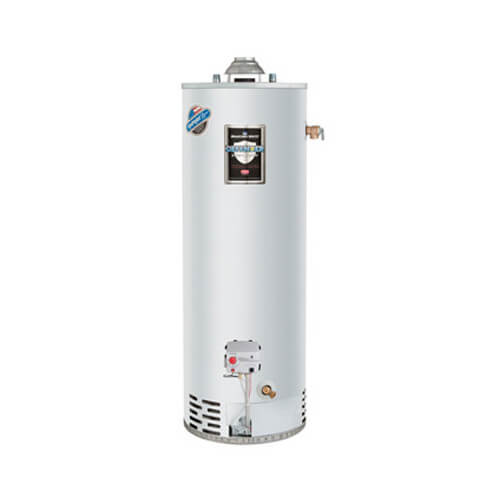
50 Gallon - 40,000 BTU Defender Safety System Atmospheric Vent Energy Saver Residential Water Heater (Nat Gas)
 --%3E %3Csvg version='1.1' id='Fill' xmlns='http://www.w3.org/2000/svg' xmlns:xlink='http://www.w3.org/1999/xlink' x='0px' y='0px' viewBox='0 0 100 100' enable-background='new 0 0 100 100' xml:space='preserve'%3E %3Cpath fill='%23F15C02' d='M79.44,0.95H20.56C9.78,0.95,0.95,9.78,0.95,20.56v58.87c0,10.79,8.82,19.61,19.61,19.61h58.87 c10.79,0,19.61-8.83,19.61-19.61V20.56C99.05,9.78,90.22,0.95,79.44,0.95z M65.38,58.24l9.38,29.58L49.69,69.78L24.5,87.82 l9.34-29.6L8.8,39.6l30.73-0.17c0,0,6.98-19.61,10-28.93c0.54,1.36,9.88,29.1,9.88,29.1H91.2L65.38,58.24z'/%3E %3C/svg%3E)
 --%3E %3Csvg version='1.1' id='Half' xmlns='http://www.w3.org/2000/svg' xmlns:xlink='http://www.w3.org/1999/xlink' x='0px' y='0px' viewBox='0 0 100 100' enable-background='new 0 0 100 100' xml:space='preserve'%3E %3Cg%3E %3Cpath fill='%23F15C02' d='M30.05,70.23l3.79-12.01L8.8,39.6l30.73-0.17c0,0,6.98-19.61,10-28.93c0.54,1.36,9.88,29.1,9.88,29.1h1.58 L93.71,7.18c-3.58-3.82-8.66-6.23-14.28-6.23H20.56C9.78,0.95,0.95,9.78,0.95,20.56v58.87c0,5.41,2.22,10.32,5.79,13.88 L30.05,70.23z'/%3E %3C/g%3E %3Cpath fill='%23FBC8B4' d='M93.71,7.18L60.98,39.6H91.2L65.38,58.24l9.38,29.58L49.69,69.78L24.5,87.82l5.55-17.59L6.75,93.32 c3.55,3.54,8.44,5.73,13.82,5.73h58.87c10.79,0,19.61-8.83,19.61-19.61V20.56C99.05,15.4,97.01,10.69,93.71,7.18z'/%3E %3C/svg%3E)
' fill='%23F15C02' d='M49 0C21.938 0 0 21.938 0 49s21.938 49 49 49 49-21.938 49-49S76.062 0 49 0m0 82.709a7.54 7.54 0 1 1 0-15.08 7.54 7.54 0 0 1 0 15.08m7.54-28.412a7.541 7.541 0 0 1-15.08 0V22.831a7.54 7.54 0 0 1 15.08 0v31.466z'/%3E%3C/svg%3E)
MANUALS (7)
'/%3E%3C/svg%3E)
Product Highlights


Description
This Bradford White water heater utilizes a draft diverter and is atmospherically vented. It is perfect for many standard water heating applications.
Features:
- Bradford White ICON System - Intelligent gas control with proven millivolt powered technology and built-in piezo igniter. A standard, off the shelf thermopile converts heat energy from the pilot flame into electrical energy to operate the gas valve and microprocessor. No need for external electricity.
- Enhanced Performance - Proprietary algorithms provide enhanced First Hour Delivery ratings and tighter temperature differentials.
- Advanced Temperature Control System - Microprocessor constantly monitors and controls burner operation to maintain consistent and accurate water temperature levels.
- Intelligent Diagnostics - An exclusive green LED light prompts the installer during start-up and provides ten different diagnostic codes to assist in troubleshooting.
- Pilot On Indication - Flashing green LED provides positive indication that pilot is on.
- Separate Immersed Thermowell - High strength advanced polymer composite thermowell provides isolation between electric temperature sensor and surrounding water. No need to drain the tank when removing gas valve.
- Advanced ScreenLok® Technology Flame Arrestor Design - Flame arrestor is designed to prevent ignition of flammable vapor outside of the water heater.
- Resettable Thermal Switch - Proven and reliable bimetallic switch prevents burner and pilot operation in case of ongoing flammable vapor burn inside of the combustion chamber or restricted air flow.
- Maintenance Free - No regular cleaning of air inlet openings or flame arrestor is required under normal conditions.
- Sight Window - Offers a view into the combustion chamber to observe the operation of the pilot and burner.
- Factory Installed Hydrojet® Total Performance System - Cold water inlet sediment reducing device helps prevent sediment build up in tank. Increases first hour delivery of hot water while minimizing temperature build up in tank.
- Vitraglas® Lining - Bradford White tanks are lined with a exclusively engineered enamel formula that provides superior protection from the highly corrosive effects of hot water. This formula (Vitraglas®) is fused to the steel surface by firing at a temperature of over 1600ºF.
- 1" Non-CFC Foam Insulation - Covers the sides and top of tank, reducing the amount of heat loss. This results in less energy consumption, improved operation efficiencies and jacket rigidity.
- Pedestal Base.
- Water Connections -3/4" NPT factory installed true dielectric fittings.
- Factory Installed Heat Traps.
- Protective Magnesium Anode Rod.
- 3x4 "Snap Lock" Draft Diverter - Allows either 3" or 4" vent connections with inputs of 40,000 BTU/Hr or less. Over 40,000 BTU/Hr. has the 4" "Snap Lock" Draft Diverter.
- T&P Relief Valve - Included.
- Brass Drain Valve - Tamper proof design
Specs
| Intended Household: | 3-4 Person |
|---|---|
| Fuel Type: | Natural Gas |
| Gas Connection: | 1/2" |
| Capacity (Gallons): | 50 |
| Water Connection: | 3/4" |
| BTU Input: | 40000 |
| Recovery Efficiency: | 79% |
| 1st Hour Delivery (Gallons): | 89 |
| Warranty: | 6 Year Limited Tank/ 6 Year Limited on Component Parts |
| Vent Size: | 3 x 4 |
| Application: | Plumbing |
| Height (Inches): | 59.625" |
| Diameter (Inches): | 20" |
| Weight (lbs): | 145 lbs |
| Energy Factor: | 0.58 |
| Energy Star Rated: | No |

Questions?
Compare Similar Products
You May Also Need
23 Replacement Parts

Need help finding a replacement part?
Product Reviews
Most Liked Positive Review
We love our new water heater!
Most Liked Negative Review
 --%3E %3Csvg version='1.1' id='With-RB' xmlns='http://www.w3.org/2000/svg' xmlns:xlink='http://www.w3.org/1999/xlink' x='0px' y='0px' viewBox='0 0 100 100' enable-background='new 0 0 100 100' xml:space='preserve'%3E %3Cpath fill='%23FBC8B4' d='M79.44,0.95H20.56C9.78,0.95,0.95,9.78,0.95,20.56v58.87c0,10.79,8.82,19.61,19.61,19.61h58.87 c10.79,0,19.61-8.83,19.61-19.61V20.56C99.05,9.78,90.22,0.95,79.44,0.95z M65.38,58.24l9.38,29.58L49.69,69.78L24.5,87.82 l9.34-29.6L8.8,39.6l30.73-0.17c0,0,6.98-19.61,10-28.93c0.54,1.36,9.88,29.1,9.88,29.1H91.2L65.38,58.24z'/%3E %3C/svg%3E)
Nightmare water heater,
Good Quality Product

Bradford Rocks
Great product
Great service, product easy to install.
2 Fail in 3 years- just the truth
Reliable and attractive
Great water heater
Terrible Warranty
Works as advertised.
So far so good!
Product Q&A
21 QuestionsQ: can i convert this model to LP? if not why? its just a matter of changing the orifaces. I can take an LP tank and change it to NG why not the other way, what is the NG>LP conversion kit part # for this specific model number and is it still available even though the tank is discon. 100'+ sea lvl 3/4' copper lines well water / mid-soft
Asked by Caleb 11 years ago
Add your answer
Verified Reply- SupplyHouse StaffUnfortunately no, there are no conversions to LP, only from LP to NG as per the manufacturer.
This has to do with the heat at which LP burns (hotter) relative to NG. The water heaters they sell for LP are build with higher grade materials due to the higher heat output of LP, which is also why they're more expensive. So you can go from LP to NG which would leave you with an over engineered water heater relative to the gas source, but if you went the other way you'd be exceeding it's design capacity.
Q: If this has been discontinued for not meeting current code, why did my plumber just install it in my home and charge me extra to "bring my system up to 2015 code"? I'm feeling very concerned and a bit "taken". Also, if it's discontinued is the warranty even valid ? He charged $1650 to do this yesterday...not to mention he switched this at the last minute, I had agreed to purchase a RUUD.
Asked by Hot water 11 years ago
Add your answer
Verified Reply- SupplyHouse StaffThis model has not been discontinued, however there have been changes made to the water heaters that are currently being manufactured to meet the 2015 NAECA codes, so it is possible your installer had the previous version of this unit and had to make adjustments. As long as the unit was installed properly and meets the requirements Bradford White specified then it should be valid under warranty as well.
Q: does this model qualify for energy tax credits ?
Asked by Sal 11 years ago
Add your answer
Verified Reply- Supplyhouse StaffPlease consult the manufacturer's website and the local utility company in your area to confirm which units qualify for energy tax credits.
Q: How much does it cost to run this unit annually?
Asked by bnlauren 11 years ago
Add your answer
Verified Reply- Supplyhouse Staffhttps://s3.supplyhouse.com/product_files/Energy%20Factor-Natural%20Gas-M-I-5036FBN.pdf
Q: What specifically do you need to buy or install to get a 10 year warranty? Who would I contact if warranty service is needed since you have no local outlets?
Asked by John 14 years ago
Add your answer
This question needs two answers. 1. The specifications page for your 50 gallon heater product ( http://www.pexsupply.com/Bradford-White-M-4-5036FBN-50-Gallon-40000-BTU-Defender-Safety-System-Energy-Star-High-Efficiency-Residential-Water-Heater-Nat-Gas )shows a standard warranty covering a 6 year period. The page also offers you a web link to another product description telling you about a second product you can buy which extends the (standard) 6 year warranty to an extended, 10-year warranty (personal comment - that adds 4 years to your warranty coverage.) Make absolutely sure your model number is on the 'authorized' list. Go HERE ( http://www.pexsupply.com/Bradford-White-238-43329-00-10-Year-Warranty-Upgrade-Kit-Level-1 ) for details on what you need to order, what it will cost, etc etc. I see a cost of 141.95 for that 4-year extension. 2. At the bottom of that page, below the listing of qualified model numbers, both Gas and Electric, which you can purchase the extended coverage, you will see " For additional warranty information, please visit Bradford White's Warranty Information Page <http://www.bradfordwhite.com/warch.asp>. " That page is your "official" statement for warranty coverage, disallowed items not covered, and most important, the final statement at the bottom of the Warranty Information Page:
For a 10 year warranty water heater you need to buy the water heater that states it does have a 10 year warranty. Simply register the water heater ad install date by mail or PC. Doing that is all you need to do. If there is a problem you would call the manufacturer and explain the problem. They have a network of plumbers or heating contractors that would come to the house to resolve the issue. As for products I like the Bradford, just made better, but that is my preference.
Q: what is the height of the gas box hole. Is it the same as my MI5036EN10? I do not want to cut gas pipe. water pipe is ok gas, no way...
Asked by Jayp 14 years ago
Add your answer
Our gas supply line is 13.5 inches from the floor to the center of the gas pipe. Our water heater sits on top of a drain pan and is further shimmed up with 1/2 inch plywood (possibly done so as not to have to cut or adjust the gas pipe). The gas feedline to the burner is 3 1/4 inches from the top of the drain pan surface. Hope this helps. Elizabeth Tonon
The height is fairly standard for the last few years
13 inches center line from floor up Sent from my iPad
Q: what does "atmospheric vent" ?
Asked by quan nguyen 14 years ago
Add your answer
Verified Reply- PexSupply StaffAtmospheric vent units (also know as gravity vent, chimney vent, or standard vent) rely on the natural process of exhaust gases rising through a chimney. Power vent and direct vent units, on the other hand, use blower fans to force exhaust gases away from the water heater.
It means that the exhaust is vented directly into the flue or utility chimney. Does not require a fan to pump the exhaust outside. Take a look at your existing water heater, if you have an aluminum flue heading to the chimney you have an atmospheric vent. Sent from my iPod
Atmospheric vent means ( based on Picture) that it is the traditional venting of galvanized pipe to a chimney-not what the higher efficiency units with power vents or PVC piping would need
Google it...here is one definition... When people talk about atmospheric-vent heaters, or if you see them in a company spec sheet, it's referring to the most common type of gas water heater out there -- one that has a vent pipe that passes straight up through the roof.
Q: what is the energy factor
Asked by [email protected] 14 years ago
Add your answer
Verified Reply- PexSupply StaffThis unit has a .58 Energy Factor.
Estimated yearly energy use is 258 Therms. Sent on the Sprint® Now Network from David's BlackBerry®
I installed this in my mother's house. It is a gas unit and is truly wonderful. I do not know the energy factor, but I do know that for the same money all the other brands are inferior to this.
I'm not sure of the energy factor, but I can tell you the water heater is pretty amazing as far as water heaters go. It was simple to pop in as a replacement and the microprocessor controlled burner is amazing. --Joe
Energy Factor is an 'artificial index' created to indicate to a buyer/user the effectiveness of a rated product. Newly demanded to be provided with appliances and products that consume power/energy to create hot water for your home..... each product design - energy source, insulation characteristics, heat loss through vents, etc., create a unique energy factor for each water heater product. The costs of energy, electric or natural gas or propane, should be factored into analyzing the 'energy factor' to determine the overall cost comparison of operating alternate product solutions and judging the lowest cost in your local community. This information may help you.... http://www.consumerenergycenter.org/home/appliances/waterheaters.html from which this following information is taken: Understanding The Energy Factor Label There is another label on new water heaters listing that unit's "Energy Factor." It's a number with a decimal point, usually listed on a separate tag beside the EnergyGuide. The higher the "Energy Factor" number, the more efficient the water heater. Gas water heaters have energy factors between 0.5 to around 0.7. Electric models range from 0.75 to 0.95. Those Energy Factor numbers show that electric models make better use of energy, primarily because gas water heaters lose some of their energy up the exhaust vent. However, new gas water heaters boast more efficient combustion than older ones, meaning that less heat escapes up the flue, and less gas is needed to heat the water. Gas efficiency has improved. But since electrical energy usually costs three times more than gas, in most of California it's still cheaper to use natural gas, if you have a choice. "Energy Factors" vary because different water heaters are made to be more energy efficient. Today's models are better insulated than the ones manufactured years ago. As a result, most cost about 18 percent less to run than older models. The savings are due to reduced heat loss, thanks to the added insulation. Return to Top It's Your Money Whichever type of water heater you buy - either gas or electric - look for a unit with a higher energy factor. It may cost more initially, but the energy (and your money) savings may more than make up for the higher sticker price. Consider the price difference and how long it would take to recover the money through energy savings. For example, say a gas water heater with an energy factor of 0.57 sells for $129, while one with an energy factor of 0.61 sells for $145. To begin with, you'll spend $16 more for the model with the higher energy factor, but it will save you almost $11 a year in the natural gas. You have recovered your initial $16 investment within 18 months. Over the estimated life of the water heater, you should save an additional $125. Here's a comparison of what various water heaters with different Energy Factors could cost to operate each year, using a consistent price for energy. Note the savings compared to the 0.53 model over the 13-year life expectancy of a water heater. Energy savings are based on the average use of a family of four. Energy Factor Energy Cost Each Year Savings Over Life of Appliance 0.53 $177 $0 0.57 $166 $143 0.61 $155 $286 0.65 $144 $429 As you can see, spending more up-front for a more efficient water heater - one with a higher Energy Factor - can mean major savings over the life of the appliance!
Q: What does 3 X 4 vent size mean?
Asked by 14 years ago
Add your answer
Verified Reply- PexSupply StaffIt means that this particular unit (M-I-5036FSX) can accept either 3" or 4" venting.
Q: Can this model be used at 7000 feet elevation?
Asked by 14 years ago
Add your answer
Verified Reply- PexSupply StaffThis unit only works at altitudes up to 2,000 feet above sea level. You would need to use a high-altitude unit at 7,000 feet. Such units can be custom-ordered by contacting our customer service department.