




Filters
SORT
Product Availability –
Connection Type –
Review Score –
 --%3E %3Csvg version='1.1' id='Fill' xmlns='http://www.w3.org/2000/svg' xmlns:xlink='http://www.w3.org/1999/xlink' x='0px' y='0px' viewBox='0 0 100 100' enable-background='new 0 0 100 100' xml:space='preserve'%3E %3Cpath fill='%23F15C02' d='M79.44,0.95H20.56C9.78,0.95,0.95,9.78,0.95,20.56v58.87c0,10.79,8.82,19.61,19.61,19.61h58.87 c10.79,0,19.61-8.83,19.61-19.61V20.56C99.05,9.78,90.22,0.95,79.44,0.95z M65.38,58.24l9.38,29.58L49.69,69.78L24.5,87.82 l9.34-29.6L8.8,39.6l30.73-0.17c0,0,6.98-19.61,10-28.93c0.54,1.36,9.88,29.1,9.88,29.1H91.2L65.38,58.24z'/%3E %3C/svg%3E)
 --%3E %3Csvg version='1.1' id='With-RB' xmlns='http://www.w3.org/2000/svg' xmlns:xlink='http://www.w3.org/1999/xlink' x='0px' y='0px' viewBox='0 0 100 100' enable-background='new 0 0 100 100' xml:space='preserve'%3E %3Cpath fill='%23FBC8B4' d='M79.44,0.95H20.56C9.78,0.95,0.95,9.78,0.95,20.56v58.87c0,10.79,8.82,19.61,19.61,19.61h58.87 c10.79,0,19.61-8.83,19.61-19.61V20.56C99.05,9.78,90.22,0.95,79.44,0.95z M65.38,58.24l9.38,29.58L49.69,69.78L24.5,87.82 l9.34-29.6L8.8,39.6l30.73-0.17c0,0,6.98-19.61,10-28.93c0.54,1.36,9.88,29.1,9.88,29.1H91.2L65.38,58.24z'/%3E %3C/svg%3E)
Price Range –
Caleffi DIRTMAG Dirt Separators

 --%3E %3Csvg version='1.1' id='No-RB' xmlns='http://www.w3.org/2000/svg' xmlns:xlink='http://www.w3.org/1999/xlink' x='0px' y='0px' viewBox='0 0 100 100' enable-background='new 0 0 100 100' xml:space='preserve'%3E %3Cpath fill='%23CECECE' d='M79.44,0.95H20.56C9.78,0.95,0.95,9.78,0.95,20.56v58.87c0,10.79,8.82,19.61,19.61,19.61h58.87 c10.79,0,19.61-8.83,19.61-19.61V20.56C99.05,9.78,90.22,0.95,79.44,0.95z M65.38,58.24l9.38,29.58L49.69,69.78L24.5,87.82 l9.34-29.6L8.8,39.6l30.73-0.17c0,0,6.98-19.61,10-28.93c0.54,1.36,9.88,29.1,9.88,29.1H91.2L65.38,58.24z'/%3E %3C/svg%3E)


 --%3E %3Csvg version='1.1' id='Half' xmlns='http://www.w3.org/2000/svg' xmlns:xlink='http://www.w3.org/1999/xlink' x='0px' y='0px' viewBox='0 0 100 100' enable-background='new 0 0 100 100' xml:space='preserve'%3E %3Cg%3E %3Cpath fill='%23F15C02' d='M30.05,70.23l3.79-12.01L8.8,39.6l30.73-0.17c0,0,6.98-19.61,10-28.93c0.54,1.36,9.88,29.1,9.88,29.1h1.58 L93.71,7.18c-3.58-3.82-8.66-6.23-14.28-6.23H20.56C9.78,0.95,0.95,9.78,0.95,20.56v58.87c0,5.41,2.22,10.32,5.79,13.88 L30.05,70.23z'/%3E %3C/g%3E %3Cpath fill='%23FBC8B4' d='M93.71,7.18L60.98,39.6H91.2L65.38,58.24l9.38,29.58L49.69,69.78L24.5,87.82l5.55-17.59L6.75,93.32 c3.55,3.54,8.44,5.73,13.82,5.73h58.87c10.79,0,19.61-8.83,19.61-19.61V20.56C99.05,15.4,97.01,10.69,93.71,7.18z'/%3E %3C/svg%3E)
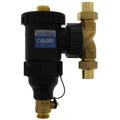

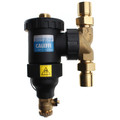
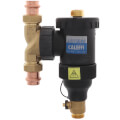
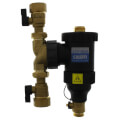
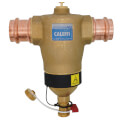
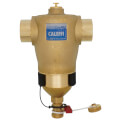
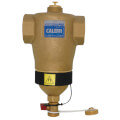
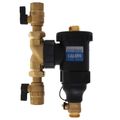
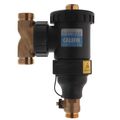
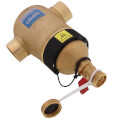
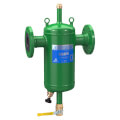
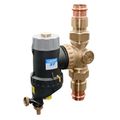
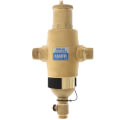
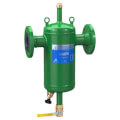
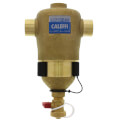
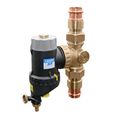
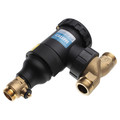

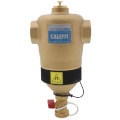
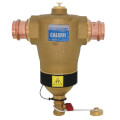
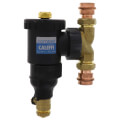
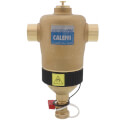
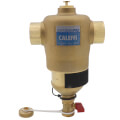
Caleffi DIRTMAG dirt separators are hydronic system components that pull suspended debris out of the water circulating through a boiler, heat pump, or chiller loop before that debris can reach pumps, valves, and heat exchangers. Caleffi describes the DIRTMAG line as using magnetic technology to remove both ferrous and non-ferrous impurities from hydronic systems, which distinguishes it from separators that rely on mesh filtration alone. A permanent magnet collects ferromagnetic particles like rust and pipe scale, while the separator body's internal geometry slows flow enough for heavier non-magnetic debris to settle out. Installing a dirt separator on new construction or during a boiler replacement protects the more expensive components downstream from the abrasive wear that circulating debris causes over years of operation. Periodic draining through the built-in valve clears collected debris without shutting the system down for a full flush.
Subcategories
- DIRTMAG Pro (Dual Magnet) Separators: DIRTMAG Pro separators use a dual magnet configuration, adding an external clip-on magnet to the internal magnetic collar for additional ferrous particle capture. Contractors specify this tier on systems with a history of dirt-related pump or valve wear, or on larger commercial installations where the added separation capacity offsets the higher component count in the loop. The dual magnet design doesn't change the separator's footprint, so it fits the same piping layout as the standard model. Removing the external magnet during service lets a technician clean it separately from the internal element.
- Standard DIRTMAG Separators: Standard DIRTMAG separators use a single internal magnet housed in a drywell, sized for typical residential and light commercial hydronic loops. The single-magnet tier covers most boiler and heat pump installations where water quality doesn't warrant the added capacity of a dual magnet model. Sweat, threaded, and press connection options let the separator match whatever joining method the rest of the piping run uses. A built-in drain valve allows collected debris to be flushed out without disconnecting the separator body.
- ANSI Flange Separators: ANSI flange DIRTMAG separators are built for larger commercial and industrial hydronic systems where flanged connections are the standard, rather than the sweat or threaded joints common on residential equipment. Facilities engineers specify flanged separators on systems with larger pipe diameters, where a compression or press fitting isn't a practical option. The flanged body still relies on the same magnetic separation principle used across the DIRTMAG line. Sizing the flange to match the existing pipe schedule is the main selection step for this tier.
Buying Guide
Selecting a dirt separator starts with matching the connection type to the existing piping, since sweat, threaded, press, and flanged options aren't interchangeable without added fittings. Pipe size comes next, since an undersized separator restricts flow and adds pressure drop to the loop, while an oversized one adds unnecessary cost without improving separation. System history matters for choosing between the standard and Pro tiers: a system with a known history of pump wear, valve sticking, or heat exchanger fouling from debris is a stronger candidate for the dual magnet Pro model, while a new installation with clean piping often performs well with the standard single-magnet version. Caleffi DIRTMAG Dirt Separators work by combining magnetic capture for ferrous debris with a settling chamber for non-magnetic particles, so the choice between models is about capacity rather than a different separation method entirely. Placement in the system also affects performance: installing the separator on the return side near the boiler or heat pump, ahead of the circulator, protects the pump from the debris it would otherwise draw in first. A built-in drain valve should be checked for accessibility during installation, since a separator mounted in a tight space is harder to service later. Flanged models add sizing considerations tied to the existing pipe schedule that residential-scale sweat and threaded models don't require.
Frequently Asked Questions
What does a DIRTMAG dirt separator remove from a hydronic system?
DIRTMAG separators remove both ferrous debris, like rust and pipe scale, using an internal magnet, and non-magnetic particles that settle out in the separator body's internal chamber. Combining magnetic capture with a settling design covers a wider range of debris than a magnet alone or a simple strainer would catch on its own.
Do all DIRTMAG separators use the same connection type?
No, DIRTMAG separators are available in sweat, threaded, press, and ANSI flange connection options, so the right choice depends on how the rest of the piping run is joined. Flanged models are typically reserved for larger commercial systems where flanged connections are already the standard.
What's the difference between the standard and Pro DIRTMAG models?
The Pro model adds a second, external clip-on magnet to the standard internal magnet, increasing ferrous particle capture without changing the separator's overall footprint. Systems with a history of debris-related component wear or larger commercial loops are the more common candidates for the Pro tier.
Where should a dirt separator be installed in the system?
Dirt separators are typically installed on the return side of the loop, ahead of the circulator pump, so debris is captured before it reaches the pump's moving parts. Installing near the boiler or heat pump also keeps the separator close to the component most sensitive to debris-related wear.
How is a DIRTMAG separator cleaned or serviced?
A built-in drain valve lets collected debris be flushed out of the separator without disconnecting it from the piping or shutting the system down completely. On Pro models, the external magnet can be removed and cleaned separately from the internal element.
