




Filters
SORT
Product Availability –
Product Type –
Review Score –
 --%3E %3Csvg version='1.1' id='Fill' xmlns='http://www.w3.org/2000/svg' xmlns:xlink='http://www.w3.org/1999/xlink' x='0px' y='0px' viewBox='0 0 100 100' enable-background='new 0 0 100 100' xml:space='preserve'%3E %3Cpath fill='%23F15C02' d='M79.44,0.95H20.56C9.78,0.95,0.95,9.78,0.95,20.56v58.87c0,10.79,8.82,19.61,19.61,19.61h58.87 c10.79,0,19.61-8.83,19.61-19.61V20.56C99.05,9.78,90.22,0.95,79.44,0.95z M65.38,58.24l9.38,29.58L49.69,69.78L24.5,87.82 l9.34-29.6L8.8,39.6l30.73-0.17c0,0,6.98-19.61,10-28.93c0.54,1.36,9.88,29.1,9.88,29.1H91.2L65.38,58.24z'/%3E %3C/svg%3E)
 --%3E %3Csvg version='1.1' id='With-RB' xmlns='http://www.w3.org/2000/svg' xmlns:xlink='http://www.w3.org/1999/xlink' x='0px' y='0px' viewBox='0 0 100 100' enable-background='new 0 0 100 100' xml:space='preserve'%3E %3Cpath fill='%23FBC8B4' d='M79.44,0.95H20.56C9.78,0.95,0.95,9.78,0.95,20.56v58.87c0,10.79,8.82,19.61,19.61,19.61h58.87 c10.79,0,19.61-8.83,19.61-19.61V20.56C99.05,9.78,90.22,0.95,79.44,0.95z M65.38,58.24l9.38,29.58L49.69,69.78L24.5,87.82 l9.34-29.6L8.8,39.6l30.73-0.17c0,0,6.98-19.61,10-28.93c0.54,1.36,9.88,29.1,9.88,29.1H91.2L65.38,58.24z'/%3E %3C/svg%3E)
Price Range –
Fantech


 --%3E %3Csvg version='1.1' id='No-RB' xmlns='http://www.w3.org/2000/svg' xmlns:xlink='http://www.w3.org/1999/xlink' x='0px' y='0px' viewBox='0 0 100 100' enable-background='new 0 0 100 100' xml:space='preserve'%3E %3Cpath fill='%23CECECE' d='M79.44,0.95H20.56C9.78,0.95,0.95,9.78,0.95,20.56v58.87c0,10.79,8.82,19.61,19.61,19.61h58.87 c10.79,0,19.61-8.83,19.61-19.61V20.56C99.05,9.78,90.22,0.95,79.44,0.95z M65.38,58.24l9.38,29.58L49.69,69.78L24.5,87.82 l9.34-29.6L8.8,39.6l30.73-0.17c0,0,6.98-19.61,10-28.93c0.54,1.36,9.88,29.1,9.88,29.1H91.2L65.38,58.24z'/%3E %3C/svg%3E)

 --%3E %3Csvg version='1.1' id='Half' xmlns='http://www.w3.org/2000/svg' xmlns:xlink='http://www.w3.org/1999/xlink' x='0px' y='0px' viewBox='0 0 100 100' enable-background='new 0 0 100 100' xml:space='preserve'%3E %3Cg%3E %3Cpath fill='%23F15C02' d='M30.05,70.23l3.79-12.01L8.8,39.6l30.73-0.17c0,0,6.98-19.61,10-28.93c0.54,1.36,9.88,29.1,9.88,29.1h1.58 L93.71,7.18c-3.58-3.82-8.66-6.23-14.28-6.23H20.56C9.78,0.95,0.95,9.78,0.95,20.56v58.87c0,5.41,2.22,10.32,5.79,13.88 L30.05,70.23z'/%3E %3C/g%3E %3Cpath fill='%23FBC8B4' d='M93.71,7.18L60.98,39.6H91.2L65.38,58.24l9.38,29.58L49.69,69.78L24.5,87.82l5.55-17.59L6.75,93.32 c3.55,3.54,8.44,5.73,13.82,5.73h58.87c10.79,0,19.61-8.83,19.61-19.61V20.56C99.05,15.4,97.01,10.69,93.71,7.18z'/%3E %3C/svg%3E)


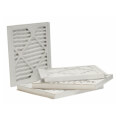
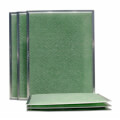
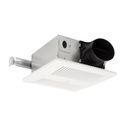

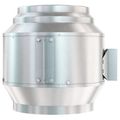

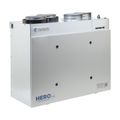
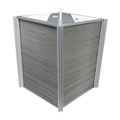


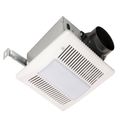
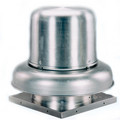
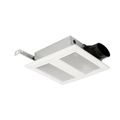
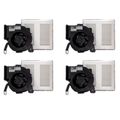
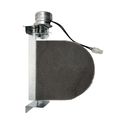

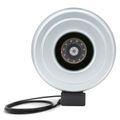


Fantech is a manufacturer of residential and commercial ventilation products. The line includes remote mount exhaust fans, inline duct fans, fresh air appliances, energy recovery ventilators, and heat recovery ventilators. It also includes makeup air systems, radon mitigation fans, and HEPA filtration systems. Fantech is part of Systemair Group, a global ventilation manufacturer. Fantech products serve single-family residences, multi-family buildings, commercial offices, hotels, and retail spaces, covering the full range of ventilation applications from bathroom exhaust to whole-building air quality management. Remote mount fan technology is a core Fantech capability. It positions the motor and blower assembly in a remote location such as an attic or mechanical room rather than at the exhaust point. This reduces in-room noise and allows multiple bathroom or kitchen exhaust points to share a single fan motor. HVAC contractors and mechanical contractors specify Fantech where remote mount ventilation, energy recovery, and whole-house fresh air management are the primary installation requirements.
Fantech Product Lines
Remote Mount Exhaust Fans
Fantech remote mount exhaust fans place the motor and centrifugal blower in a remote location, such as an attic or mechanical room. The motor is separated from the exhaust grille at the ceiling or wall of the bathroom or kitchen being ventilated. The remote mount configuration reduces in-room noise levels because the motor runs away from the occupied space, with only the exhaust airflow passing through the ceiling-mounted grille. Fantech remote mount fans can serve multiple exhaust points from a single motor, reducing the total number of fan motors in a multi-bathroom residence. Remote mount fans from Fantech are available in round and rectangular duct configurations. They are also available in multiple CFM ratings to cover the exhaust volume required for single or multi-point bathroom and kitchen ventilation.
Inline Duct Fans
Fantech inline duct fans install within the exhaust duct run rather than at the exhaust grille or in a remote location. They provide additional duct static pressure capability for longer or more restrictive duct runs where a ceiling-mount fan cannot deliver adequate airflow. Inline duct fans from Fantech are available in round duct sizes covering the standard 4-inch, 6-inch, and larger duct diameters used in residential exhaust systems. The inline configuration allows the fan to be installed anywhere along the duct path where a straight duct section and service access are available. A remote mount fan serves an above-ceiling installation. An inline duct fan suits applications where the duct run is long or has multiple elbows. These elbows add static pressure beyond what a grille-mounted fan can overcome.
Energy Recovery Ventilators (ERVs) and Heat Recovery Ventilators (HRVs)
Fantech ERV and HRV systems provide controlled whole-house fresh air ventilation with heat transfer between the outgoing exhaust air and incoming outdoor air. This reduces the heating and cooling energy required to condition fresh air. ERVs from Fantech transfer both heat and moisture between the exhaust and supply airstreams, making them appropriate for climates where humidity management is a year-round concern. HRVs transfer heat only, making them appropriate for cold climates where moisture transfer would add humidity in winter. Fantech ERV and HRV systems are designed for residential and light commercial applications requiring mechanical ventilation to meet ASHRAE 62.2 or building code ventilation rate requirements. Where remote mount exhaust fans provide point-source exhaust ventilation, Fantech ERVs and HRVs provide balanced whole-building ventilation with energy recovery.
Radon Mitigation Fans and HEPA Filtration
Fantech radon mitigation fans are designed for sub-slab depressurization systems. These systems draw radon-bearing soil gas from beneath a building's foundation and exhaust it above the roofline. This prevents radon accumulation inside the occupied space. Radon fans from Fantech are available in multiple flow and pressure ratings to match the soil gas permeability and sub-slab volume at the installation site. A Fantech radon alarm alerts occupants if the radon system loses function. HEPA filtration systems from Fantech provide whole-house particulate filtration for residences where indoor air quality improvement beyond standard HVAC filter capability is required. Where ERVs and HRVs address ventilation fresh air management, Fantech radon fans address radon gas control and HEPA systems address particulate air quality independently.
Why Contractors Specify Fantech
HVAC contractors specify Fantech because the brand offers a complete residential and commercial ventilation product line from a single manufacturer. The line covers remote mount exhaust fans, inline fans, ERVs, HRVs, makeup air systems, radon fans, and HEPA filtration. This avoids requiring multiple ventilation brands on a single project. Remote mount fan technology from Fantech addresses the contractor and building owner requirement for quiet bathroom and kitchen ventilation by moving the motor out of the occupied space. Fantech ERV and HRV systems provide the balanced mechanical ventilation with heat recovery required for ASHRAE 62.2 compliance. This applies in tight residential construction where natural infiltration no longer provides adequate fresh air. Fantech is part of Systemair Group, a global ventilation manufacturer providing the engineering and product development resources of a large international HVAC organization.
How to Choose a Fantech Product
The primary selection variable for a Fantech ventilation product is application type. Bathroom and kitchen exhaust calls for a remote mount or inline duct fan. Whole-house fresh air ventilation with energy recovery calls for a Fantech ERV (humid climates) or HRV (cold dry climates). Radon mitigation calls for a Fantech radon fan sized to the sub-slab conditions. Particulate air quality improvement calls for a Fantech HEPA filtration system.
For remote mount fan selection, identify the total exhaust CFM required for all exhaust points served by the fan. Also identify the total equivalent duct length from fan to exhaust grilles. Confirm the duct diameter in use. Fantech remote mount fans are rated in CFM at a specific static pressure. Confirm the fan can deliver the required CFM at the static pressure of the installed duct system. A longer or more restrictive duct run requires a fan with a higher static pressure capability.
For ERV or HRV selection, the key variables are building size, ventilation rate requirement, climate, and duct connection configuration. Fantech ERVs are sized by CFM capacity at the design ventilation rate. For cold climates where moisture transfer in winter is not desired, an HRV is the appropriate selection over an ERV.
Frequently Asked Questions
Is Fantech part of a larger ventilation company?
Yes. Fantech is part of Systemair Group, a global ventilation manufacturer. Systemair Group provides the engineering and product development resources of a large international HVAC organization.
What ventilation products does Fantech manufacture?
Fantech manufactures remote mount exhaust fans, inline duct fans, and fresh air appliances. The line also includes energy recovery ventilators, heat recovery ventilators, makeup air systems, radon mitigation fans, and HEPA filtration systems. These products serve residential and commercial buildings.
What is the difference between Fantech remote mount fans and inline duct fans?
The difference between Fantech remote mount fans and inline duct fans is the installation location and configuration. Remote mount fans install in a remote location such as an attic or mechanical room, separated from the exhaust grille. This reduces in-room noise and allows one motor to serve multiple exhaust grilles. Inline duct fans install within the duct run itself. They suit applications where the duct run is too long or restrictive for a standard exhaust fan to deliver the required CFM.
What is the difference between a Fantech ERV and HRV?
The difference between a Fantech ERV (energy recovery ventilator) and HRV (heat recovery ventilator) is the type of energy recovered. ERVs transfer both heat and moisture between exhaust and supply airstreams, which is appropriate for humid climates where moisture management is important year-round. HRVs transfer heat only without moisture transfer, which is appropriate for cold, dry climates where adding humidity in winter is not desired.
What is a Fantech radon mitigation fan and when should it be specified?
A Fantech radon mitigation fan is designed for sub-slab depressurization systems. These systems draw soil gas containing radon from beneath a building's foundation and exhaust it above the roofline. Fantech radon fans should be specified when a radon remediation system is required following radon testing results above the EPA action level. Radon fans from Fantech are available in multiple flow and pressure ratings to match the sub-slab conditions at the installation site.
Can Fantech remote mount fans serve multiple bathrooms from a single motor?
Fantech remote mount fans can serve multiple exhaust grilles from a single motor. This requires the total CFM of all connected exhaust points to be within the fan's rated capacity. The static pressure of the duct system must also be within the fan's operating range. Serving multiple bathrooms from one remote mount fan reduces the total number of fan motors in a multi-bath residence. Confirm the total CFM requirement and duct static pressure for all connected exhaust points before specifying a single Fantech remote mount fan for multi-point use.
