




Fish Tape & Accessories

 --%3E %3Csvg version='1.1' id='No-RB' xmlns='http://www.w3.org/2000/svg' xmlns:xlink='http://www.w3.org/1999/xlink' x='0px' y='0px' viewBox='0 0 100 100' enable-background='new 0 0 100 100' xml:space='preserve'%3E %3Cpath fill='%23CECECE' d='M79.44,0.95H20.56C9.78,0.95,0.95,9.78,0.95,20.56v58.87c0,10.79,8.82,19.61,19.61,19.61h58.87 c10.79,0,19.61-8.83,19.61-19.61V20.56C99.05,9.78,90.22,0.95,79.44,0.95z M65.38,58.24l9.38,29.58L49.69,69.78L24.5,87.82 l9.34-29.6L8.8,39.6l30.73-0.17c0,0,6.98-19.61,10-28.93c0.54,1.36,9.88,29.1,9.88,29.1H91.2L65.38,58.24z'/%3E %3C/svg%3E)
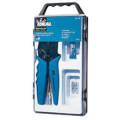
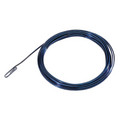
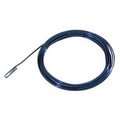

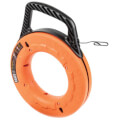
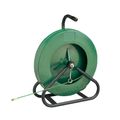
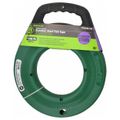
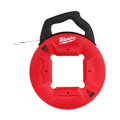
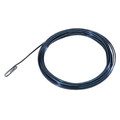
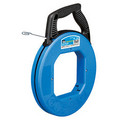
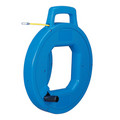
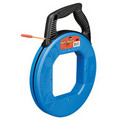
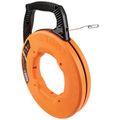
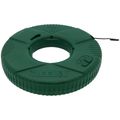

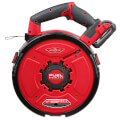
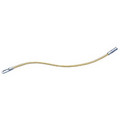
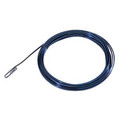
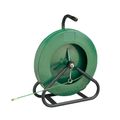
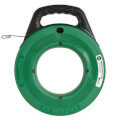
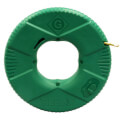

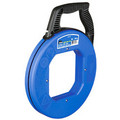
Fish Tape & Accessories help electricians pull wire and cable through conduit, wall cavities, and other enclosed spaces where feeding conductors by hand isn't possible. Tape lengths commonly range from 25 feet up to 240 feet, with some professional-grade reels extending to 400 feet for long commercial conduit runs. Steel fish tape offers the most pushing force, which makes it the better choice for long, straight EMT or PVC conduit runs where stiffness helps feed the tape through without kinking. Fiberglass tape is nonconductive, so electricians favor it around live circuits or inside congested panels where accidental contact with an energized part is a real risk. Where conduit holds standing water, stainless steel or nylon-coated tape resists corrosion better than plain steel, which can rust and bind inside the conduit over time. Choosing the right material and length up front avoids swapping tapes mid-pull on a job, especially on longer commercial runs where a shorter or wrong-material tape means starting the pull over with different equipment.
Subcategories
- Steel Fish Tapes: Steel fish tape provides the stiffest, most rigid pull of the common tape materials, giving it the pushing force needed for long, straight conduit runs. Electricians reach for steel on EMT and PVC runs where the tape needs to travel a long distance without buckling. Steel conducts electricity, so it isn't the right choice around live circuits or inside congested panels. Lengths commonly run from 25 feet up to 240 feet depending on the reel.
- Fiberglass Fish Tapes: Fiberglass fish tape is nonconductive, which makes it the safer option around live circuits or in panels where an energized part might be contacted accidentally. It's lighter than steel tape and more flexible, which helps in tighter bends but offers less pushing force on very long straight runs. Electricians commonly choose fiberglass for residential and light commercial work where safety around live parts matters more than raw stiffness. Fiberglass tape also resists corrosion better than plain steel.
- Stainless Steel Fish Tapes: Stainless steel fish tape combines the pushing force of standard steel with better resistance to rust and corrosion. Electricians use stainless steel tape where conduit holds standing water or in damp underground and outdoor runs where plain steel would corrode over time. It remains conductive, so the same live-circuit precautions that apply to standard steel tape still apply. Stainless steel tapes are available in similar length ranges as standard steel options.
- Fish Tape Accessories: Fish tape accessories include leaders, connectors, and reels that support the core wire-pulling task. Leaders attach to the tape end and help guide it around obstacles or through tight bends without snagging. Connectors join the tape to the wire or cable being pulled, keeping the bundle secure through the length of the pull. Reels keep long tape lengths organized and prevent kinking during storage and transport between jobs.
Buying Guide
Match material to the job before worrying about length, since material determines both pulling force and electrical safety around the conduit being worked on. Steel fish tape delivers the most pushing force for long, straight EMT or PVC runs, but its conductivity makes it the wrong choice around live circuits or inside a congested panel where accidental contact is possible. Fiberglass tape solves that safety concern by staying nonconductive, at some cost to stiffness on very long runs, so it suits residential and light commercial pulls where live parts are nearby. Stainless steel tape covers the middle ground: it keeps the rigidity of standard steel while resisting the corrosion that comes with standing water in underground or outdoor conduit, though it remains conductive like plain steel. Length should match the longest run on the job plus enough extra to comfortably grip and maneuver the tape at both ends, since a tape that's too short forces a mid-pull splice or a second trip for a longer reel. Fish Tape & Accessories like leaders and connectors matter as much as the tape itself on tricky pulls: a leader designed for tight bends can save time on a run with multiple offsets, and a reliable connector keeps the tape from separating from the wire bundle partway through a long pull. Reels aren't just for storage either, since a tangled tape kinks and weakens over repeated use, shortening its working life well before the material itself would otherwise wear out.
Frequently Asked Questions
What length fish tape is needed for most jobs?
Fish tape commonly comes in lengths from 25 feet up to 240 feet, covering most residential and commercial conduit runs. Professional-grade reels extend up to 400 feet for longer commercial pulls. Matching length to the longest expected run avoids a mid-pull splice or a second trip for a longer reel.
When should fiberglass fish tape be used instead of steel?
Fiberglass fish tape is nonconductive, making it the safer choice around live circuits or inside congested panels where accidental contact with an energized part is a risk. Steel tape provides more pushing force on long, straight runs but conducts electricity, so it isn't appropriate near live parts. Fiberglass also resists corrosion better than plain steel.
Does fish tape rust if conduit has water in it?
Plain steel fish tape can rust and bind inside conduit that holds standing water. Stainless steel or nylon-coated tape resists that corrosion while still providing similar pushing force to standard steel. Underground and outdoor conduit runs are the most common situations where corrosion resistance matters.
What accessories go along with a fish tape?
Fish tape accessories commonly include leaders, connectors, and reels. Leaders attach to the tape end to help it navigate tight bends and obstacles without snagging. Connectors join the tape securely to the wire being pulled, and reels keep the tape organized and prevent kinking during storage and transport.
Is steel or fiberglass fish tape better for long conduit runs?
Steel fish tape generally performs better on long, straight conduit runs because it offers more pushing force and resists buckling. Fiberglass is more flexible and works well in tighter bends but provides less stiffness over very long distances. The choice often comes down to balancing pushing force against the need to stay nonconductive around live circuits.
