




Irrigation Sprinkler Control Valves

 --%3E %3Csvg version='1.1' id='Fill' xmlns='http://www.w3.org/2000/svg' xmlns:xlink='http://www.w3.org/1999/xlink' x='0px' y='0px' viewBox='0 0 100 100' enable-background='new 0 0 100 100' xml:space='preserve'%3E %3Cpath fill='%23F15C02' d='M79.44,0.95H20.56C9.78,0.95,0.95,9.78,0.95,20.56v58.87c0,10.79,8.82,19.61,19.61,19.61h58.87 c10.79,0,19.61-8.83,19.61-19.61V20.56C99.05,9.78,90.22,0.95,79.44,0.95z M65.38,58.24l9.38,29.58L49.69,69.78L24.5,87.82 l9.34-29.6L8.8,39.6l30.73-0.17c0,0,6.98-19.61,10-28.93c0.54,1.36,9.88,29.1,9.88,29.1H91.2L65.38,58.24z'/%3E %3C/svg%3E)

 --%3E %3Csvg version='1.1' id='No-RB' xmlns='http://www.w3.org/2000/svg' xmlns:xlink='http://www.w3.org/1999/xlink' x='0px' y='0px' viewBox='0 0 100 100' enable-background='new 0 0 100 100' xml:space='preserve'%3E %3Cpath fill='%23CECECE' d='M79.44,0.95H20.56C9.78,0.95,0.95,9.78,0.95,20.56v58.87c0,10.79,8.82,19.61,19.61,19.61h58.87 c10.79,0,19.61-8.83,19.61-19.61V20.56C99.05,9.78,90.22,0.95,79.44,0.95z M65.38,58.24l9.38,29.58L49.69,69.78L24.5,87.82 l9.34-29.6L8.8,39.6l30.73-0.17c0,0,6.98-19.61,10-28.93c0.54,1.36,9.88,29.1,9.88,29.1H91.2L65.38,58.24z'/%3E %3C/svg%3E)

 --%3E %3Csvg version='1.1' id='With-RB' xmlns='http://www.w3.org/2000/svg' xmlns:xlink='http://www.w3.org/1999/xlink' x='0px' y='0px' viewBox='0 0 100 100' enable-background='new 0 0 100 100' xml:space='preserve'%3E %3Cpath fill='%23FBC8B4' d='M79.44,0.95H20.56C9.78,0.95,0.95,9.78,0.95,20.56v58.87c0,10.79,8.82,19.61,19.61,19.61h58.87 c10.79,0,19.61-8.83,19.61-19.61V20.56C99.05,9.78,90.22,0.95,79.44,0.95z M65.38,58.24l9.38,29.58L49.69,69.78L24.5,87.82 l9.34-29.6L8.8,39.6l30.73-0.17c0,0,6.98-19.61,10-28.93c0.54,1.36,9.88,29.1,9.88,29.1H91.2L65.38,58.24z'/%3E %3C/svg%3E)
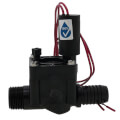
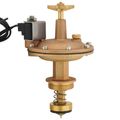
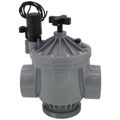
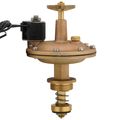
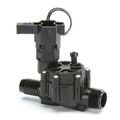

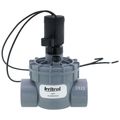
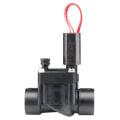
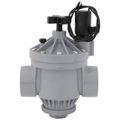
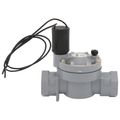
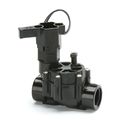
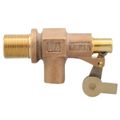
Irrigation sprinkler control valves are the electrically or manually operated valves that turn water flow on and off to individual zones of a lawn or landscape irrigation system. Each zone in a typical residential or commercial sprinkler layout runs through its own valve, which lets a controller run zones in sequence rather than pressurizing the whole system at once, keeping water pressure and flow within what the pipe and heads in that zone can handle. Most residential systems use solenoid-actuated valves wired back to an automatic controller, while smaller or simpler setups sometimes use manual valves operated by hand at the valve box. Diaphragm-style valves are the most common design in irrigation because they close reliably even at the lower pressures typical of residential water service, and they're easy to service in the field since the internals can usually be accessed without removing the valve body from the pipe. For contractors, matching valve size and flow rating to the zone's head count and pipe size is one of the more common troubleshooting points on callbacks for weak or uneven coverage.
Subcategories
- Electric Solenoid Valves: These use a solenoid coil wired to an irrigation controller to open and close the valve automatically on a schedule. Most residential and commercial automatic systems use this style almost exclusively. Voltage is typically 24V AC to match standard irrigation controllers and transformers. A manual bleed screw on most models allows the valve to be opened by hand for testing without energizing the solenoid.
- Manual Valves: Manual valves are opened and closed by hand, either with a wheel handle or a key, and don't require any wiring or controller. They're common on simple systems, temporary irrigation setups, or as a master shutoff ahead of a bank of automatic zone valves. Because there's no solenoid or electrical component, there's less to fail over time. Contractors also use them as isolation valves for servicing automatic valves downstream.
- Anti-Siphon Valves: Anti-siphon valves combine a control valve with a built-in vacuum breaker, so the valve itself protects the potable water supply without a separate backflow device. Local plumbing codes often require this protection at the point where an irrigation system connects to the household water line. Because the anti-siphon body must sit above the highest sprinkler head in the zone it serves, these are typically installed above ground rather than in a buried valve box.
- Jar-Top and Globe Valves: These describe the body shape and internal mechanism rather than a separate control method, with globe-style valves offering a straight-through flow path that reduces pressure loss compared to angle-body designs. Jar-top valves have a removable top section that gives easy access to the diaphragm and solenoid for cleaning or replacement in the field. Both styles are common across residential and commercial irrigation brands.
Buying Guide
Start by matching valve size to the zone's flow rate rather than just the pipe size, since an irrigation sprinkler control valve rated below the total GPM of the heads on that zone will restrict flow and cause weak coverage at the far end of the run.
Confirm the voltage and wiring type match the existing or planned controller. Nearly all residential automatic valves use 24V AC solenoids, but it's still worth double-checking against the controller's specifications before ordering a batch for a multi-zone job.
Check local code requirements for backflow protection at the point of connection. In many jurisdictions, an anti-siphon valve satisfies this requirement at the first valve in the system, which can save the cost of a separate backflow device on smaller residential jobs.
For valve bodies, a globe-style design generally offers lower pressure loss than an angle body, which matters more on longer zone runs or systems already running close to their pressure limits.
Finally, favor valves with a manual bleed feature for field testing. Being able to open a valve by hand without energizing the solenoid makes troubleshooting a suspected clogged head or broken lateral line much faster on a service call.
Frequently Asked Questions
What size irrigation valve do I need for a given zone?
Valve size should be based on the total flow rate of all the heads on that zone, not just the pipe diameter. A common approach is to add up the rated GPM of every head in the zone and select a valve whose rated flow range comfortably covers that total without excessive pressure loss.
Do all irrigation valves need an anti-siphon feature?
Not necessarily, but local plumbing code usually requires backflow protection somewhere at the point where the irrigation system connects to the potable water supply. An anti-siphon valve at that first connection point can satisfy this requirement without a separate backflow device, though some jurisdictions still require a dedicated backflow assembly regardless of valve type.
Can a manual valve be converted to an automatic one later?
In most cases, yes, since many manual and automatic valves share the same body style and just differ in the bonnet assembly. A technician can often swap the manual bonnet for a solenoid-equipped one without replacing the whole valve, though it's worth confirming compatibility with the specific brand and model first.
Why does one zone have weaker coverage than the others?
Weak coverage on a single zone is often traced back to a valve sized too small for that zone's flow demand, a partially closed isolation valve upstream, or a clogged filter screen inside the valve itself. Opening the manual bleed screw to test flow directly at the valve is usually the fastest way to narrow down whether the problem is at the valve or further out in the zone piping.
How do I know if a valve's diaphragm needs replacing instead of the whole valve?
If a valve won't fully close, won't open, or leaks water at the bonnet, the diaphragm is often the cause rather than the entire valve body. Most jar-top and similar serviceable designs allow the top to be removed and the diaphragm inspected or replaced in place, which is usually faster and cheaper than replacing the full valve.
