




Filters
SORT
Product Availability –
Category –
Brand –
Size –
Connection Type –
Connection Method –
Color –
Review Score –
 --%3E %3Csvg version='1.1' id='Fill' xmlns='http://www.w3.org/2000/svg' xmlns:xlink='http://www.w3.org/1999/xlink' x='0px' y='0px' viewBox='0 0 100 100' enable-background='new 0 0 100 100' xml:space='preserve'%3E %3Cpath fill='%23F15C02' d='M79.44,0.95H20.56C9.78,0.95,0.95,9.78,0.95,20.56v58.87c0,10.79,8.82,19.61,19.61,19.61h58.87 c10.79,0,19.61-8.83,19.61-19.61V20.56C99.05,9.78,90.22,0.95,79.44,0.95z M65.38,58.24l9.38,29.58L49.69,69.78L24.5,87.82 l9.34-29.6L8.8,39.6l30.73-0.17c0,0,6.98-19.61,10-28.93c0.54,1.36,9.88,29.1,9.88,29.1H91.2L65.38,58.24z'/%3E %3C/svg%3E)
 --%3E %3Csvg version='1.1' id='With-RB' xmlns='http://www.w3.org/2000/svg' xmlns:xlink='http://www.w3.org/1999/xlink' x='0px' y='0px' viewBox='0 0 100 100' enable-background='new 0 0 100 100' xml:space='preserve'%3E %3Cpath fill='%23FBC8B4' d='M79.44,0.95H20.56C9.78,0.95,0.95,9.78,0.95,20.56v58.87c0,10.79,8.82,19.61,19.61,19.61h58.87 c10.79,0,19.61-8.83,19.61-19.61V20.56C99.05,9.78,90.22,0.95,79.44,0.95z M65.38,58.24l9.38,29.58L49.69,69.78L24.5,87.82 l9.34-29.6L8.8,39.6l30.73-0.17c0,0,6.98-19.61,10-28.93c0.54,1.36,9.88,29.1,9.88,29.1H91.2L65.38,58.24z'/%3E %3C/svg%3E)
Price Range –
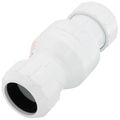
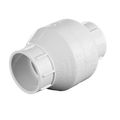
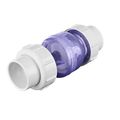
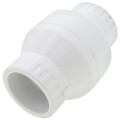
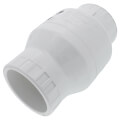
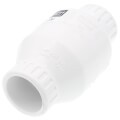
PVC Check Valves








 --%3E %3Csvg version='1.1' id='No-RB' xmlns='http://www.w3.org/2000/svg' xmlns:xlink='http://www.w3.org/1999/xlink' x='0px' y='0px' viewBox='0 0 100 100' enable-background='new 0 0 100 100' xml:space='preserve'%3E %3Cpath fill='%23CECECE' d='M79.44,0.95H20.56C9.78,0.95,0.95,9.78,0.95,20.56v58.87c0,10.79,8.82,19.61,19.61,19.61h58.87 c10.79,0,19.61-8.83,19.61-19.61V20.56C99.05,9.78,90.22,0.95,79.44,0.95z M65.38,58.24l9.38,29.58L49.69,69.78L24.5,87.82 l9.34-29.6L8.8,39.6l30.73-0.17c0,0,6.98-19.61,10-28.93c0.54,1.36,9.88,29.1,9.88,29.1H91.2L65.38,58.24z'/%3E %3C/svg%3E)
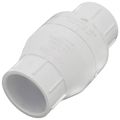


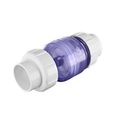
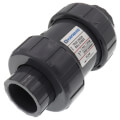

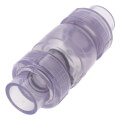

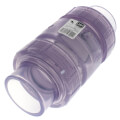
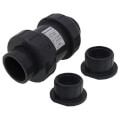
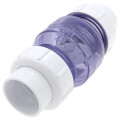



 --%3E %3Csvg version='1.1' id='Half' xmlns='http://www.w3.org/2000/svg' xmlns:xlink='http://www.w3.org/1999/xlink' x='0px' y='0px' viewBox='0 0 100 100' enable-background='new 0 0 100 100' xml:space='preserve'%3E %3Cg%3E %3Cpath fill='%23F15C02' d='M30.05,70.23l3.79-12.01L8.8,39.6l30.73-0.17c0,0,6.98-19.61,10-28.93c0.54,1.36,9.88,29.1,9.88,29.1h1.58 L93.71,7.18c-3.58-3.82-8.66-6.23-14.28-6.23H20.56C9.78,0.95,0.95,9.78,0.95,20.56v58.87c0,5.41,2.22,10.32,5.79,13.88 L30.05,70.23z'/%3E %3C/g%3E %3Cpath fill='%23FBC8B4' d='M93.71,7.18L60.98,39.6H91.2L65.38,58.24l9.38,29.58L49.69,69.78L24.5,87.82l5.55-17.59L6.75,93.32 c3.55,3.54,8.44,5.73,13.82,5.73h58.87c10.79,0,19.61-8.83,19.61-19.61V20.56C99.05,15.4,97.01,10.69,93.71,7.18z'/%3E %3C/svg%3E)
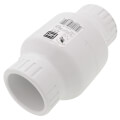
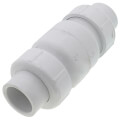
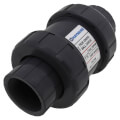
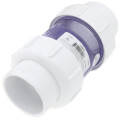
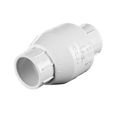
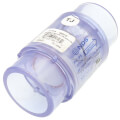

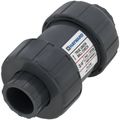
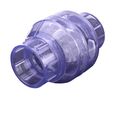

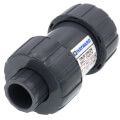
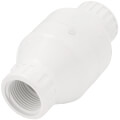
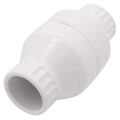
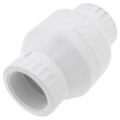
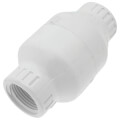

PVC check valves are one-way valves installed in PVC piping to let water flow in a single direction while blocking backflow, protecting pumps, meters, and other equipment from water running back the wrong way through the line. They show up constantly in irrigation systems, well pump discharge lines, sump and ejector pump discharge, and pool or spa plumbing, anywhere a pump needs to hold its prime or a line needs to stay from draining back after the pump shuts off. Because PVC doesn't corrode the way metal check valves can in wet or chemically treated water, it's become a standard material choice for irrigation and pool applications specifically. Installing the wrong type for the application, like a swing check valve on a vertical line where a spring check would work better, is a common source of jobs that run louder or lose prime more than they should. Getting the valve type and orientation right on the first install saves a return trip for a problem that usually isn't the valve itself.
Subcategories
- Swing Check Valves: Swing check valves use a hinged flapper that swings open with forward flow and closes under gravity or reverse pressure. They're a common choice on larger-diameter lines and low-flow applications where the flapper design causes less pressure drop than a spring-loaded design. Orientation matters: most swing checks need to be installed with the flow horizontal or upward, not installed upside down.
- Spring Check Valves: Spring check valves use an internal spring to hold the valve closed until forward flow pressure overcomes it, which lets them work in any orientation, including vertical lines. They're a frequent choice on well pump discharge and sump pump lines where the valve needs to seat quickly to prevent backflow and hold the pump's prime. The spring tension needs to match the system's flow rate, since too stiff a spring adds unnecessary pressure loss.
- Ball Check Valves: Ball check valves use a free-floating ball that seats against the valve body to block reverse flow. They handle debris and solids better than some other check valve designs, which makes them a common choice on effluent, sewage, or ejector pump lines. Like spring checks, most ball check valves can be installed in multiple orientations.
- Union and Threaded Check Valves: These check valves include a union or threaded connection built into the body, making it possible to service or replace the internal check mechanism without cutting into the pipe run. They're a practical choice anywhere a check valve is likely to need future servicing, since a solvent-welded valve with no union means cutting the pipe to make a repair.
Buying Guide
The first decision on any check valve job is orientation and flow direction. Install PVC Check Valves backward and the line will either never flow or never hold backflow, so double-check the arrow molded into the valve body before gluing anything permanently. Spring and ball check valves work in any orientation, including straight up a vertical riser, while many swing check valves need to be mounted horizontally or with upward flow to close properly under gravity; installing a swing check on a vertical line is one of the most common mistakes on a jobsite. Flow rate and pipe diameter both affect which internal design makes sense: a spring check adds a small amount of resistance that can matter on a low-head pump application, while a swing check generally has a lower pressure drop but needs the right orientation to seat correctly. For lines carrying anything with solids, like sump, ejector, or effluent lines, a ball check valve tends to clear debris more reliably than a tight-tolerance spring mechanism that can jam. It's also worth specifying a union or threaded-body valve on any install where future service is likely, since a solvent-welded check valve with no union means cutting into the pipe to replace a failed internal component down the road. Matching valve type to orientation, flow rate, and expected debris in the line is what keeps a check valve doing its job quietly for years instead of generating a callback.
Frequently Asked Questions
Can a swing check valve be installed vertically?
Most swing check valves are designed to close under gravity, so they generally need horizontal or upward flow to seat properly, so check the manufacturer's orientation markings before installing one on a vertical riser. A spring or ball check valve is usually the better choice for vertical lines.
What's the difference between a spring check and a ball check valve?
A spring check uses an internal spring to hold the valve shut until forward pressure overcomes it, while a ball check uses a free-floating ball that seats against the body. Ball checks tend to handle solids and debris better, which is why they show up often on sewage or ejector lines.
Why would I choose a union-style check valve over a standard solvent-weld one?
A union or threaded connection lets a tech service or replace the internal check mechanism without cutting into the pipe, which saves time on future repairs. It's worth the extra cost on any install where servicing down the road is a real possibility.
Do PVC check valves add much pressure drop to a line?
It varies by design. Swing checks generally add less resistance than spring checks, but the difference matters most on low-head or gravity-fed systems where every bit of pressure counts. On a typical residential well or irrigation line, either type usually performs fine if sized correctly.
Why is PVC preferred over metal check valves for irrigation and pool lines?
PVC doesn't corrode the way metal valves can when exposed to treated pool water or the minerals common in well and irrigation water. That corrosion resistance is why PVC has become the standard material for those applications specifically.
