




TOTO

 --%3E %3Csvg version='1.1' id='No-RB' xmlns='http://www.w3.org/2000/svg' xmlns:xlink='http://www.w3.org/1999/xlink' x='0px' y='0px' viewBox='0 0 100 100' enable-background='new 0 0 100 100' xml:space='preserve'%3E %3Cpath fill='%23CECECE' d='M79.44,0.95H20.56C9.78,0.95,0.95,9.78,0.95,20.56v58.87c0,10.79,8.82,19.61,19.61,19.61h58.87 c10.79,0,19.61-8.83,19.61-19.61V20.56C99.05,9.78,90.22,0.95,79.44,0.95z M65.38,58.24l9.38,29.58L49.69,69.78L24.5,87.82 l9.34-29.6L8.8,39.6l30.73-0.17c0,0,6.98-19.61,10-28.93c0.54,1.36,9.88,29.1,9.88,29.1H91.2L65.38,58.24z'/%3E %3C/svg%3E)
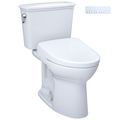
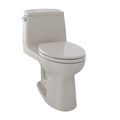
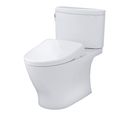
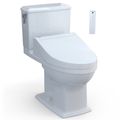
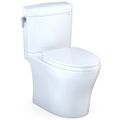
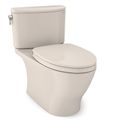
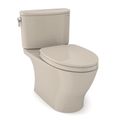
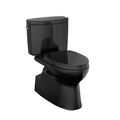

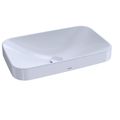
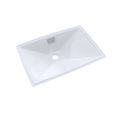
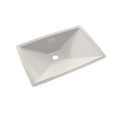
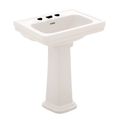
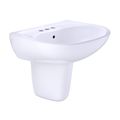
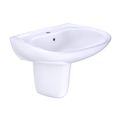
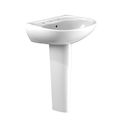
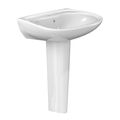
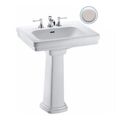
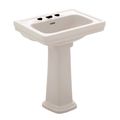
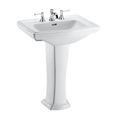
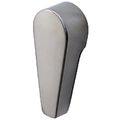
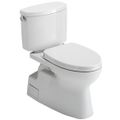
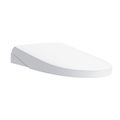

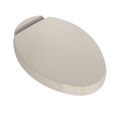

TOTO traces its founding to 1917, when Kazuchika Okura established Toyo Toki K.K. in Kitakyushu, Japan, after setting up a ceramics laboratory five years earlier to develop sanitary fixtures comparable to what Okura had seen in Europe and the United States. The company grew from that early ceramics work into a global manufacturer of toilets, faucets, and bathroom fixtures. Production expanded into metal fittings and faucets by 1946, and its first overseas factory opened in Indonesia in 1977.
TOTO expanded into the United States market as demand grew for its ceramic sanitary ware and later for its washing toilet seat technology. The company remains headquartered in Japan. TOTO USA serves as its dedicated arm for the North American market, supplying toilets, faucets, and bathroom fixtures to both residential and commercial projects.
Product Lines
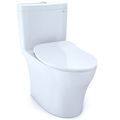
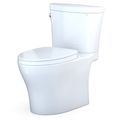
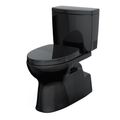
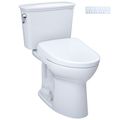
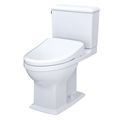
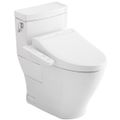
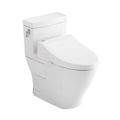
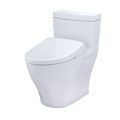
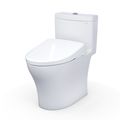
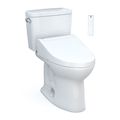
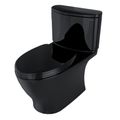
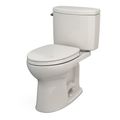
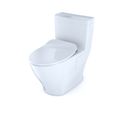
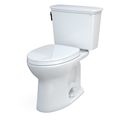
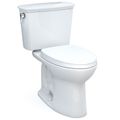
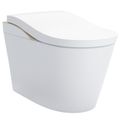
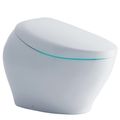
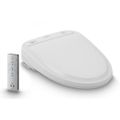
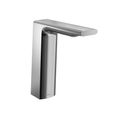
SupplyHouse carries TOTO toilets and faucets built around the company's ceramic and washing-seat technologies. The WASHLET line, launched in 1980, integrates a water-washing bidet function into the toilet seat as an alternative to paper-only cleaning. The NEOREST line, introduced in 1993, combines that washing technology with a more integrated one-piece toilet design. TOTO's core toilet lineup also includes standard two-piece models built for straightforward replacement work, while its faucet offerings cover kitchen and bathroom applications in a range of finishes. Together these lines give contractors both a high-end intelligent toilet option and conventional fixtures for standard remodel and new-construction jobs.
Why Contractors Specify TOTO
Contractors specify TOTO in large part for its ceramic manufacturing background. The company has built on that background since its earliest years in Japan, and it shows up in the fit and finish of its toilet bowls and tanks. Its washing-seat technology has been sold worldwide for decades under the WASHLET name. It gives contractors a well-established option for clients who want an upgraded bathroom fixture beyond a standard toilet. Long-running global production also gives TOTO fixtures a track record. Contractors can point to it when a client is unfamiliar with the brand but wants assurance the manufacturer isn't new to the category.
How to Choose TOTO Products
Confirm rough-in dimensions before ordering a TOTO toilet. Standard two-piece models and the more integrated NEOREST line can differ in footprint and mounting requirements compared to a fixture being replaced. When a client is interested in a WASHLET seat, check whether the existing toilet bowl is compatible with a retrofit seat. If it isn't, the job may call for one of TOTO's integrated one-piece models instead, since not every bowl shape accepts every seat. Electrical access also matters for washing-seat installations, since these models require a nearby outlet, which can change the scope of a bathroom remodel if one isn't already in place. For faucets, match the finish and mounting hole configuration to the existing sink or countertop before finalizing a selection.
Frequently Asked Questions
Does a TOTO WASHLET seat fit any toilet bowl?
Not always. Not every bowl shape accepts every seat, so check compatibility with the existing toilet bowl before ordering a retrofit seat.
Do TOTO WASHLET installations need an electrical outlet nearby?
Yes. WASHLET seats require a nearby outlet. If one isn't already in place, adding it can change the scope of a bathroom remodel.
What's the difference between TOTO's NEOREST line and a standard WASHLET-equipped toilet?
NEOREST integrates the washing-seat technology into a single-piece toilet design, while a standard WASHLET setup pairs a separate washing seat with a conventional toilet bowl.
Are TOTO toilets suitable for commercial installations?
TOTO supplies fixtures for both residential and commercial projects. Confirm that a specific model is rated for commercial use before specifying it on a non-residential job.
How long has TOTO been making ceramic plumbing fixtures?
TOTO's ceramics work dates back to a laboratory the founder set up in 1912. The company was formally established in 1917, giving it more than a century of experience in ceramic sanitary ware.
