



Filter menu expanded
Thermal Imaging Tools

Need a little help?
20 items
Grid
List
Compare
 --%3E %3Csvg version='1.1' id='Fill' xmlns='http://www.w3.org/2000/svg' xmlns:xlink='http://www.w3.org/1999/xlink' x='0px' y='0px' viewBox='0 0 100 100' enable-background='new 0 0 100 100' xml:space='preserve'%3E %3Cpath fill='%23F15C02' d='M79.44,0.95H20.56C9.78,0.95,0.95,9.78,0.95,20.56v58.87c0,10.79,8.82,19.61,19.61,19.61h58.87 c10.79,0,19.61-8.83,19.61-19.61V20.56C99.05,9.78,90.22,0.95,79.44,0.95z M65.38,58.24l9.38,29.58L49.69,69.78L24.5,87.82 l9.34-29.6L8.8,39.6l30.73-0.17c0,0,6.98-19.61,10-28.93c0.54,1.36,9.88,29.1,9.88,29.1H91.2L65.38,58.24z'/%3E %3C/svg%3E)
 --%3E %3Csvg version='1.1' id='Half' xmlns='http://www.w3.org/2000/svg' xmlns:xlink='http://www.w3.org/1999/xlink' x='0px' y='0px' viewBox='0 0 100 100' enable-background='new 0 0 100 100' xml:space='preserve'%3E %3Cg%3E %3Cpath fill='%23F15C02' d='M30.05,70.23l3.79-12.01L8.8,39.6l30.73-0.17c0,0,6.98-19.61,10-28.93c0.54,1.36,9.88,29.1,9.88,29.1h1.58 L93.71,7.18c-3.58-3.82-8.66-6.23-14.28-6.23H20.56C9.78,0.95,0.95,9.78,0.95,20.56v58.87c0,5.41,2.22,10.32,5.79,13.88 L30.05,70.23z'/%3E %3C/g%3E %3Cpath fill='%23FBC8B4' d='M93.71,7.18L60.98,39.6H91.2L65.38,58.24l9.38,29.58L49.69,69.78L24.5,87.82l5.55-17.59L6.75,93.32 c3.55,3.54,8.44,5.73,13.82,5.73h58.87c10.79,0,19.61-8.83,19.61-19.61V20.56C99.05,15.4,97.01,10.69,93.71,7.18z'/%3E %3C/svg%3E)
$449.00 each
In Stock

Get 5 by Fri, Jun 12
In Stock
Get 5 by Fri, Jun 12
Compare
 --%3E %3Csvg version='1.1' id='No-RB' xmlns='http://www.w3.org/2000/svg' xmlns:xlink='http://www.w3.org/1999/xlink' x='0px' y='0px' viewBox='0 0 100 100' enable-background='new 0 0 100 100' xml:space='preserve'%3E %3Cpath fill='%23CECECE' d='M79.44,0.95H20.56C9.78,0.95,0.95,9.78,0.95,20.56v58.87c0,10.79,8.82,19.61,19.61,19.61h58.87 c10.79,0,19.61-8.83,19.61-19.61V20.56C99.05,9.78,90.22,0.95,79.44,0.95z M65.38,58.24l9.38,29.58L49.69,69.78L24.5,87.82 l9.34-29.6L8.8,39.6l30.73-0.17c0,0,6.98-19.61,10-28.93c0.54,1.36,9.88,29.1,9.88,29.1H91.2L65.38,58.24z'/%3E %3C/svg%3E)
$349.99 each
In Stock
Get 8 by Fri, Jun 12
In Stock
Get 8 by Fri, Jun 12
Compare
$447.00 each
In Stock
Get 6 by Fri, Jun 12
In Stock
Get 6 by Fri, Jun 12
Compare
 --%3E %3Csvg version='1.1' id='With-RB' xmlns='http://www.w3.org/2000/svg' xmlns:xlink='http://www.w3.org/1999/xlink' x='0px' y='0px' viewBox='0 0 100 100' enable-background='new 0 0 100 100' xml:space='preserve'%3E %3Cpath fill='%23FBC8B4' d='M79.44,0.95H20.56C9.78,0.95,0.95,9.78,0.95,20.56v58.87c0,10.79,8.82,19.61,19.61,19.61h58.87 c10.79,0,19.61-8.83,19.61-19.61V20.56C99.05,9.78,90.22,0.95,79.44,0.95z M65.38,58.24l9.38,29.58L49.69,69.78L24.5,87.82 l9.34-29.6L8.8,39.6l30.73-0.17c0,0,6.98-19.61,10-28.93c0.54,1.36,9.88,29.1,9.88,29.1H91.2L65.38,58.24z'/%3E %3C/svg%3E)
$649.99 each
In Stock
Get 10 by Fri, Jun 12
In Stock
Get 10 by Fri, Jun 12
Compare
$769.00 each
In Stock
Get 3 by Fri, Jun 12
In Stock
Get 3 by Fri, Jun 12
Compare

$460.12 each
In Stock
Get 2 by Fri, Jun 12
In Stock
Get 2 by Fri, Jun 12
Compare
$68.00 each
In Stock
Get 2 by Fri, Jun 12
In Stock
Get 2 by Fri, Jun 12
Compare
$449.99 each
In Stock
Get 2 by Fri, Jun 12
In Stock
Get 2 by Fri, Jun 12
Compare
$258.13 each
Backorder
Get it by Fri, Jul 10 - Fri, Aug 7
Backorder
Get it by Fri, Jul 10 - Fri, Aug 7
Compare
$456.46 each
In Stock
Get 1 by Fri, Jun 12
In Stock
Get 1 by Fri, Jun 12
Compare
$299.99 each
Backorder
Get it by Fri, Jul 10 - Fri, Aug 7
Backorder
Get it by Fri, Jul 10 - Fri, Aug 7
Compare
$1,217.86 each
In Stock
Get 11 by Mon, Jun 15 - Tue, Jun 16
In Stock
Get 11 by Mon, Jun 15 - Tue, Jun 16
Compare
$427.93 each
In Stock
Get 2 by Fri, Jun 12
In Stock
Get 2 by Fri, Jun 12
Compare
$22,763.49 each
In Stock
Get 1 by Mon, Jun 15 - Tue, Jun 16
In Stock
Get 1 by Mon, Jun 15 - Tue, Jun 16
Compare

$34.17 each
Backorder
Get it by Fri, Jul 10 - Fri, Aug 7
Backorder
Get it by Fri, Jul 10 - Fri, Aug 7
Compare
$392.51 each
Backorder
Get it by Fri, Jul 10 - Fri, Aug 7
Backorder
Get it by Fri, Jul 10 - Fri, Aug 7
Compare

$549.99 each
Backorder
Get it by Fri, Jul 10 - Fri, Aug 7
Backorder
Get it by Fri, Jul 10 - Fri, Aug 7
Compare
$295.84 each
In Stock
Get 2 by Mon, Jun 15 - Tue, Jun 16
In Stock
Get 2 by Mon, Jun 15 - Tue, Jun 16
Compare
$699.99 each
Backorder
Get it by Fri, Jul 10 - Fri, Aug 7
Backorder
Get it by Fri, Jul 10 - Fri, Aug 7
Compare
$433.57 each
In Stock
Get 11 by Mon, Jun 15 - Tue, Jun 16
In Stock
Get 11 by Mon, Jun 15 - Tue, Jun 16
Resources
FAQs, Manuals & Videos

Articles
More About Thermal Imaging Tools
Thermal Imaging Tools Introduction
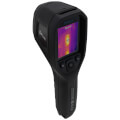
Thermal imaging cameras are non-contact diagnostic tools that detect infrared radiation emitted by surfaces and convert it into a visible temperature map, allowing technicians to identify heat anomalies without touching equipment or opening panels. Unlike single-spot IR thermometers that return one reading at a time, thermal imaging cameras display a full scene of hot and cold zones simultaneously, making it possible to scan electrical panels, HVAC equipment, pipe runs, and building envelopes in a fraction of the time. A capable handheld model can store up to 50,000 images onboard and measure temperatures across a range of -25°C to 380°C (-13°F to 716°F). Thermal imaging cameras have become a standard diagnostic tool for HVAC technicians, electricians, building inspectors, and facilities maintenance professionals who need fast, reliable answers on the job site.
Key Product Types
Handheld Spot Thermal Cameras
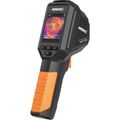
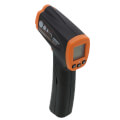
Handheld spot thermal cameras bridge the gap between single-spot IR thermometers and full-featured thermal imagers, combining a bullseye laser pointer with a wide-field thermal display for faster target acquisition. Models like the FLIR TG165-X deliver MSX image enhancement on a 2.4-inch color display with onboard storage for up to 50,000 images, which means technicians can document findings without pulling out a laptop. An IP54 enclosure and 2-meter drop rating make spot thermal cameras practical for the kind of environments HVAC and electrical techs actually work in. For technicians who need quick temperature confirmation and basic documentation, spot thermal cameras hit the right balance of capability and simplicity.
Compact Fully Radiometric Thermal Cameras
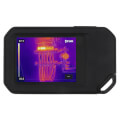
Compact fully radiometric thermal cameras, like the FLIR C5, record temperature data for every pixel in the image, allowing post-capture analysis of any point in the scene. The FLIR C5 pairs a 160 x 120 (19,200 pixel) IR sensor with a 5-megapixel visual camera and covers a temperature range of -20°C to 400°C (-4°F to 752°F), making it capable of handling everything from duct leaks to overheated motor windings. Built-in Wi-Fi with direct upload to FLIR Ignite cloud storage reduces report-building time on jobs that require formal documentation. Compact radiometric cameras are the right choice for HVAC/R professionals and building inspectors who need full image data and client-ready reporting.
Professional High-Resolution Thermal Imagers
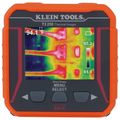
Professional high-resolution thermal imagers are designed for technicians who need precise temperature measurement of small or distant targets and detailed documentation for commercial or industrial clients. The Klein Tools TI290 Rechargeable Pro Thermal Imaging Camera delivers over 76,800 pixels of resolution with Wi-Fi transfer, user-selectable temperature alarms, and adjustable emissivity from 0.01 to 0.99, which matters when measuring surfaces ranging from bare metal to painted equipment. Professional-grade cameras are the right call for commercial electrical contractors, industrial maintenance teams, and inspectors producing reports that need to hold up under scrutiny. Temperature coverage on professional models typically spans -4°F to 752°F (-20°C to 400°C).
Smartphone-Attachable Thermal Imagers
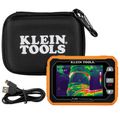
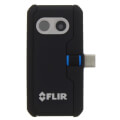
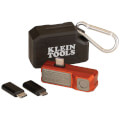
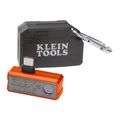
Smartphone-attachable thermal imagers are compact modules that plug into an Android or iOS device via USB-C and use the phone's screen as a live thermal display. The FLIR ONE Pro uses MSX technology to emboss visible-light edge detail onto the thermal image, producing a sharper picture than the raw sensor data alone. The Klein Tools TI223 Mobile Thermal Imager delivers 19,200 pixels of resolution and supports differential temperature readout, spot temperature measurement, and high/low alarms, all through the Klein Tools Thermal Imager app. For technicians who want thermal capability without carrying a dedicated device, a smartphone-attachable imager turns hardware already in a pocket into a professional-grade diagnostic tool.
Buying Guide: How to Choose
Resolution is the first variable to nail down when specifying a thermal imaging camera, because it controls how much detail the camera captures and how accurately it measures small or distant targets. For most HVAC diagnostics — checking refrigerant distribution across an evaporator coil, scanning radiant panels for uneven heat, confirming duct connections — a 160 x 120 (19,200 pixel) sensor covers the job. For commercial electrical work or inspection reports that need to document precise temperature anomalies at a distance, a 320 x 240 (76,800 pixel) model is worth the step up.
After resolution, consider how the camera handles documentation. Spot thermal cameras with onboard flash storage work fine for technicians who check equipment and move on. Jobs that require client-facing reports or image archiving are better served by cameras with Wi-Fi transfer, cloud connectivity, or built-in reporting software. The FLIR C5 uploads directly to FLIR Ignite; the Klein Tools TI290 transfers images via Wi-Fi to a free companion app.
Temperature range is rarely a limiting factor in standard HVAC and electrical applications, but it's worth confirming for specialized work. Most mid-range and professional thermal imaging cameras cover -4°F to 752°F (-20°C to 400°C), which handles anything from frozen pipe inspection to motor winding diagnostics.
Durability matters on real job sites. Look for an IP54 enclosure rating, which provides meaningful protection against dust and water, and a drop rating of at least 2 meters. Models built to those specs don't need babying in the field.
Finally, consider the form factor relative to how often the camera gets used. A smartphone-attachable thermal imager makes sense for technicians who need occasional diagnostic capability without dedicated hardware. A compact pocket camera is the right daily-carry tool. A professional handheld unit is built for technicians whose workflow depends on thermal imaging every day.
FAQs
What's the difference between a thermal imaging camera and an IR thermometer?
The difference between a thermal imaging camera and an IR thermometer is that a thermal imaging camera captures a full visual map of temperature across an entire scene, while an IR thermometer returns a single temperature reading from one targeted spot. A thermal imaging camera can show exactly where a temperature anomaly is located within a panel, coil, or wall section, without the technician needing to scan point by point. For HVAC and electrical diagnostics, the visual context a thermal imaging camera provides typically reduces diagnostic time significantly compared to single-spot measurement.
What resolution thermal imaging camera do HVAC technicians need?
For most HVAC diagnostic work, a 160 x 120 (19,200 pixel) thermal imaging camera covers the standard range of applications, from checking refrigerant distribution to scanning radiant panels and identifying duct leaks. Technicians who do regular commercial electrical surveys or need to document findings in formal inspection reports may benefit from a 320 x 240 (76,800 pixel) model, which captures finer temperature detail and measures smaller targets more accurately at greater distances. Matching resolution to the actual application avoids overspending on capability that won't get used.
What does MSX mean on FLIR thermal imaging cameras?
MSX on FLIR thermal imaging cameras stands for Multi-Spectral Dynamic Imaging, a patented technology that embosses visible-light edge detail from a secondary camera onto the full thermal image in real time. The result is a sharper, more readable image that retains complete thermal data while adding the text legibility and edge definition of a standard photo. MSX doesn't dilute the thermal content of the image — it overlays visual reference detail on top of it, which makes identifying the exact location of a hotspot faster and more accurate.
Can a thermal imaging camera detect refrigerant leaks or HVAC issues?
A thermal imaging camera can identify the temperature anomalies that commonly indicate HVAC issues, including uneven refrigerant distribution across an evaporator coil, hot spots on compressor housings, and cold zones that may suggest restricted airflow or insulation failures. Thermal cameras won't directly detect refrigerant gas the way a leak detector does, but the temperature patterns associated with refrigerant distribution problems are often visible in a thermal scan. For HVAC/R diagnostics, a fully radiometric thermal imaging camera with at least 160 x 120 resolution provides enough detail to support a reliable visual assessment.
What's the benefit of a Wi-Fi enabled thermal imaging camera?
Wi-Fi enabled thermal imaging cameras allow technicians to transfer captured images directly to a smartphone app or cloud storage without connecting a cable, which speeds up documentation and reporting on multi-stop service days. The Klein Tools TI290 pairs with a free companion app available on both Android and iOS for wireless image transfer and sharing. For technicians who produce client reports or need to log findings across multiple job sites in a single day, Wi-Fi connectivity reduces the administrative friction of managing image files between the camera and reporting software.
Thermal imaging cameras are non-contact diagnostic tools that detect infrared radiation emitted by surfaces and convert it into a visible temperature map, allowing technicians to identify heat anomalies without touching equipment or opening panels. Unlike single-spot IR thermometers that return one reading at a time, thermal imaging cameras display a full scene of hot and cold zones simultaneously, making it possible to scan electrical panels, HVAC equipment, pipe runs, and building envelopes in a fraction of the time. A capable handheld model can store up to 50,000 images onboard and measure temperatures across a range of -25°C to 380°C (-13°F to 716°F). Thermal imaging cameras have become a standard diagnostic tool for HVAC technicians, electricians, building inspectors, and facilities maintenance professionals who need fast, reliable answers on the job site.
Key Product Types
Handheld Spot Thermal Cameras
Handheld spot thermal cameras bridge the gap between single-spot IR thermometers and full-featured thermal imagers, combining a bullseye laser pointer with a wide-field thermal display for faster target acquisition. Models like the FLIR TG165-X deliver MSX image enhancement on a 2.4-inch color display with onboard storage for up to 50,000 images, which means technicians can document findings without pulling out a laptop. An IP54 enclosure and 2-meter drop rating make spot thermal cameras practical for the kind of environments HVAC and electrical techs actually work in. For technicians who need quick temperature confirmation and basic documentation, spot thermal cameras hit the right balance of capability and simplicity.
Compact Fully Radiometric Thermal Cameras
Compact fully radiometric thermal cameras, like the FLIR C5, record temperature data for every pixel in the image, allowing post-capture analysis of any point in the scene. The FLIR C5 pairs a 160 x 120 (19,200 pixel) IR sensor with a 5-megapixel visual camera and covers a temperature range of -20°C to 400°C (-4°F to 752°F), making it capable of handling everything from duct leaks to overheated motor windings. Built-in Wi-Fi with direct upload to FLIR Ignite cloud storage reduces report-building time on jobs that require formal documentation. Compact radiometric cameras are the right choice for HVAC/R professionals and building inspectors who need full image data and client-ready reporting.
Professional High-Resolution Thermal Imagers
Professional high-resolution thermal imagers are designed for technicians who need precise temperature measurement of small or distant targets and detailed documentation for commercial or industrial clients. The Klein Tools TI290 Rechargeable Pro Thermal Imaging Camera delivers over 76,800 pixels of resolution with Wi-Fi transfer, user-selectable temperature alarms, and adjustable emissivity from 0.01 to 0.99, which matters when measuring surfaces ranging from bare metal to painted equipment. Professional-grade cameras are the right call for commercial electrical contractors, industrial maintenance teams, and inspectors producing reports that need to hold up under scrutiny. Temperature coverage on professional models typically spans -4°F to 752°F (-20°C to 400°C).
Smartphone-Attachable Thermal Imagers
Smartphone-attachable thermal imagers are compact modules that plug into an Android or iOS device via USB-C and use the phone's screen as a live thermal display. The FLIR ONE Pro uses MSX technology to emboss visible-light edge detail onto the thermal image, producing a sharper picture than the raw sensor data alone. The Klein Tools TI223 Mobile Thermal Imager delivers 19,200 pixels of resolution and supports differential temperature readout, spot temperature measurement, and high/low alarms, all through the Klein Tools Thermal Imager app. For technicians who want thermal capability without carrying a dedicated device, a smartphone-attachable imager turns hardware already in a pocket into a professional-grade diagnostic tool.
Buying Guide: How to Choose
Resolution is the first variable to nail down when specifying a thermal imaging camera, because it controls how much detail the camera captures and how accurately it measures small or distant targets. For most HVAC diagnostics — checking refrigerant distribution across an evaporator coil, scanning radiant panels for uneven heat, confirming duct connections — a 160 x 120 (19,200 pixel) sensor covers the job. For commercial electrical work or inspection reports that need to document precise temperature anomalies at a distance, a 320 x 240 (76,800 pixel) model is worth the step up.
After resolution, consider how the camera handles documentation. Spot thermal cameras with onboard flash storage work fine for technicians who check equipment and move on. Jobs that require client-facing reports or image archiving are better served by cameras with Wi-Fi transfer, cloud connectivity, or built-in reporting software. The FLIR C5 uploads directly to FLIR Ignite; the Klein Tools TI290 transfers images via Wi-Fi to a free companion app.
Temperature range is rarely a limiting factor in standard HVAC and electrical applications, but it's worth confirming for specialized work. Most mid-range and professional thermal imaging cameras cover -4°F to 752°F (-20°C to 400°C), which handles anything from frozen pipe inspection to motor winding diagnostics.
Durability matters on real job sites. Look for an IP54 enclosure rating, which provides meaningful protection against dust and water, and a drop rating of at least 2 meters. Models built to those specs don't need babying in the field.
Finally, consider the form factor relative to how often the camera gets used. A smartphone-attachable thermal imager makes sense for technicians who need occasional diagnostic capability without dedicated hardware. A compact pocket camera is the right daily-carry tool. A professional handheld unit is built for technicians whose workflow depends on thermal imaging every day.
FAQs
What's the difference between a thermal imaging camera and an IR thermometer?
The difference between a thermal imaging camera and an IR thermometer is that a thermal imaging camera captures a full visual map of temperature across an entire scene, while an IR thermometer returns a single temperature reading from one targeted spot. A thermal imaging camera can show exactly where a temperature anomaly is located within a panel, coil, or wall section, without the technician needing to scan point by point. For HVAC and electrical diagnostics, the visual context a thermal imaging camera provides typically reduces diagnostic time significantly compared to single-spot measurement.
What resolution thermal imaging camera do HVAC technicians need?
For most HVAC diagnostic work, a 160 x 120 (19,200 pixel) thermal imaging camera covers the standard range of applications, from checking refrigerant distribution to scanning radiant panels and identifying duct leaks. Technicians who do regular commercial electrical surveys or need to document findings in formal inspection reports may benefit from a 320 x 240 (76,800 pixel) model, which captures finer temperature detail and measures smaller targets more accurately at greater distances. Matching resolution to the actual application avoids overspending on capability that won't get used.
What does MSX mean on FLIR thermal imaging cameras?
MSX on FLIR thermal imaging cameras stands for Multi-Spectral Dynamic Imaging, a patented technology that embosses visible-light edge detail from a secondary camera onto the full thermal image in real time. The result is a sharper, more readable image that retains complete thermal data while adding the text legibility and edge definition of a standard photo. MSX doesn't dilute the thermal content of the image — it overlays visual reference detail on top of it, which makes identifying the exact location of a hotspot faster and more accurate.
Can a thermal imaging camera detect refrigerant leaks or HVAC issues?
A thermal imaging camera can identify the temperature anomalies that commonly indicate HVAC issues, including uneven refrigerant distribution across an evaporator coil, hot spots on compressor housings, and cold zones that may suggest restricted airflow or insulation failures. Thermal cameras won't directly detect refrigerant gas the way a leak detector does, but the temperature patterns associated with refrigerant distribution problems are often visible in a thermal scan. For HVAC/R diagnostics, a fully radiometric thermal imaging camera with at least 160 x 120 resolution provides enough detail to support a reliable visual assessment.
What's the benefit of a Wi-Fi enabled thermal imaging camera?
Wi-Fi enabled thermal imaging cameras allow technicians to transfer captured images directly to a smartphone app or cloud storage without connecting a cable, which speeds up documentation and reporting on multi-stop service days. The Klein Tools TI290 pairs with a free companion app available on both Android and iOS for wireless image transfer and sharing. For technicians who produce client reports or need to log findings across multiple job sites in a single day, Wi-Fi connectivity reduces the administrative friction of managing image files between the camera and reporting software.
Didn't find what you're looking for?
Let us know
.