




Filters
SORT
Product Availability –
Brand –
Review Score –
 --%3E %3Csvg version='1.1' id='Fill' xmlns='http://www.w3.org/2000/svg' xmlns:xlink='http://www.w3.org/1999/xlink' x='0px' y='0px' viewBox='0 0 100 100' enable-background='new 0 0 100 100' xml:space='preserve'%3E %3Cpath fill='%23F15C02' d='M79.44,0.95H20.56C9.78,0.95,0.95,9.78,0.95,20.56v58.87c0,10.79,8.82,19.61,19.61,19.61h58.87 c10.79,0,19.61-8.83,19.61-19.61V20.56C99.05,9.78,90.22,0.95,79.44,0.95z M65.38,58.24l9.38,29.58L49.69,69.78L24.5,87.82 l9.34-29.6L8.8,39.6l30.73-0.17c0,0,6.98-19.61,10-28.93c0.54,1.36,9.88,29.1,9.88,29.1H91.2L65.38,58.24z'/%3E %3C/svg%3E)
 --%3E %3Csvg version='1.1' id='With-RB' xmlns='http://www.w3.org/2000/svg' xmlns:xlink='http://www.w3.org/1999/xlink' x='0px' y='0px' viewBox='0 0 100 100' enable-background='new 0 0 100 100' xml:space='preserve'%3E %3Cpath fill='%23FBC8B4' d='M79.44,0.95H20.56C9.78,0.95,0.95,9.78,0.95,20.56v58.87c0,10.79,8.82,19.61,19.61,19.61h58.87 c10.79,0,19.61-8.83,19.61-19.61V20.56C99.05,9.78,90.22,0.95,79.44,0.95z M65.38,58.24l9.38,29.58L49.69,69.78L24.5,87.82 l9.34-29.6L8.8,39.6l30.73-0.17c0,0,6.98-19.61,10-28.93c0.54,1.36,9.88,29.1,9.88,29.1H91.2L65.38,58.24z'/%3E %3C/svg%3E)
Price Range –
Thermal Actuator



 --%3E %3Csvg version='1.1' id='Half' xmlns='http://www.w3.org/2000/svg' xmlns:xlink='http://www.w3.org/1999/xlink' x='0px' y='0px' viewBox='0 0 100 100' enable-background='new 0 0 100 100' xml:space='preserve'%3E %3Cg%3E %3Cpath fill='%23F15C02' d='M30.05,70.23l3.79-12.01L8.8,39.6l30.73-0.17c0,0,6.98-19.61,10-28.93c0.54,1.36,9.88,29.1,9.88,29.1h1.58 L93.71,7.18c-3.58-3.82-8.66-6.23-14.28-6.23H20.56C9.78,0.95,0.95,9.78,0.95,20.56v58.87c0,5.41,2.22,10.32,5.79,13.88 L30.05,70.23z'/%3E %3C/g%3E %3Cpath fill='%23FBC8B4' d='M93.71,7.18L60.98,39.6H91.2L65.38,58.24l9.38,29.58L49.69,69.78L24.5,87.82l5.55-17.59L6.75,93.32 c3.55,3.54,8.44,5.73,13.82,5.73h58.87c10.79,0,19.61-8.83,19.61-19.61V20.56C99.05,15.4,97.01,10.69,93.71,7.18z'/%3E %3C/svg%3E)


 --%3E %3Csvg version='1.1' id='No-RB' xmlns='http://www.w3.org/2000/svg' xmlns:xlink='http://www.w3.org/1999/xlink' x='0px' y='0px' viewBox='0 0 100 100' enable-background='new 0 0 100 100' xml:space='preserve'%3E %3Cpath fill='%23CECECE' d='M79.44,0.95H20.56C9.78,0.95,0.95,9.78,0.95,20.56v58.87c0,10.79,8.82,19.61,19.61,19.61h58.87 c10.79,0,19.61-8.83,19.61-19.61V20.56C99.05,9.78,90.22,0.95,79.44,0.95z M65.38,58.24l9.38,29.58L49.69,69.78L24.5,87.82 l9.34-29.6L8.8,39.6l30.73-0.17c0,0,6.98-19.61,10-28.93c0.54,1.36,9.88,29.1,9.88,29.1H91.2L65.38,58.24z'/%3E %3C/svg%3E)

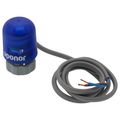





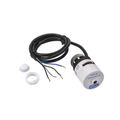

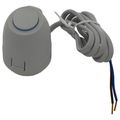
A thermal actuator is a wax-motor driven device mounted on a zone valve or manifold valve that opens or closes the valve in response to an electrical signal from a thermostat or zone control panel. Heating and cooling contractors use these actuators to convert electrical zone calls into mechanical valve movement, most commonly on hydronic heating manifolds, radiant floor zones, and small zone valve bodies rather than large motorized ball valves. The wax element inside expands when powered, pushing a pin that opens the valve, and contracts as it cools once power is removed, closing it again. Because the actuator threads or clips onto the valve body rather than being built into it, a failed actuator can usually be replaced without removing the valve itself or draining the entire system. Matching the actuator's voltage, normally open or normally closed operation, and thread pattern to the existing valve is what determines whether a replacement fits without modification.
Subcategories
- 24V Actuators: 24-volt actuators are the most common voltage used on residential zone valve and manifold systems, matching the low-voltage output of most zone control panels and thermostats. Contractors replacing a failed actuator on an existing system typically match this voltage first, since installing the wrong voltage actuator can damage the control board or simply fail to open the valve. Wiring is usually a two-wire connection with a quick-disconnect terminal for easy field replacement. Most residential hydronic zoning setups standardize on this voltage.
- Line Voltage Actuators: Line voltage actuators run directly off building power rather than a low-voltage control transformer, which suits systems where the zone controller is wired for line voltage output. Commercial and some larger residential systems use this configuration when the existing control wiring was installed for line voltage from the start. Contractors need to confirm voltage compatibility carefully here, since installing a line voltage actuator on a low-voltage system won't work and can create a safety hazard. Line voltage actuators typically carry a different physical connector than their 24-volt counterparts.
- Normally Open vs. Normally Closed Models: Normally open actuators keep the valve open with no power applied and close it when energized, while normally closed models do the opposite, staying shut until power opens the valve. Zone system design determines which type a given valve needs, so contractors should verify the existing actuator's type before ordering a replacement rather than assuming based on the valve alone. Mixing up the two types on a manifold can leave a zone stuck open or stuck closed regardless of what the thermostat calls for. Manufacturers typically mark the actuator's type on the housing or in the part number.
Buying Guide
Replacing a thermal actuator correctly starts with identifying the exact voltage the existing system uses, since a 24-volt actuator won't function on a line-voltage control circuit and vice versa. Contractors should also confirm whether the valve needs a normally open or normally closed actuator, because installing the wrong type can leave a zone permanently open or permanently shut no matter what the thermostat requests. Thread pattern and physical mounting also matter: actuators from different manufacturers don't universally interchange, so matching the thread size and mounting style to the existing valve body avoids a return trip for the wrong part. For radiant floor and multi-zone manifold systems, checking how many actuators the transformer or control panel is rated to power at once is worth doing before adding several new zones, since undersized transformers can struggle when multiple thermal actuator units open simultaneously on a cold morning. Response time is another practical factor: wax-motor actuators aren't instant, typically taking a few minutes to fully open or close, which is normal behavior rather than a defect and worth explaining to a homeowner expecting immediate room temperature changes. Keeping a couple of spare actuators of the most common voltage and switching type on the truck covers the majority of service calls, since these components are one of the more frequent failure points on an otherwise reliable zone valve system. Confirming wiring compatibility, including whether the existing connector is a spade terminal or a different quick-connect style, rounds out a complete replacement.
Frequently Asked Questions
How do I know if my zone valve's thermal actuator has failed?
A zone that won't open or close on thermostat demand, or one that's stuck in one position, usually points to a failed actuator. A quick voltage check at the actuator terminals during a zone call can confirm whether power is reaching it.
Can I replace an actuator without draining the system?
In most cases, yes. Actuators thread or clip onto the valve body separately from the valve's internals, so removing one typically doesn't require draining the zone.
Why does the actuator take a few minutes to open the valve?
Wax-motor actuators rely on heating a wax element to expand and push open the valve, which takes a short time rather than happening instantly. The delay is normal operation, not a sign of failure.
What happens if I install the wrong voltage actuator?
It typically won't operate the valve correctly, and in some cases it can damage the control transformer or board. Confirming voltage before ordering a replacement avoids this problem.
Are normally open and normally closed actuators visually different?
Not always visually, though most manufacturers mark the type on the housing or the part number. Checking the existing actuator's marking before ordering is the most reliable way to match a replacement.
