




Filters
SORT
Product Availability –
Review Score –
 --%3E %3Csvg version='1.1' id='Fill' xmlns='http://www.w3.org/2000/svg' xmlns:xlink='http://www.w3.org/1999/xlink' x='0px' y='0px' viewBox='0 0 100 100' enable-background='new 0 0 100 100' xml:space='preserve'%3E %3Cpath fill='%23F15C02' d='M79.44,0.95H20.56C9.78,0.95,0.95,9.78,0.95,20.56v58.87c0,10.79,8.82,19.61,19.61,19.61h58.87 c10.79,0,19.61-8.83,19.61-19.61V20.56C99.05,9.78,90.22,0.95,79.44,0.95z M65.38,58.24l9.38,29.58L49.69,69.78L24.5,87.82 l9.34-29.6L8.8,39.6l30.73-0.17c0,0,6.98-19.61,10-28.93c0.54,1.36,9.88,29.1,9.88,29.1H91.2L65.38,58.24z'/%3E %3C/svg%3E)
 --%3E %3Csvg version='1.1' id='With-RB' xmlns='http://www.w3.org/2000/svg' xmlns:xlink='http://www.w3.org/1999/xlink' x='0px' y='0px' viewBox='0 0 100 100' enable-background='new 0 0 100 100' xml:space='preserve'%3E %3Cpath fill='%23FBC8B4' d='M79.44,0.95H20.56C9.78,0.95,0.95,9.78,0.95,20.56v58.87c0,10.79,8.82,19.61,19.61,19.61h58.87 c10.79,0,19.61-8.83,19.61-19.61V20.56C99.05,9.78,90.22,0.95,79.44,0.95z M65.38,58.24l9.38,29.58L49.69,69.78L24.5,87.82 l9.34-29.6L8.8,39.6l30.73-0.17c0,0,6.98-19.61,10-28.93c0.54,1.36,9.88,29.1,9.88,29.1H91.2L65.38,58.24z'/%3E %3C/svg%3E)
Price Range –
DuraDrive Actuators

 --%3E %3Csvg version='1.1' id='No-RB' xmlns='http://www.w3.org/2000/svg' xmlns:xlink='http://www.w3.org/1999/xlink' x='0px' y='0px' viewBox='0 0 100 100' enable-background='new 0 0 100 100' xml:space='preserve'%3E %3Cpath fill='%23CECECE' d='M79.44,0.95H20.56C9.78,0.95,0.95,9.78,0.95,20.56v58.87c0,10.79,8.82,19.61,19.61,19.61h58.87 c10.79,0,19.61-8.83,19.61-19.61V20.56C99.05,9.78,90.22,0.95,79.44,0.95z M65.38,58.24l9.38,29.58L49.69,69.78L24.5,87.82 l9.34-29.6L8.8,39.6l30.73-0.17c0,0,6.98-19.61,10-28.93c0.54,1.36,9.88,29.1,9.88,29.1H91.2L65.38,58.24z'/%3E %3C/svg%3E)

 --%3E %3Csvg version='1.1' id='Half' xmlns='http://www.w3.org/2000/svg' xmlns:xlink='http://www.w3.org/1999/xlink' x='0px' y='0px' viewBox='0 0 100 100' enable-background='new 0 0 100 100' xml:space='preserve'%3E %3Cg%3E %3Cpath fill='%23F15C02' d='M30.05,70.23l3.79-12.01L8.8,39.6l30.73-0.17c0,0,6.98-19.61,10-28.93c0.54,1.36,9.88,29.1,9.88,29.1h1.58 L93.71,7.18c-3.58-3.82-8.66-6.23-14.28-6.23H20.56C9.78,0.95,0.95,9.78,0.95,20.56v58.87c0,5.41,2.22,10.32,5.79,13.88 L30.05,70.23z'/%3E %3C/g%3E %3Cpath fill='%23FBC8B4' d='M93.71,7.18L60.98,39.6H91.2L65.38,58.24l9.38,29.58L49.69,69.78L24.5,87.82l5.55-17.59L6.75,93.32 c3.55,3.54,8.44,5.73,13.82,5.73h58.87c10.79,0,19.61-8.83,19.61-19.61V20.56C99.05,15.4,97.01,10.69,93.71,7.18z'/%3E %3C/svg%3E)
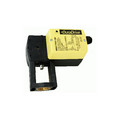
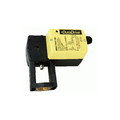
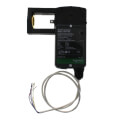
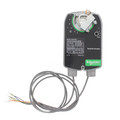
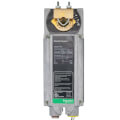
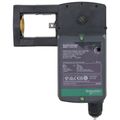
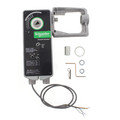
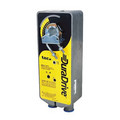
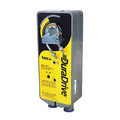
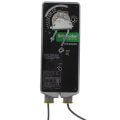
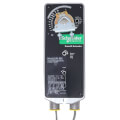
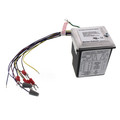
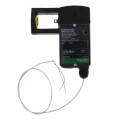
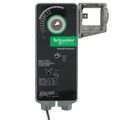
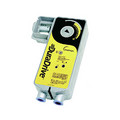
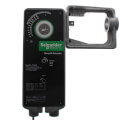
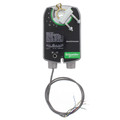
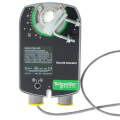
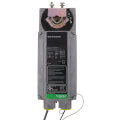
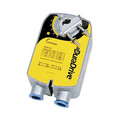
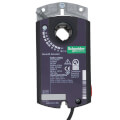
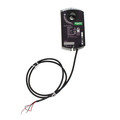
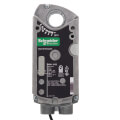
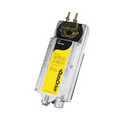
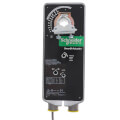
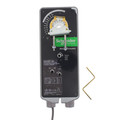


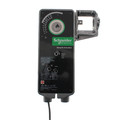
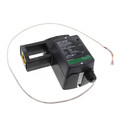
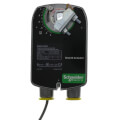
DuraDrive actuators are direct-coupled electric actuators for HVAC dampers and valves, a product line that traces back through Barber Colman and Invensys and is now part of Schneider Electric's building controls offering. Controls techs use these actuators to open and close dampers or modulate valves in response to a building automation system or a local thermostat, replacing pneumatic or manual linkage-driven operators. The line covers both spring return models, which drive the damper or valve to a fail-safe position on power loss, and non-spring return proportional models for applications where a specific failed position isn't required. Torque ratings across the line run from 35 lb-in up to 133 lb-in, covering everything from small VAV terminal dampers to larger mixed-air dampers and control valves. Because DuraDrive actuators mount directly to the damper or valve shaft rather than through a separate linkage, installation and setup take less time than older pneumatic or linkage-based operators, and there's less to maintain once the actuator is in service.
Subcategories
- Spring Return DuraDrive Actuators: Spring return DuraDrive actuators drive the connected damper or valve to a predetermined fail-safe position whenever power is interrupted, which matters for smoke dampers, outside air dampers, and other applications where a specific position on power loss is a code or design requirement. These are available across the line's torque range, from 35 lb-in up to 133 lb-in. Controls techs select spring return models based on both the required torque and the fail direction the application calls for. Checking the actuator's rated cycle time against the application's response requirements is a useful step before final selection.
- Proportional Non-Spring Return DuraDrive Actuators: Proportional non-spring return DuraDrive actuators modulate to a commanded position based on a continuous control signal and hold that position without needing a fail-safe spring, suited to applications like VAV box dampers or modulating valves where a specific failed position isn't mandated. These models are offered in the same 35, 60, and 133 lb-in torque ratings as the spring return line. Matching the control signal type to the building automation system's output is the main selection point for this category. Techs replacing an older pneumatic actuator often move to this style when converting a zone to direct digital control.
- Two-Position DuraDrive Actuators: Two-position DuraDrive actuators drive between two fixed positions, typically fully open and fully closed, rather than modulating across a range. These suit simple on-off damper applications where proportional control isn't needed, such as basic outside air or exhaust dampers tied to a single-stage control signal. Two-position models are available with spring return for fail-safe applications. Confirming the required torque against the damper's breakaway and running torque avoids an undersized actuator that stalls under load.
Buying Guide
Selecting a DuraDrive actuator starts with torque, since an undersized actuator will stall or fail to fully stroke a damper or valve while an oversized one adds unnecessary cost. The line's 35, 60, and 133 lb-in ratings cover most terminal unit and mixed-air damper applications, but checking the connected damper or valve's rated breakaway and running torque against the actuator's output is the only reliable way to confirm a match. Spring return versus non-spring return is the next major decision point, and it often comes down to code requirements or system design rather than preference; smoke dampers and many outside air dampers call for a defined fail-safe position, which points toward a spring return model, while VAV terminal dampers and other zone-level applications frequently use non-spring return actuators since a specific failed position isn't mandated. Control signal type needs to match whatever the building automation system or local controller is sending, whether that's a proportional signal for modulating control or a simple two-position on-off command. Voltage also needs to match the control circuit, and confirming this before ordering avoids a mismatch that shows up during startup. Mounting shaft size and orientation on the existing damper or valve should be checked against the actuator's mounting hardware, since a direct-coupled actuator needs a compatible shaft diameter to grip properly. For retrofit jobs replacing an older Barber Colman or TAC-branded actuator, DuraDrive's continued availability under Schneider Electric makes it a straightforward like-for-like replacement in many existing installations.
Frequently Asked Questions
What torque ratings are available in the DuraDrive actuator line?
DuraDrive actuators are available in 35 lb-in, 60 lb-in, and 133 lb-in torque ratings, covering applications from small VAV terminal dampers up to larger mixed-air dampers and control valves.
What's the difference between spring return and non-spring return models?
Spring return actuators drive the damper or valve to a fixed fail-safe position when power is lost, which some applications require by code. Non-spring return models hold their last commanded position on power loss and are used where a specific failed position isn't required.
Can DuraDrive actuators replace older Barber Colman or TAC actuators?
DuraDrive is the continuation of the Barber Colman and TAC actuator line, now offered under Schneider Electric, so it's commonly used as a direct replacement in retrofit work on existing systems.
Do these actuators need a separate linkage to operate a damper?
No. DuraDrive actuators are direct-coupled, mounting straight onto the damper or valve shaft without a separate linkage assembly, which simplifies installation compared to older linkage-driven operators.
Are two-position and proportional control both available?
Yes, the line includes two-position actuators for simple open and closed control as well as proportional actuators that modulate to a commanded position based on a continuous control signal.
