



'/%3E%3C/svg%3E)
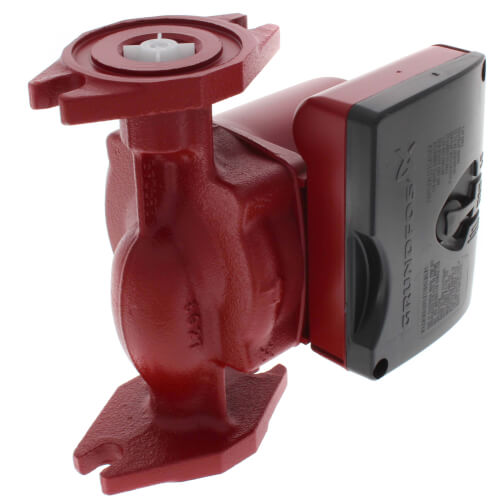
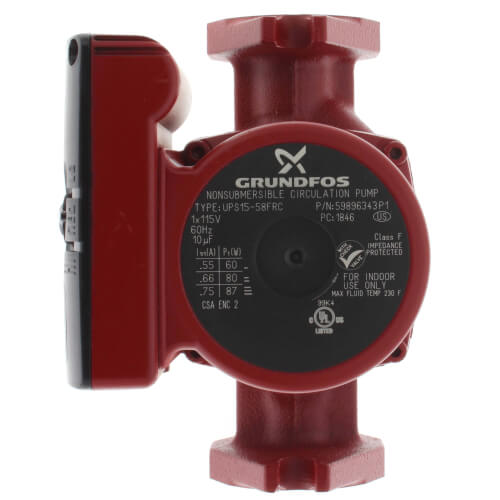
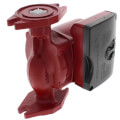
UPS15-58FRC, 3-Speed Rotated Flanged Circulator Pump, 1/25 HP, 115 volt
 --%3E %3Csvg version='1.1' id='Fill' xmlns='http://www.w3.org/2000/svg' xmlns:xlink='http://www.w3.org/1999/xlink' x='0px' y='0px' viewBox='0 0 100 100' enable-background='new 0 0 100 100' xml:space='preserve'%3E %3Cpath fill='%23F15C02' d='M79.44,0.95H20.56C9.78,0.95,0.95,9.78,0.95,20.56v58.87c0,10.79,8.82,19.61,19.61,19.61h58.87 c10.79,0,19.61-8.83,19.61-19.61V20.56C99.05,9.78,90.22,0.95,79.44,0.95z M65.38,58.24l9.38,29.58L49.69,69.78L24.5,87.82 l9.34-29.6L8.8,39.6l30.73-0.17c0,0,6.98-19.61,10-28.93c0.54,1.36,9.88,29.1,9.88,29.1H91.2L65.38,58.24z'/%3E %3C/svg%3E)
 --%3E %3Csvg version='1.1' id='Half' xmlns='http://www.w3.org/2000/svg' xmlns:xlink='http://www.w3.org/1999/xlink' x='0px' y='0px' viewBox='0 0 100 100' enable-background='new 0 0 100 100' xml:space='preserve'%3E %3Cg%3E %3Cpath fill='%23F15C02' d='M30.05,70.23l3.79-12.01L8.8,39.6l30.73-0.17c0,0,6.98-19.61,10-28.93c0.54,1.36,9.88,29.1,9.88,29.1h1.58 L93.71,7.18c-3.58-3.82-8.66-6.23-14.28-6.23H20.56C9.78,0.95,0.95,9.78,0.95,20.56v58.87c0,5.41,2.22,10.32,5.79,13.88 L30.05,70.23z'/%3E %3C/g%3E %3Cpath fill='%23FBC8B4' d='M93.71,7.18L60.98,39.6H91.2L65.38,58.24l9.38,29.58L49.69,69.78L24.5,87.82l5.55-17.59L6.75,93.32 c3.55,3.54,8.44,5.73,13.82,5.73h58.87c10.79,0,19.61-8.83,19.61-19.61V20.56C99.05,15.4,97.01,10.69,93.71,7.18z'/%3E %3C/svg%3E)


MANUALS (2)
'/%3E%3C/svg%3E)
Product Highlights


Description
- 3-Speed Super Brute Circulator Pump
- Rotated Flanged Housing
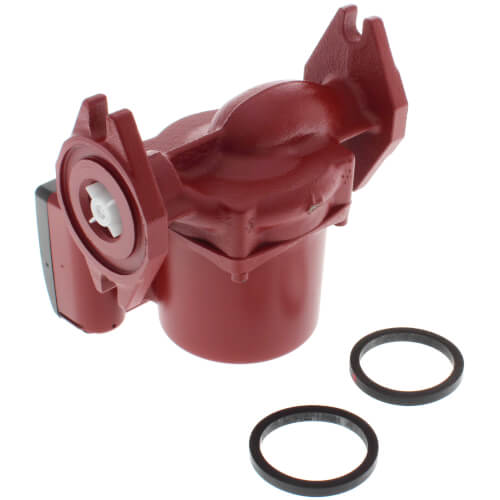
- With Integral Check Valve
- 1/25 HP
- 115 Volts
- Pump Connection: GF 15/26 Flange
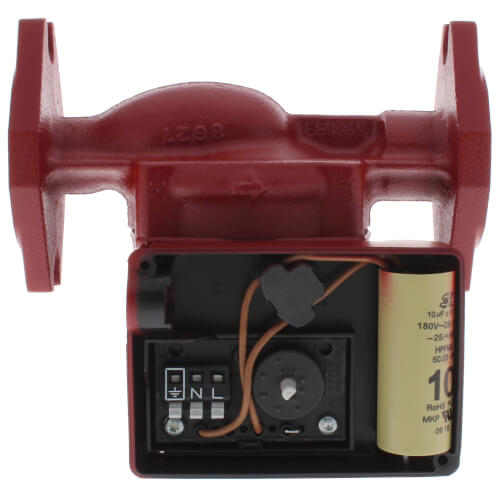
- Built-in motor protection for long life
- Multiple accessories for a variety of applications
- Whisper-quiet operation for sound sensitive installations
- Applications include, Hydronic heating, Fan coil heating, Solar heating, and Radiant heating systems
Specs
| Frequency: | 60 Hz 60 Hz 60 Hz |
|---|---|
| Application: | Zoning |
| Poles: | 2 |
| Material: | Cast Iron |
| Amperage: | 0.75 |
| Voltage: | 115V |
| Max Pressure (PSI): | 145 |
| Type: | 3-Speed Pump |
| Features: | Integral Check Valve |
| Horse Power: | 1/25 |
| Flow Range (GPM): | 0-17 |
| Max Flow (GPM): | 17 |
| Max Head (Ft): | 19.5 |
| Head Range (ft.): | 0-19.5 |
| Hertz: | 60 |
| Phase: | 1 |
| RPM: | 2450 |
| Temperature Range (F): | 36°F - 230°F |
| Connection Size: | 1" 1-1/2" 1-1/4" 3/4" |
| Connection Type: | Flanged x Flanged |

Questions?
Compare Similar Products
You May Also Need
2 Replacement Parts

Need help finding a replacement part?
Product Reviews
Most Liked Positive Review
Great Product
Most Liked Negative Review
 --%3E %3Csvg version='1.1' id='With-RB' xmlns='http://www.w3.org/2000/svg' xmlns:xlink='http://www.w3.org/1999/xlink' x='0px' y='0px' viewBox='0 0 100 100' enable-background='new 0 0 100 100' xml:space='preserve'%3E %3Cpath fill='%23FBC8B4' d='M79.44,0.95H20.56C9.78,0.95,0.95,9.78,0.95,20.56v58.87c0,10.79,8.82,19.61,19.61,19.61h58.87 c10.79,0,19.61-8.83,19.61-19.61V20.56C99.05,9.78,90.22,0.95,79.44,0.95z M65.38,58.24l9.38,29.58L49.69,69.78L24.5,87.82 l9.34-29.6L8.8,39.6l30.73-0.17c0,0,6.98-19.61,10-28.93c0.54,1.36,9.88,29.1,9.88,29.1H91.2L65.38,58.24z'/%3E %3C/svg%3E)
Great price and Service but not exactly what I expected.
Best Circulator on the Market
Great service and fast delivery from Supply House.
Perfect
Perfect fit and functionality.
i would purches again
Supply House has never let us down. Amazing Co and staff
I am so happy
Perfect fit.
Just a great circulator
Caught a bad one
Product Q&A
12 QuestionsQ: can I install in a 1/2" line?
Asked by bill 8 years ago
Add your answer
Verified Reply- SupplyHouse StaffBill, The Connection Size for this pump is 3/4" - 1-1/2"
Q: Can I use pump with out check valve?
Asked by Skip 12 years ago
Add your answer
Verified Reply- SupplyHouse StaffYou can as long as the check valve is not necessary for your application. Check valves are normally used to prevent flow of unwanted heat to zones that are not calling for heat. Removing a check valve will usually break the valve and make it unusable in the future.
yes
Yes you can.
yes it just pulls out with a pair of needle nose pliers
Yes you can but there should be a check value somewhere in the line to prevent back flow
Q: I have 4 of these in a 7 yr old system. One has almost from the start had a constant rattle when the pump is circulating that you can hear through the pipes throughout the house where the zone heats. Do you think it could be the check valve or would replacing the entire pump be more appropriate?
Asked by Steve 12 years ago
Add your answer
First I would bleed the zone to eliminate any air in the pipes and then I would make sure there are sufficient pipe hangers and all are tight. I have had good luck with these pumps but that is not to say replacing one might be the answer. Process of elimination I would say to solve the problem. Hope this is helpful, Sent from my iPad
Steve, There may be a few things going on. Here it comes: If the sound is a crackle type rattle, then your pump may be cavitating. Understadning cavitation is when the pump is being starved. The impellor slices through the liquid, but the starvation causes a small gap between the molecules of liquid and when the fluid passes the impellor it smacks against the fluid molecules coming back together causing the sound. In order to test this reduce the opening of the valve after the pump by 50% and the crackling should stop. If it does than you know your starving the pump. Also, if the pump has other speeds, reduce the speed of the pump. The pump can be starved by elbows to close to the opening, or the fluid is too thick, or the there is an obstruction like build-up in the pipe, or even if your mixing valve is on the intake side of the pump. Your welcome to email me you results at: ****@***.*** Good Luck, John
Q: Are the check valves a replaceable part in this unit? What is the part number?
Asked by Biker Mike 12 years ago
Add your answer
Verified Reply- PexSupply StaffThe replacement check valve is part 596630.
Q: Can this pump be controlled with a low voltage line such as from a Taco Zone control ZVC406? If not, is there a Grundfos pump that can be controlled such as the Taco-007?
Asked by John 12 years ago
Add your answer
Verified Reply- PexSupply StaffThis pump could be controlled through the circulator connection on a Taco Zone Valve Control, but not through the zone connections. We would recommend Taco part SR506-4 if you are zoning by circulator.
You can control this pump with a solid-state relay. That in turn needs a 5V to 30V DC input voltage at 1 mA only, to turn on. If you got 24V AC available, use a diode and resistor in line. This relay will work: http://www.jameco.com/webapp/wcs/stores/servlet/Product_10001_10001_175222_-1 Relay Solid State 32 Volt DC Input 4 Amp 60 Volt DC Output 4-Pin KF0604D: KYOTO ELECTRIC View Larger Image Image is representative only KYOTO ELECTRIC Jameco Part no. 175222 Manufacturer KYOTO ELECTRIC Manufacturer no. KF0604D Have fun !
Q: How do you find out or calculate the head pressure for this pump? How do you find out the size of pump you need? This pump would be pushing hot water up 19 feet to the second floor. through 3/4 pex reducing down to 1/2 inch pex in-floor heating. The room is approximately 15ft x 14 ft.
Asked by jm 14 years ago
Add your answer
I can't answer your initial question but I should be able to help you with the rest. Most (if not all) 2 story homes are run on 1/25hp circulation pumps from the basement. I am running 2x500' loops of 3/4" pex in parallel plus an additional loop around the house no problem with one pump. The key thing to remember is having a closed loop system. Remember that any water pushed up is also coming back down. This is a great pump for radiant heating. The 3-speed ability allows me to run it at different speeds depending on the average temperature outside. I.e. Faster in the winter since the return temp needs to be fairly close to the supply temp to prevent boiler shock.
Q: Can I mount this pump in any direction?
Asked by henrikb 14 years ago
Add your answer
Verified Reply- PexSupply StaffThis pump will function as long as the canister with the impeller is not facing straight into the air.
Q: I'd like to get a higher flow rate in one zone in an existing hydronic system. Can the Grundfos UPS15-58FRC give a higher flow rate than the existing Taco 007?
Asked by 15 years ago
Add your answer
Verified Reply- PexSupply StaffIt can at on Speed 3 at certain head pressures. You can compare the pump curves at the links below. http://s3.pexsupply.com/manuals/1249544647674/Grundfos_ups15-58fc_Product_Data.pdf http://s3.pexsupply.com/manuals/1249544537780/101-029.pdf
Q: what is the purpose of a 3 speed pump as opposed to a regular taco pump.I am installing it on a radiant system.
Asked by 15 years ago
Add your answer
Verified Reply- PexSupply Staff3-speed pumps work in a wider variety of applications and allow installers to cut down on their inventory. Regardless of the type of pump being used, all circulators must be sized based on the GPM and head pressure of the system.
Q: Is it possible to connect 2 of these pumps in series? I have a high head system that also requires high flow. None of the bigger pumps will meet the requirements. I would like to put one pump in the supply line before the most resistance, and another in the return line after the most resistance.
Asked by Josh 15 years ago
Add your answer
Verified Reply- PexSupply StaffConnecting two pumps in series would boost your flow rate, but it would not do anything for the head pressure.