




Kidde


 --%3E %3Csvg version='1.1' id='No-RB' xmlns='http://www.w3.org/2000/svg' xmlns:xlink='http://www.w3.org/1999/xlink' x='0px' y='0px' viewBox='0 0 100 100' enable-background='new 0 0 100 100' xml:space='preserve'%3E %3Cpath fill='%23CECECE' d='M79.44,0.95H20.56C9.78,0.95,0.95,9.78,0.95,20.56v58.87c0,10.79,8.82,19.61,19.61,19.61h58.87 c10.79,0,19.61-8.83,19.61-19.61V20.56C99.05,9.78,90.22,0.95,79.44,0.95z M65.38,58.24l9.38,29.58L49.69,69.78L24.5,87.82 l9.34-29.6L8.8,39.6l30.73-0.17c0,0,6.98-19.61,10-28.93c0.54,1.36,9.88,29.1,9.88,29.1H91.2L65.38,58.24z'/%3E %3C/svg%3E)

 --%3E %3Csvg version='1.1' id='Fill' xmlns='http://www.w3.org/2000/svg' xmlns:xlink='http://www.w3.org/1999/xlink' x='0px' y='0px' viewBox='0 0 100 100' enable-background='new 0 0 100 100' xml:space='preserve'%3E %3Cpath fill='%23F15C02' d='M79.44,0.95H20.56C9.78,0.95,0.95,9.78,0.95,20.56v58.87c0,10.79,8.82,19.61,19.61,19.61h58.87 c10.79,0,19.61-8.83,19.61-19.61V20.56C99.05,9.78,90.22,0.95,79.44,0.95z M65.38,58.24l9.38,29.58L49.69,69.78L24.5,87.82 l9.34-29.6L8.8,39.6l30.73-0.17c0,0,6.98-19.61,10-28.93c0.54,1.36,9.88,29.1,9.88,29.1H91.2L65.38,58.24z'/%3E %3C/svg%3E)
 --%3E %3Csvg version='1.1' id='Half' xmlns='http://www.w3.org/2000/svg' xmlns:xlink='http://www.w3.org/1999/xlink' x='0px' y='0px' viewBox='0 0 100 100' enable-background='new 0 0 100 100' xml:space='preserve'%3E %3Cg%3E %3Cpath fill='%23F15C02' d='M30.05,70.23l3.79-12.01L8.8,39.6l30.73-0.17c0,0,6.98-19.61,10-28.93c0.54,1.36,9.88,29.1,9.88,29.1h1.58 L93.71,7.18c-3.58-3.82-8.66-6.23-14.28-6.23H20.56C9.78,0.95,0.95,9.78,0.95,20.56v58.87c0,5.41,2.22,10.32,5.79,13.88 L30.05,70.23z'/%3E %3C/g%3E %3Cpath fill='%23FBC8B4' d='M93.71,7.18L60.98,39.6H91.2L65.38,58.24l9.38,29.58L49.69,69.78L24.5,87.82l5.55-17.59L6.75,93.32 c3.55,3.54,8.44,5.73,13.82,5.73h58.87c10.79,0,19.61-8.83,19.61-19.61V20.56C99.05,15.4,97.01,10.69,93.71,7.18z'/%3E %3C/svg%3E)
 --%3E %3Csvg version='1.1' id='With-RB' xmlns='http://www.w3.org/2000/svg' xmlns:xlink='http://www.w3.org/1999/xlink' x='0px' y='0px' viewBox='0 0 100 100' enable-background='new 0 0 100 100' xml:space='preserve'%3E %3Cpath fill='%23FBC8B4' d='M79.44,0.95H20.56C9.78,0.95,0.95,9.78,0.95,20.56v58.87c0,10.79,8.82,19.61,19.61,19.61h58.87 c10.79,0,19.61-8.83,19.61-19.61V20.56C99.05,9.78,90.22,0.95,79.44,0.95z M65.38,58.24l9.38,29.58L49.69,69.78L24.5,87.82 l9.34-29.6L8.8,39.6l30.73-0.17c0,0,6.98-19.61,10-28.93c0.54,1.36,9.88,29.1,9.88,29.1H91.2L65.38,58.24z'/%3E %3C/svg%3E)



























Kidde was founded in 1917 by Walter Kidde and grew from fire detection work for the maritime industry into one of the largest manufacturers of fire and life safety equipment in the United States. Early milestones included acquiring rights to a ship based fire detection system in 1918 and developing a portable carbon dioxide fire extinguisher in 1924 after securing patent rights to an improved release mechanism. The brand is now headquartered in Mebane, North Carolina, and operates as part of Kidde Global Solutions.
Product Lines
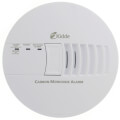
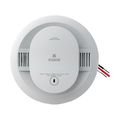
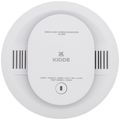
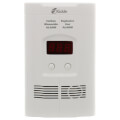
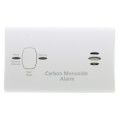
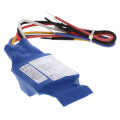
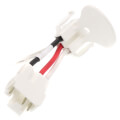
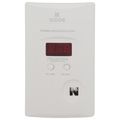
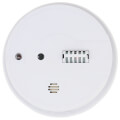
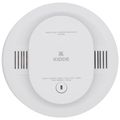
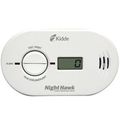
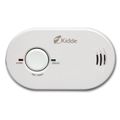
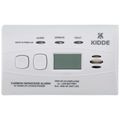
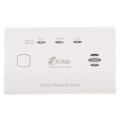
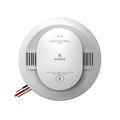
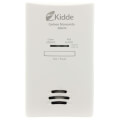
Kidde's catalog for residential and light commercial use centers on smoke alarms, combination smoke and carbon monoxide alarms, and standalone carbon monoxide alarms, alongside a range of portable fire extinguishers sized for kitchens, garages, and general household use. The brand's extinguisher technology traces back to its early carbon dioxide units, and the current lineup also includes dry chemical models intended for different classes of fire.
Why Contractors Specify Kidde
Electrical and HVAC contractors frequently install Kidde smoke and carbon monoxide alarms because the brand has more than a century of experience specifically in fire and life safety detection, beginning with shipboard fire systems in the early twentieth century. Builders and remodelers also specify Kidde when a project calls for combination alarms that satisfy both smoke and carbon monoxide detection requirements in a single device, simplifying inspection and code compliance. The long history with portable fire extinguishers gives contractors confidence when recommending Kidde units for code mandated placements in mechanical rooms, kitchens, and garages.
How to Choose Kidde Products
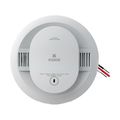
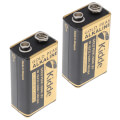
Selecting between a smoke alarm, a carbon monoxide alarm, and a combination unit depends on local code requirements and the specific risks present in a structure, such as whether fuel burning appliances are installed nearby. Power source matters as well, since Kidde offers hardwired, battery powered, and interconnected alarm options suited to new construction versus retrofit work. For fire extinguishers, matching the unit's fire class rating to the hazards in a given space, such as a kitchen versus a garage, is the main factor in selection.
Frequently Asked Questions
When was Kidde founded and what was its original focus?
Walter Kidde founded the company in 1917, and its early work centered on fire detection systems for ships before expanding into portable fire extinguishers and, later, residential smoke and carbon monoxide alarms.
What is the difference between a Kidde smoke alarm and a combination alarm?
A standard smoke alarm detects only smoke, while a combination unit also monitors for carbon monoxide, allowing one device to cover both hazards in a single installation.
Does the Kidde lineup include hardwired and battery powered alarm options?
Yes, the lineup includes hardwired, battery powered, and interconnected options to suit both new construction and retrofit installations.
How long has Kidde made fire extinguishers?
The company introduced its first portable carbon dioxide fire extinguisher in 1924, building on patent rights it acquired the prior year for an improved gas release mechanism.
Where is Kidde headquartered now?
Kidde operates out of Mebane, North Carolina, as part of Kidde Global Solutions.
