




Filters
SORT
Product Availability –
Brand –
Size –
Material –
Review Score –
 --%3E %3Csvg version='1.1' id='Fill' xmlns='http://www.w3.org/2000/svg' xmlns:xlink='http://www.w3.org/1999/xlink' x='0px' y='0px' viewBox='0 0 100 100' enable-background='new 0 0 100 100' xml:space='preserve'%3E %3Cpath fill='%23F15C02' d='M79.44,0.95H20.56C9.78,0.95,0.95,9.78,0.95,20.56v58.87c0,10.79,8.82,19.61,19.61,19.61h58.87 c10.79,0,19.61-8.83,19.61-19.61V20.56C99.05,9.78,90.22,0.95,79.44,0.95z M65.38,58.24l9.38,29.58L49.69,69.78L24.5,87.82 l9.34-29.6L8.8,39.6l30.73-0.17c0,0,6.98-19.61,10-28.93c0.54,1.36,9.88,29.1,9.88,29.1H91.2L65.38,58.24z'/%3E %3C/svg%3E)
 --%3E %3Csvg version='1.1' id='With-RB' xmlns='http://www.w3.org/2000/svg' xmlns:xlink='http://www.w3.org/1999/xlink' x='0px' y='0px' viewBox='0 0 100 100' enable-background='new 0 0 100 100' xml:space='preserve'%3E %3Cpath fill='%23FBC8B4' d='M79.44,0.95H20.56C9.78,0.95,0.95,9.78,0.95,20.56v58.87c0,10.79,8.82,19.61,19.61,19.61h58.87 c10.79,0,19.61-8.83,19.61-19.61V20.56C99.05,9.78,90.22,0.95,79.44,0.95z M65.38,58.24l9.38,29.58L49.69,69.78L24.5,87.82 l9.34-29.6L8.8,39.6l30.73-0.17c0,0,6.98-19.61,10-28.93c0.54,1.36,9.88,29.1,9.88,29.1H91.2L65.38,58.24z'/%3E %3C/svg%3E)
Price Range –
Knee Pads and Kneeling Pads


 --%3E %3Csvg version='1.1' id='No-RB' xmlns='http://www.w3.org/2000/svg' xmlns:xlink='http://www.w3.org/1999/xlink' x='0px' y='0px' viewBox='0 0 100 100' enable-background='new 0 0 100 100' xml:space='preserve'%3E %3Cpath fill='%23CECECE' d='M79.44,0.95H20.56C9.78,0.95,0.95,9.78,0.95,20.56v58.87c0,10.79,8.82,19.61,19.61,19.61h58.87 c10.79,0,19.61-8.83,19.61-19.61V20.56C99.05,9.78,90.22,0.95,79.44,0.95z M65.38,58.24l9.38,29.58L49.69,69.78L24.5,87.82 l9.34-29.6L8.8,39.6l30.73-0.17c0,0,6.98-19.61,10-28.93c0.54,1.36,9.88,29.1,9.88,29.1H91.2L65.38,58.24z'/%3E %3C/svg%3E)

 --%3E %3Csvg version='1.1' id='Half' xmlns='http://www.w3.org/2000/svg' xmlns:xlink='http://www.w3.org/1999/xlink' x='0px' y='0px' viewBox='0 0 100 100' enable-background='new 0 0 100 100' xml:space='preserve'%3E %3Cg%3E %3Cpath fill='%23F15C02' d='M30.05,70.23l3.79-12.01L8.8,39.6l30.73-0.17c0,0,6.98-19.61,10-28.93c0.54,1.36,9.88,29.1,9.88,29.1h1.58 L93.71,7.18c-3.58-3.82-8.66-6.23-14.28-6.23H20.56C9.78,0.95,0.95,9.78,0.95,20.56v58.87c0,5.41,2.22,10.32,5.79,13.88 L30.05,70.23z'/%3E %3C/g%3E %3Cpath fill='%23FBC8B4' d='M93.71,7.18L60.98,39.6H91.2L65.38,58.24l9.38,29.58L49.69,69.78L24.5,87.82l5.55-17.59L6.75,93.32 c3.55,3.54,8.44,5.73,13.82,5.73h58.87c10.79,0,19.61-8.83,19.61-19.61V20.56C99.05,15.4,97.01,10.69,93.71,7.18z'/%3E %3C/svg%3E)



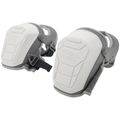



Knee Pads and Kneeling Pads are protective gear plumbers, HVAC techs, and electricians wear or use on the job to cushion joints during hours spent crouched under sinks, crawling through attics, or working at floor level on a rough-in. Gel-padded styles, such as Milwaukee's Stabilizer Performance Knee Pad, use a large flat cap and layered gel padding to spread pressure across a wider area on hard surfaces like tile or concrete. Foam-based pads trade some cushioning for flexibility and weight, which matters on jobs that call for frequent standing and kneeling throughout a shift. Hinged designs flex at the knee joint instead of staying rigid, reducing strain on techs moving in and out of a crouch repeatedly. Picking the right pad style comes down to the flooring, the task, and how long a knee stays planted in one spot, since a pad built for occasional kneeling won't hold up to a full day of tile work.
Subcategories
- Gel Knee Pads: Gel knee pads use a layer of gel over foam to cushion the kneecap against hard, unforgiving surfaces like tile, concrete, and subfloor. Milwaukee's Stabilizer Performance Knee Pad pairs a large flat cap with layered gel padding to spread weight across a wider surface and add stability while kneeling. Plumbers and tile setters reach for gel pads on jobs that involve staying in one kneeling position for extended stretches, such as setting a tub drain or running low pipe. The added cushioning comes with more bulk and weight than a foam-only pad.
- Foam Knee Pads: Foam knee pads trade some of the cushioning of a gel pad for a lighter, more flexible build that suits jobs with frequent standing and kneeling. Milwaukee's Free-Flex Knee Pad uses lightweight foam padding and a water-resistant cap, holding up to damp basements and crawl spaces without soaking through. Electricians and HVAC techs favor foam pads when a task calls for moving between kneeling and standing repeatedly rather than staying planted in one spot. The lighter build reduces leg fatigue over a full shift compared to a heavier gel pad.
- Hinged Knee Pads: Hinged knee pads use a jointed cap that flexes with the knee instead of staying rigid, letting a tech bend, crouch, and stand without the pad catching or shifting out of place. Klein Tools' Heavy Duty Hinged Knee Pads and Hinged Gel Knee Pads both use this jointed design, adding gel padding in the latter for extra cushioning. Techs working in tight crawl spaces or attics benefit from the added range of motion a hinged cap provides over a flat, rigid pad. The hinge mechanism adds moving parts that need to stay clear of debris to keep flexing smoothly.
- Knee Pad Compression Sleeves: Knee pad compression sleeves wrap around the knee like a sleeve rather than strapping on over pants, using neoprene foam for light cushioning and joint support. Klein Tools offers its Knee Pad Compression Sleeve in S/M and M/L sizing to fit a range of leg sizes. Techs who need light, low-profile knee protection for quick tasks or tight spaces where a bulkier pad won't fit reach for this style. Compression sleeves offer less impact protection than a gel or foam cap, making them better suited to brief kneeling than an all-day rough-in.
Buying Guide
Start with the flooring and task at hand, since that decides how much cushioning matters. Hard surfaces like tile, concrete, and subfloor call for a gel-padded design that spreads weight across a wider area, while softer surfaces or brief kneeling tasks don't need that much bulk. Time spent in one position matters just as much as the surface. A plumber setting a tub drain or running low pipe for an hour benefits from a gel pad's extra cushioning, while an electrician moving between kneeling and standing throughout the day may prefer a lighter foam pad that doesn't add fatigue. Choosing between Knee Pads and Kneeling Pads that strap on versus compression sleeves that pull on like a sock comes down to fit and task length. Strap-on pads generally offer more impact protection and stay put during heavy kneeling, while compression sleeves work better for quick tasks in tight spaces where a bulky cap gets in the way. Range of motion is worth checking too, since a hinged cap flexes with the knee joint and holds up better in tight crawl spaces than a flat, rigid pad that can shift out of place. Water resistance matters on jobs in damp basements or crawl spaces, where a foam pad with a water-resistant cap keeps moisture from soaking through to pants and skin. Trying a pad on with actual work pants and a tool belt before committing to a style confirms it stays in place through a real range of motion rather than just standing still in a showroom.
Frequently Asked Questions
What's the difference between a gel knee pad and a foam knee pad?
Gel knee pads use a layer of gel over foam to spread pressure across a wider area, which helps on hard surfaces like tile or concrete during longer kneeling stretches. Foam knee pads use lighter padding alone, trading some cushioning for a lighter, more flexible build suited to jobs with frequent standing and kneeling. Picking between the two comes down to how long a knee stays planted in one spot during a given task.
Do hinged knee pads work better than flat knee pads for crawl space work?
Hinged knee pads flex at a joint built into the cap, letting a tech bend and move without the pad shifting or catching, which helps in tight crawl spaces and attics. Flat knee pads stay rigid across the whole cap, offering solid support for staying still in one kneeling position but less flexibility when moving around. Techs who spend more time crawling and repositioning than staying planted in one spot tend to prefer the hinged style.
How does a knee pad compression sleeve differ from a strap-on knee pad?
A compression sleeve pulls on over the leg like a sock and uses neoprene foam for light cushioning and joint support, offering a low-profile fit for tight spaces. A strap-on knee pad uses adjustable straps to hold a rigid or gel-padded cap in place, offering more impact protection for heavy or extended kneeling. Compression sleeves suit brief tasks or tight quarters, while strap-on pads suit longer stretches of kneeling on hard flooring.
Are water-resistant knee pads necessary for basement or crawl space work?
Damp basements and crawl spaces soak through a standard foam pad quickly, so a water-resistant cap keeps moisture from reaching pants and skin during a long job. Milwaukee's Free-Flex Knee Pad, for example, pairs lightweight foam with a water-resistant cap for exactly that kind of environment. Techs working regularly in wet or damp conditions benefit from that extra layer of protection over a standard pad.
How should a knee pad fit to avoid slipping during work?
A knee pad should sit centered over the kneecap with straps or a compression sleeve snug enough to stay put through bending, crouching, and standing. Sizing matters for compression sleeves specifically, since Klein Tools offers its sleeve in S/M and M/L to match different leg sizes. Testing a pad's fit while wearing actual work pants and moving through a full range of motion confirms it won't slip mid-task.
