




Filters
SORT
Product Availability –
Brand –
Flow At 1 FT Head –
Voltage –
Horse Power –
Review Score –
 --%3E %3Csvg version='1.1' id='Fill' xmlns='http://www.w3.org/2000/svg' xmlns:xlink='http://www.w3.org/1999/xlink' x='0px' y='0px' viewBox='0 0 100 100' enable-background='new 0 0 100 100' xml:space='preserve'%3E %3Cpath fill='%23F15C02' d='M79.44,0.95H20.56C9.78,0.95,0.95,9.78,0.95,20.56v58.87c0,10.79,8.82,19.61,19.61,19.61h58.87 c10.79,0,19.61-8.83,19.61-19.61V20.56C99.05,9.78,90.22,0.95,79.44,0.95z M65.38,58.24l9.38,29.58L49.69,69.78L24.5,87.82 l9.34-29.6L8.8,39.6l30.73-0.17c0,0,6.98-19.61,10-28.93c0.54,1.36,9.88,29.1,9.88,29.1H91.2L65.38,58.24z'/%3E %3C/svg%3E)
 --%3E %3Csvg version='1.1' id='With-RB' xmlns='http://www.w3.org/2000/svg' xmlns:xlink='http://www.w3.org/1999/xlink' x='0px' y='0px' viewBox='0 0 100 100' enable-background='new 0 0 100 100' xml:space='preserve'%3E %3Cpath fill='%23FBC8B4' d='M79.44,0.95H20.56C9.78,0.95,0.95,9.78,0.95,20.56v58.87c0,10.79,8.82,19.61,19.61,19.61h58.87 c10.79,0,19.61-8.83,19.61-19.61V20.56C99.05,9.78,90.22,0.95,79.44,0.95z M65.38,58.24l9.38,29.58L49.69,69.78L24.5,87.82 l9.34-29.6L8.8,39.6l30.73-0.17c0,0,6.98-19.61,10-28.93c0.54,1.36,9.88,29.1,9.88,29.1H91.2L65.38,58.24z'/%3E %3C/svg%3E)
Price Range –
Large Reservoir Condensate Removal Pumps


 --%3E %3Csvg version='1.1' id='Half' xmlns='http://www.w3.org/2000/svg' xmlns:xlink='http://www.w3.org/1999/xlink' x='0px' y='0px' viewBox='0 0 100 100' enable-background='new 0 0 100 100' xml:space='preserve'%3E %3Cg%3E %3Cpath fill='%23F15C02' d='M30.05,70.23l3.79-12.01L8.8,39.6l30.73-0.17c0,0,6.98-19.61,10-28.93c0.54,1.36,9.88,29.1,9.88,29.1h1.58 L93.71,7.18c-3.58-3.82-8.66-6.23-14.28-6.23H20.56C9.78,0.95,0.95,9.78,0.95,20.56v58.87c0,5.41,2.22,10.32,5.79,13.88 L30.05,70.23z'/%3E %3C/g%3E %3Cpath fill='%23FBC8B4' d='M93.71,7.18L60.98,39.6H91.2L65.38,58.24l9.38,29.58L49.69,69.78L24.5,87.82l5.55-17.59L6.75,93.32 c3.55,3.54,8.44,5.73,13.82,5.73h58.87c10.79,0,19.61-8.83,19.61-19.61V20.56C99.05,15.4,97.01,10.69,93.71,7.18z'/%3E %3C/svg%3E)


 --%3E %3Csvg version='1.1' id='No-RB' xmlns='http://www.w3.org/2000/svg' xmlns:xlink='http://www.w3.org/1999/xlink' x='0px' y='0px' viewBox='0 0 100 100' enable-background='new 0 0 100 100' xml:space='preserve'%3E %3Cpath fill='%23CECECE' d='M79.44,0.95H20.56C9.78,0.95,0.95,9.78,0.95,20.56v58.87c0,10.79,8.82,19.61,19.61,19.61h58.87 c10.79,0,19.61-8.83,19.61-19.61V20.56C99.05,9.78,90.22,0.95,79.44,0.95z M65.38,58.24l9.38,29.58L49.69,69.78L24.5,87.82 l9.34-29.6L8.8,39.6l30.73-0.17c0,0,6.98-19.61,10-28.93c0.54,1.36,9.88,29.1,9.88,29.1H91.2L65.38,58.24z'/%3E %3C/svg%3E)

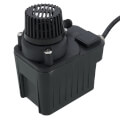
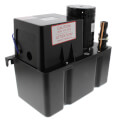

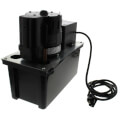
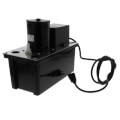


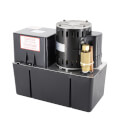
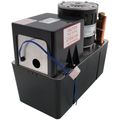
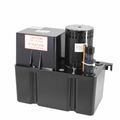
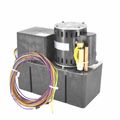
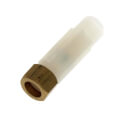
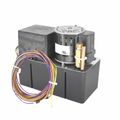
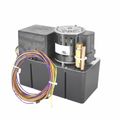

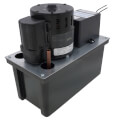
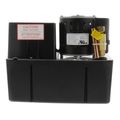
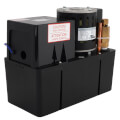
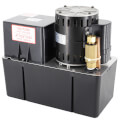
Large reservoir condensate removal pumps handle overflow water from air handlers, furnaces, and dehumidifiers where the sump beneath the equipment needs a bigger holding tank than a standard mini pump provides. The larger reservoir buys more run time between pump cycles, which matters most in a mechanical room where multiple air handlers drain into a single condensate line or where an installation involves a long vertical lift to the discharge point. Because the pump cycles less often than a smaller unit handling the same load, wear on the switch and motor spreads out over more total gallons pumped, which stretches replacement intervals in high-volume commercial applications. A tech specifying one of these for a rooftop unit or a commercial dehumidifier bank should confirm both the tank capacity and the pump's vertical lift rating match the job, since either mismatch shows up later as nuisance shutoffs or a slow leak around an overfilled reservoir.
Subcategories
- Commercial HVAC Condensate Pumps: Commercial HVAC condensate pumps in this category handle the higher condensate volume produced by rooftop units, large air handlers, and multi-zone systems compared to a residential mini-split pump. A larger reservoir gives the pump more buffer before it needs to cycle, which reduces nuisance shutoffs on equipment that runs long hours. Commercial installations often need a longer vertical lift rating than a residential pump provides, since mechanical rooms frequently route condensate lines well above the equipment.
- Dehumidifier Condensate Pumps: Dehumidifier condensate pumps sized for a large reservoir suit commercial dehumidifier banks or industrial spaces where multiple units drain into a shared collection point. A bigger tank means fewer pump cycles even when several dehumidifiers feed the same reservoir simultaneously. A tech setting up one of these for a multi-unit dehumidification system should confirm the combined discharge rate of every unit feeding the pump doesn't exceed its rated capacity.
- Furnace & Boiler Condensate Pumps: Furnace and boiler condensate pumps built with a larger reservoir handle the acidic condensate produced by high-efficiency, condensing equipment in commercial boiler rooms. Condensing furnace and boiler exhaust produces a steady drip rather than an occasional surge, so a bigger tank smooths out pump cycling over a full heating season. Corrosion-resistant tank and float construction matters more in this category than in general HVAC use, since the condensate itself is mildly acidic and will degrade a standard plastic reservoir faster over time.
Buying Guide
Start with the total condensate volume the pump needs to handle, adding up every piece of equipment that will drain into the reservoir if more than one unit shares the pump. A tank sized for a single air handler will cycle constantly and wear out early if a second unit gets tied into the same line later.
Vertical lift rating comes next. Large Reservoir Condensate Removal Pumps are often specified for mechanical rooms where the discharge line runs a long distance vertically before it reaches a drain or exterior wall, and a pump rated for a shorter lift than the job needs will struggle to keep up even with an oversized tank.
Check the float switch type and confirm it comes with a high-water alarm output, since a larger reservoir sitting unattended for longer stretches between cycles benefits from an alarm that flags a stuck float or clogged discharge line before water backs up into the equipment above it.
For boiler or high-efficiency furnace applications, confirm the tank and internal components are rated for acidic condensate rather than general HVAC condensate, since standard materials degrade faster when exposed to a steady drip of mildly acidic water. Finally, verify the pump's electrical requirements match the mechanical room's available circuit, particularly on larger commercial units that may draw more current than a typical residential condensate pump.
Frequently Asked Questions
Why choose a large reservoir pump over a standard condensate pump?
A bigger tank buys more time between pump cycles, which matters when multiple pieces of equipment drain into one pump or when the equipment runs long hours without a break. Less frequent cycling also spreads switch and motor wear over more total gallons pumped.
How is vertical lift rating different from tank capacity?
Tank capacity is how much condensate the reservoir holds before the pump cycles. Vertical lift rating is how high the pump can push that water once it cycles, and the two specs need to be checked separately since a big tank paired with a weak lift rating still won't clear a long vertical discharge run.
Can multiple air handlers or dehumidifiers share one large reservoir pump?
Yes, as long as the combined condensate output of every unit feeding the reservoir stays within the pump's rated capacity. Adding equipment to a shared line after the fact without rechecking that total is a common cause of nuisance shutoffs.
Do boiler and furnace condensate pumps need different materials than HVAC pumps?
High-efficiency furnaces and boilers produce mildly acidic condensate, so a pump built for that application needs a corrosion-resistant tank and internal components rather than the standard materials used in general HVAC condensate removal.
What does the high-water alarm output do on these pumps?
It signals a stuck float or a clogged discharge line before the reservoir overflows, which matters more on a large tank that may sit unattended between cycles for longer than a small residential unit would.
