




Filters
SORT
Product Availability –
Material –
Body Pattern –
Flow Capacity (Cv) –
Size –
Review Score –
 --%3E %3Csvg version='1.1' id='Fill' xmlns='http://www.w3.org/2000/svg' xmlns:xlink='http://www.w3.org/1999/xlink' x='0px' y='0px' viewBox='0 0 100 100' enable-background='new 0 0 100 100' xml:space='preserve'%3E %3Cpath fill='%23F15C02' d='M79.44,0.95H20.56C9.78,0.95,0.95,9.78,0.95,20.56v58.87c0,10.79,8.82,19.61,19.61,19.61h58.87 c10.79,0,19.61-8.83,19.61-19.61V20.56C99.05,9.78,90.22,0.95,79.44,0.95z M65.38,58.24l9.38,29.58L49.69,69.78L24.5,87.82 l9.34-29.6L8.8,39.6l30.73-0.17c0,0,6.98-19.61,10-28.93c0.54,1.36,9.88,29.1,9.88,29.1H91.2L65.38,58.24z'/%3E %3C/svg%3E)
Price Range –
Magnetic Valves


 --%3E %3Csvg version='1.1' id='No-RB' xmlns='http://www.w3.org/2000/svg' xmlns:xlink='http://www.w3.org/1999/xlink' x='0px' y='0px' viewBox='0 0 100 100' enable-background='new 0 0 100 100' xml:space='preserve'%3E %3Cpath fill='%23CECECE' d='M79.44,0.95H20.56C9.78,0.95,0.95,9.78,0.95,20.56v58.87c0,10.79,8.82,19.61,19.61,19.61h58.87 c10.79,0,19.61-8.83,19.61-19.61V20.56C99.05,9.78,90.22,0.95,79.44,0.95z M65.38,58.24l9.38,29.58L49.69,69.78L24.5,87.82 l9.34-29.6L8.8,39.6l30.73-0.17c0,0,6.98-19.61,10-28.93c0.54,1.36,9.88,29.1,9.88,29.1H91.2L65.38,58.24z'/%3E %3C/svg%3E)


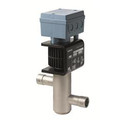





Magnetic Valves are solenoid-actuated valves that open or close a fluid or refrigerant line using an electromagnetic coil rather than a manual handle or pneumatic actuator, giving a control system direct electric control over flow. Part of the broader Control Valves category, these valves are common in hydronic heating systems, refrigeration circuits, and process water lines where a thermostat, timer, or building automation system needs to start and stop flow automatically. Most models are rated for a specific voltage, either low-voltage 24V control circuits or line voltage, and matching that rating to the existing control wiring is essential before installation. Orientation matters on many magnetic valve bodies, since the coil and internal plunger are designed to operate correctly only when mounted in the position specified on the valve body. Selecting a valve rated for the system's working pressure and the fluid or refrigerant being controlled keeps the installation reliable over the long run.
Subcategories
- Coil Assemblies: Coil assemblies generate the electromagnetic field that lifts the plunger inside a magnetic valve body, opening the flow path when energized. Replacement coils are matched to the valve's voltage rating, whether 24V, 120V, or another line voltage, and swapping in the wrong voltage coil can burn out the replacement quickly. Technicians often replace a failed coil rather than the entire valve body when the body itself is undamaged. Confirming the coil's physical mounting style against the valve body prevents a fit mismatch.
- Valve Bodies: Valve bodies house the internal plunger, seat, and ports that direct flow through a magnetic valve, and are sized to the pipe or tubing connection used in the system. Brass and bronze bodies are common in hydronic and water applications, while refrigeration circuits often call for a body rated for the specific refrigerant type in use. Orientation markings on the body indicate how the valve must be mounted for the internal plunger to seat correctly. Replacing a worn body typically also means replacing the seat and any internal seals at the same time.
- Replacement Seals & Plungers: Replacement seals and plungers restore a magnetic valve's ability to fully close and hold pressure after the original components wear from repeated cycling. A valve that won't fully close often traces back to a worn seat or a plunger that's no longer seating evenly. Seal and plunger kits are typically sold matched to a specific valve body model. Cycling a valve too rapidly over its service life accelerates wear on these parts.
- Manual Override Stems: Manual override stems allow a technician to manually open or close a magnetic valve during troubleshooting or in the event of a coil or wiring failure. Having this feature is valuable on critical system lines where a technician needs to isolate flow without waiting for an electrical repair. Override stems are typically a simple screw-type actuator built into the valve body or bonnet. Checking whether a specific valve model includes this feature before specifying it for a critical shutoff application is worthwhile.
Buying Guide
Selecting the right magnetic valve starts with confirming the control voltage available at the installation site, since a coil rated for the wrong voltage either won't operate or will burn out quickly. Line-voltage and low-voltage 24V models aren't interchangeable without swapping the coil, and in some cases the entire valve, so checking the existing control wiring before ordering avoids a mismatch. Pressure and fluid compatibility matter just as much as voltage: a magnetic valve rated for water service isn't necessarily rated for the pressures or refrigerants found in a refrigeration circuit, so confirming the application against the valve's published rating is a required step, not an optional one. Magnetic Valves also have a mounting orientation requirement on most models, since the internal plunger relies on gravity or a specific alignment to seat properly, and installing one sideways or upside down when it isn't rated for that orientation leads to a valve that won't fully close. Pipe or tubing connection size and type, whether threaded, sweat, or flare, needs to match the existing system to avoid adding a transition fitting that introduces another potential leak point. For systems that cycle frequently, choosing a valve built for a higher duty cycle reduces the frequency of coil or seal replacement down the line. Keeping a spare coil on hand for critical systems shortens downtime if a coil fails outside of business hours.
Frequently Asked Questions
What voltage do magnetic valves typically use?
Common ratings include low-voltage 24V for thermostat and control-board applications and line voltage for direct electrical control. Confirming the available control voltage at the installation site before ordering avoids a coil mismatch. Swapping a coil to a different voltage rating is possible on many models but requires ordering the correct replacement coil separately.
Why won't a magnetic valve fully close?
A worn seat, a plunger that's no longer seating evenly, or debris caught in the valve body are the most common causes. Replacement seal and plunger kits, matched to the specific valve model, often resolve the issue without replacing the entire valve. Checking the valve's mounting orientation is also worth confirming, since some models only seal correctly in a specific position.
Can a magnetic valve be installed in any orientation?
Not on every model. Many magnetic valve bodies rely on the internal plunger's orientation relative to gravity to seat correctly, and the valve body typically includes markings showing the required mounting position. Installing a valve outside its rated orientation can prevent it from fully closing even when the coil and electrical connection are functioning correctly.
How is a failed coil diagnosed on a magnetic valve?
Checking for the rated voltage at the coil terminals with the control circuit energized is the first step, since a missing signal points to a wiring or control-board issue rather than the coil itself. If voltage is present, but the plunger doesn't move, replacing the coil is the next step. Confirming the coil's voltage rating against the system before ordering a replacement prevents a repeat failure.
Are magnetic valves rated for refrigeration use different from water service valves?
Refrigeration-rated magnetic valves use materials and seals compatible with specific refrigerants and operate across a different pressure range than valves built for water or hydronic service. Using a water-rated valve on a refrigerant line can lead to seal failure and leaks. Checking the valve's published fluid compatibility against the application is a required step before ordering.
