




Filters
SORT
Product Availability –
Category –
Brand –
Size –
Pressure Set Point –
Capacity (BTU) –
Review Score –
 --%3E %3Csvg version='1.1' id='Fill' xmlns='http://www.w3.org/2000/svg' xmlns:xlink='http://www.w3.org/1999/xlink' x='0px' y='0px' viewBox='0 0 100 100' enable-background='new 0 0 100 100' xml:space='preserve'%3E %3Cpath fill='%23F15C02' d='M79.44,0.95H20.56C9.78,0.95,0.95,9.78,0.95,20.56v58.87c0,10.79,8.82,19.61,19.61,19.61h58.87 c10.79,0,19.61-8.83,19.61-19.61V20.56C99.05,9.78,90.22,0.95,79.44,0.95z M65.38,58.24l9.38,29.58L49.69,69.78L24.5,87.82 l9.34-29.6L8.8,39.6l30.73-0.17c0,0,6.98-19.61,10-28.93c0.54,1.36,9.88,29.1,9.88,29.1H91.2L65.38,58.24z'/%3E %3C/svg%3E)
 --%3E %3Csvg version='1.1' id='With-RB' xmlns='http://www.w3.org/2000/svg' xmlns:xlink='http://www.w3.org/1999/xlink' x='0px' y='0px' viewBox='0 0 100 100' enable-background='new 0 0 100 100' xml:space='preserve'%3E %3Cpath fill='%23FBC8B4' d='M79.44,0.95H20.56C9.78,0.95,0.95,9.78,0.95,20.56v58.87c0,10.79,8.82,19.61,19.61,19.61h58.87 c10.79,0,19.61-8.83,19.61-19.61V20.56C99.05,9.78,90.22,0.95,79.44,0.95z M65.38,58.24l9.38,29.58L49.69,69.78L24.5,87.82 l9.34-29.6L8.8,39.6l30.73-0.17c0,0,6.98-19.61,10-28.93c0.54,1.36,9.88,29.1,9.88,29.1H91.2L65.38,58.24z'/%3E %3C/svg%3E)
Price Range –
Pressure Relief Valves



 --%3E %3Csvg version='1.1' id='No-RB' xmlns='http://www.w3.org/2000/svg' xmlns:xlink='http://www.w3.org/1999/xlink' x='0px' y='0px' viewBox='0 0 100 100' enable-background='new 0 0 100 100' xml:space='preserve'%3E %3Cpath fill='%23CECECE' d='M79.44,0.95H20.56C9.78,0.95,0.95,9.78,0.95,20.56v58.87c0,10.79,8.82,19.61,19.61,19.61h58.87 c10.79,0,19.61-8.83,19.61-19.61V20.56C99.05,9.78,90.22,0.95,79.44,0.95z M65.38,58.24l9.38,29.58L49.69,69.78L24.5,87.82 l9.34-29.6L8.8,39.6l30.73-0.17c0,0,6.98-19.61,10-28.93c0.54,1.36,9.88,29.1,9.88,29.1H91.2L65.38,58.24z'/%3E %3C/svg%3E)














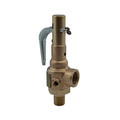


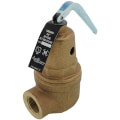


 --%3E %3Csvg version='1.1' id='Half' xmlns='http://www.w3.org/2000/svg' xmlns:xlink='http://www.w3.org/1999/xlink' x='0px' y='0px' viewBox='0 0 100 100' enable-background='new 0 0 100 100' xml:space='preserve'%3E %3Cg%3E %3Cpath fill='%23F15C02' d='M30.05,70.23l3.79-12.01L8.8,39.6l30.73-0.17c0,0,6.98-19.61,10-28.93c0.54,1.36,9.88,29.1,9.88,29.1h1.58 L93.71,7.18c-3.58-3.82-8.66-6.23-14.28-6.23H20.56C9.78,0.95,0.95,9.78,0.95,20.56v58.87c0,5.41,2.22,10.32,5.79,13.88 L30.05,70.23z'/%3E %3C/g%3E %3Cpath fill='%23FBC8B4' d='M93.71,7.18L60.98,39.6H91.2L65.38,58.24l9.38,29.58L49.69,69.78L24.5,87.82l5.55-17.59L6.75,93.32 c3.55,3.54,8.44,5.73,13.82,5.73h58.87c10.79,0,19.61-8.83,19.61-19.61V20.56C99.05,15.4,97.01,10.69,93.71,7.18z'/%3E %3C/svg%3E)
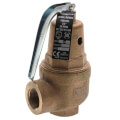
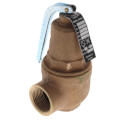
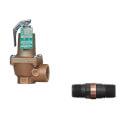


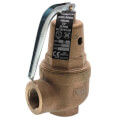
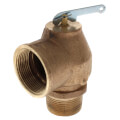
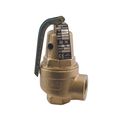
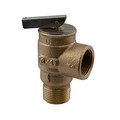
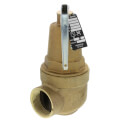
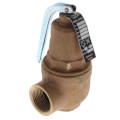
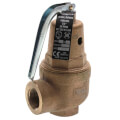
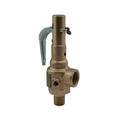
Pressure Relief Valves protect boilers, water heaters, and closed hydronic systems from dangerous pressure buildup by opening automatically once system pressure exceeds a set threshold. Each valve is rated for a specific pressure setting and connection size, and matching those two figures to the equipment being protected is the most important step in a proper installation. A valve that's rated too high for the system it protects can fail to open before a tank or boiler is damaged, while one rated too low will discharge water unnecessarily during normal operation. Most residential and light commercial systems use valves set well below the equipment's maximum working pressure to leave a safety margin. Because these valves are safety devices rather than standard plumbing fittings, replacing a leaking or failed unit promptly rather than capping it off is standard practice in the trade.
Subcategories
- Boiler Relief Valves: Boiler relief valves are set to open at the pressure rating specific to the boiler they protect, which is typically printed on the boiler's own data plate. A valve that weeps or drips steadily often signals system pressure running higher than normal rather than a defect in the valve itself. Matching the valve's pressure setting and pipe size to the original is essential, since swapping in a valve rated for a different boiler model can leave the system unprotected. Most boiler relief valves also carry a temperature rating in addition to pressure, since they guard against both conditions.
- Water Heater T&P Valves: Temperature and pressure relief valves on water heaters open in response to either excess pressure or water temperature climbing above a safe limit. A valve that discharges frequently on a residential tank often points to thermal expansion in a closed plumbing system rather than a failing valve. Replacement valves are selected by matching both the pressure and temperature setpoints stamped on the original, along with the tank's connection size. Testing the valve's lever periodically is standard maintenance recommended by most manufacturers.
- Expansion Tank Valves: Expansion tank valves work alongside relief valves to absorb the extra volume created when water heats and expands in a closed system. A waterlogged expansion tank forces the relief valve to open more often than it should, since the tank can no longer cushion normal pressure swings. Checking the tank's air charge against its rated pre-charge pressure is a quick way to rule it out before replacing a relief valve that seems to be failing prematurely. Both components are typically serviced together during a water heater replacement.
- Test Levers & Repair Parts: Test levers, seat kits, and other repair parts let a technician service certain relief valve models instead of replacing the entire valve. A lever that's stuck or corroded can prevent a valve from being manually tested, which is a required part of routine maintenance on many systems. Repair parts are matched to a specific valve model and are not interchangeable across brands or pressure ratings. Replacing a full valve rather than attempting a field repair is the safer choice whenever the valve's history or condition is uncertain.
Buying Guide
Matching pressure rating and connection size to the equipment being protected is the starting point for any Pressure Relief Valves purchase, since these are safety devices rather than general-purpose fittings. The rating stamped on the boiler, water heater, or expansion tank's data plate should always take priority over an assumption based on the old valve, especially if there's any uncertainty about whether the original valve was even correct for the equipment.
Discharge piping matters as much as the valve itself. Code in most jurisdictions requires relief valve discharge to terminate near the floor and away from any point where scalding water could contact a person, so confirming local requirements before finishing an installation avoids a failed inspection. Valves rated for both temperature and pressure, common on water heaters, need both figures checked against the tank's nameplate rather than pressure alone.
A relief valve that weeps or discharges periodically is often a symptom of a separate problem, such as thermal expansion or a waterlogged expansion tank, rather than a defective valve. Replacing the valve without addressing the underlying pressure issue usually leads to the same complaint returning within weeks. Keeping a range of common pressure and temperature settings in stock, along with matching expansion tanks, covers most Pressure Relief Valves service calls in a single trip.
Frequently Asked Questions
How often should a pressure relief valve be tested?
Most manufacturers recommend testing a relief valve's lever at least once a year to confirm it isn't stuck or corroded shut. A valve that fails to reseat properly after testing should be replaced rather than reused.
Why does a water heater's T&P valve drip periodically?
Periodic dripping is commonly caused by thermal expansion in a closed plumbing system rather than a failing valve. Installing or checking an expansion tank often resolves the issue without replacing the valve itself.
What happens if a relief valve is rated too high for the equipment it protects?
A valve rated above the equipment's safe working pressure may not open in time to prevent damage during a pressure buildup. Matching the valve's rating to the data plate on the boiler or water heater is the only reliable way to confirm the correct setting.
Can a relief valve be repaired instead of replaced?
Some models accept replacement seat kits or test levers, but a valve with an uncertain service history is generally safer to replace outright. Repair parts are specific to a single valve model and are not interchangeable across brands.
Where should relief valve discharge piping terminate?
Discharge piping should terminate near the floor and away from any location where hot water discharge could contact a person, following local plumbing code. Confirming these requirements before finishing an installation helps avoid a failed inspection.
