





'/%3E%3C/svg%3E)
 --%3E %3Csvg version='1.1' id='Fill' xmlns='http://www.w3.org/2000/svg' xmlns:xlink='http://www.w3.org/1999/xlink' x='0px' y='0px' viewBox='0 0 100 100' enable-background='new 0 0 100 100' xml:space='preserve'%3E %3Cpath fill='%23F15C02' d='M79.44,0.95H20.56C9.78,0.95,0.95,9.78,0.95,20.56v58.87c0,10.79,8.82,19.61,19.61,19.61h58.87 c10.79,0,19.61-8.83,19.61-19.61V20.56C99.05,9.78,90.22,0.95,79.44,0.95z M65.38,58.24l9.38,29.58L49.69,69.78L24.5,87.82 l9.34-29.6L8.8,39.6l30.73-0.17c0,0,6.98-19.61,10-28.93c0.54,1.36,9.88,29.1,9.88,29.1H91.2L65.38,58.24z'/%3E %3C/svg%3E)


MANUALS (5)
'/%3E%3C/svg%3E)
Product Highlights


Description
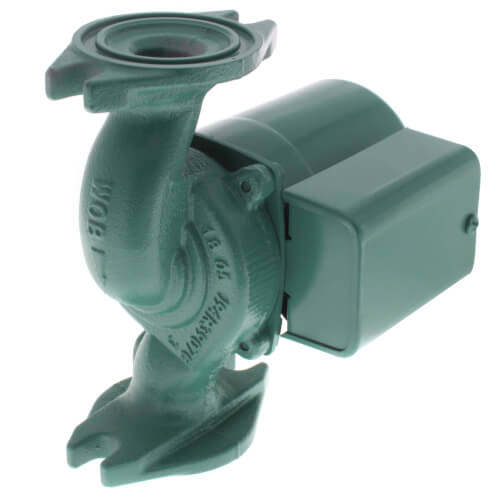
Efficient, reliable, and remarkably easy to maintain, the Taco 007-F5 - in true circulator pump fashion - has never stopped churning out reasons to be impressed.
Designed for use with residential hydronic and radiant heating systems, the Taco 007-F5 has a reputation for running quietly, but it made a lot of noise when it first entered the market for its revolutionary maintenance-free design. The 007 series' durable cast iron pump features an easy-to-replace cartridge, and the system self-lubricates as it runs, making service trips simple and rare.
And just as the Taco 007-F5 doesn't demand attention for maintenance, it doesn't draw any attention while it's running. Users can run the cartridge circulator in the next room without ever hearing it - though it's important to note the lack of noise doesn't reflect a lack of output. The Taco 007-F5 circulator pump's 1/25 HP motor is an absolute workhorse, capable of a max flow of 23 gallons per minute, which is even more impressive given its compact design.
Make sure to check out the media section on the left side of this page for exclusive in-depth content like 360-degree product photography, detailed installation and maintenance videos, and a pro's guide to proper circulator selection.
Benefits
Reliable - The circulator pump's self-lubricating design and durable cast iron construction makes it more dependable and significantly reduces the need for maintenance trips.
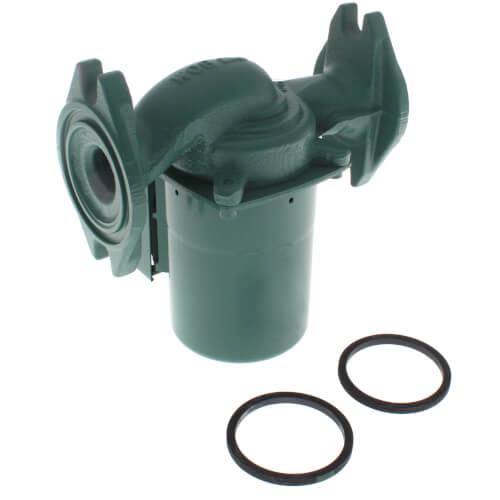
Field Serviceable - The Taco 007-F5's unique replaceable cartridge contains all the moving parts and allows the circulator to be easily serviced without replacing the entire unit.
Durable - Designed without a mechanical seal , the cast iron circulator pump has fewer potential leak- and failure-points and can withstand maximum pressure of 125 PSI.
High Output - A max flow rate of 23 GPM coupled with an output of 1/25 HP means water is distributed quickly and efficiently throughout the system.
Low Power Consumption - The 007 series Direct Drive motor eliminates the need for belts and pulleys, which cuts down on excess noise, energy expenditure, and operating costs.
Widely Compatible - The cartridge circulator's universal flange-to-flange dimensions help make installation secure and straightforward, while the 115V operating power means it can be used with standard electrical outlets. The result is a pump that's compatible with a wide variety of systems and piping arrangements.
Taco 007-F5 Typical Applications:
Hydronic Heating
Radiant Heating
Hydro-Air Fan Coils
Indirect Water Heating
Chilled Water Cooling
Taco 007-F5 Replacement Parts List
Casing O-Ring: 008-005RP
007 Series Flange Gasket Set: 007-007RP
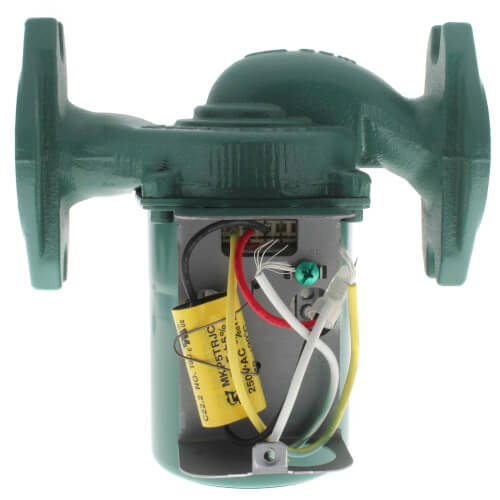
007 Series Capacitor for PC Board: 007-002RP
007 Series Cartridge Assembly Complete: 007-042RP
Specs
| Application: | Zoning |
|---|---|
| Material: | Cast Iron |
| Amperage: | 0.71 |
| Voltage: | 115V |
| Max Pressure (PSI): | 125 |
| Type: | Pump |
| Horse Power: | 1/25 |
| Connection Size: | 1-1/4" 3/4" 1" 1-1/2" |
| Flow Range (GPM): | 0-23 |
| Max Flow (GPM): | 23 |
| Max Head (Ft): | 10 |
| Head Range (ft.): | 0-10 |
| Hertz: | 60 |
| Phase: | 1 |
| RPM: | 3250 |
| Temperature Range (F): | 40°F - 240°F |
| Connection Type: | Flanged x Flanged |
| Warranty: | 3 Year |
| Replaces: | 007-F4 007-F3 |

Questions?
Compare Similar Products
You May Also Need
5 Replacement Parts
Need help finding a replacement part?
Product Reviews
Most Liked Positive Review
Taco 007 F5 pumps
Most Liked Negative Review
 --%3E %3Csvg version='1.1' id='With-RB' xmlns='http://www.w3.org/2000/svg' xmlns:xlink='http://www.w3.org/1999/xlink' x='0px' y='0px' viewBox='0 0 100 100' enable-background='new 0 0 100 100' xml:space='preserve'%3E %3Cpath fill='%23FBC8B4' d='M79.44,0.95H20.56C9.78,0.95,0.95,9.78,0.95,20.56v58.87c0,10.79,8.82,19.61,19.61,19.61h58.87 c10.79,0,19.61-8.83,19.61-19.61V20.56C99.05,9.78,90.22,0.95,79.44,0.95z M65.38,58.24l9.38,29.58L49.69,69.78L24.5,87.82 l9.34-29.6L8.8,39.6l30.73-0.17c0,0,6.98-19.61,10-28.93c0.54,1.36,9.88,29.1,9.88,29.1H91.2L65.38,58.24z'/%3E %3C/svg%3E)
Good warranty
Pump works well
Absolutely
Always good!
I would buy this from them again!
Yes I would buy again!
Identical replacement of one that ran for over 15 years.
Very impressed!!
Easy Circ Pump Install
I would buy this product from Supply House any time I need o
Working as expected
Product Q&A
77 QuestionsQ: will the impeller function correct when the manifold direction is changed?
Asked by na 14 years ago
Add your answer
There is an arrow on the manifold body which indicates flow direction. You can rotate the motor housing to suit the installation. There are some limitations to mounting the motor vertically. Read the data sheets.
Yes, the impeller will function normally regardless of the pump body orientation.
Always follow the indicated direction. If you are switching directions, turn the pump around to match the flow direction.
Q: The pump specs say 0 to 23 gallons per minute. Does that mean this pump is fine if the output flow is shut off completely? Would shutting off the output flow of the pump result in some kind of "idle" state? The goal is to use the pump to circulate water in a stationary engine. There will be no water flow when the thermostat is closed.
Asked by Andy 14 years ago
Add your answer
Verified Reply- PexSupply StaffThis is a water-lubricated circulator, so running it without water for any length of time could cause it to burn out. The 0-23 GPM number is based on the pump curve: you won't get any flow through the pump once head pressure hits approximately 11 feet.
Don't know the answer for sure, but we have accidentally ran this pump with the valve shut completely off, for about an hour. It had hot water behind it, and it did not burn up - it was fine. However, the thermostat should have an 1/8" hole, so it wouldn't be completely shut off anyhow.... Matt
No. You cannot block the flow of water completely. You will burn the pump. The variations in flow described id predicated by piping size and length. Horrace Wimp Sent from my iPhone
An engine thermostat will always allow a bit of water flow through its relief port. When it reaches about 180-195 degrees F, it will open allowing more flow. Just to be safe, I would wire a thermocouple relay into the water system so that the pump switches on when the hot water is released by the thermostat into the radiator area. Alternative is to remove the thermostat and have the pump running whenever the engine is on, if you don't need the engine to warm up quickly.
Andy, The 007 Cast Iron Circulator is a "centrifugal" style pump, so it won't hurt it to pump against a closed valve. That condition is referred to as "dead-heading" the pump. Although it won't bother the pump to run in this fashion for a period of time, I wouldn't recommend allowing that condition to exist indefinitely. Usually, the longer a pump runs with no flow, or "dead-headed", the more heat builds in the system and this will eventually take it's toll on the rotating equipment. Hope this helps. Mike
Andy, My preferance would be to wire in a relay to shut the pump off with the thermostat as well. That way it is not working against itself. Todd Beck Make the best of what God has given you
No; this will NOT work for your application. The 007 is a centifugal pump, and if outlet flow is completely shut off when the thermostat is shut, IT WILL EXPLODE! You must have a bypass of some kind to use this sort of pump. With only a few exceptions, EVERY water cooled engine has a bypass of some kind. Please do not try this without one! Now, as for the pump specs, the flow rate would depend several factors, but the two most important are: Head-loss (resistance to flow within a tube or cavity) and Water Temp.(viscosity is lower at higher temp). By the way, is there an expansion tank for the "extra water" when it heats up in the engine?
Running any centrifugal pump dead headed (discharge valve closed) is never a good idea for any length of time, because the water in the pump will get very hot and can cause pump components to fail. One solution I have used is to drill one or 2 small holes in the thermostat so there is always a small amount of water circulating. This will protect the pump whenever the thermostat is always closed. hope this advice helped.
Ya, it is not a good idea to run a pump without water flowing thru it (dead head). Large pumps can explode ( the mechanical energy from the impeller is converted into thermal energy, which causes steam, which explodes the volute. Small pumps like this do not explode. How big a stationary engine? How much flow do you need? Engines like water heaters have very low head loss (resistance to flow). Use a Grundfos Alpha pump and leave it plugged in all the time. When the thermostat closed the pump slows down. If you are running antifreeze use a cast iron pump as it has anti corrosive properties, otherwise stainless.
Q: I have a Taco 007 installed on a hot water heater providing instant hot water to fixtures around the house. The unit is now 12 years old. In the first five years I replaced 3 cartridges. The third one has lasted 7 years and died today. I replaced it with my last cartridge I bought about 10 years ago. It ran nicely for about 8 hours and started hanging up. I don't understand why this unit keeps eating up cartridges. The installation is clean. (I'm not a licensed plumber, but I have been a Builder for 46 years. The type that did my own work. Turned a lot of wrenches over the years. I'm not the handy homeowner type). This thing has really got me stumped. I'm only pushing about a 5 foot head through about a 70 foot loop in 1/2" copper. I run out of the hot water supply line and feed back in at the drain spigot. I did split the spigot of the feed line. I would appreciate any help you-all may want to give. Thanks very much.
Asked by Rick 14 years ago
Add your answer
Verified Reply- PexSupply StaffThe problem may caused by the fact that this is a cast iron circulator. Cast iron circulators should only be used on closed-loop heating systems. The oxygen present in open-loop systems and plumbing systems causes ferrous metals to rust.
To my fellow shopper: Firstly, a cast iron circulator should never have been used on a domestic hot water line. The constant, freshly oxygenated water makes the cast iron rust. And by now, who knows what you have going on in the "body" of the circulator. The right thing to do is replace the whole 007 with a bronze 006. Cost more but you shouldn't have these problems. Good luck, Max
Just guessing, 1. 3 cartridges in 5 years then 8 yrs. could there be a problem in the rest of the pump assembly? could the cartridges have been from a bad manufacturing run? 2. assume the 1/2" dia pipe is to reduce the time to get hot water from source to use point. if it is a recirc system perhaps 3/4" would be better. Yes, the 8 year run is the fly in the ointment. 3. You can get new/used 007's for 60-120$.. perhaps it is time to try a new pump? That is all i can think of. Good Luck.
Sounds to me like the 007 pump is severely oversized. It's trying to push against the very high resistance of the 1/2" copper. The pump is water lubricated and requires sufficient water back to keep it from failing. I'd suggest speaking with a Taco rep. and asking their advice for sizing. A 006, or even an 003 may be a better match. Make sure the pump you're using is stainless steel not the standard iron. The oxygen in the domestic hot water with deteriorate an iron pump used in a domestic hot water recirculation loop. Hope this helps! Good luck, Ken Patkin, Cool Tech HVAC/R
My thoughts are that you are getting fine particles (minerals and oxidized metals) from your aging hot water tank that are getting into the wet seal of your pump. The only other reason for early failure that I have experienced is if your pump is exposed to temperatures above 200f . Topline Distributing Topline Green Store ***.****ph***.****fx Neil Robb Polar Furnaces & Components Solar Thermal Heating Systems Web Site www.topline-dist.com Leading in Green Innovations
IF YOU ARE USING THE WRONG PUMP. YOU NEED TO USE A BRONZE PUMP IF YOU ARE TO CIRCULATE HOT WATER FROM HOT WATER HEATER. OXYGEN FROM WATER WILL DESTROY A CAST IRON PUMP
I'm curious, is this a cast iron pump you are using for your domestic water recirculation? If so, that would cause the pump to corrode over time. The new cartridge may simply not be able to spin the impellers due to rust build-up. And/or, you might want to check the water lines. 70' feet of 1/2" tubing is more than 5 ft of head. If there is any lingering junk in the pipes, it'd also cause extra resistance.
Rick, I am by no means a rocket scientist. My guess is it may need an entire replacement. When you say cartridge, I am assuming that is the motor portion of the pump. Have you changed the impeller portion of the pump? Also, is this pump certified for continuous duty? Just some thoughts. You may want to try a Grundfos pump that is made for hot water systems. I have 2 installed on my remote wood burning furnace for 7 years and they have never failed. One is continuous duty and the other operates off a thermostat for my pool heater. May be worth the investment. Pex does carry several types. Good luck Todd Beck Make the best of what God has given you
Be sure the pump shaft is in a horizontal position for max life. Also check housing for build up of corosion - rust - scale. Finally make sure that you do not have an air pocket in the line - this will cause the pump to run dry and overheat quickly.
Hi Rick: I don't know what your problem is specifically. If you are replacing the motor only that often, maybe you have an under/over voltage problem. I have the same unit that is in a 2 zone baseboard heating system for my whole house (in New England cold) and it is 14 years old and runs fine. I bought a spare about 3 years ago thinking it would probably fail sometime around 10 years of use. My system has 3/4" pipes and maybe that makes a difference, but I doubt it. My household AC voltage runs at slightly over 120 volts. If your utility company operates under "brownout" conditions at very high demand periods then that may contribute to motor failure. If your impeller is binding or seizing that often, maybe there something in your water like sediment or excessive iron. Obviously binding or seizure would lead to motor failure also. Probably not much help, but those are things I would check for before getting help from Taco about such a high failure rate.
Q: How do i turnoff and drain the water going into taco 007-f5 circulator? Water is leaking from the cartidge and I want to stop the flow of water. Please help!!
Asked by Doc 14 years ago
Add your answer
Either use the inline shutoff valve or shut your water off at the source. You should have a drain valve at the bottom of your boiler connect a garden hose to it and lead it to the nearest drain and open it up Connected by DROID on Verizon Wireless
If you have "isolation valves" before and after the circulator, turn them off before removing the 007. If there are no isolation valves, you better call a professional. It can get messy. Sent from my iPhone
You must isolate (close) the up and downstream valves. After the pump is isolated, you can break the unit apart and service the gasket or part causing the leak. If you don't have isolation valves, you will need to drain the system.
You would have to have valves befor the unit. If you dont have that, you will have to drsin the system. If you do, be shure to put a valve in. Sent from my U.S. Cellular® Samsung Galaxy Tab
Q: i have a 007 bf5 jw. making the loudest noises and cavitating. its been in a weil mclain gv4 for 13 years. i am willing to replace the whole unit. is it the oo7f5
Asked by steamboatdan 15 years ago
Add your answer
Verified Reply- PexSupply StaffThe 007-F5 has the same ratings and capabilities as your existing circulator, but the current unit is bronze. The 007-SF5 stainless steel circulator would be a better choice if you need a corrosion-resistant (i.e. bronze or stainless steel) circulator. You'd need to use a stainless steel model because Taco no longer offers a bronze version of the 007.
I doubt that you have cavitation especially in a small pump like this. It is a specific term, although noise can be a indication of cavitation. Take the pump apart and check for damage in the volute and replace the cartridge. It comes with a gasket. Maybe the pump isn't turning and you're getting flashing in the boiler and that is where the noise is coming from. Look at the pressure gauge, is it jumping around (boiler flashing) when the noise is occurring?
Q: Can I use this to replace a Taco 110 with a 1/12 h.p. motor?
Asked by 15 years ago
Add your answer
Verified Reply- PexSupply StaffYou can replace the Taco 110 with any circulator that meets the GPM and head pressure requirements of your system, but keep in mind that the 007 has different flange-to-flange dimensions.
Q: I have a 5 zone baseboard heating system. Each zone is fitted with the 007-F5 cartridge circulator. One of the zones is not functioning properly. Heat is constantly staying on in zone (thermostat set for 58 but reading 75 and rising!). I've tested the thermostat (recently replaced old round mercury ones with programmable Honeywell) on the wall and it responds when temperature is raised ubove current level but when thermostat is turned lower than current temp or turned off, heat keeps coming up through baseboards. Could the problem be the circulator? Is there a way to test it before calling for service?
Asked by 15 years ago
Add your answer
Verified Reply- PexSupply StaffThe problem may be that you do not have a check valve on the zone. Check valves, which are included internally on Taco's '-IFC' model circulators, prevent heat from flowing to zones that are not calling for it. Without a check valve, water may flow to these areas not because the circulator is on, but because there is nothing to stop the water. If you do have a check valve on this zone, it is either not functioning properly or there is another issue.
Q: On my 007-f5 cirulator pump pump is real hot to touch but no heat to zone, is the pump bad and to replace do i have to isolate the pump so the water does not run out or can i just Change pump out?
Asked by Peter 15 years ago
Add your answer
Verified Reply- PexSupply StaffIt is likely a problem with the cartridge, which is a replaceable part (# 007-042RP).
Q: What pump would replace a Taco model 007-bf3-1w?
Asked by Buster 15 years ago
Add your answer
Verified Reply- PexSupply StaffThe 'B' in the model number indicates that it's a bronze circulator. Bronze or stainless steel models should always be used in open-loop heating systems or domestic water plumbing systems (they resist rusting in these applications). The current model is stainless steel, part 007-SF5.
Q: does the 007-f5 have a flow check built in it?
Asked by 15 years ago
Add your answer
Verified Reply- PexSupply StaffIt does not. If you want an internal flow check, you would need model 007-F5-7IFC.