




Filters
SORT
Product Availability –
Brand –
Finish –
Length (Inches) –
Gauge –
Review Score –
 --%3E %3Csvg version='1.1' id='Fill' xmlns='http://www.w3.org/2000/svg' xmlns:xlink='http://www.w3.org/1999/xlink' x='0px' y='0px' viewBox='0 0 100 100' enable-background='new 0 0 100 100' xml:space='preserve'%3E %3Cpath fill='%23F15C02' d='M79.44,0.95H20.56C9.78,0.95,0.95,9.78,0.95,20.56v58.87c0,10.79,8.82,19.61,19.61,19.61h58.87 c10.79,0,19.61-8.83,19.61-19.61V20.56C99.05,9.78,90.22,0.95,79.44,0.95z M65.38,58.24l9.38,29.58L49.69,69.78L24.5,87.82 l9.34-29.6L8.8,39.6l30.73-0.17c0,0,6.98-19.61,10-28.93c0.54,1.36,9.88,29.1,9.88,29.1H91.2L65.38,58.24z'/%3E %3C/svg%3E)
 --%3E %3Csvg version='1.1' id='With-RB' xmlns='http://www.w3.org/2000/svg' xmlns:xlink='http://www.w3.org/1999/xlink' x='0px' y='0px' viewBox='0 0 100 100' enable-background='new 0 0 100 100' xml:space='preserve'%3E %3Cpath fill='%23FBC8B4' d='M79.44,0.95H20.56C9.78,0.95,0.95,9.78,0.95,20.56v58.87c0,10.79,8.82,19.61,19.61,19.61h58.87 c10.79,0,19.61-8.83,19.61-19.61V20.56C99.05,9.78,90.22,0.95,79.44,0.95z M65.38,58.24l9.38,29.58L49.69,69.78L24.5,87.82 l9.34-29.6L8.8,39.6l30.73-0.17c0,0,6.98-19.61,10-28.93c0.54,1.36,9.88,29.1,9.88,29.1H91.2L65.38,58.24z'/%3E %3C/svg%3E)
Price Range –
Tubular Slip Joint Waste Bends


 --%3E %3Csvg version='1.1' id='No-RB' xmlns='http://www.w3.org/2000/svg' xmlns:xlink='http://www.w3.org/1999/xlink' x='0px' y='0px' viewBox='0 0 100 100' enable-background='new 0 0 100 100' xml:space='preserve'%3E %3Cpath fill='%23CECECE' d='M79.44,0.95H20.56C9.78,0.95,0.95,9.78,0.95,20.56v58.87c0,10.79,8.82,19.61,19.61,19.61h58.87 c10.79,0,19.61-8.83,19.61-19.61V20.56C99.05,9.78,90.22,0.95,79.44,0.95z M65.38,58.24l9.38,29.58L49.69,69.78L24.5,87.82 l9.34-29.6L8.8,39.6l30.73-0.17c0,0,6.98-19.61,10-28.93c0.54,1.36,9.88,29.1,9.88,29.1H91.2L65.38,58.24z'/%3E %3C/svg%3E)

 --%3E %3Csvg version='1.1' id='Half' xmlns='http://www.w3.org/2000/svg' xmlns:xlink='http://www.w3.org/1999/xlink' x='0px' y='0px' viewBox='0 0 100 100' enable-background='new 0 0 100 100' xml:space='preserve'%3E %3Cg%3E %3Cpath fill='%23F15C02' d='M30.05,70.23l3.79-12.01L8.8,39.6l30.73-0.17c0,0,6.98-19.61,10-28.93c0.54,1.36,9.88,29.1,9.88,29.1h1.58 L93.71,7.18c-3.58-3.82-8.66-6.23-14.28-6.23H20.56C9.78,0.95,0.95,9.78,0.95,20.56v58.87c0,5.41,2.22,10.32,5.79,13.88 L30.05,70.23z'/%3E %3C/g%3E %3Cpath fill='%23FBC8B4' d='M93.71,7.18L60.98,39.6H91.2L65.38,58.24l9.38,29.58L49.69,69.78L24.5,87.82l5.55-17.59L6.75,93.32 c3.55,3.54,8.44,5.73,13.82,5.73h58.87c10.79,0,19.61-8.83,19.61-19.61V20.56C99.05,15.4,97.01,10.69,93.71,7.18z'/%3E %3C/svg%3E)




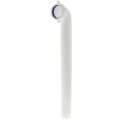
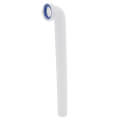


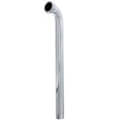

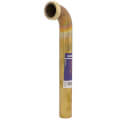
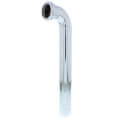


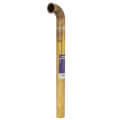
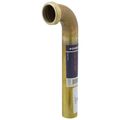


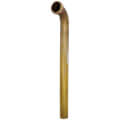
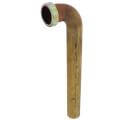
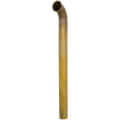
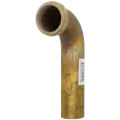
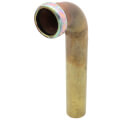


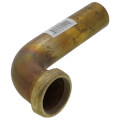
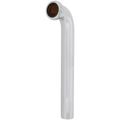
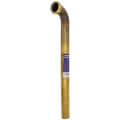



Tubular slip joint waste bends are the curved drain fittings that route wastewater from a sink's tailpiece or trap arm down into the wall or floor drain stub-out, connecting the visible P-trap assembly to the fixed drain piping behind it. Plumbers rely on the slip joint design at each end of the bend because it allows the fitting to be adjusted and rotated during installation without cutting or gluing, then locked in place with a compression nut and washer once the alignment is correct. That adjustability matters most on remodel and repair jobs, where the drain stub-out rarely lines up perfectly with a new sink or vanity's tailpiece position. Waste bends come in different angle and offset configurations to bridge that gap between the fixture drain and the wall or floor connection. Choosing the right bend depends on the horizontal and vertical distance between the trap arm and the stub-out, along with the tubing material already in use on the rest of the drain assembly.
Subcategories
- 90-Degree Waste Bends: A 90-degree waste bend makes a sharp right-angle turn, most often used when a trap arm needs to connect into a stub-out that sits directly below or beside it rather than in a straight line. Plumbers use this bend when a fixture's drain position and the wall or floor stub-out are offset at close to a right angle. The sharper turn makes precise alignment during installation more important, since there's less room to compensate for a minor misalignment than with a shallower bend. This is one of the most commonly stocked bend angles for standard sink and lavatory installations.
- 45-Degree Waste Bends: A 45-degree bend provides a gentler change in direction than a 90-degree fitting, which plumbers use when the trap arm and stub-out are offset at a shallower angle or when a sharper bend would create too tight a turn for smooth drainage. The shallower angle also tends to reduce the chance of debris catching at the bend compared to a sharp right-angle turn. This bend is a common choice on kitchen sink drains, where the trap arm often approaches the wall connection at less than a right angle. Stocking both 45 and 90-degree bends covers most standard drain configurations encountered in the field.
- Slip Joint Extension Tubes: Extension tubes aren't a bend themselves but are sold alongside waste bends to add straight length between the trap and the bend fitting when the stub-out sits farther from the fixture than a standard bend alone can reach. Plumbers add these when a vanity or sink is installed farther from the wall than the original rough-in anticipated. Because they use the same slip joint connections as the bends, extension tubes can be trimmed to length in the field and adjusted along with the rest of the assembly. Keeping a few lengths on the truck avoids a second trip when a stub-out doesn't line up as expected.
- Slip Joint Nuts and Washers: Replacement slip joint nuts and washers are the compression components that seal each connection point in a waste bend assembly, and they're often the first parts to fail or need replacing on an older drain setup. A cracked nut or a hardened, brittle washer is a common cause of a slow drip at a slip joint connection long before the tubing itself needs replacing. Keeping an assortment of nut and washer sizes on hand lets a plumber fix a leaking joint without replacing the entire bend. Matching the washer material and nut thread to the existing tubing size is what keeps the repair from introducing a new leak.
Buying Guide
Selecting tubular slip joint waste bends for a job starts with measuring the actual offset between the trap arm and the wall or floor stub-out, both the horizontal distance and any vertical drop, since that measurement determines whether a 90-degree, 45-degree, or a combination with an extension tube will make the connection without excessive strain on the fittings. Material consistency across the drain assembly also matters: waste bends are commonly available in different tubing materials, and mixing incompatible materials at a slip joint connection can affect how well the washer seals against the tubing surface. On remodel jobs where a new vanity or sink sits in a different position than the original fixture, it's common to need an extension tube in addition to a bend, so measuring the full path before ordering saves a return trip for missing parts. Because slip joints are meant to be adjustable rather than permanent, waste bends are typically finger-tightened into position first to confirm alignment, then fully tightened once the fit is correct; overtightening a compression nut before confirming alignment can crack the nut or distort the washer. When a bend is being replaced for a leak rather than a new install, checking whether the leak is actually at the bend itself, or just at a worn washer or nut, can save the cost and labor of replacing tubing that's still sound. Keeping a stock of common bend angles alongside spare nuts and washers covers the majority of slip joint drain repair calls without a special order.
Frequently Asked Questions
What's the difference between a 90-degree and 45-degree waste bend?
A 90-degree bend makes a sharp right-angle turn, while a 45-degree bend changes direction more gradually. The right choice depends on the actual offset angle between the trap arm and the wall or floor stub-out.
Can slip joint fittings be reused after taking them apart?
In many cases the tubing and bend can be reused, but the washers are worth inspecting and often replacing, since a washer that's been compressed and removed once may not seal as reliably the second time.
Why is my slip joint connection leaking even though it's tight?
A leak at a properly tightened slip joint often points to a cracked nut, a worn or misaligned washer, or tubing that isn't properly seated inside the fitting rather than a tightness problem.
Do I need an extension tube for every waste bend installation?
No. An extension tube is only needed when the distance between the trap arm and the stub-out is longer than a standard bend alone can span.
Should slip joint nuts be tightened with a wrench or by hand?
Most slip joint nuts are designed to be hand-tightened, sometimes with a slight additional turn using pliers or a wrench for a final snug fit. Overtightening with excessive force can crack the nut or damage the washer.
